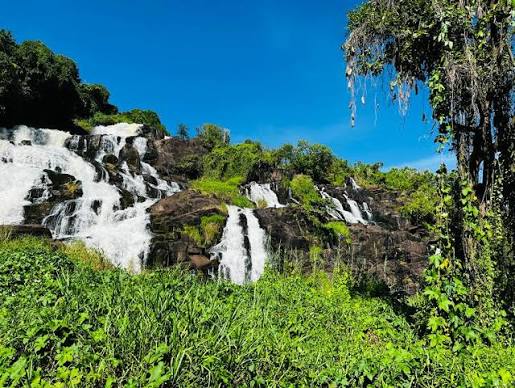
Things to do at Aruu Falls
Most visitors reach Aruu Falls with one to three hours on site in mind — enough for a guided walk, photography, and perhaps a picnic before continuing toward Gulu, Kitgum, or Kidepo Valley National Park. The site spreads water across broad Acholi-country rock near the Gulu–Kitgum highway in Pader District, around Lupaya village in Angagura sub-county. Unlike Murchison Falls on the Nile or the developed hiking scene at Sipi Falls, Aruu feels local, intimate, and especially useful as a scenic pause on northern Uganda overland routes.
Guided walks on rock shelves and viewpoints
The signature Aruu Falls activity is a guided walk across layered rock shelves, pool margins, and cascade viewpoints. Water channels shift with season — powerful flow after rain, calmer pools and exposed stone in drier months — and local guides adapt walking lines accordingly. Wear shoes with grip, expect spray near active cascades, and follow guides away from fast-water edges and steep drops. Wet rock injures more visitors than wildlife ever will; pacing matters more than fitness.
Guides who work the site regularly know where families can stand safely, which shelves suit wide photography, and where currents hide beneath calm-looking pools. Tell your guide if you need slower pacing, child-friendly routes, or extra time for tripod setups. The experience is not a sealed boardwalk attraction — infrastructure improvements including walkways and guardrails have been reported in planning documents but may not be complete everywhere.
Waterfall and landscape photography
Photographers should allow time to explore multiple angles. Aruu Falls photography suits both wide frames capturing the spread of water across ancient rock and closer shots of texture, vegetation, and people using the site respectfully. Morning and late afternoon northern Uganda light is usually kinder than midday heat on exposed shelves. Bring lens cloths or rain covers — spray zones can surprise you even when skies look clear.
Compare Aruu visually with Karuma Falls on the Murchison corridor and with Nile power at Murchison itself — each waterfall teaches different geology and regional culture. Aruu's multi-level layout means one visit rarely captures every channel; return travelers on repeat northern routes often notice different flow patterns year to year.
Swimming and pool exploration — only with local guidance
Some visitors swim in natural pools at Aruu, but only where local guides confirm safety. Water levels, currents, submerged rocks, and slippery entries change quickly — especially after rain. The multi-level cascade layout means safe zones shift seasonally; never assume a pool that looked calm last month remains safe today. Children should stay within arm's reach of adults and well back from fast water.
If swimming is on your wish list, mention it when booking your Gulu-area transport so guides allocate time and towels. Dry-season wading can feel inviting yet expose sharp submerged stone; wet-season power looks dramatic but hides stronger flow. Honest guide advice beats social-media photos every time.
Picnics, rest stops, and road-trip pacing
Aruu works beautifully as a northern Uganda picnic stop between long drives. Carry water, snacks, sun protection, and litter bags — leave the site cleaner than you found it. Travelers returning from Kidepo toward Gulu often schedule Aruu early enough in the day that onward arrival still falls in daylight; night driving on unfamiliar northern roads is best avoided.
From Gulu, Aruu is commonly cited at about 47 km — roughly one to one-and-a-half hours each way under normal conditions, plus one to two hours on site. From Kitgum, figures near 57 km apply. Treat timing as operational, not brochure minimums.
Casual nature and birding on the same stop
Between cascade photos, scan pool edges for kingfishers, swallows over water, butterflies on damp margins, and countryside birds along the approach through Acholi farmland. Aruu is not a specialist birding destination like Mabamba Swamp, but binoculars add value without a separate birding day. See our wildlife and bird watching pages for habitat detail.
Cultural context and community tourism
Aruu sits in an Acholi-region landscape of farms, villages, and lived-in water use — picnics, local bathing where permitted, guiding income, and community tourism around Pader. Guides often explain that the name Aruu relates to a Luo word meaning woken up — a memorable hook for travelers hearing northern landscape stories for the first time. Ask before photographing local people; respect spaces beyond tourism.
Hiring Acholi-area guides directly supports people who know safe walking lines and seasonal conditions. Responsible visits reinforce community tourism value around a site still developing formal infrastructure.
Combining Aruu with Gulu, Kidepo, Murchison, and Pakwach corridors
Logical route pairings include Gulu town services, Kidepo wildlife drives, Murchison Falls and Karuma Falls on western northern extensions, Pian Upe Wildlife Reserve on some cross-country legs, and West Nile routing toward Arua or Pakwach when the wider itinerary supports it. Build fixed commitments — Kidepo lodge check-in, park gates — around the waterfall stop, not vice versa.
Aruu is impractical as a standalone day trip from Kampala or Entebbe; it belongs inside a northern Uganda circuit after you are already in the region.
Plan seasons on our Aruu Falls best time to visit page; access detail on how to get there; practical questions on FAQs.