Maasai Mara National Reserve is Kenya’s most celebrated safari destination — a vast rolling grassland where the Great Migration pours across open plains, lions lounge on sun-warmed kopjes, and the Mara River becomes the stage for one of nature’s most dramatic wildlife spectacles. Bordering Tanzania’s Serengeti National Park within the Greater Serengeti–Mara ecosystem, the Mara delivers the classic East African safari experience that travelers picture long before they book their flights.
For travelers planning authentic Kenya wildlife safaris, few destinations match the combination of predator density, migration drama, Maasai cultural heritage, and private conservancy experiences offered by the Maasai Mara. Here, enormous herds of wildebeest and zebra arrive seasonally from the Serengeti, while resident wildlife — including impressive lion prides, leopards, cheetahs, elephants, and buffalo — rewards visitors year-round across the main reserve and surrounding community conservancies.
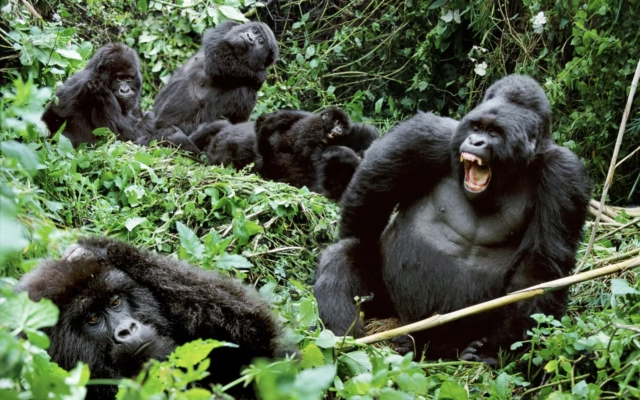
Whether you are planning a short fly-in escape from Nairobi, a photographic safari focused on river crossings, a family-friendly Kenya circuit, or a broader East Africa journey combining savannah wildlife with gorilla trekking in Bwindi Impenetrable National Park or Volcanoes National Park, the Mara deserves a central place on your itinerary.
This destination combines naturally with Serengeti National Park, Lake Nakuru National Park, Amboseli National Park, and Nairobi in a well-planned Kenya safari route.
From sunrise game drives across golden plains to hot-air balloon safaris at dawn, from wildebeest plunging into crocodile-filled channels to intimate conservancy walks, Maasai Mara safaris deliver the complete African wilderness experience.
Quick Facts About Maasai Mara National Reserve
| Feature | Details |
|---|---|
| Location | Southwestern Kenya, Narok County — bordering Tanzania’s Serengeti |
| Established | 1961 (national reserve status) |
| Size | Approximately 1,510 square kilometres (main reserve); larger with conservancies |
| Management | Narok County & Trans Mara County governments; ecosystem partners include KWS and conservancy trusts |
| Main Attractions | Great Migration, Mara River crossings, Big Five, big cats, Maasai culture, conservancies |
| Ecosystem | Greater Serengeti–Mara ecosystem (~35,500 km²), unfenced from Serengeti |
| Best Time to Visit | Year-round; July–October peak for migration & river crossings; January–March for calving in south Serengeti |
| Major Wildlife | Wildebeest, zebra, lions, leopards, cheetahs, elephants, buffalo, giraffe, hippo, crocodile |
| Bird Species | 470+ species recorded |
| Nearest Gateway | Nairobi (approximately 270 km / 5–6 hours by road) |
| Flight Access | Multiple bush airstrips including Keekorok, Mara Serena, Ol Kiombo, Musiara |
Overview of Maasai Mara National Reserve
Maasai Mara National Reserve protects the Kenyan portion of one of the world’s most productive savannah ecosystems. Unlike Kenya’s national parks managed directly by the Kenya Wildlife Service (KWS), the Mara is a national reserve administered by county governments — principally Narok County — in partnership with tourism operators, Maasai landowners, and conservancy organisations. This governance model has shaped the destination’s blend of public reserve game drives, private conservancy experiences, and community-based tourism that defines modern Mara safaris.
Located in the Rift Valley province southwest of Nairobi, the reserve forms the northern extension of the Serengeti–Mara grasslands. No fence separates the Mara from Tanzania’s Serengeti; wildebeest, zebra, and gazelle move freely in response to rainfall and grazing quality, creating the circular migration pattern that draws hundreds of thousands of visitors annually. The Mara River and its tributaries — including the Talek and Sand — cut through the landscape, creating riverine forest corridors, hippo pools, and the famous crossing points where migration herds brave crocodiles and swift currents.

The landscape is classic East African savannah: rolling grass plains dotted with acacia trees, seasonal marshes, and rocky outcrops. The Oloololo Escarpment marks the western boundary, while conservancies radiate outward from the reserve core, offering lower vehicle densities and activities such as night drives and guided walks where permitted. Together, the main reserve and surrounding conservancies — including Mara North, Naboisho, Olare Motorogi, and the Mara Triangle managed by the Mara Conservancy — create one of Africa’s most diverse safari destinations.
For safari travelers, Maasai Mara safaris represent the pinnacle of Kenyan wildlife tourism. Lion densities are among the highest in Africa, cheetahs hunt open plains with remarkable visibility, and leopards inhabit riverine woodland along the Mara and Talek systems. Elephants traverse the ecosystem year-round, buffalo gather in large herds, and Maasai giraffes browse acacia canopies. Black rhino occur in small numbers, particularly in the Mara Triangle, though the Mara is primarily celebrated for cats and migration spectacle rather than rhino-focused safaris.
The Maasai people have inhabited this landscape for centuries, and their pastoral traditions remain intertwined with conservation and tourism. Responsible operators work with Maasai communities through conservancy leases, cultural visits, and employment — relationships that help sustain wildlife habitat outside formal reserve boundaries. Understanding this human context deepens appreciation for why the Mara remains intact while many other African grasslands have been converted to agriculture.
The reserve is best understood through its major zones, each offering distinct access points, lodges, and seasonal highlights.
Mara Triangle (North-West)
Managed by the Mara Conservancy (Mara Triangle), this western sector includes some of the most productive game-viewing areas and key Mara River crossing points. The Oloololo Gate and Serena area provide access to open plains, riverine forest, and the dramatic landscapes where migration herds often concentrate between July and October.
Central & Eastern Mara
Sekenani, Talek, and Ololaimutia gates serve the central and eastern sectors, where rolling grasslands support resident predators and general game year-round. This zone includes many mid-range and budget camps and offers strong wildlife viewing even outside peak migration months.
Mara River Corridor
The river system is the ecosystem’s lifeline — sustaining hippos, crocodiles, waterbirds, and riverine species while providing the migration’s most photographed obstacle. Main crossing points shift with herd movements; experienced guides monitor conditions daily during peak season.
Surrounding Conservancies
Private conservancies on Maasai-owned land surround the reserve, offering exclusive game drives, walking safaris, night drives, and lower vehicle numbers. Naboisho, Mara North, Olare Motorogi, and Lemek are among the best-known, each with distinct character and lodge portfolios.
Maasai Mara National Reserve integrates beautifully into broader East Africa itineraries. Travelers often combine the Mara with Lake Nakuru for rhino and flamingo, Amboseli for elephants and Kilimanjaro views, or fly onward to Entebbe or Kigali for gorilla trekking in Uganda and Rwanda.
Why Visit Maasai Mara National Reserve?
The Mara earns its global reputation through a combination of wildlife density, migration drama, photographic opportunity, and itinerary flexibility that few destinations can match.
The Great Migration
Between roughly July and October, enormous herds of wildebeest and zebra cross from Tanzania into Kenya, often pausing along the Mara River before attempting dangerous crossings. This is one of nature’s greatest spectacles — unpredictable, raw, and unforgettable.
Exceptional Big Cat Viewing
The Mara’s open plains and abundant prey support large lion prides, frequent cheetah sightings, and leopards along riverine corridors. For predator enthusiasts and photographers, the Mara consistently delivers.
Big Five Safari Potential
Lions, leopards, elephants, and buffalo are reliably encountered. Black rhino are rare but present in protected zones such as the Mara Triangle, allowing Big Five-focused itineraries with appropriate planning.
Conservancy Experiences
Private conservancies offer night drives, walking safaris, and exclusive game viewing with fewer vehicles — a compelling complement to main-reserve drives during peak season.
Maasai Cultural Heritage
Community visits, cultural centres, and conservancy partnerships provide meaningful engagement with Maasai traditions, crafts, and pastoral life beyond standard game drives.
East Africa Itinerary Anchor
The Mara’s flight and road connections to Nairobi, combined with logical links to Tanzania’s Serengeti and Uganda–Rwanda gorilla parks, make it the natural centrepiece of multi-country safaris.
Top Things to Do in Maasai Mara National Reserve
Maasai Mara safaris centre on game drives across open grasslands, migration tracking along the Mara River, and predator viewing that ranks among the best in Africa. Most visitors explore the main reserve by 4×4 with licensed guides, while conservancy stays add walking safaris, night drives, and lower-density wildlife encounters.
Morning and afternoon game drives reveal lion prides on the plains, cheetahs scanning for prey, elephants moving between browsing areas, and — during migration season — vast herds stretching to the horizon. Hot-air balloon safaris at dawn offer a spectacular aerial perspective over the Mara, followed by bush breakfasts on the plains. Cultural visits to Maasai villages and community conservancies add human dimension to the wildlife experience.
Travellers with extra time often combine Mara game drives with Serengeti extensions, Nairobi city stops, or cross-border routes linking Kenya savannah with gorilla trekking in Bwindi or Volcanoes National Park.
Game Drives
Morning and afternoon wildlife safaris across the reserve and conservancies.
Explore Maasai Mara Wildlife & Game Drives
Great Migration & River Crossings
Track wildebeest and zebra herds and witness dramatic Mara River crossings in season.
Big Cat & Big Five Viewing
Search for lions, leopards, cheetahs, elephants, and buffalo across the ecosystem.
Hot-Air Balloon Safari
Float above the plains at sunrise for panoramic views and a champagne bush breakfast.
Bird Watching
Discover 470+ species from raptors and bustards to riverine kingfishers and migrants.
Explore Maasai Mara Bird Watching
Maasai Cultural Visits
Engage respectfully with Maasai communities through guided cultural experiences.
Conservancy Night Drives & Walks
Experience nocturnal wildlife and guided bush walks in private conservancy zones.
Learn more about things to do in Maasai Mara National
Game Drives in Maasai Mara National Reserve
Game drives are the foundation of every Maasai Mara safari. The reserve’s open terrain, reliable wildlife concentrations, and extensive track network make vehicle-based viewing exceptionally productive throughout the year — not only during migration season.
Morning drives departing at or before sunrise offer cooler temperatures, active predators, and golden light prized by photographers. Lion prides often remain visible on plains after night hunts, cheetahs position on termite mounds to scan for prey, and hyenas return to den sites. As the day warms, wildlife concentrates near shade, water, and riverine corridors.
Afternoon and evening drives reveal different behaviour: elephants moving to water, hippos emerging from Mara River pools, and predators becoming active as temperatures drop. During migration months, herds may shift position dramatically within hours — making experienced guiding essential for positioning at river crossing points.
Key game-drive zones within Maasai Mara National Reserve include:
- Mara Triangle — river crossings, rhino territory, varied terrain
- Central plains near Talek — resident predators and general game
- Mara River corridor — hippos, crocodiles, leopards, waterbirds
- Oloololo Escarpment approaches — scenic vistas and varied habitat
- Conservancy zones — lower traffic, night drives, walking options
Wildlife commonly encountered during game drives in the Maasai Mara includes:
- Lions (including large prides)
- Leopards
- Cheetahs
- Spotted hyenas
- African elephants
- African buffaloes
- Maasai giraffes
- Plains zebras
- Blue wildebeest (seasonal migration herds)
- Topi, impala, Thomson’s and Grant’s gazelles
- Hippos and Nile crocodiles (Mara River system)
Regulations require staying on designated tracks in the main reserve and following guide instructions around river crossings, where vehicle congestion can stress wildlife. Conservancy rules vary by property but generally emphasise respectful distances and limited numbers at sightings.
Great Migration & Mara River Crossings
The Great Migration is the Mara’s defining natural event — a continuous cycle of movement involving more than a million wildebeest and hundreds of thousands of zebra and gazelle across the Serengeti–Mara ecosystem. Although the migration is often described as a single annual journey, it is better understood as a year-round pattern driven by rainfall, grass quality, and predator pressure.
Between approximately July and October, herds typically enter Kenya from Tanzania, congregating along the Mara River before attempting crossings. These moments are among safari’s most dramatic: animals mass on steep banks, hesitate at the water’s edge, then plunge into currents patrolled by enormous Nile crocodiles. Survivors scramble up opposite banks while predators wait inland. No two crossings are identical, and timing depends on weather, herd position, and river level.
Main crossing areas include points along the Mara River in the Mara Triangle and central reserve, though exact locations shift daily. Experienced guides share radio networks and river monitoring intelligence during peak season, but patience remains essential — crossings cannot be scheduled.
Outside the Mara season, migration herds may be in Tanzania’s southern Serengeti (calving typically January–March), western corridor (Grumeti crossings May–July), or northern Serengeti. This is why combining Serengeti National Park with the Mara creates the most complete migration itinerary.
Even without migration herds present, the Mara sustains impressive resident wildebeest and zebra populations, and predator viewing remains outstanding year-round.
Mara Conservancies
The conservancy model has transformed Mara tourism over the past two decades. Maasai landowners lease land to tourism partners, creating private wildlife zones that buffer the main reserve while generating community income. Visitors staying in conservancy camps typically enjoy exclusive game drives, guided walks, night drives, and lower vehicle densities than the public reserve during peak migration.
Major conservancies include:
- Mara North Conservancy — excellent cat viewing, luxury and mid-range camps
- Naboisho Conservancy — low-density tourism, strong predator populations
- Olare Motorogi Conservancy — premium lodges, quality wildlife
- Lemek Conservancy — accessible wildlife with community focus
- Mara Triangle — separately managed western reserve sector with strong anti-poaching
Conservancy fees are separate from main reserve park fees. Packages usually include these costs, but independent travellers should confirm fee structures with operators. The conservancy experience complements rather than replaces main-reserve drives — many itineraries combine both for maximum coverage.
Wildlife in Maasai Mara National Reserve
Maasai Mara wildlife thrives in one of Africa’s most intact savannah ecosystems. Open grasslands support enormous prey populations, which in turn sustain exceptional predator numbers. Riverine forest along the Mara and Talek rivers adds leopard habitat, while escarpment woodland provides variety across the landscape.
Predators
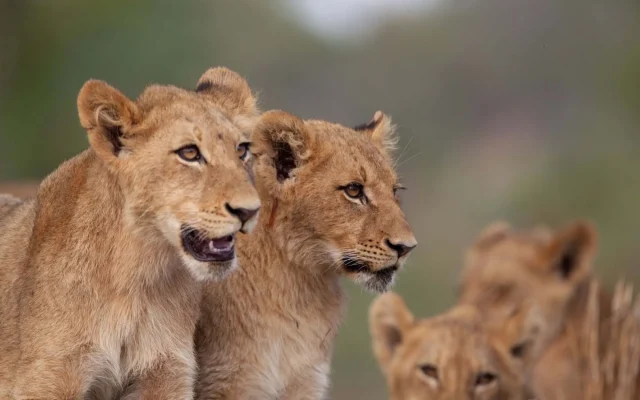
Lion prides are the Mara’s signature predators, often seen hunting or resting on plains in family groups. Cheetahs utilise termite mounds and vehicle tracks as vantage points across open country. Leopards inhabit riverine woodland and are regularly sighted along the Mara River, Talek River, and conservancy drainage lines. Spotted hyenas compete fiercely with lions and are abundant throughout the ecosystem.
Herbivores & Migration Species
Blue wildebeest and plains zebra dominate migration narratives, but resident populations remain significant year-round. Maasai giraffes, African elephants, African buffaloes, topi, impala, hartebeest, and gazelles graze the plains in all seasons.
River Wildlife
The Mara River supports dense hippo populations and large Nile crocodiles — the latter infamous for migration-season predation. Waterbirds, fish eagles, and kingfishers thrive along riverbanks.
Black Rhino
Black rhino are rare in the Mara but present in protected sectors, particularly the Mara Triangle where conservation efforts continue. Rhino should not be expected on standard itineraries, but dedicated searching in appropriate zones can reward patient travellers.
Read full Maasai Mara wildlife guide
Bird Watching in Maasai Mara National Reserve
With more than 470 bird species recorded, Maasai Mara bird watching rewards specialists and general safari travellers alike. Grassland raptors, riverine species, and Palearctic migrants create exceptional avian diversity across seasons.
Notable species include secretary birds, martial eagles, bateleurs, lilac-breasted rollers, crowned cranes, saddle-billed storks, African fish eagles, and numerous vultures essential to the ecosystem’s cleanup role. Wet season brings migratory waders and waterfowl to seasonal pools.
Birding integrates naturally with game drives — dawn hours are particularly productive. Specialist birding guides add significant value for target species and call identification.
Read full Maasai Mara bird watching guide
Best Time to Visit Maasai Mara National Reserve
The best time to visit the Maasai Mara depends on whether migration spectacle, predator viewing, birding, or lower crowds matter most. The reserve rewards visitors in every month.
Migration Season (July to October)
Peak period for herds entering Kenya and Mara River crossings. Lodges fill early; fees and vehicle congestion are highest. Wildlife viewing is spectacular but requires advance booking.
Green Season (November to May)
Rains bring lush plains, newborn antelope, excellent birding, and fewer visitors. Some tracks become muddy, but predator viewing remains strong and photography benefits from dramatic skies and saturated colours.
Calving Season (Southern Serengeti, January to March)
Not in the Mara itself, but critical for full migration itineraries — wildebeest calving occurs on Tanzania’s short-grass plains before herds move northward.
Read full best time to visit guide
How to Get to Maasai Mara National Reserve
Reaching Maasai Mara National Reserve is straightforward via road from Nairobi or by scheduled and charter flights to multiple bush airstrips.
By Road from Nairobi
Road transfers take approximately five to six hours via Narok, depending on gate destination (Sekenani, Talek, Oloololo, or Musiara). Most safari packages include private 4×4 vehicles with driver-guides. The route passes through the Great Rift Valley with scenic viewpoints en route.
By Air
Scheduled flights from Wilson Airport (Nairobi) to Mara airstrips — including Keekorok, Mara Serena, Ol Kiombo, and Musiara — take under an hour. Fly-in safaris suit travellers with limited time or those combining multiple parks by air.
From Tanzania
Overland routes from the Serengeti cross the Kenya–Tanzania border at Isibania/Sirari for travellers on multi-country itineraries. Visa requirements and border timing must be planned in advance.
Park Fees & Conservancy Charges
Reserve entry fees are collected at gates; conservancy and Mara Triangle fees apply separately. Licensed operators typically handle payments. Confirm current fee schedules when budgeting — rates differ for residents and non-residents.
Where to Stay in Maasai Mara National Reserve
Maasai Mara accommodation spans luxury safari lodges, tented camps, mid-range properties, and budget camps both inside the reserve and in surrounding conservancies. Location determines drive times to river crossings, predator zones, and gate access.
Inside the Reserve
Properties within the main reserve offer direct access to core game areas but may experience higher vehicle traffic during peak migration.
Conservancy Camps
Conservancy lodges provide exclusive drives, walking safaris, and night drives with fewer vehicles — ideal for travellers prioritising intimacy over minimum cost.
Mara Triangle
Western lodges near the Mara Triangle excel for river-crossing access and varied terrain including rhino-range areas.
Budget & Mid-Range
Options near Talek Gate and Sekenani serve overland travellers and group safaris at accessible price points.
Book six to twelve months ahead for July–October migration peaks. Green-season travel often offers better availability and promotional rates.
Where to stay in Maasai Mara National
Maasai Mara Safari Tours
Maasai Mara safari tours suit first-time Kenya visitors, migration photographers, families, and multi-country East Africa travellers.
3 Day Maasai Mara Safari
A compact fly-in or road itinerary with two full days of game drives — workable but tight for a reserve of this scale.
Explore 3 Day Maasai Mara Safaris
4–5 Day Mara Wildlife Safari
The recommended minimum for relaxed game drives, conservancy exploration, and reasonable migration-tracking flexibility.
Explore 4–5 Day Maasai Mara Safaris
Mara & Serengeti Migration Circuit
Combine Kenya and Tanzania for complete Great Migration coverage across river crossings and calving plains.
Kenya Highlights Safari
Link the Mara with Lake Nakuru, Amboseli, and Nairobi for a classic Kenya circuit.
East Africa Gorilla & Savannah Combo
Pair Mara wildlife with mountain gorilla trekking in Bwindi Impenetrable National Park (Uganda) or Volcanoes National Park (Rwanda) — one of the continent’s most sought-after multi-country itineraries.
Photography & Balloon Safaris
Specialist departures focused on river crossings, predator behaviour, and dawn balloon flights over the plains.
Maasai Mara National Reserve FAQs
- Is Maasai Mara National Reserve worth visiting?
-
Absolutely. Maasai Mara National Reserve is one of Africa’s most rewarding safari destinations, offering exceptional predator viewing, Great Migration spectacle, Big Five potential, conservancy experiences, and strong links to broader Kenya and East Africa itineraries.
- When is the best time to see the Great Migration in the Maasai Mara?
-
Herds typically enter Kenya between roughly July and October, with Mara River crossings most likely during this window. Exact timing varies annually with rainfall. For calving on the short-grass plains, visit southern Serengeti around January–March.
- Can you see the Big Five in the Maasai Mara?
-
Yes, with planning. Lions, leopards, elephants, and buffalo are reliably seen. Black rhino are rare but present in sectors such as the Mara Triangle. The Mara is best known for cats and migration rather than rhino-focused safaris.
- How many days do you need in the Maasai Mara?
-
Three to four nights (four to five days) is the recommended minimum for relaxed game drives, conservancy time, and migration flexibility. Two nights works for fly-in travellers with limited time but feels rushed during peak season.
- How do I get to the Maasai Mara from Nairobi?
-
Road transfers take approximately five to six hours via Narok. Scheduled and charter flights from Wilson Airport to Mara bush airstrips take under an hour. Most international visitors book road or fly-in packages through licensed operators.
- What is the difference between the Maasai Mara and Serengeti?
-
They form one ecosystem divided by a national border. The Serengeti is Tanzania’s vast national park; the Maasai Mara is Kenya’s northern grassland extension. Migration herds move between both. Combining both destinations delivers the most complete migration experience.
- What are Mara conservancies?
-
Conservancies are Maasai-owned lands leased for tourism, surrounding the main reserve. They offer lower vehicle densities, night drives, and walking safaris where permitted. Fees are separate from main reserve entry charges.
- Is the Maasai Mara managed by Kenya Wildlife Service?
-
The Mara is a national reserve managed by Narok and Trans Mara county governments, unlike KWS-administered national parks such as Amboseli or Lake Nakuru. KWS remains central to Kenya’s wider wildlife policy, and the Mara works within national conservation frameworks alongside conservancy partners.
- Can I combine the Maasai Mara with gorilla trekking?
-
Yes. Fly from Nairobi to Entebbe or Kigali for gorilla trekking in Bwindi Impenetrable National Park or Volcanoes National Park. This savannah-and-gorilla combination is among East Africa’s most popular multi-country itineraries.
- Is the Maasai Mara safe for safari travellers?
-
Yes. The Mara is visited safely by hundreds of thousands of travellers annually through licensed operators and established lodges. Follow guide instructions around wildlife, river crossings, and park regulations at all times.
Nearby Destinations to Combine with Maasai Mara National Reserve
One of the greatest strengths of Maasai Mara National Reserve is its position within East Africa’s premier safari network. The reserve connects logically to Tanzania’s Serengeti, Kenya’s Rift Valley parks, Nairobi gateway services, and cross-border gorilla trekking destinations in Uganda and Rwanda.
Serengeti National Park
Tanzania's Serengeti continues the migration story south of the border — unfenced from the Mara and essential for calving plains, Grumeti crossings, and complete Great Migration itineraries.
Lake Nakuru National Park
A KWS-managed Rift Valley park famous for rhino sanctuary, flamingo-lined shores, and acacia woodland wildlife — a strong Kenya circuit partner between Nairobi and the Mara.
Amboseli National Park
Kenya's elephant heartland beneath Mount Kilimanjaro pairs beautifully with the Mara for a classic Big Five and scenery combination on southern and western Kenya routes.
Nairobi
Kenya's capital is the main gateway for Mara road and air transfers — ideal for arrival logistics, city culture, and pre- or post-safari extensions before heading southwest.
Bwindi Impenetrable National Park
For East Africa combo itineraries, Bwindi's mountain gorilla trekking complements Mara savannah wildlife in one of the continent's most sought-after Kenya–Uganda safari pairings.
Volcanoes National Park
Rwanda's Volcanoes National Park offers shorter gorilla trekking access from Kigali — a natural extension after Mara game drives for multi-country savannah and rainforest adventures.
Nearby destinations to combine
Plan Your Maasai Mara Safari
Maasai Mara National Reserve remains one of Africa’s defining safari destinations — a landscape where migration herds darken the horizon, lions command the grasslands, and the Mara River holds its annual test of courage and survival. Whether you arrive by road from Nairobi or by air to a bush airstrip, the Mara delivers wildlife encounters that define the African safari dream.
From dawn balloon flights over golden plains to afternoon drives tracking cheetahs across open country, from conservancy night drives to respectful Maasai cultural encounters, every day in the Mara connects travellers to East Africa’s deepest wilderness traditions.
Our expertly crafted Kenya safari tours and East Africa combinations can be customized to match your travel dates, migration priorities, photography goals, and lodge preferences.
Whether you prefer a short Mara fly-in, a Kenya highlights circuit, a Serengeti–Mara migration route, or a gorilla-and-savannah combination linking the Mara with Bwindi or Volcanoes, we can help design the ideal safari experience.