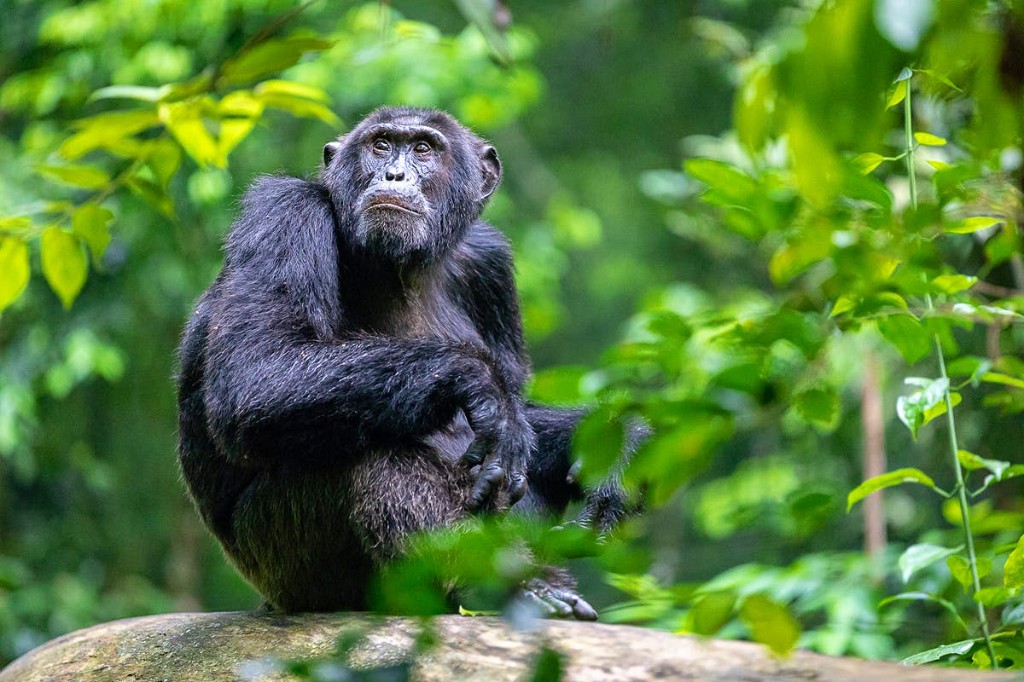
Kibale National Park is Uganda’s premier chimpanzee trekking destination and one of Africa’s most rewarding primate safari parks. Famous for exceptional chimpanzee encounters, dense tropical rainforest, extraordinary biodiversity, remarkable bird watching, and unforgettable primate experiences, this remarkable forest destination is a must-visit for travelers seeking deeper wildlife immersion beyond traditional savannah safaris.
Located in western Uganda near the foothills of the Rwenzori Mountains, Kibale National Park protects one of East Africa’s most biologically rich rainforest ecosystems. It is internationally recognized for having one of the highest densities of primates in Africa, making it a dream destination for wildlife enthusiasts, photographers, bird watchers, and travelers planning specialist Uganda primate safaris.
For many travelers, the highlight is chimpanzee trekking in Kibale National Park, where visitors track habituated chimpanzee communities through lush tropical forest in search of one of humanity’s closest living relatives.
This destination combines naturally with Queen Elizabeth National Park, Bwindi Impenetrable National Park, Lake Bunyonyi, and Murchison Falls National Park in a well-planned Uganda safari route.
Whether you are planning a focused chimpanzee safari, a broader wildlife itinerary, or a multi-destination Uganda adventure that combines gorillas, wildlife, and primates, Kibale National Park safaris offer unforgettable experiences.
Quick Facts About Kibale National Park
| Feature | Details |
|---|---|
| Location | Western Uganda |
| Established | 1993 |
| Size | Approximately 795 square kilometers |
| Main Attraction | Chimpanzee trekking |
| Ecosystem | Tropical rainforest, woodland, swamp habitats |
| Best Time to Visit | December to February & June to September |
| Primate Species | 13+ species |
| Bird Species | 375+ species |
| Nearest Gateway | Entebbe / Kampala |
| Main Nearby Town | Fort Portal |
Overview of Kibale National Park
Kibale National Park is widely regarded as Uganda’s primate capital and one of Africa’s finest rainforest wildlife destinations. Covering approximately 795 square kilometers, this biodiverse protected area preserves tropical rainforest, woodland, wetland, and grassland transition habitats that support extraordinary wildlife richness.
Situated in western Uganda near Fort Portal, the park forms part of a broader ecological landscape that links with Queen Elizabeth National Park, creating important wildlife corridors between forest and savannah ecosystems.

What makes Kibale National Park safaris truly exceptional is the density and diversity of primates. The park supports more than 13 primate species, making it one of the most important primate conservation destinations in Africa.
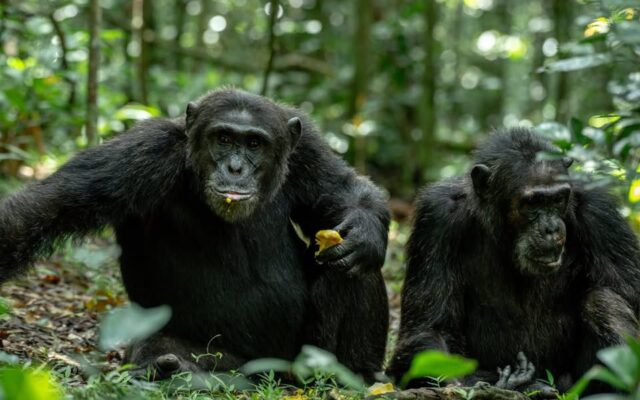
The undisputed stars are chimpanzees.
Chimpanzee trekking in Uganda reaches its finest expression in Kibale, where habituated communities allow visitors extraordinary opportunities to observe social interactions, feeding behavior, communication, grooming, movement, and dynamic forest behavior.
Unlike savannah safari parks, Kibale offers a completely immersive rainforest experience. Towering trees, dense vegetation, rich birdlife, humid forest air, and layered jungle sounds create a deeply atmospheric wildlife environment.
Beyond chimpanzees, the park supports:
- black-and-white colobus monkeys
- red colobus monkeys
- L’Hoest’s monkeys
- grey-cheeked mangabeys
- red-tailed monkeys
- blue monkeys
- baboons
- bush babies
This primate diversity makes Kibale safaris far more than a single-attraction experience.
The surrounding region also adds exceptional scenic and safari value. Crater lakes, tea plantations, nearby wetlands, cultural experiences, and convenient safari routing strengthen the destination’s appeal.
Travelers often combine Kibale National Park with Queen Elizabeth National Park, Bwindi Impenetrable National Park, Lake Bunyonyi, and Murchison Falls National Park.
Why Visit Kibale National Park?
Kibale National Park offers one of the most immersive wildlife experiences in Uganda, especially for travelers fascinated by primates and tropical forest ecosystems.
World-Class Chimpanzee Trekking
The primary reason most travelers visit is chimpanzee trekking in Kibale National Park.
Watching wild chimpanzees move through the forest canopy, communicate vocally, forage, groom, and interact socially is an unforgettable wildlife experience.
This remains one of the strongest primate experiences anywhere in Africa.
Chimpanzee Habituation Experience
Kibale offers one of Uganda’s most immersive primate experiences through extended chimpanzee habituation encounters.
This premium activity provides deeper insight into chimpanzee behavior and conservation.
Extraordinary Primate Diversity
With over 13 primate species, Kibale National Park offers unmatched primate variety in Uganda.
Exceptional Bird Watching
Forest birders find Kibale bird watching highly rewarding, with numerous sought-after forest species.
Rainforest Safari Experience
Unlike open wildlife parks, Kibale delivers immersive tropical forest adventure and ecological richness.
Excellent Safari Combinations
Kibale integrates naturally into broader Uganda safari itineraries involving gorillas, wildlife, crater lakes, and scenic destinations.
Top Things to Do in Kibale National Park
Kibale National Park safaris offer exceptional activity diversity for primate enthusiasts, birders, photographers, and immersive wildlife travelers.
Chimpanzee Trekking
The park’s signature wildlife experience.
Explore Chimpanzee Trekking in Kibale
Chimpanzee Habituation Experience
Extended immersive chimpanzee encounters with researchers and trackers.
Bird Watching
Exceptional forest birding opportunities.
Bigodi Wetland Walks
Outstanding guided wetland wildlife and birding experiences.
Nature Walks
Rainforest exploration beyond chimpanzee tracking.
Crater Lake Excursions
Scenic exploration of western Uganda’s volcanic landscapes.
Learn more about things to do in Kibale
Chimpanzee Trekking in Kibale National Park
Chimpanzee trekking in Kibale National Park is one of Uganda’s most exciting wildlife experiences and remains the defining attraction for visitors to this remarkable rainforest destination.
Tracking wild chimpanzees through the tropical rainforest of Kibale National Park offers a completely different wildlife experience from traditional savannah safaris. The forest is alive with movement, layered bird calls, rustling leaves, distant vocalizations, and the anticipation of encountering one of humanity’s closest relatives in their natural habitat.
Chimpanzee trekking begins with an early morning briefing led by experienced park guides and rangers. Visitors receive orientation on trekking procedures, chimpanzee behavior, safety expectations, and responsible wildlife viewing protocols before entering the forest.
Treks vary depending on chimpanzee movement and forest conditions, but sightings are often highly rewarding due to Kibale’s strong chimpanzee population and well-established tracking programs.
Once located, visitors spend valuable time observing the chimpanzees as they move through the forest, forage, groom, vocalize, interact socially, and display remarkable intelligence and human-like behavior.
Few wildlife encounters feel as dynamic and energetic as chimpanzee trekking in Uganda.
Because chimpanzees are highly active, sightings often involve movement through branches and rapid changes in position, creating an exciting and immersive forest tracking experience.
Travelers planning Kibale National Park safaris should bring:
- comfortable hiking shoes
- lightweight long trousers
- long-sleeved shirts
- rain jacket
- insect repellent
- water bottle
- camera
- daypack
For travelers seeking deeper primate immersion, the Chimpanzee Habituation Experience offers extended encounters.
Chimpanzee Habituation Experience in Kibale
For serious wildlife enthusiasts, photographers, and primate-focused travelers, the Chimpanzee Habituation Experience in Kibale National Park offers one of Uganda’s most immersive wildlife activities.
Unlike standard trekking, this premium experience allows significantly extended time with chimpanzees alongside researchers, trackers, and conservation teams working with partially habituated communities.
This creates exceptional opportunities for:
- behavioral observation
- wildlife photography
- conservation insight
- deeper forest immersion
- longer primate encounters
Travelers seeking richer primate experiences often consider this one of Uganda’s most rewarding specialized activities.
Wildlife in Kibale National Park
Although chimpanzees define the destination, Kibale National Park wildlife extends far beyond a single primate species.
This richly biodiverse rainforest ecosystem supports remarkable wildlife diversity, making every forest excursion potentially rewarding.
Chimpanzees
The park’s flagship attraction, chimpanzees remain the primary wildlife draw for most visitors.
Their intelligence, social complexity, and dynamic behavior make them among Africa’s most compelling wildlife encounters.
Other Primates
Kibale National Park supports one of Africa’s richest primate communities, including:
- black-and-white colobus monkeys
- red colobus monkeys
- L’Hoest’s monkeys
- grey-cheeked mangabeys
- red-tailed monkeys
- blue monkeys
- olive baboons
- bush babies
This diversity makes Kibale safaris exceptionally rewarding for primate enthusiasts.
Forest Mammals
Other wildlife may include:
- forest antelope
- bush pigs
- small carnivores
- rodents
- rare forest mammals
Dense forest conditions make mammal sightings less predictable than open savannah parks, but the ecological richness is undeniable.
Read more about wildlife in Kibale
Bird Watching in Kibale National Park
Bird watching in Kibale National Park is highly rewarding, particularly for forest bird enthusiasts seeking specialized species not commonly encountered in savannah parks.
With more than 375 recorded species, the park offers strong avian diversity across forest, swamp, edge habitat, and nearby wetland ecosystems.
Birders may encounter:
- African pitta
- green-breasted pitta
- great blue turaco
- black bee-eater
- yellow-spotted barbet
- forest hornbills
- woodpeckers
- sunbirds
Nearby wetland habitats, especially Bigodi Wetland Sanctuary, further strengthen birding opportunities.
Specialist birders often include Kibale as a core component of Uganda birding itineraries.
Bird watching guide for Kibale
Bigodi Wetland Sanctuary
One of the most rewarding complementary experiences to Kibale National Park safaris is a guided visit to Bigodi Wetland Sanctuary.
This community-managed wetland habitat offers exceptional bird watching, monkey sightings, wetland ecology experiences, and meaningful conservation tourism.
Visitors may encounter:
- monkeys
- wetland birds
- butterflies
- small mammals
- community-guided nature interpretation
Bigodi adds excellent biodiversity variety to primate-focused itineraries.
Best Time to Visit Kibale National Park
The best time to visit Kibale National Park depends on trekking priorities, photography preferences, and seasonal travel goals, but chimpanzee trekking is possible throughout the year.
Dry Season
The most popular travel periods include:
- December
- January
- February
- June
- July
- August
- September
During these months:
- forest trails are generally easier to navigate
- trekking becomes more comfortable
- photography improves
- travel logistics are often easier
Wet Season
Rainier months bring lush forest scenery, active birdlife, dramatic rainforest atmosphere, and fewer visitors, though trails may become muddier and more physically demanding.
Best time to visit Kibale — full guide
Weather & Climate in Kibale National Park
Kibale National Park experiences a humid tropical rainforest climate characterized by relatively stable temperatures, frequent rainfall, lush vegetation, and rich year-round biodiversity. Unlike Uganda’s open savannah parks, Kibale’s dense forest ecosystem creates cooler, shaded trekking conditions but consistently higher humidity.
Temperatures generally range between 14°C and 27°C depending on time of day, altitude, and seasonal rainfall patterns. Mornings are often cool and pleasant, while daytime trekking may feel warmer due to humidity and physical activity.
Rainfall can occur throughout the year, which is typical for tropical rainforest environments.
Drier Periods
The relatively drier travel months usually offer:
- easier chimpanzee trekking conditions
- less muddy trails
- improved hiking comfort
- stronger photography conditions
- more predictable travel logistics
Rainier Periods
Rainier months transform the forest into an intensely lush wildlife environment, with dramatic vegetation, active bird life, and fewer tourists, though trekking may become more physically demanding.
Travelers planning Kibale National Park safaris should pack lightweight trekking gear, waterproof protection, and suitable forest footwear.
How to Get to Kibale National Park
Accessing Kibale National Park is straightforward, making it one of Uganda’s most convenient major primate safari destinations.
By Road from Kampala or Entebbe
Road transfers remain the most common access option for Kibale safari tours.
Approximate travel times:
- Kampala to Kibale: 5–7 hours
- Entebbe to Kibale: 6–8 hours
The journey passes scenic western Uganda landscapes, tea-growing regions, and crater country, making overland access enjoyable as part of broader itineraries.
By Road from Queen Elizabeth National Park
One of Uganda’s strongest safari combinations connects Kibale National Park with Queen Elizabeth National Park.
Approximate transfer time:
- 2–4 hours depending on route and safari logistics
This combination creates an excellent wildlife and primate itinerary.
By Road from Bwindi
Travelers combining gorillas and chimpanzees often route between Bwindi Impenetrable National Park and Kibale as part of longer primate-focused safaris.
Domestic Flights
Fly-in safari options may be arranged through nearby regional air access depending on itinerary design, though road access remains more common for Kibale.
Private Safari Transfers
Private guided transfers remain ideal for customized multi-destination Uganda safari itineraries.
How to get to Kibale — routes & drive times
Where to Stay in Kibale National Park
Accommodation near Kibale National Park ranges from luxury forest lodges and boutique safari retreats to comfortable mid-range properties and affordable traveler-friendly options.
Your accommodation choice depends on safari style, chimpanzee trekking plans, comfort preferences, and broader itinerary routing.
Luxury Forest Lodges
Luxury accommodation offers immersive rainforest comfort, premium service, scenic forest settings, and exceptional safari experiences.
Luxury travelers often prioritize:
- exclusive forest settings
- premium dining
- high-end service
- private safari experiences
- photographic comfort
Luxury Kibale safari lodges are particularly attractive for honeymooners and premium safari travelers.
Mid-Range Lodges
Mid-range accommodation provides excellent comfort and value for travelers seeking quality without premium pricing.
Typical features include:
- comfortable en-suite rooms
- good dining
- convenient chimp trekking access
- friendly service
- strong value
Budget Accommodation
Budget-conscious travelers can still enjoy rewarding Kibale National Park safaris through practical guesthouses and affordable safari stays.
Kibale Safari Tours
Kibale safari tours can be designed for focused chimpanzee adventures, luxury primate safaris, family wildlife combinations, birding itineraries, and broader Uganda circuits.
3 Day Kibale Chimpanzee Safari
A focused primate itinerary centered around chimpanzee trekking in Kibale National Park.
Explore 3 Day Kibale Chimpanzee Safari
Kibale & Queen Elizabeth Safari
One of Uganda’s strongest safari combinations pairing chimpanzees with classic wildlife viewing.
Explore Wildlife & Chimpanzee Safaris
Kibale & Bwindi Primate Safari
This iconic primate itinerary combines chimpanzee trekking with unforgettable mountain gorilla encounters.
Explore Gorilla & Chimpanzee Safaris
Luxury Primate Safaris
Premium travelers can enjoy high-end forest experiences, luxury accommodations, and seamless safari logistics.
Birding Safaris
Specialist birding itineraries frequently include Kibale as a core forest birding destination.
Kibale National Park FAQs
- Is Kibale National Park worth visiting?
Absolutely. Kibale National Park is Uganda’s leading chimpanzee trekking destination and one of Africa’s most rewarding primate safari parks.
- What is Kibale famous for?
The park is best known for chimpanzee trekking in Uganda, exceptional primate diversity, rainforest biodiversity, and specialist bird watching.
- How difficult is chimpanzee trekking in Kibale?
Trekking difficulty varies depending on chimpanzee movement and trail conditions, but most reasonably active travelers can participate comfortably.
- Can I combine Kibale with gorilla trekking?
Yes. Combining Kibale National Park with Bwindi Impenetrable National Park creates one of Uganda’s strongest primate safari itineraries.
- Is Kibale good for bird watching?
Yes. The park offers excellent forest birding, especially when combined with Bigodi Wetland.
- Is Kibale National Park safe?
Yes. The park is professionally managed and safely visited through licensed safari operators, guided trekking procedures, and official conservation systems.
Nearby Destinations to Combine with Kibale National Park
One of the greatest strengths of visiting Kibale National Park is its strategic location within Uganda’s premier safari circuit. The park combines effortlessly with other outstanding destinations, allowing travelers to build rich itineraries that blend primates, classic wildlife safaris, scenic escapes, and unforgettable conservation experiences.
Queen Elizabeth National Park
One of the most natural safari pairings combines Kibale National Park with Queen Elizabeth National Park.
Bwindi Impenetrable National Park
For primate enthusiasts, combining Kibale National Park with Bwindi Impenetrable National Park creates one of Africa’s most rewarding wildlife journeys.
Lake Bunyonyi
After active forest trekking, Lake Bunyonyi offers a scenic and peaceful retreat ideal for relaxation, photography, honeymoon escapes, and slower-paced itinerary transitions.
Murchison Falls National Park
Travelers seeking a broader wildlife circuit often combine Kibale safaris with Murchison Falls National Park, adding classic savannah game drives, Nile boat safaris, and dramatic waterfall scenery.
Semuliki National Park
Semuliki National Park adds unique lowland tropical forest biodiversity, hot springs, specialist birding opportunities, and distinctive ecological contrast to western Uganda itineraries.
Rwenzori Mountains National Park
Adventure travelers may combine Kibale National Park with the spectacular Rwenzori Mountains for hiking, mountain scenery, and wilderness adventure experiences.
Fort Portal & Crater Lakes
The nearby Fort Portal region offers beautiful crater lake scenery, tea plantations, scenic drives, cultural experiences, and excellent supplementary exploration opportunities around Kibale.
Nearby destinations to combine
Plan Your Kibale Safari
Kibale National Park remains one of Africa’s finest primate safari destinations, offering extraordinary chimpanzee encounters, immersive rainforest adventure, exceptional biodiversity, rich birdlife, and unforgettable conservation experiences.
Whether you are planning a focused chimpanzee trekking Uganda adventure, a luxury primate safari, a wildlife-and-primate combination, a specialist birding journey, or a broader multi-destination Uganda expedition, Kibale National Park safaris offer exceptional depth and flexibility.
From the excitement of tracking wild chimpanzees through tropical rainforest to discovering rich wetland biodiversity at Bigodi and combining unforgettable forest experiences with Uganda’s other iconic safari destinations, every journey through Kibale offers memorable wildlife immersion.
Our expertly designed Uganda safari tours can be fully customized around your travel dates, accommodation preferences, wildlife interests, and broader safari goals.
Whether you prefer luxury forest lodges, mid-range safari comfort, specialist primate itineraries, or seamless gorilla and chimpanzee safari combinations, we can help create the perfect safari experience.