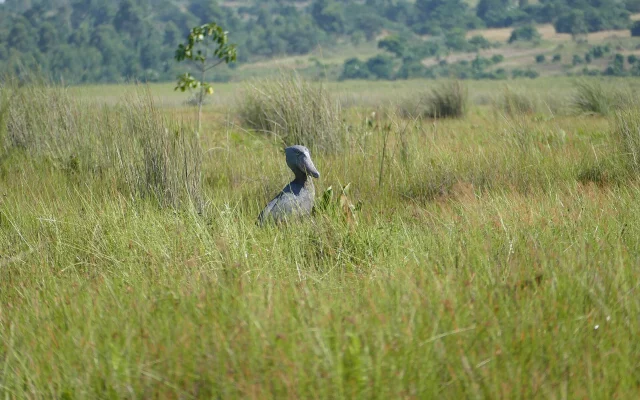
Mabamba Swamp, also known as the Mabamba Bay Wetland System, is Uganda’s most famous shoebill birding site and one of the most rewarding wetland excursions near Entebbe and Kampala. Set on the northern shore of Lake Victoria, this papyrus-fringed bay gives travelers a rare chance to search for the prehistoric-looking shoebill by canoe while still staying close to Uganda’s main international airport.
For birders, photographers, conservation travelers, and safari guests with one free morning around Entebbe, Mabamba Swamp tours are among the most practical ways to add a truly iconic Uganda wildlife experience without committing to a long overland journey. The wetland is internationally recognized as a Ramsar site and Important Bird Area, and it is especially valued for shoebills, papyrus specialists, Lake Victoria wetland birds, and community-based guiding.
The experience feels very different from a classic savannah game drive. Instead of dusty tracks and open plains, you move quietly through narrow channels of papyrus, water lilies, floating vegetation, and open pools while local guides scan for the shoebill’s heavy bill, upright stance, and patient hunting behavior. Even when the shoebill takes time to find, the swamp itself is atmospheric: fishermen work the lake edge, weavers and kingfishers flick through the reeds, and the water opens toward the wider Lake Victoria basin.
This destination combines naturally with Entebbe, Entebbe Botanical Gardens, Lutembe Bay Wetland, and Lake Victoria in a well-planned Uganda safari route.
Whether you are planning a dedicated Uganda birding safari, a short Entebbe layover activity, a photography morning, or a soft nature add-on before gorilla trekking and savannah parks, Mabamba is one of the easiest wetland destinations to justify in a Uganda itinerary.
Quick Facts About Mabamba Swamp
| Feature | Details |
|---|---|
| Official Name | Mabamba Bay Wetland System |
| Location | Northern shore of Lake Victoria, west / northwest of Entebbe |
| District Area | Wakiso and Mpigi area, close to Kasanje and Mabamba Bay |
| Conservation Status | Ramsar wetland of international importance and Important Bird Area |
| Ramsar Site Number | 1638 |
| Approximate Area | 2,424 hectares |
| Main Attraction | Shoebill tracking by canoe |
| Best For | Bird watching, photography, wetland ecology, Entebbe day trips |
| Birdlife | 300+ recorded species in and around the wider wetland area |
| Typical Visit Length | Half day from Entebbe or Kampala, longer for serious birders |
Overview of Mabamba Swamp
Mabamba Swamp is a broad papyrus marsh and Lake Victoria bay system that has become one of Uganda’s signature birding destinations. Its reputation rests on one extraordinary bird: the shoebill. This globally threatened species is difficult to see in many parts of Africa, but Mabamba remains one of the most accessible and reliable places for a respectful search.
The wetland stretches through a long, narrow bay where papyrus beds, open channels, fishing grounds, small pools, and lake-edge vegetation create varied habitat. Shoebills hunt lungfish and other aquatic prey in quiet shallows, while herons, jacanas, kingfishers, weavers, bee-eaters, raptors, and papyrus specialists use the same mosaic of reeds and water.
Unlike some remote birding sites, Mabamba is close enough to Entebbe to work as a first-day or last-day safari activity. Travelers arriving through Entebbe International Airport can often include a guided Mabamba shoebill tour before heading to Uganda safaris in Bwindi, Kibale, Queen Elizabeth, Murchison Falls, or Lake Mburo. For serious birders, it can also serve as the first wetland stop on a longer Uganda birding circuit.
The visitor experience is usually community-based. Local guides and boatmen know the channels, feeding areas, recent shoebill movements, and the rhythm of the water. This makes the trip more than a checklist birding stop: it supports local livelihoods and gives the surrounding community a practical reason to protect the wetland.
Because Mabamba is a working landscape as well as a conservation site, visitors also see how local fishing, papyrus use, transport, and small-scale agriculture interact with wetland protection. That human side is part of the destination’s character and should be approached with patience, respect, and realistic expectations.
Why Visit Mabamba Swamp?
Mabamba is not a large national park with lodges, big mammals, and multi-day safari infrastructure. Its value is more focused and, for the right traveler, extremely high. It is a compact wetland experience that can deliver one of Africa’s most sought-after bird sightings within easy reach of Entebbe.
Uganda’s Most Accessible Shoebill Site
The shoebill is the main reason most travelers visit. Mabamba offers a realistic chance to search for this remarkable bird without needing a remote expedition. Sightings are never guaranteed, because this is wild birding, but local knowledge, canoe access, and resident shoebill territories make the swamp one of Uganda’s strongest options.
Excellent Start or End to a Safari
Mabamba works beautifully at the beginning or end of a Uganda itinerary. It is close enough to Entebbe for a morning excursion before an afternoon hotel rest, a late flight, or the first long drive into the safari circuit. It also gives travelers an immediate sense of Uganda’s biodiversity before they move inland.
Specialist Wetland Birding
Beyond the shoebill, Mabamba offers papyrus and wetland birding that complements forest and savannah destinations. Birders can build a more complete Uganda list by combining Mabamba with forest sites such as Kibale and Budongo, savannah parks such as Murchison Falls and Queen Elizabeth, and highland areas around Bwindi or Mgahinga.
Community-Based Tourism
The wetland’s birding economy is closely tied to local guides and canoe operators. A well-organized visit supports people living around the bay and reinforces the value of keeping shoebills and papyrus habitat alive.
Soft Adventure for Non-Birders
Even travelers who are not expert birders can enjoy Mabamba. The canoe journey is peaceful, the scenery is distinctive, and the shoebill is dramatic enough to impress anyone with an interest in nature, photography, or unusual wildlife.
Shoebill Tracking at Mabamba Swamp
Shoebill tracking in Mabamba Swamp is the centerpiece of the destination. The activity is usually done by canoe or small boat with a local guide, moving slowly through channels and open patches of wetland where shoebills may hunt.
The shoebill, Balaeniceps rex, is one of Africa’s most distinctive birds. Its massive shoe-shaped bill, tall frame, slow movements, and intense stare make it feel almost prehistoric. In Mabamba, guides look for birds standing in shallow water, watching for lungfish or other prey. When a shoebill is found, the best guides keep a respectful distance and position the canoe without crowding or flushing the bird.
A good shoebill outing is patient rather than rushed. Some mornings produce quick sightings; other days require quiet searching, local updates, and movement between channels. The reward is not only the bird itself but the sense of entering a wetland world where papyrus, fishermen, waterbirds, and conservation all meet.
For photographers, early light is usually best. Morning visits also tend to be cooler and calmer, with better bird activity and more comfortable boat conditions. Long lenses are useful, but visitors should avoid pressuring guides to move too close. Ethical shoebill viewing protects the experience for the next traveler and the next breeding season.
Read more about bird watching in Mabamba Swamp
Bird Watching in Mabamba Swamp
Although the shoebill dominates the headlines, bird watching in Mabamba Swamp is much broader than a single species. The bay supports a rich mix of papyrus specialists, Lake Victoria wetland birds, waterbirds, raptors, migrants, and farmland-edge species.
Commonly sought birds and possible highlights include shoebill, African jacana, malachite kingfisher, pied kingfisher, African fish eagle, purple heron, long-toed lapwing, blue-breasted bee-eater, swamp flycatcher, papyrus gonolek, papyrus yellow warbler, African pygmy goose, palm-nut vulture, and seasonal migrants. Exact lists vary by water level, season, guide effort, and how much time you spend on the wetland and surrounding tracks.
For serious birders, Mabamba should be treated as a half-day minimum. A short shoebill-only visit can be rewarding, but a slower birding plan gives time to scan papyrus edges, cultivated margins, open water, and nearby woodland patches. The wetland also pairs well with Entebbe Botanical Gardens, Lutembe Bay, Mabira Forest, and other accessible birding sites around central Uganda.
Birding here is best with a guide who understands both the shoebill territories and the smaller papyrus species. Some of the most interesting birds are not always obvious to casual visitors, so expert identification improves the value of the trip.
Bird watching guide for Mabamba Swamp
Wildlife and Wetland Ecology
Mabamba is primarily known as a birding destination, but its ecology is richer than the bird list alone. The wetland provides habitat, breeding ground, feeding areas, and natural services for the Lake Victoria basin. Papyrus filters water, stores carbon, supports fisheries, and protects surrounding communities from some forms of flooding and shoreline pressure.
The shoebill’s relationship with lungfish is central to Mabamba’s story. Lungfish are valuable to both shoebills and local fishermen, and that overlap once created tension. Community tourism has helped shift attitudes by making the living shoebill more valuable as an attraction than as a competitor. A responsible Mabamba tour therefore supports conservation indirectly through local income.
Other wildlife may include monitor lizards, frogs, fish, butterflies, and, with luck, wetland mammals such as sitatunga in suitable swamp habitat. Large mammal viewing is not the reason to come, but the wetland still offers an intimate look at Uganda’s freshwater ecosystems.
Visitors should remember that Mabamba is not a manicured tourism park. Water levels, vegetation growth, fishing activity, weather, and bird movements all influence the day. That variability is part of nature-based travel, and the best experience comes when travelers allow the wetland to set the pace.
Explore wildlife notes for Mabamba Swamp
Top Things to Do at Mabamba Swamp
Most activities at Mabamba are simple, low-impact, and nature-focused. The destination is not about rushing between attractions; it is about entering the wetland slowly and making the most of local guiding knowledge.
Shoebill Canoe Tour
This is the classic Mabamba experience. Travelers board a canoe or small boat with a local guide and search the papyrus channels for shoebills. The pace is quiet, and the best trips balance patience with respect for the bird.
General Wetland Birding
Birders can extend the outing beyond the shoebill search to look for papyrus gonolek, kingfishers, jacanas, bee-eaters, raptors, herons, and seasonal migrants. A full morning is much better than a rushed stop.
Photography
Mabamba is excellent for moody wetland photography: canoes in papyrus channels, fishermen on Lake Victoria, kingfishers on reeds, and, if lucky, a shoebill standing in open water.
Community Guiding Experience
The local guide system is an important part of the visit. Travelers learn how tourism, fishing, conservation, and wetland use interact around Mabamba Bay.
Entebbe Birding Combination
Mabamba combines well with Entebbe Botanical Gardens, the Lake Victoria shoreline, or a relaxed night near the airport. This is especially useful for travelers with limited time.
See things to do in Mabamba Swamp
Best Time to Visit Mabamba Swamp
Mabamba can be visited year-round, but the quality of the outing depends on weather, water levels, and bird activity. The shoebill is resident in the wider wetland system, so the question is less about whether the bird exists and more about comfort, visibility, and how much time you can spend searching.
Morning Visits
Morning is usually the preferred time. Temperatures are cooler, wind is often lighter, bird activity is stronger, and the light is better for photography. If you are serious about the shoebill, avoid planning the outing as a rushed late-afternoon afterthought.
Dry Season
Drier months can make road access easier and may produce calmer logistics. However, dry-season pressure on the wetland and fishing activity can influence movement in some areas. Guides will advise based on current conditions.
Rainy Season
Wet months can be lush and bird-rich, but showers, muddy access roads, and changing water levels require flexibility. A rain jacket, dry bag, and patient schedule help.
Migration Periods
Birders interested in migrants may find the wider October to March period rewarding, especially when combining Mabamba with other wetlands. The exact species mix varies from year to year.
Plan the best time to visit Mabamba Swamp
How to Get to Mabamba Swamp
Mabamba is one of the easiest major birding sites to reach from Entebbe and Kampala, but the best route depends on your starting point, budget, group size, and tolerance for local transport delays.
From Entebbe
From Entebbe, travelers may reach Mabamba by road around the northern and western side of the bay, or by a lake-based approach depending on arrangements. Organized tours often simplify timing because they coordinate vehicle, boat, guide, and local landing logistics.
From Kampala
From Kampala, allow enough time for traffic, rougher local roads, and the boat activity itself. A very early departure is best if the focus is shoebill tracking. Kampala-based travelers should avoid underestimating road conditions and city traffic.
Self-Drive vs Guided Tour
Independent travelers can reach the landing area and hire a local boat, but a pre-arranged guide is often easier for visitors with limited time. A guided arrangement also helps with timing, communication, and matching your interest level, whether casual nature viewing or serious birding.
Read how to get to Mabamba Swamp
How Mabamba Fits into a Uganda Safari
Mabamba is rarely the only destination in a safari, but it is one of the easiest add-ons to justify. It fills a specific niche: high-value wetland birding near the airport. That makes it useful for birders, photographers, families with a gentle first activity, and travelers who want to see something memorable before longer drives begin.
With Entebbe
The most natural combination is Entebbe plus Mabamba. Travelers can sleep in Entebbe, leave early for the wetland, return for lunch or a rest, and continue with airport logistics or the next safari leg.
With Kampala
Kampala travelers can include Mabamba as a day trip, though traffic planning matters. It can pair with cultural sites, city accommodation, or a pre-safari briefing day.
With Birding Circuits
Specialist birding itineraries often combine Mabamba with Entebbe Botanical Gardens, Lutembe Bay, Mabira Forest, Budongo Forest, Kibale, Queen Elizabeth, Bwindi, and other habitats. This gives a strong wetland-to-forest-to-savannah birding progression.
With Gorilla and Wildlife Safaris
For non-specialist safari travelers, Mabamba adds variety before or after gorilla trekking, chimpanzee tracking, and savannah wildlife. It is especially useful when flights create a spare morning around Entebbe.
Browse Uganda safari routes that can include Mabamba Swamp
Accommodation for Mabamba Swamp
Most travelers visiting Mabamba stay in Entebbe or Kampala rather than inside the wetland itself. This keeps airport access simple and provides a wider choice of hotels, guesthouses, restaurants, and transport options.
Entebbe Hotels
Entebbe is the most practical base for many visitors. It works well for arrival nights, departure nights, and short birding extensions. Staying in Entebbe allows an early start while keeping the day less tiring than a round trip from Kampala.
Kampala Hotels
Kampala can work for travelers already based in the capital, but departure time should be planned carefully. Traffic can change the feel of the day, especially if you are trying to reach the wetland for the best birding window.
Specialist Birding Itineraries
Birders may prefer accommodation chosen for easy access to multiple sites rather than luxury alone. Entebbe can be paired with Mabamba, Botanical Gardens, Lutembe Bay, and Lake Victoria shoreline birding.
Compare accommodation options for Mabamba Swamp trips
Responsible Travel and Conservation
Mabamba’s future depends on keeping the wetland valuable to local communities while protecting the habitat that makes it special. Tourism can help when it is organized respectfully: hire local guides, listen to distance instructions around shoebills, avoid litter, and do not push boatmen to disturb birds for photographs.
Wetlands face pressures from fishing, invasive vegetation, agricultural runoff, shoreline development, and demand for papyrus or other resources. A visitor may not see all of these issues during a short trip, but understanding them adds meaning to the experience. Mabamba is not simply a “shoebill stop”; it is a living wetland that supports birds, fish, water, livelihoods, and local identity.
Good tourism should make conservation practical. When communities earn from guiding, boat work, and visitor services, there is a stronger incentive to protect shoebills and maintain the channels that make the site attractive.
Practical Tips for Visiting Mabamba Swamp
- Start early, especially if shoebill photography is important.
- Carry binoculars, a camera, sun protection, and a rain jacket.
- Use a dry bag or waterproof cover for electronics.
- Wear muted colors and comfortable shoes for boarding boats.
- Bring small cash for local fees, guide tips, or community services.
- Keep your voice low near shoebills and sensitive bird areas.
- Do not expect a zoo-like guarantee; this is wild birding.
- Allow buffer time if connecting to flights or long road transfers.
Read Mabamba Swamp travel tips
Mabamba Swamp FAQs
- Is Mabamba Swamp worth visiting?
Yes. Mabamba Swamp is one of the most worthwhile short nature trips near Entebbe because it offers a strong chance to search for the shoebill, excellent wetland birding, community-guided canoe experiences, and easy access from Uganda’s main airport gateway.
- Can I see the shoebill at Mabamba Swamp?
Mabamba is one of Uganda’s most reliable shoebill sites, but sightings are still wild birding rather than a zoo guarantee. Early starts, patient local guides, and enough time on the wetland give you the best chance.
- How long do I need for a Mabamba Swamp tour?
Most travelers plan a half day from Entebbe or Kampala. Serious birders may want a longer morning so they can search for papyrus specialists and other wetland birds after the shoebill search.
- What is the best time of day to visit Mabamba?
Morning is usually best. The light is softer, temperatures are cooler, bird activity is stronger, and the water is often calmer for canoe-based birding and photography.
- Is Mabamba Swamp good for non-birders?
Yes, especially for travelers who enjoy quiet landscapes, photography, local guiding, and unusual wildlife. The shoebill is dramatic enough to impress many visitors who are not specialist birders.
- Can I visit Mabamba Swamp before or after a flight?
Often, yes, because Mabamba is close to Entebbe compared with Uganda’s distant national parks. You still need a sensible time buffer for traffic, boat logistics, weather, and airport procedures.
- What should I bring for Mabamba Swamp?
Bring binoculars, sun protection, a rain jacket, drinking water, a dry bag for electronics, and small cash for local services or tips. Photographers should carry a longer lens and avoid pressuring guides to approach birds too closely.
- Is Mabamba Swamp safe?
Mabamba is commonly visited on organized birding and day tours. Use a reputable guide, wear a life jacket when provided, follow boat instructions, keep valuables dry, and allow enough time for road or lake transfers.
Nearby Destinations to Combine with Mabamba Swamp
Mabamba works best as part of the greater Entebbe and Lake Victoria travel zone. It can also be the opening birding stop before longer Uganda safari circuits to forests, savannah parks, and primate destinations.
Entebbe
Entebbe is the most practical base for Mabamba Swamp, especially for arrival nights, departure days, Botanical Gardens birding, and Lake Victoria travel planning.
Entebbe Botanical Gardens
Entebbe Botanical Gardens pairs naturally with Mabamba for travelers who want an easy central Uganda birding day before or after a safari.
Lutembe Bay Wetland
Lutembe Bay adds another Lake Victoria wetland angle, especially for birders interested in waterbirds, seasonal migrants, and shoreline habitats.
Lake Victoria
Lake Victoria gives Mabamba its ecological setting and can extend a short wetland tour into a broader scenic or boat-based Uganda travel experience.
Ngamba Island Chimpanzee Sanctuary
Ngamba Island works well for travelers who want to combine Lake Victoria conservation experiences with birding and relaxed Entebbe-based logistics.
Kampala
Kampala can be used as a starting point for Mabamba day trips when travelers are based in the capital and have an early departure window.
Nearby destinations to combine
Plan Your Mabamba Swamp Shoebill Tour
Mabamba Swamp is one of Uganda’s most rewarding short nature experiences: accessible, distinctive, conservation-focused, and genuinely memorable. It gives travelers a strong chance to search for the shoebill while supporting local wetland guiding around Lake Victoria.
For casual visitors, Mabamba is a peaceful half-day escape from Entebbe. For birders, it is a priority wetland site that can anchor a wider Uganda birding safari. For photographers, it offers one of the best opportunities to capture the shoebill in an atmospheric papyrus setting.
Our team can build Mabamba into a day trip, a first-night Entebbe plan, a birding-focused itinerary, or a complete Uganda safari that continues to gorilla trekking, chimpanzee forests, and savannah wildlife parks.