
10-Day Ultimate Uganda Safari: Gorillas, Chimpanzees & Big Five
Uganda · Extended flagship circuit
Last reviewed: September 21, 2026
No-obligation proposal with named lodges, included permits and a complete safari price.
Tour overview
Track mountain gorillas in Bwindi, follow chimpanzees through Kibale Forest, search for the Big Five and cruise two of Uganda’s richest wildlife waterways on this privately guided 10-day Uganda safari.
This carefully designed 10-day Uganda safari itinerary brings together the country’s most memorable primate, wildlife and landscape experiences. Beginning in Entebbe, you travel north to Ziwa Rhino Sanctuary and Murchison Falls National Park before continuing southwest to Kibale National Park, Queen Elizabeth National Park, Bwindi Impenetrable National Park and Lake Bunyonyi.
Over ten unforgettable days, you will track southern white rhinos on foot, watch elephants and giraffes on open savannahs, cruise the wildlife-rich Victoria Nile, trek habituated chimpanzees beneath Kibale’s rainforest canopy, explore the Kazinga Channel, search for the famous tree-climbing lions of Ishasha and spend a remarkable hour with a mountain gorilla family in Bwindi.
The safari ends with a relaxing stay beside Lake Bunyonyi before returning to Entebbe. Travellers with suitable international flights can request an alternative finish in Kigali, Rwanda, which can reduce the final road journey from southwestern Uganda.
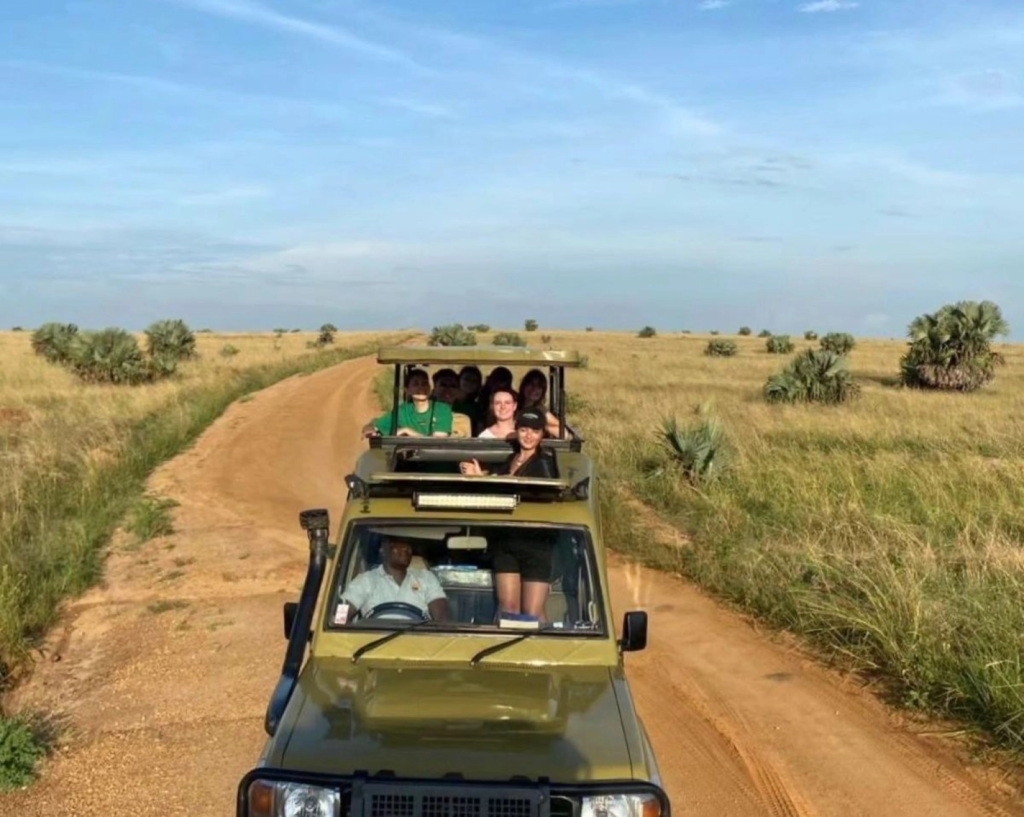
This is a private Uganda safari operated with your own professional driver-guide and dedicated 4×4 safari vehicle. The itinerary can be customised for couples, families, honeymooners, solo travellers and private groups. Budget, mid-range and luxury accommodation options are available, subject to your travel dates, preferred comfort level and lodge availability.
Start Planning Your 10-Day Uganda Safari
Tell us your preferred travel dates, number of travellers and accommodation level. We will check gorilla and chimpanzee permit availability and prepare a personalised quotation with named lodges, complete inclusions and a day-by-day itinerary.
Request My Personalised Safari Quote
Chat With a Uganda Safari Expert on WhatsApp
No-obligation quotation. We normally respond within one business day.
10-Day Uganda Safari at a Glance
- Safari duration: 10 days and 9 nights
- Starting point: Entebbe International Airport, an Entebbe hotel or Kampala
- Ending point: Entebbe, with Kigali available on request
- Safari style: Private guided road safari
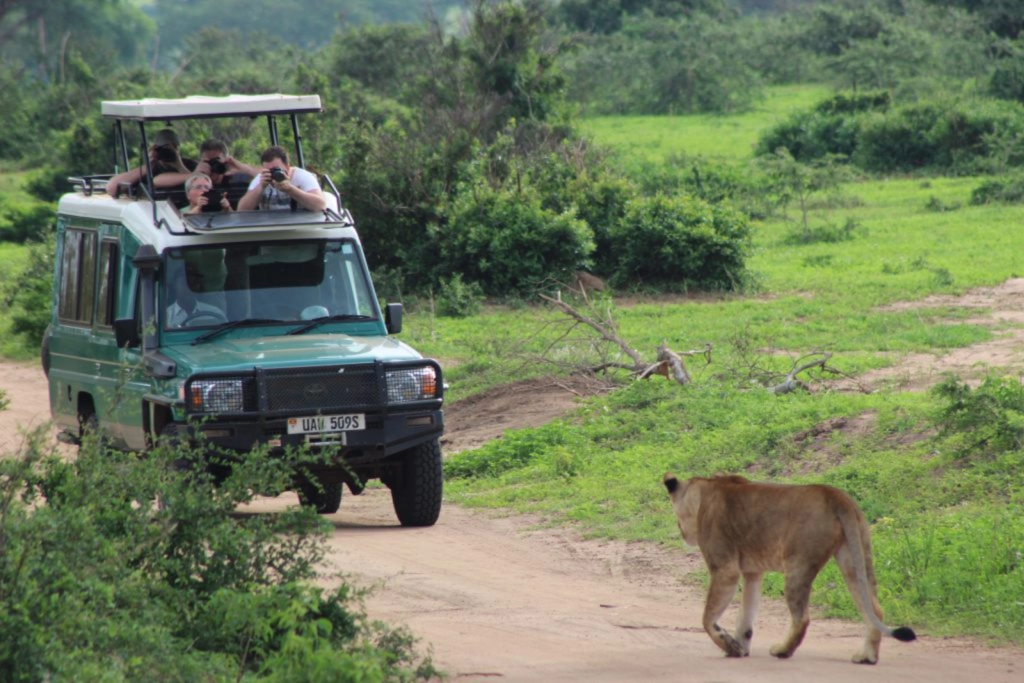
- Transport: Private 4×4 safari vehicle with a pop-up roof
- Main destinations: Ziwa Rhino Sanctuary, Murchison Falls, Kibale, Queen Elizabeth, Bwindi and Lake Bunyonyi
- Primate experiences: One gorilla trek and one chimpanzee trek
- Boat safaris: Victoria Nile and Kazinga Channel
- Accommodation: Budget, mid-range or luxury
- Meals: Breakfast, lunch and dinner on most safari days
- Physical level: Moderate overall, with the gorilla trek potentially becoming strenuous
- Best for: First-time Uganda visitors, primate enthusiasts, wildlife lovers, photographers, couples, families and private groups
- Customisation: Available for accommodation, activities, pace, room types, dietary needs and arrival or departure airport
This itinerary is designed for travellers who want to experience Uganda’s most important wildlife encounters without spending two full weeks on safari. It includes the country’s three principal safari environments: open savannah, tropical rainforest and freshwater ecosystems.
Although ten days is enough to complete the circuit, this is an active safari. Several mornings begin early, and two days involve long road transfers. Travellers looking for a slower journey can add one or more nights, use selected domestic flights or request our extended Uganda safari itinerary.
Places You Will Visit During This 10-Day Uganda Safari
- Entebbe: Your arrival point and a gentle introduction to Uganda beside Lake Victoria.
- Ziwa Rhino Sanctuary: Uganda’s principal destination for guided rhino tracking on foot.
- Murchison Falls National Park: Uganda’s largest national park and home to the powerful Murchison Falls, savannah game drives and Nile boat safaris.
- Kibale National Park: A biodiverse rainforest renowned for chimpanzee trekking and numerous other primates.
- Queen Elizabeth National Park: A varied wildlife park featuring the Kazinga Channel, Kasenyi Plains, crater landscapes and the Ishasha sector.
- Ishasha: The southern sector of Queen Elizabeth National Park, best known for its tree-climbing lions.
- Bwindi Impenetrable National Park: A UNESCO World Heritage Site and one of the world’s most important mountain gorilla habitats.
- Lake Bunyonyi: A scenic highland lake surrounded by terraced hills and islands, ideal for relaxing after gorilla trekking.
- Entebbe or Kigali: The safari ends at Entebbe International Airport or, when arranged in advance, Kigali International Airport.
10-Day Uganda Safari Route Overview
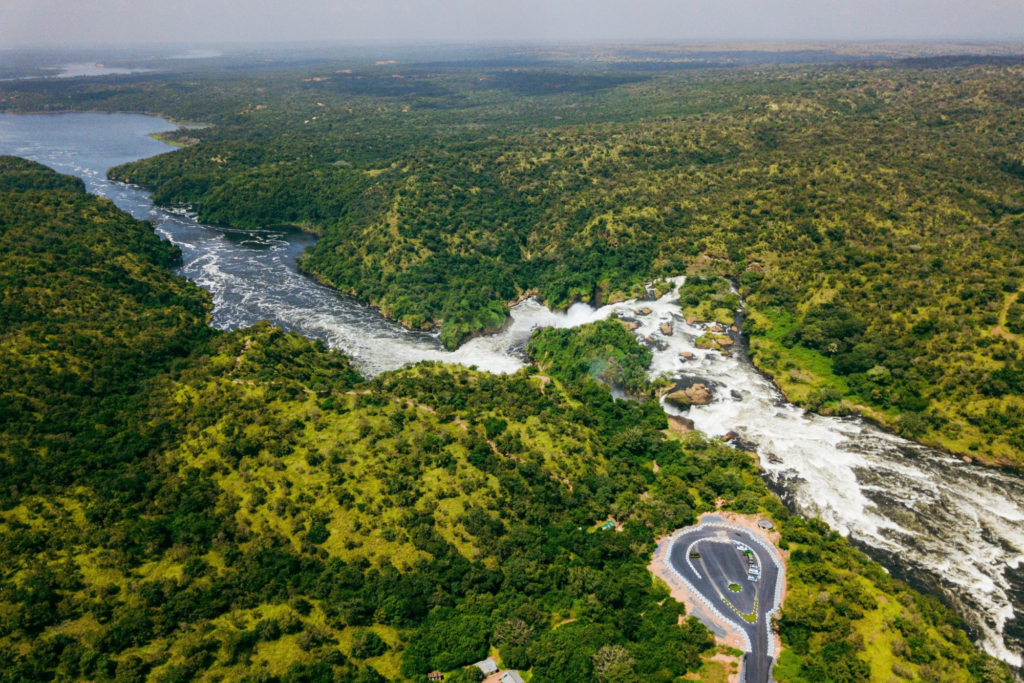
The journey begins in Entebbe and travels north through central Uganda to Ziwa Rhino Sanctuary. After tracking rhinos on foot, you continue to Murchison Falls National Park, where the Victoria Nile divides Uganda’s northern savannah and creates one of Africa’s most powerful waterfalls.
From Murchison Falls, the route turns southwest toward Fort Portal and Kibale National Park. Kibale provides the safari’s first major primate encounter: a guided trek to find a habituated chimpanzee community in its natural rainforest habitat.
You then continue to Queen Elizabeth National Park for a boat safari on the Kazinga Channel and a game drive across the Kasenyi Plains. The following day passes through Ishasha, where lions are sometimes seen resting in large fig trees, before climbing into the green hills surrounding Bwindi Impenetrable National Park.
Day 8 is dedicated to mountain gorilla trekking. After completing the trek, you travel to Lake Bunyonyi for a slower afternoon among the islands and terraced hills. The standard itinerary returns to Entebbe via Mbarara and the Equator. A Kigali departure can be arranged when it is compatible with your international flights, border requirements and confirmed Bwindi sector.
Route by Day
- Day 1: Arrive in Entebbe and meet your Uganda Safari Tours guide.
- Day 2: Travel to Ziwa Rhino Sanctuary and Murchison Falls National Park.
- Day 3: Murchison Falls game drive and Victoria Nile boat safari.
- Day 4: Drive from Murchison Falls to Kibale National Park.
- Day 5: Chimpanzee trekking in Kibale and an optional Bigodi wetland experience.
- Day 6: Transfer to Queen Elizabeth National Park and cruise the Kazinga Channel.
- Day 7: Kasenyi game drive, Ishasha wildlife search and transfer to Bwindi.
- Day 8: Mountain gorilla trekking in Bwindi Impenetrable National Park.
- Day 9: Transfer through the highlands to Lake Bunyonyi.
- Day 10: Return to Entebbe via the Equator or continue to Kigali by prior arrangement.
Recommended map placement: Insert an original route map here showing Entebbe, Ziwa, Murchison Falls, Kibale, Queen Elizabeth, Ishasha, Bwindi, Lake Bunyonyi and the optional Kigali ending.
Recommended map alternative text: Map of the 10-day Uganda safari route from Entebbe to Murchison Falls, Kibale, Queen Elizabeth, Bwindi and Lake Bunyonyi.
Why Choose This 10-Day Uganda Safari?
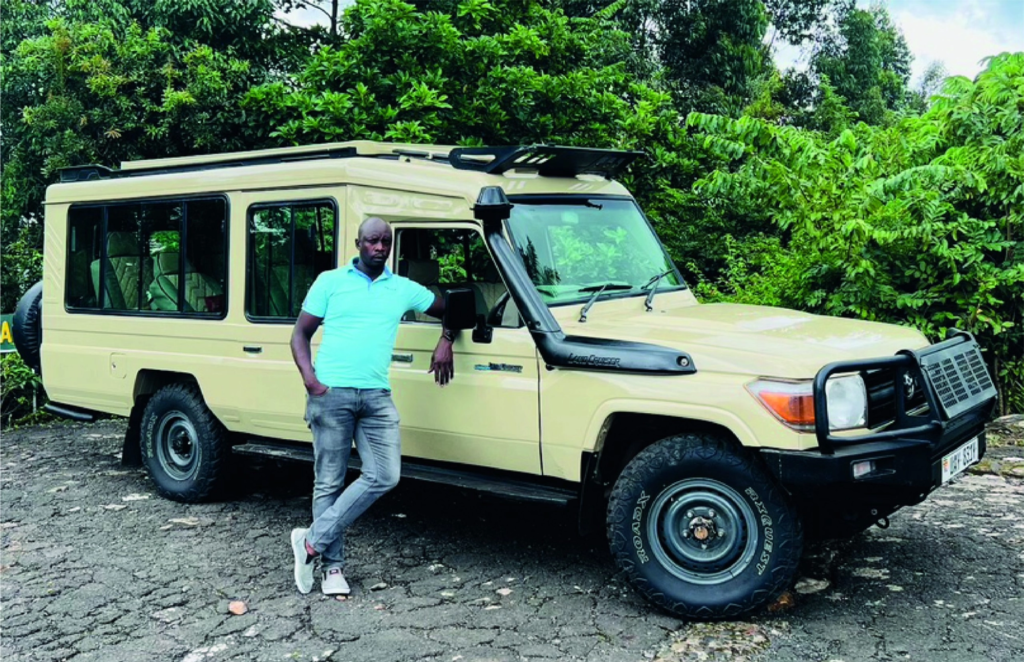
Experience Uganda’s Gorillas, Chimpanzees and Savannah Wildlife
Many African safari itineraries focus entirely on open savannah wildlife. Uganda offers something more varied. During this journey, you can watch elephants and giraffes on the plains and then enter ancient rainforests to search for chimpanzees and mountain gorillas.
Chimpanzee trekking and gorilla trekking are very different experiences. Chimpanzees are energetic, vocal and highly mobile. They may feed in the canopy, travel rapidly across the forest floor or communicate through loud pant-hoots. Gorillas are usually quieter and more deliberate, and observing the relationships within a family can feel remarkably intimate.
Including both treks gives you a much more complete understanding of Uganda’s primate diversity.
Look for the Big Five
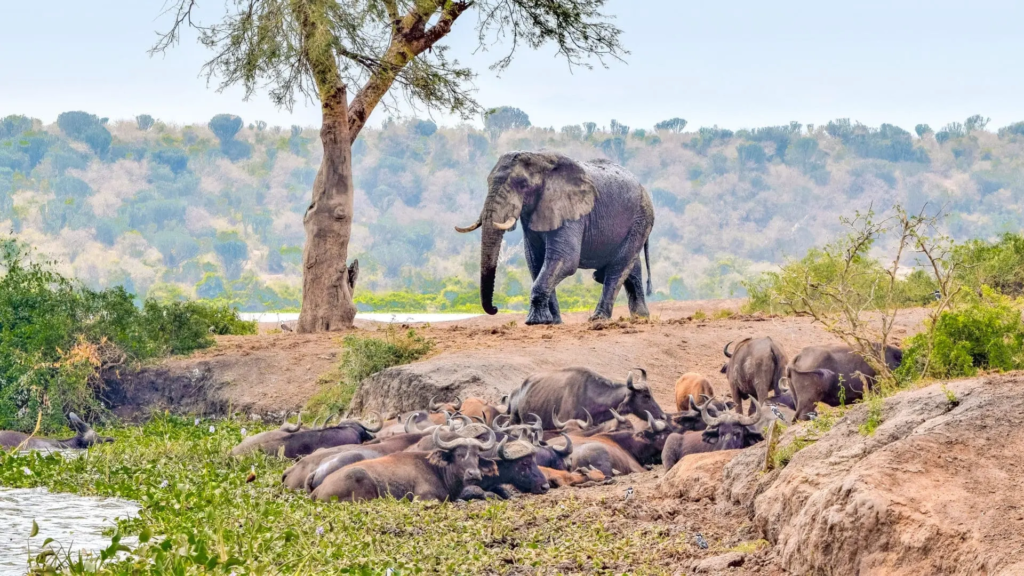
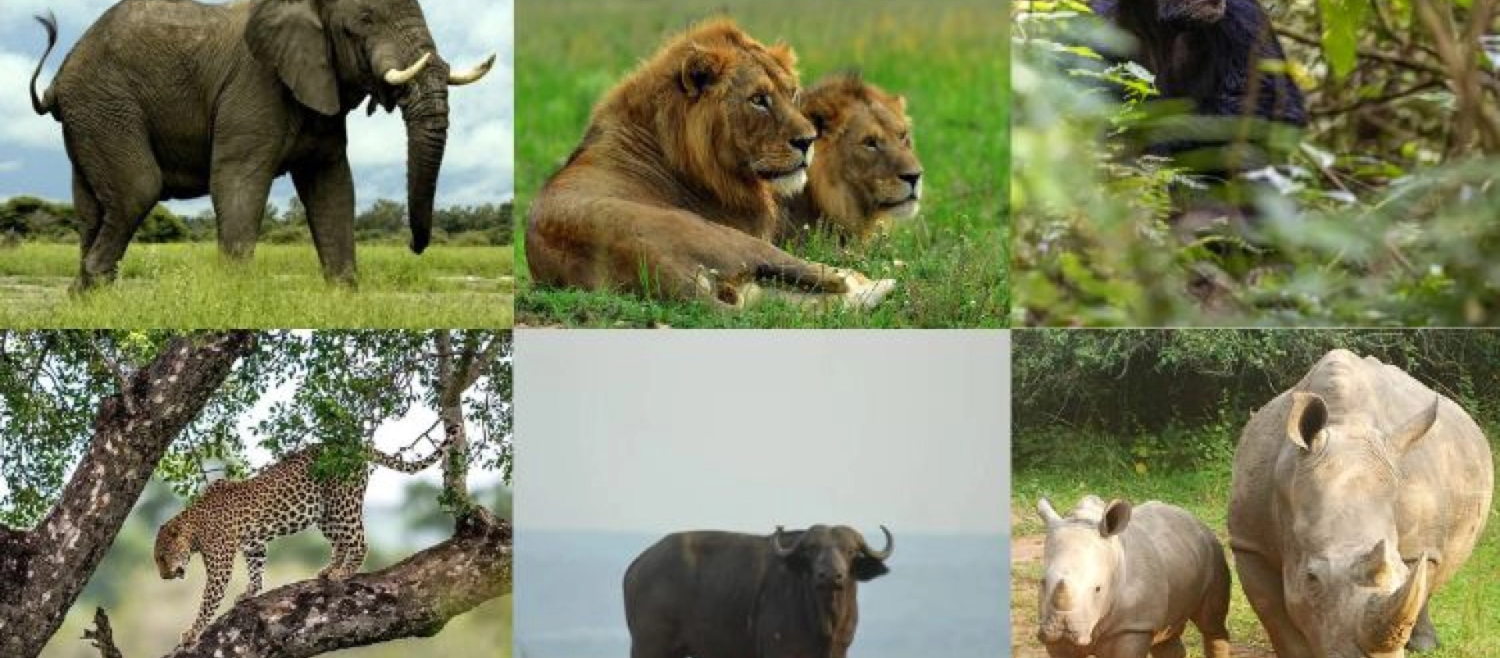
This itinerary gives you the opportunity to encounter the Big Five within the wider Uganda safari circuit. Southern white rhinos are tracked at Ziwa Rhino Sanctuary, while lions, leopards, elephants and buffalo inhabit the national parks included in the route.
Wildlife sightings can never be guaranteed. Leopards are secretive, lions may be hidden in tall grass and animals move freely across large ecosystems. Your professional guide uses knowledge of animal behaviour, tracks, alarm calls, habitat and responsible communication with other guides to improve your chances.
We describe this as an opportunity to see the Big Five rather than a guaranteed checklist. Authentic wildlife encounters are unpredictable, and that uncertainty is part of what makes every safari different.
Enjoy Two Outstanding Boat Safaris
The journey includes boat safaris in Murchison Falls and Queen Elizabeth national parks.
At Murchison Falls, you travel along the Victoria Nile toward the base of the falls. Hippos, Nile crocodiles, elephants, buffalo and numerous waterbirds may be observed along the riverbanks. The cruise also reveals the extraordinary force of the Nile as it emerges from the narrow Murchison Falls gorge.
In Queen Elizabeth National Park, the Kazinga Channel connects Lakes George and Edward. Its banks attract dense concentrations of hippos, buffalo, elephants and birds. Viewing wildlife from the water provides a completely different perspective from a game drive and creates excellent photographic opportunities.
Travel Through Uganda’s Most Varied Landscapes
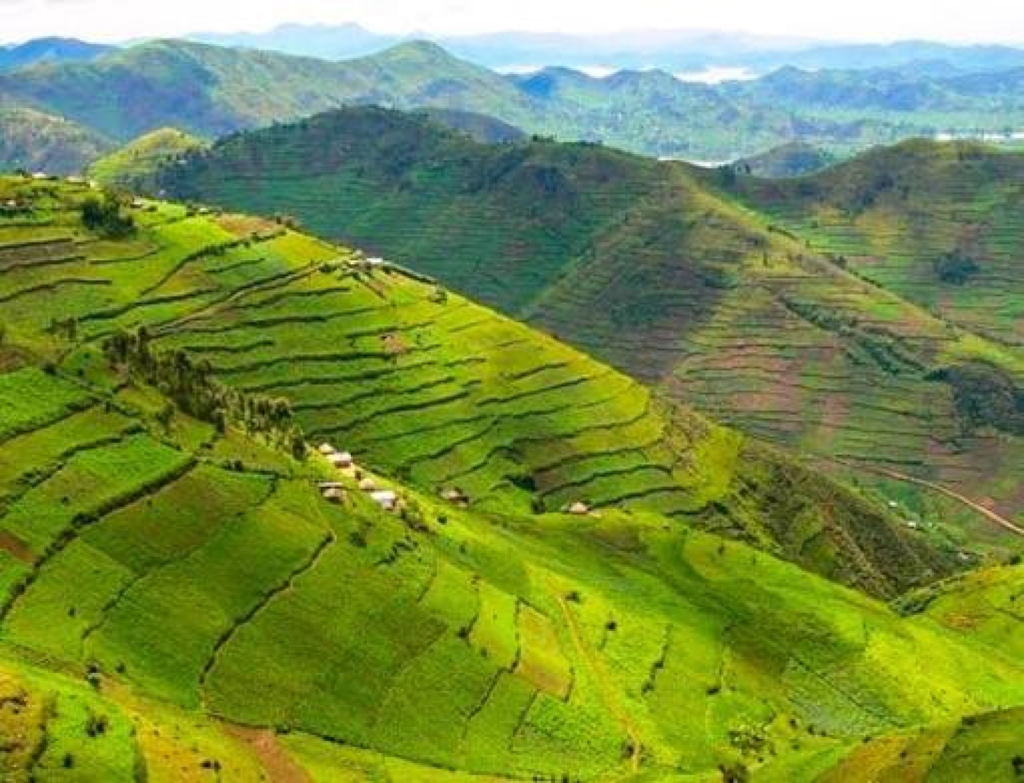
This is not a safari where every day looks the same. The route passes through Lake Victoria’s green basin, northern savannah, Nile riverine habitat, tea-growing country, tropical rainforest, Rift Valley plains, crater landscapes and the steep highlands surrounding Bwindi.
The scenery changes gradually as you travel between parks. Although some transfers are long, they reveal a side of Uganda that visitors using only internal flights can miss: roadside towns, farms, markets, cattle country, tea estates and densely cultivated hillsides.
Travel Privately With a Dedicated Guide
Your vehicle is reserved for your booking rather than shared with unrelated travellers. A private safari provides more flexibility for photography, comfort stops, departure times and the pace of game drives, subject to park rules and confirmed activity schedules.
Your driver-guide does considerably more than drive. The guide interprets wildlife behaviour, coordinates park entries and boat departures, communicates with lodges, monitors timing and assists with practical matters throughout the journey.
Choose the Accommodation Level That Suits You
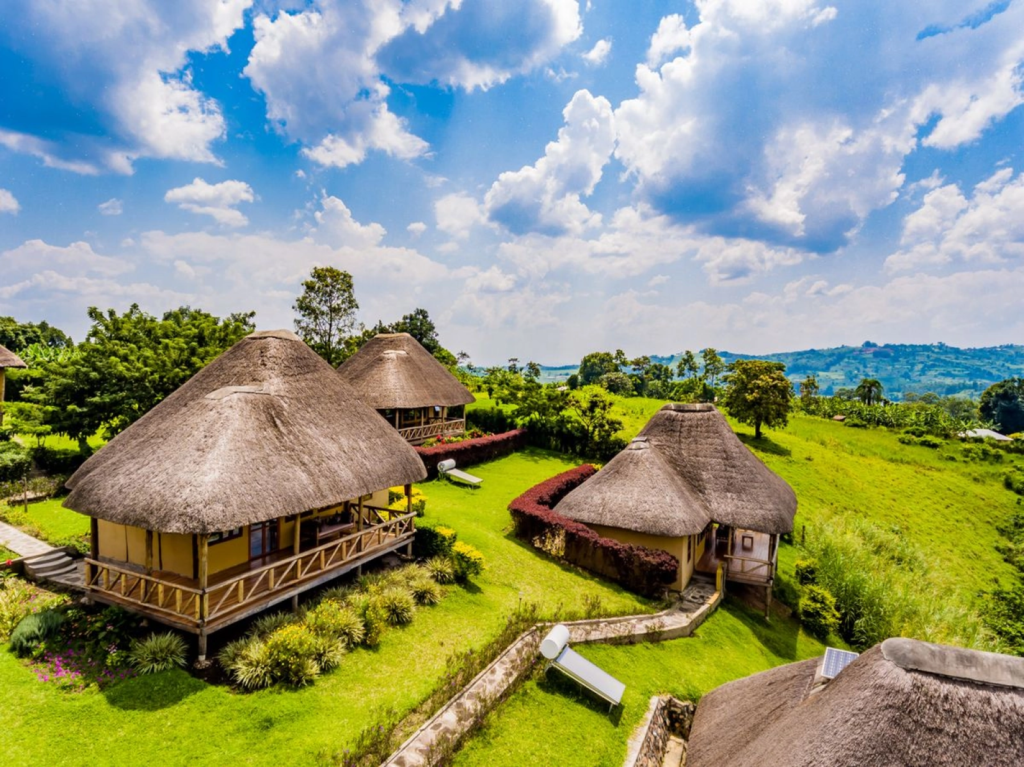
The same core itinerary can be arranged with budget, mid-range or luxury accommodation. This makes the safari suitable for travellers who want the full Uganda experience without being restricted to one price level.
Every proposal identifies the exact accommodation offered. We do not rely only on labels such as “mid-range” or “luxury,” because standards and room types vary between properties. Your quotation will show the proposed lodge, room arrangement, meal plan and available alternatives.
Customise the Safari Around Your Interests
The published itinerary is a strong starting point, but it is not the only possible version. You can add extra game drives, a longer chimpanzee experience, cultural activities, private boat services, an additional gorilla trek or more time at selected destinations.
Travellers who prefer a slower pace can extend the journey to twelve or fourteen days. Those who dislike long road transfers can ask about domestic flights or a Kigali ending. Any changes are subject to practical routing, operating schedules, permit availability and budget.
Highlights of the 10-Day Ultimate Uganda Safari
Track Rhinos on Foot at Ziwa Rhino Sanctuary
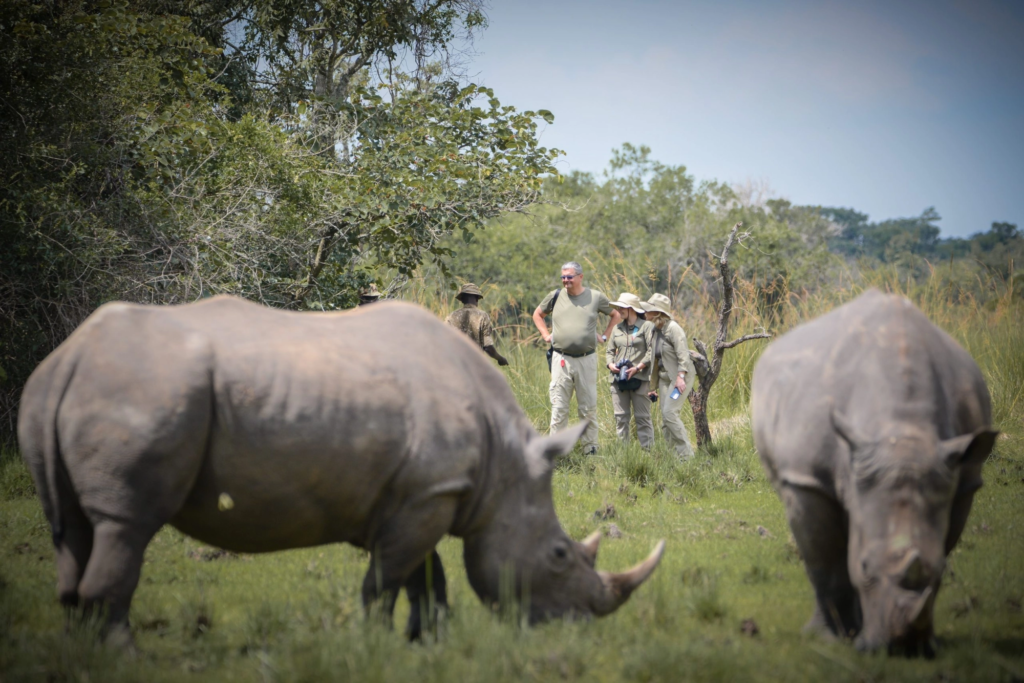
Your first major wildlife activity is a guided rhino-tracking experience at Ziwa Rhino Sanctuary. Accompanied by trained sanctuary rangers, you follow walking trails through bush and grassland to locate southern white rhinos.
Walking in rhino habitat is very different from viewing wildlife through a vehicle window. You become more aware of tracks, wind direction, vegetation, bird calls and the instructions of the ranger. The rhinos are powerful wild animals living within a protected environment, and every approach is managed carefully.
Guests must remain behind the ranger, maintain the instructed distance and avoid sudden independent movement. Ziwa provides an important introduction to Uganda’s conservation story and completes the potential Big Five experience offered by the wider itinerary.
Stand Above the Powerful Murchison Falls
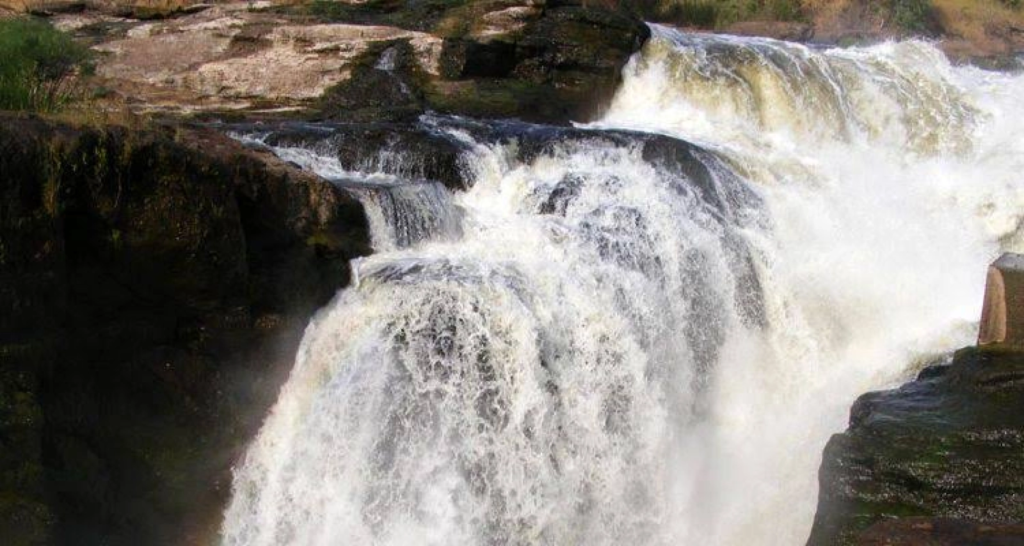
Murchison Falls is created where the Victoria Nile is forced through a narrow rocky gorge before plunging into the river below. From the top viewpoint, you can feel the spray, hear the roar of the water and watch the Nile accelerate between dark rock walls.
The viewpoint reveals the power of the falls, while the following boat safari provides a second perspective from the river. Experiencing Murchison Falls from both land and water is one of the defining features of this itinerary.
Explore Murchison Falls National Park on a Game Drive
The northern bank of Murchison Falls National Park contains broad grasslands and scattered palms that support giraffes, elephants, buffalo, Uganda kob, Jackson’s hartebeest, waterbuck, oribi and warthogs. Lions, leopards and spotted hyenas may also be encountered.
Game drives usually begin early, when temperatures are cooler and wildlife may be more active. The pop-up roof provides a clear viewing position when road, weather and park conditions allow. Your guide balances the search for headline species with time to observe animal behaviour, landscapes and birdlife.
Cruise the Victoria Nile
The Victoria Nile boat safari travels upstream toward the base of Murchison Falls. Hippos gather in the water, crocodiles rest along the banks and elephants may emerge from the woodland to drink. African fish eagles, kingfishers, herons, bee-eaters and other birds add colour and movement throughout the cruise.
As the boat approaches its safe turning point, the falls become visible between the cliffs. The Nile bursts from the gorge in white water and spray, offering a dramatic conclusion to one of Uganda’s classic boat journeys.
Trek Chimpanzees in Kibale National Park
Kibale National Park protects one of East Africa’s richest primate habitats. During the chimpanzee trek, you enter the forest with trained rangers and listen for vocalisations, drumming on tree roots and movement in the canopy.
Chimpanzees can move quickly and unpredictably. They may feed high above the trail, rest in small groups or travel across the forest floor. Once the habituated community is located, visitors observe according to the time and conduct rules attached to the current permit.
The forest is also home to several other primates, including black-and-white colobus, red colobus, red-tailed monkeys and grey-cheeked mangabeys. Supporting wildlife sightings are possible but never guaranteed.
Discover the Kazinga Channel
The Kazinga Channel is one of Queen Elizabeth National Park’s most productive wildlife areas. The boat safari passes hippo pods, buffalo in the shallows, elephants at the water’s edge and an exceptional variety of waterbirds.
The boat’s low viewing angle is particularly valuable for photography. It allows guests to observe wildlife behaviour that can be difficult to see from a vehicle, including animals drinking, bathing and interacting along the banks.
Search for Lions on the Kasenyi Plains
The Kasenyi Plains are an important game-viewing area in Queen Elizabeth National Park. Large numbers of Uganda kob attract predators, and lions are among the main animals searched for during the morning drive.
Elephants, buffalo, warthogs, waterbuck, hyenas and leopards are also possible. The open plains create long views, but grass height, weather and wildlife movement influence every sighting.
Look for the Tree-Climbing Lions of Ishasha
Ishasha is famous for lions that sometimes rest in the spreading branches of fig trees. Seeing a large lion stretched above the savannah is an unusual and memorable sight.
Tree-climbing is a natural behaviour rather than a scheduled attraction. The lions may be hunting, resting in grass or moving outside the accessible area. Your guide searches known habitats while also looking for topi, buffalo, elephant, kob and other Ishasha wildlife.
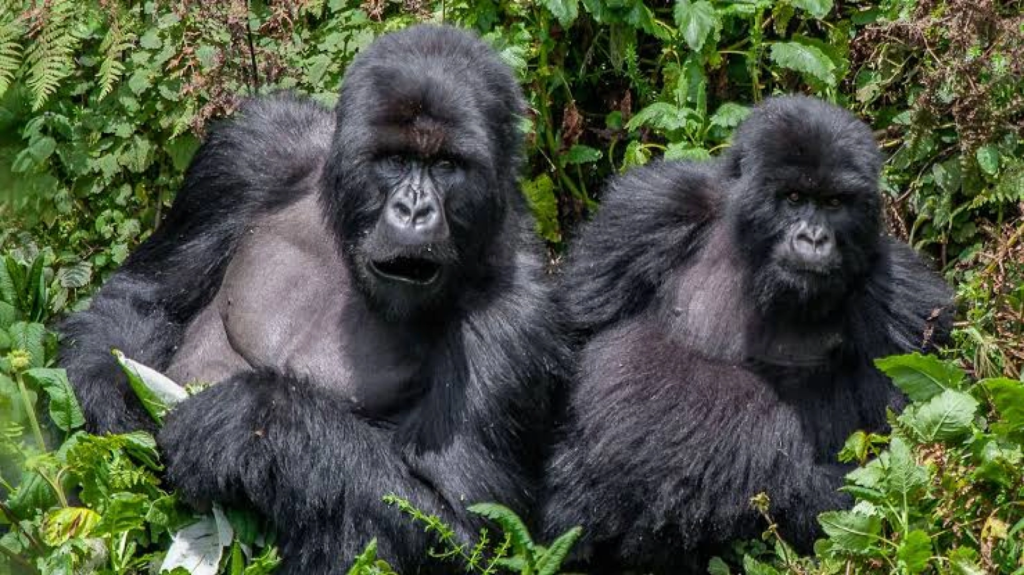
Meet a Mountain Gorilla Family in Bwindi
Mountain gorilla trekking is the emotional centre of this safari. After an early breakfast, you report to the ranger station assigned to your permit for registration and a detailed briefing.
Rangers and trackers lead you into Bwindi’s dense montane forest. The trek may follow established trails before entering steeper or more heavily vegetated terrain. Walking time varies according to the gorilla family’s location, weather and trail conditions.
Once the family is located, the ranger manages the approach and observation period according to current regulations. You may watch a silverback feed, juveniles climb through vines, adults groom one another or a mother care for her infant.
Visitors must maintain the required distance whenever possible, keep voices low, avoid flash photography and follow every ranger instruction. If a gorilla moves closer, remain calm and allow the ranger to direct the group.
No photograph fully captures the experience of sharing the forest with a mountain gorilla family. Set the camera down occasionally and observe their expressions, movements and relationships without looking through a screen.
Relax Beside Lake Bunyonyi
After the physical and emotional intensity of gorilla trekking, Lake Bunyonyi provides a welcome change of pace. The lake is surrounded by terraced hills and dotted with islands, creating one of southwestern Uganda’s most attractive landscapes.
Depending on your confirmed itinerary, the afternoon can include a guided boat or canoe excursion, birdwatching, a community experience or time to relax at the lodge. Lake Bunyonyi is not included simply to add another destination; it creates valuable recovery time before the final journey.
Wildlife You May Encounter
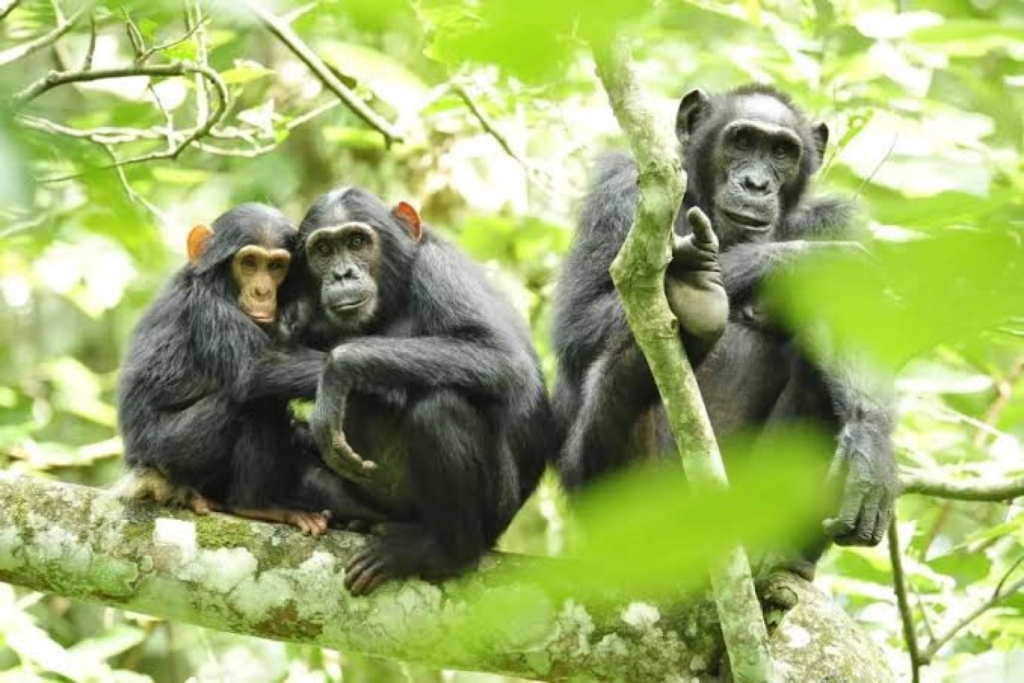
This 10-day Uganda safari travels through several distinct ecosystems and therefore offers opportunities to encounter an impressive variety of mammals, primates, reptiles and birds.
Primates
- Mountain gorillas
- Chimpanzees
- Black-and-white colobus monkeys
- Ugandan red colobus monkeys
- Red-tailed monkeys
- Grey-cheeked mangabeys
- Blue monkeys
- Olive baboons
- Vervet monkeys
Predators
- Lions
- Tree-climbing lions
- Leopards
- Spotted hyenas
- Smaller cats and mongooses
Large Mammals and Grazers
- African elephants
- African buffalo
- Southern white rhinos
- Rothschild’s giraffes
- Hippopotamuses
- Uganda kob
- Jackson’s hartebeest
- Topi
- Waterbuck
- Bushbuck
- Oribi
- Warthogs
Reptiles and Birdlife
Nile crocodiles, monitor lizards and other reptiles may be seen around rivers and wetlands. Birding is rewarding throughout the route, with possible sightings of African fish eagles, kingfishers, bee-eaters, hornbills, herons, egrets, storks, turacos, raptors and numerous forest and savannah species.
Every sighting occurs in a natural habitat and remains subject to wildlife movement, season, weather and luck. Uganda Safari Tours does not guarantee specific animals, but an experienced guide will maximise your opportunities while respecting park regulations and animal welfare.
Who Is This 10-Day Uganda Safari Suitable For?
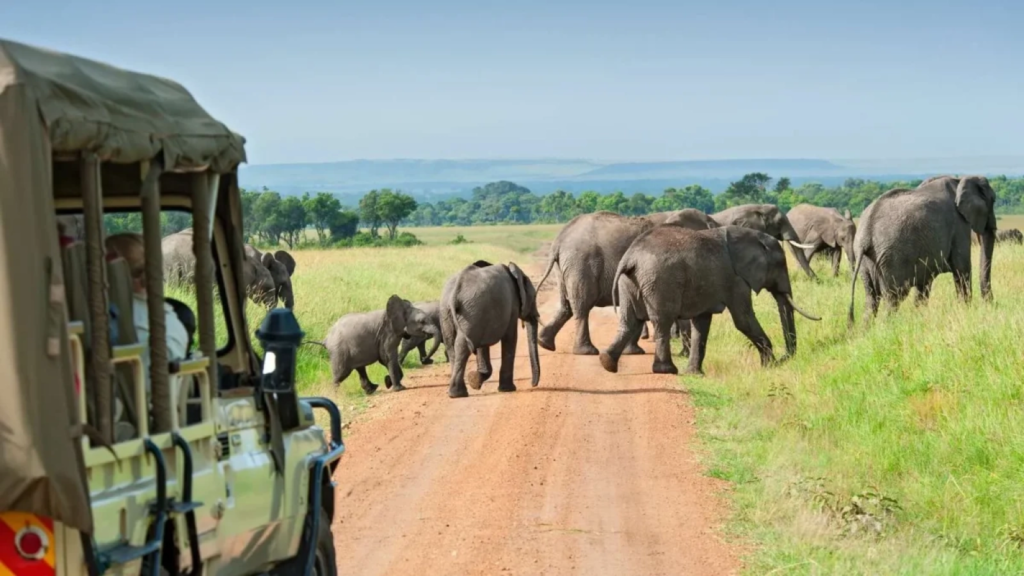
First-Time Visitors to Uganda
The itinerary provides a broad introduction to Uganda without attempting to include every national park. It combines the country’s best-known primate activities with savannah game drives, boat safaris and varied scenery.
Couples and Honeymooners
Couples can travel privately and select romantic lodges, upgraded rooms or special arrangements. Honeymoon additions must be requested in advance so that suitable properties and services can be confirmed.
Families
Families can request family rooms or interconnecting accommodation where available. Children must meet the current minimum ages for gorilla and chimpanzee trekking. Provide every child’s age during the initial enquiry so that eligibility, room arrangements and alternative activities can be planned correctly.
Solo Travellers
Solo travellers can book the itinerary privately and enjoy complete flexibility with the guide. The per-person price is higher because the vehicle, fuel and guiding costs are not shared. Ask whether a scheduled small-group departure is available if sharing is preferred.
Wildlife Photographers
A private vehicle provides more control over seating, equipment and time at sightings. Serious photographers should disclose equipment requirements and priority species during planning. Additional nights, private boats or a specialised vehicle setup may be recommended.
Older Travellers
Many active older travellers complete this route successfully. Age alone does not determine trekking ability. Walking fitness, balance, joint health and recovery are more important. Porters, suitable rooms, extra nights and carefully chosen lodge locations can improve comfort.
Travellers Who May Prefer a Different Itinerary
This route may not be ideal if you strongly dislike long road journeys, want several consecutive nights at every lodge or require a guaranteed low-exertion gorilla trek. Gorilla families move freely, so no operator can guarantee a short or easy trekking route.
We can create a slower twelve-day itinerary, use selected domestic flights or focus on fewer destinations. Honest route selection produces a better safari than forcing every traveller into the same programme.
How Your Private Uganda Safari Works
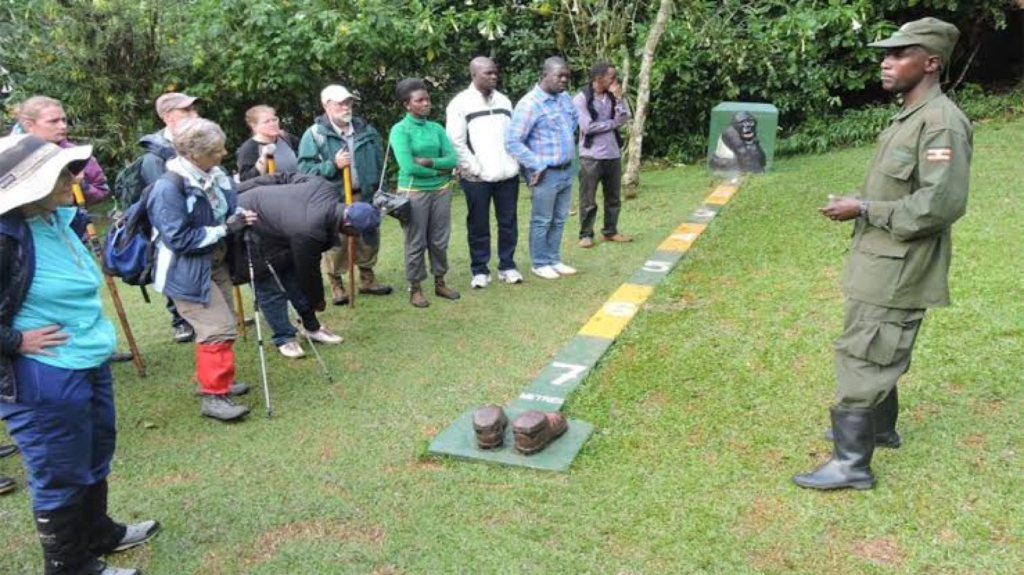
Unless a specific shared departure is advertised, this itinerary is operated privately. Your safari vehicle and driver-guide are reserved for the travellers named in your booking.
Private operation gives you more flexibility, but park rules, permit times, boat schedules, lodge meal times and daylight still determine parts of each day. Your guide will adjust ordinary stops and wildlife viewing where practical without risking a confirmed activity.
Gorilla trekking, chimpanzee trekking and rhino tracking are normally completed in groups allocated by the responsible park or sanctuary team. Scheduled boat cruises can also include other passengers. A private safari vehicle does not mean an exclusive gorilla family visit.
Your Safari Vehicle
The road circuit is normally operated in a suitable four-wheel-drive safari vehicle with a pop-up roof for wildlife viewing. The exact vehicle depends on the confirmed package and number of passengers.
Your quotation should identify the proposed vehicle category, passenger arrangement and any luggage restrictions. Larger groups or photographers carrying extensive equipment may require an additional vehicle.
Your Driver-Guide
Your English-speaking driver-guide remains central to the entire journey. In addition to driving, the guide interprets wildlife behaviour, manages park and lodge timing, coordinates activities and provides practical support.
Guides speaking other languages, specialist birding guides and additional photographic support can be requested, subject to availability and cost.
Budget, Mid-Range and Luxury Accommodation
This 10-day Uganda safari can be organised at three principal comfort levels. The wildlife activities and route remain broadly similar, but accommodation style, room quality, service, location and included amenities differ.
Budget Accommodation
Budget accommodation prioritises cleanliness, safety, location and value. Rooms are generally simple and private, often with an en-suite bathroom, mosquito protection and hot water. Electricity, Wi-Fi and hot-water availability can be limited at some remote properties.
Choosing budget accommodation does not reduce the importance of a reliable vehicle, professional guide, valid permits or park fees. Those are essential operational costs. Most savings come from using simpler lodges and camps.
Mid-Range Accommodation
Mid-range is the most popular choice for this safari. It normally offers comfortable rooms, private bathrooms, established dining, attractive settings and dependable service without the price of premium lodges.
Some properties include pools and large cottages, while forest lodges may emphasise atmosphere, privacy and convenient park access. Your quotation will identify the exact room and property rather than relying only on the term “mid-range.”
Luxury Accommodation
Luxury options prioritise exceptional locations, spacious rooms, refined meals, personal service and greater privacy. Some premium lodges include selected drinks, laundry or additional services, but inclusions vary.
The most expensive property is not always the best operational choice. In Bwindi, the lodge must match the confirmed trekking sector. At Murchison Falls and Queen Elizabeth, location affects game-drive and boat-transfer times. We consider both comfort and practical access when recommending a lodge.
Accommodation Availability
Lodge names shown on the website are examples until confirmed in writing. Safari properties often have limited rooms, particularly during popular travel periods. Your final proposal will state the selected accommodation, room arrangement, meal plan and appropriate alternatives.
No material downgrade should be made without discussing the change with you. If an originally proposed property is unavailable, we will recommend the closest suitable alternative within the agreed comfort level and route.
Gorilla and Chimpanzee Trekking Permits
Gorilla and chimpanzee permits are limited, date-specific and essential to this safari. The standard quotation should clearly state whether one gorilla permit and one chimpanzee permit are included for each eligible trekking guest.
A quotation or enquiry does not automatically reserve permits. Once you approve the proposal and pay the required amount, Uganda Safari Tours checks the applicable availability and begins securing the confirmed services.
The gorilla permit determines the trekking date and Bwindi sector. We then select accommodation that provides practical access to the assigned ranger station. Bwindi’s Buhoma, Ruhija, Rushaga and Nkuringo sectors are separated by significant road journeys and should not be treated as interchangeable.
Permit prices and conditions are set by the responsible wildlife authority and can change. Any price displayed on this page must include a genuine review date. The standard gorilla trek must also be distinguished from the longer Gorilla Habituation Experience, which uses a different permit and has different conditions.
Travellers must meet the current age, identification, health and conduct requirements. Anyone experiencing symptoms that could place gorillas or chimpanzees at risk must inform the guide. Rangers retain final authority over participation and behaviour.
Responsible and Respectful Safari Travel
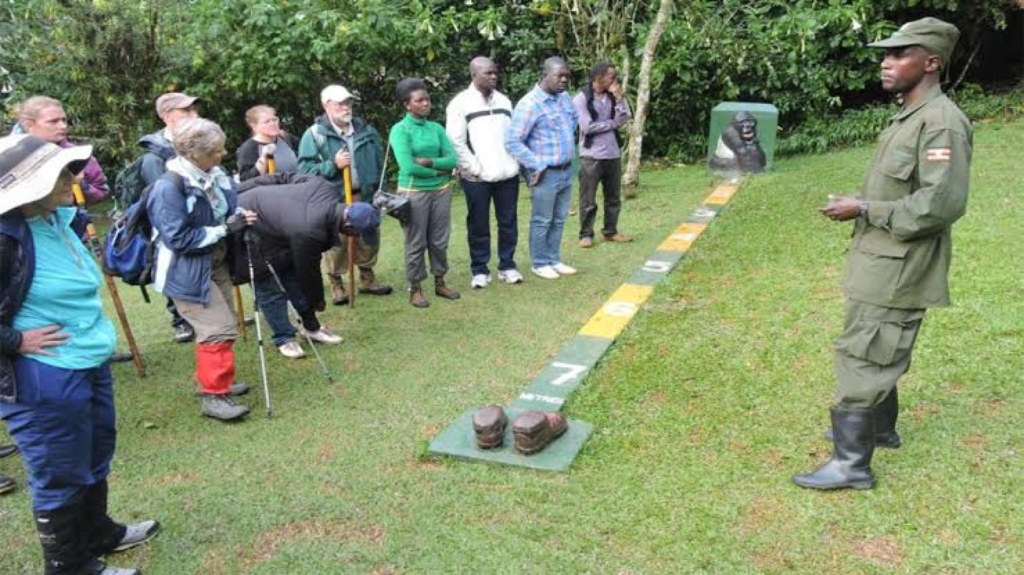
Uganda’s forests, wildlife areas and communities should benefit from carefully managed tourism. During the safari, follow all instructions provided by guides, rangers, boat crews and lodge staff.
- Maintain the required distance from wildlife.
- Never feed or touch animals.
- Do not pressure guides to leave authorised tracks.
- Keep noise low at sightings.
- Do not use flash photography around gorillas or chimpanzees.
- Follow current mask and health procedures during primate encounters.
- Carry litter out of parks and forests.
- Use refillable water containers where operationally possible.
- Ask permission before photographing people.
- Purchase crafts directly from responsible community projects where possible.
Community visits should be respectful exchanges led by the host community. They should never treat people as exhibits or present living cultures as unchanged performances from the past. Your itinerary will identify any included cultural experience and how it is organised.
Permit fees, park entries, responsible lodge employment and properly managed community activities can all contribute to conservation and local livelihoods. Any specific claim about how money is distributed should be supported by verified information.
An Honest Note About Safari Expectations
Wildlife safaris take place in natural environments. Animals move freely, forest conditions change, rain can occur during a generally dry month and road journeys can take longer than expected.
A lion may walk beside the vehicle or remain hidden in tall grass. A gorilla trek may finish before lunch or continue for most of the day. Tree-climbing lions may rest in the branches or stay out of view. No responsible safari operator can control these conditions.
What Uganda Safari Tours can provide is careful preparation: permits secured through the appropriate process, lodges matched to the route, realistic transfer planning, a suitable vehicle, an experienced guide and operational assistance throughout the journey.
Our goal is not to promise what nature will do. Our goal is to put you in the right places, with the right preparation and guidance, to experience Uganda responsibly and comfortably.
Request Your Personalised 10-Day Uganda Safari Quote
Every quotation is prepared around your actual travel details. Send us your preferred dates, alternative dates if available, number of travellers, children’s ages, room arrangement and preferred accommodation level.
We will check:
- Gorilla trekking permit availability
- Chimpanzee trekking permit availability
- Suitable lodges in the correct locations
- Budget, mid-range or luxury options
- Entebbe and Kigali departure alternatives
- Dietary, mobility and room requirements
- Optional activities and safari extensions
Your proposal will include the day-by-day itinerary, named accommodation, meal plan, included activities, exclusions, complete safari price and booking steps.
Request My 10-Day Uganda Safari Quote
Chat With a Uganda Safari Planner
Permit and lodge availability can change until the required payment has been received and the booking is confirmed in writing.
10-Day Uganda Safari Cost (indicative)
Current guide prices per person sharing for this private itinerary:
- Budget — from USD 3,100 per person
- Mid-range — from USD 3,500 per person
- Luxury — from USD 5,500 per person
Prices are indicative and depend on travel dates, group size, lodge availability and gorilla/chimpanzee permit rates. Request a dated quotation with named lodges.
Places you visit
Key stops along this itinerary — customise dates and lodges when you enquire.
- Entebbe (Start)
- Ziwa Rhino Sanctuary
- Murchison Falls National Park
- Kibale National Park
- Queen Elizabeth National Park
- Bwindi Impenetrable National Park
- Lake Bunyonyi
- Entebbe or Kigali (End)
Route
Uganda

- Day 1 Entebbe (City)
- Day 2–3 Murchison Falls NP (Ziwa & Murchison)
- Day 4–5 Kibale Forest NP (Chimps)
- Day 6 Queen Elizabeth NP
- Day 7–8 Bwindi Impenetrable NP (Kasenyi, Ishasha & Bwindi)
- Day 9 Lake Bunyonyi (Relaxation)
- End Entebbe (City) (Day 10)
Day-by-day itinerary
Detailed 10-Day Uganda Safari Itinerary
The first five days of your Uganda safari take you from the shores of Lake Victoria to the open savannahs of Murchison Falls and the tropical rainforest of Kibale National Park.
You begin with a relaxed arrival in Entebbe before travelling north to track southern white rhinos at Ziwa Rhino Sanctuary. Two nights in Murchison Falls National Park allow time for a proper game drive, a Victoria Nile boat safari and views of the powerful waterfall. From Murchison, you cross western Uganda to Kibale National Park, where you enter the rainforest in search of a habituated chimpanzee community.
This sequence balances wildlife activities with necessary travel. Arrival day is deliberately gentle, the drive to Murchison is divided by the Ziwa rhino experience, and the long journey from Murchison to Kibale is followed by a full day in the forest without another inter-park transfer.
Important Information About Driving Times
All driving times shown in this itinerary are estimates. They can change because of traffic, road construction, weather, park conditions, wildlife sightings, comfort stops and the location of your confirmed lodge.
Game-drive time is not included in ordinary transfer estimates. Your driver-guide may adjust departure times or the order of minor activities to protect confirmed permit times, boat departures and safe arrival before dark.
Arrival at Entebbe International Airport and Welcome to Uganda
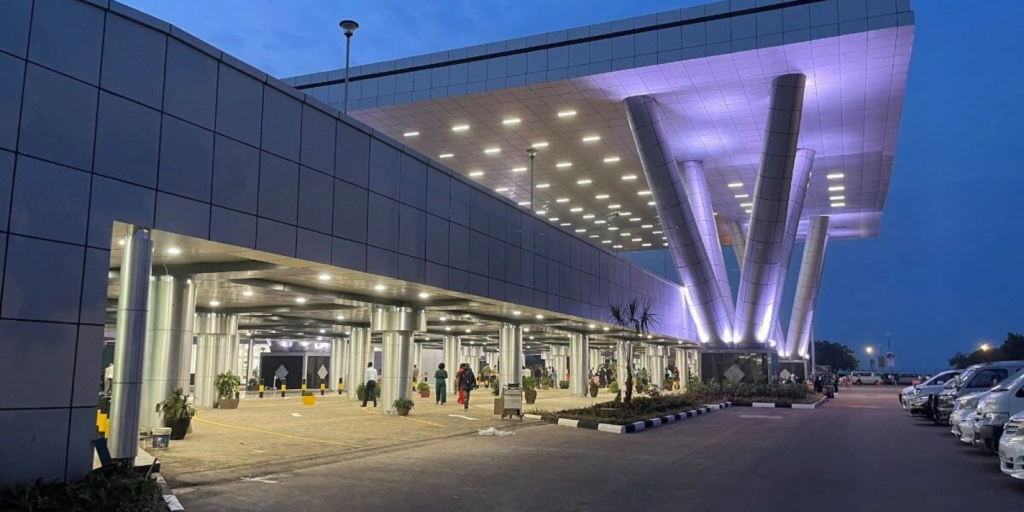
Your Uganda Safari Begins
Welcome to Uganda, the Pearl of Africa. Your 10-day adventure begins when your international flight arrives at Entebbe International Airport.

After completing immigration, collecting your luggage and passing through the required airport procedures, continue to the arrivals area. A representative from Uganda Safari Tours will be waiting for you at the agreed meeting point with a clearly displayed name board.
Your guide will welcome you, assist with the luggage and introduce you to the vehicle that will be used for the first transfer. You will then drive to your hotel in Entebbe for check-in, refreshments and time to recover from the international journey.
Entebbe provides a convenient and peaceful beginning to the safari. The town occupies a green peninsula beside Lake Victoria and is considerably closer to Uganda’s international airport than central Kampala. Beginning here avoids an unnecessary drive through heavy city traffic and makes the following morning’s departure easier.
Depending on your arrival time, the remainder of the day is free for rest. You may relax at the hotel, walk through its gardens, enjoy views of Lake Victoria or have your first meal in Uganda.
Safari Briefing
Your guide will provide a safari briefing either after arrival or before departure the following morning. The briefing covers:

- The route and main destinations included in the safari
- Expected morning departure times
- Approximate driving times
- Meal arrangements
- Luggage organisation
- Gorilla and chimpanzee trekking preparation
- Health and safety procedures
- Weather expectations
- Money and personal-expense guidance
- Any dietary, medical or mobility requirements previously communicated
This is an opportunity to ask questions and discuss personal interests such as wildlife photography, birdwatching, cultural experiences or preferred rest stops.
Optional Entebbe Activities
If your flight arrives early and you would like an activity, a short Entebbe excursion can be arranged in advance. The available option will depend on your arrival time, immigration procedures, weather, opening hours and the amount of daylight remaining.

Possible activities include:
- A guided visit to Entebbe Botanical Gardens
- A relaxed walk beside Lake Victoria
- A sunset boat cruise, subject to weather and availability
- A local restaurant experience
- Time at a craft market or shopping centre for essential supplies
Entebbe Botanical Gardens can provide an enjoyable introduction to Uganda’s vegetation and birdlife. Monkeys and numerous bird species may be encountered, although sightings are not guaranteed.
A proper Mabamba wetland excursion to search for the shoebill requires more time and is normally better arranged with an additional night in Entebbe. It should not be squeezed into a late arrival day or allowed to delay the departure toward Murchison Falls.
Should You Stay in Entebbe or Kampala?
The standard itinerary uses Entebbe because it is close to the airport and practical for the next day’s journey. Kampala can be arranged when a traveller specifically wants to stay in the capital or has already booked a hotel there.

Traffic between Entebbe and Kampala is unpredictable. Travellers who want a meaningful Kampala cultural or historical tour should consider arriving one day before the safari officially begins. This allows time to explore without making the first safari day rushed.
What to Do If Your Flight Arrives Late
Late-night airport pickups can be arranged when your flight details are provided in advance. Your guide will meet you according to the confirmed arrangement and transfer you directly to the hotel.
Dinner may not be available after the hotel kitchen closes unless a late meal has been arranged. We can ask the hotel to prepare a cold plate or packed meal where possible, but this must be requested before arrival.
Provide the correct airline, flight number, arrival date and scheduled arrival time during booking. This allows our operations team to monitor significant schedule changes and coordinate the airport pickup.
Day 1 Summary
- Starting point: Entebbe International Airport
- Destination: Entebbe hotel or Kampala by prior arrangement
- Estimated driving time: Usually a short local transfer in Entebbe; considerably longer if continuing to Kampala
- Main activities: Airport welcome, hotel transfer and safari briefing
- Meal plan: Dinner, subject to arrival time and the confirmed hotel arrangement
- Accommodation: Entebbe or Kampala
Suggested Day 1 Accommodation
Budget: ViaVia Entebbe or a comparable guesthouse.
Mid-range: 2 Friends Beach Hotel, Protea Hotel Entebbe or a comparable property.
Luxury: Hotel No. 5, a premium Lake Victoria property or a comparable boutique hotel.
These accommodation names are examples and remain subject to availability. Your personalised quotation will identify the exact proposed hotel and room arrangement.
Guide’s Tip for Arrival Day
Keep essential medication, travel documents, chargers, valuables and one change of clothes in your hand luggage. If checked luggage is delayed, you will still have the most important items needed for the first safari day.
Avoid exchanging a large amount of money before discussing your likely personal expenses with the guide. Cards are accepted by many established hotels and lodges, but payment systems and internet connections can fail. It is useful to carry a reasonable amount of cash for drinks, tips and small purchases.
Entebbe to Ziwa Rhino Sanctuary and Murchison Falls National Park

Begin the Journey to Northern Uganda
After an early breakfast, meet your driver-guide and begin the journey north from Entebbe toward Nakasongola and Murchison Falls National Park.
The route passes through the greater Kampala area before joining the highway toward central and northern Uganda. Your guide will plan suitable comfort, fuel and refreshment stops while keeping enough time for rhino tracking and the onward journey.
As you travel away from the capital, urban development gradually gives way to roadside towns, farmland, wetlands and broader rural landscapes. This is the first opportunity to observe everyday life outside Uganda’s main cities.
Please ask before photographing people, schools, markets or private property. Your guide can help you understand when photography is appropriate.
Arrive at Ziwa Rhino Sanctuary
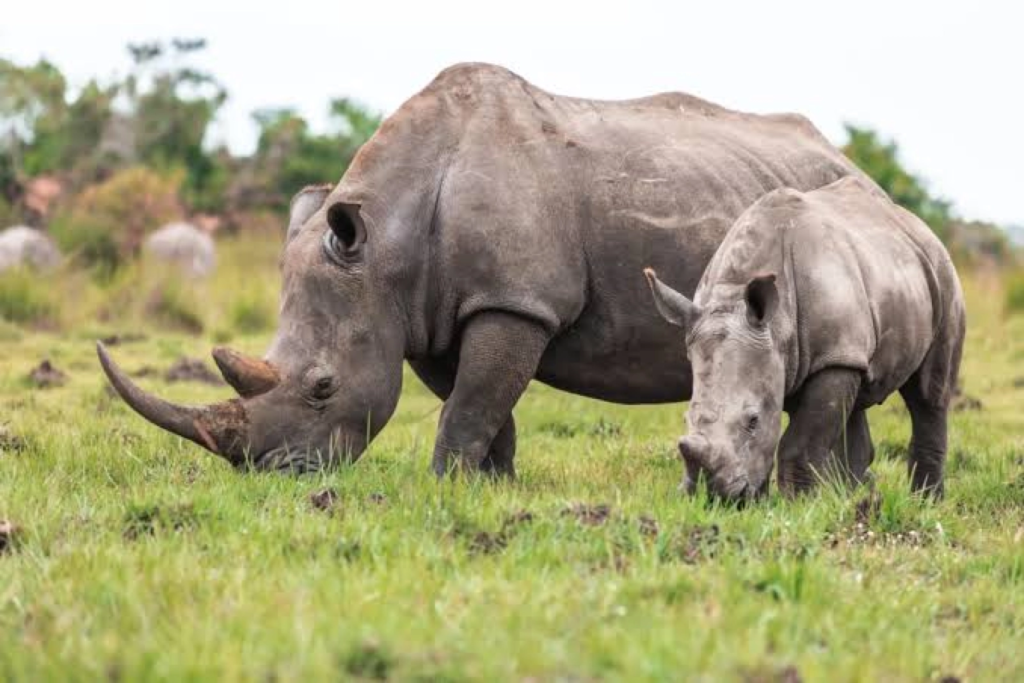
Ziwa Rhino Sanctuary is the principal place to observe rhinos in Uganda. The sanctuary plays an important role in the country’s rhino conservation and recovery efforts after rhinos disappeared from Uganda’s wild landscapes.

On arrival, complete registration and meet the trained sanctuary ranger who will lead the activity. Before entering the tracking area, the ranger explains:
- How to walk through rhino habitat
- Where to position yourself
- The importance of remaining behind the ranger
- What to do if the ranger changes direction
- How close the group may safely approach
- Photography and noise guidelines
- How wind and vegetation affect the tracking approach
Guided Rhino Tracking on Foot
The ranger uses current monitoring information and signs in the landscape to locate the rhinos. Walking distance and tracking time vary according to where the animals are resting or feeding.

The terrain is generally less difficult than the forests used for gorilla trekking, but it remains an outdoor wildlife activity. Wear long trousers, closed walking shoes, a hat and sun protection. Carry drinking water and follow the ranger closely.
Tracking wildlife on foot creates a heightened sense of awareness. Without the protection and elevation of a safari vehicle, you begin to notice footprints, dung, feeding signs, wind direction, bird calls and the movement of vegetation.
Southern white rhinos are enormous and powerful. Although the sanctuary’s rhinos are monitored, they must be respected as wild animals. Never move ahead of the ranger, separate from the group or attempt to approach a rhino for a better photograph.
The ranger determines the safest observation point. Guests should remain quiet, avoid sudden movements and keep all equipment secure.
Understanding Uganda’s Big Five Experience
Rhino tracking at Ziwa gives this itinerary the opportunity to include all members of the Big Five within the wider Uganda circuit.
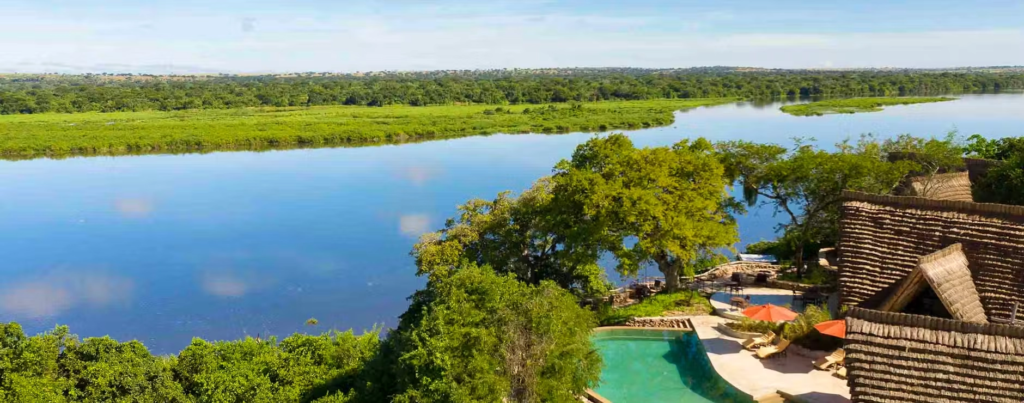
Rhinos are observed at the sanctuary, while lions, leopards, elephants and buffalo inhabit the national parks included in the itinerary. This distinction should be understood clearly: Uganda’s rhinos are protected at Ziwa rather than roaming Murchison Falls or Queen Elizabeth National Park.
Leopard sightings are never guaranteed, and no responsible operator should promise that all five species will be seen. The itinerary provides a strong opportunity, but wildlife remains unpredictable.
Lunch and Continuation to Murchison Falls
After rhino tracking, continue for lunch according to the confirmed itinerary. Lunch may be taken at the sanctuary, a nearby restaurant or another suitable stop selected by the guide.
You then proceed toward Murchison Falls National Park. The exact entrance gate and sequence depend on road conditions, timing and the location of your lodge.
Visit the Top of Murchison Falls
When time and park conditions allow, visit the top of Murchison Falls before continuing to the lodge.
Murchison Falls is formed where the Victoria Nile is forced through a narrow rocky gorge before plunging into the river below. The result is a dramatic concentration of water, spray and sound.
From the viewpoints, you can watch the Nile accelerate between dark rock walls and crash into the turbulent water beneath the falls. This land-based visit provides a very different perspective from the boat safari planned for Day 3.
Paths and rocks around the viewpoint can become slippery, particularly after rain. Remain on authorised paths, observe safety barriers and follow the guide’s instructions. Do not step beyond barriers or approach an unsafe edge for photographs.
Arrival at Your Murchison Falls Lodge
Continue to your lodge in or near Murchison Falls National Park. Depending on the property and entry route, the transfer may include additional park driving and possible wildlife sightings.
Check in, receive the lodge briefing and settle into your room. Enjoy dinner and prepare for the following morning’s early game drive.
Many safari lodges are unfenced, allowing wildlife to move naturally through the surrounding area. Follow staff instructions about walking after dark. When an escort is required, contact reception rather than walking alone.
Day 2 Summary
- Route: Entebbe or Kampala to Ziwa Rhino Sanctuary and Murchison Falls National Park
- Estimated driving time: Approximately five to seven hours in total, excluding rhino tracking, lunch and major delays
- Main activities: Guided rhino tracking and a visit to the top of Murchison Falls when timing permits
- Activity level: Easy to moderate walking
- Meal plan: Breakfast, lunch and dinner
- Accommodation: Murchison Falls National Park area
Suggested Murchison Falls Accommodation
Budget: Red Chilli Rest Camp, Heritage Safari Lodge or a comparable property.
Mid-range: Pakuba Safari Lodge, Fort Murchison, Paraa Safari Lodge in an appropriate room category or a comparable property.
Luxury: Baker’s Lodge, Nile Safari Lodge or a comparable premium property.
Lodge selection depends on availability, budget and the activity route. A lodge’s position relative to the river, game-drive circuits and park gates can significantly affect driving time. Your quotation will explain the recommended property rather than treating every lodge as interchangeable.
What to Carry for Rhino Tracking
- Closed walking shoes
- Long, lightweight trousers
- Sun hat
- Sunscreen
- Drinking water
- Insect repellent
- Camera with a secure strap
- Light rain protection during wetter periods
Responsible Rhino Viewing
Do not ask the ranger to move closer than the permitted distance. A photograph taken responsibly is more valuable than one obtained by disturbing an animal or ignoring instructions.
Murchison Falls Game Drive and Victoria Nile Boat Safari

Early-Morning Game Drive
Wake early for tea, coffee or a light snack before meeting your guide. Depart for a morning game drive when the park schedule, daylight and lodge location allow.

The cooler hours around sunrise are often rewarding because many animals are actively feeding or moving before the heat increases. Predators may also remain active after the night’s hunting.
Murchison Falls National Park’s northern bank contains broad savannahs, scattered borassus palms, riverine woodland and open grazing areas. These habitats support an impressive range of wildlife.
Animals You May See
Possible sightings during the game drive include:
- Rothschild’s giraffes
- African elephants
- African buffalo
- Uganda kob
- Jackson’s hartebeest
- Waterbuck
- Oribi
- Bushbuck
- Warthogs
- Olive baboons
- Vervet monkeys
- Lions
- Leopards
- Spotted hyenas
Giraffes, antelope and elephants are frequently associated with the northern savannah, but every drive is different. Lions may be found resting near prey-rich plains, while leopards are much more secretive and often disappear into woodland or tall vegetation.
Your guide searches for tracks, listens to alarm calls and observes how prey animals are behaving. Information may also be shared responsibly between professional guides, but the objective is not to race dangerously from one reported sighting to another.
How to Enjoy a Responsible Game Drive
Keep voices low around wildlife and avoid sudden movements. Remain inside the vehicle unless your guide confirms that leaving it is permitted in a designated area.

Do not ask the guide to drive off authorised tracks, block an animal’s path or surround wildlife. If several vehicles are present, each guide should position responsibly and give others an opportunity to view.
The pop-up roof provides excellent viewing when it is safe and permitted to open it. Keep hands, heads and camera equipment within the appropriate area and sit down whenever the guide requests it.
Wildlife Behaviour, Not Only a Species Checklist
A good game drive is not measured only by how many species are recorded. Take time to watch giraffes moving between acacia trees, elephants protecting calves, antelope responding to danger and birds interacting with large mammals.

Behaviour often produces more meaningful memories and photographs than a brief glimpse of an animal surrounded by vehicles.
Breakfast, Brunch and Rest
Depending on lodge location and the day’s arrangement, return for breakfast or carry a packed breakfast to enjoy at an approved location.
After the game drive, return to the lodge for rest before lunch and the afternoon boat cruise. Temperatures are usually higher around midday, making this a useful time to shower, recharge batteries and enjoy the lodge.
Victoria Nile Boat Safari
After lunch, transfer to the jetty and board the scheduled boat travelling toward the base of Murchison Falls.
The Victoria Nile is the park’s central lifeline. The river attracts wildlife from the surrounding savannah and supports one of the itinerary’s most rewarding concentrations of aquatic animals and birds.
As the boat travels upstream, look for:
- Large pods of hippopotamuses
- Nile crocodiles resting along the banks
- Elephants approaching the river
- Buffalo cooling in the shallows
- Waterbuck and other antelope
- Warthogs near open banks
- Monitor lizards
- African fish eagles
- Kingfishers
- Herons and egrets
- Cormorants
- Bee-eaters
- Storks and other waterbirds
Hippos are powerful and territorial animals. The boat captain determines the safe distance and route. Passengers should remain seated or balanced as instructed and should not encourage the crew to approach wildlife too closely.
Approaching the Base of Murchison Falls
As the boat continues upstream, the current becomes stronger and the surrounding cliffs become more dramatic. Spray may become visible before the full waterfall appears.
The captain approaches the safest permitted point according to water level and operating conditions. From here, you can watch the Nile burst from the narrow gorge into the wider river.
The waterfall looks very different from below. On Day 2, you witnessed the river being forced into the gorge from the upper viewpoint. From the boat, you see the powerful result as the water emerges between the cliffs.
The vessel does not move dangerously close to the falling water. Safety and river conditions determine the final viewing position.
Boat-Safari Photography Tips
- Carry a dry bag or waterproof camera cover.
- Use a lens hood to reduce glare.
- Keep equipment secure when the boat changes direction.
- Avoid standing suddenly or moving everyone to one side.
- Check exposure when photographing dark animals against reflective water.
- Bring binoculars for distant birds and animals.
- Protect your skin with a hat and sunscreen.
Return to the Lodge
After the cruise, return to the lodge. Depending on the jetty, lodge location and remaining daylight, the transfer may include additional wildlife viewing.
Enjoy dinner and prepare for the long journey to Kibale National Park the following morning. Pack most luggage before sleeping so that departure can be efficient.
Day 3 Summary
- Location: Murchison Falls National Park
- Main activities: Morning game drive and afternoon Victoria Nile boat safari
- Game-drive duration: Usually several hours, depending on lodge location and sightings
- Boat duration: Commonly two to three hours, subject to the confirmed service and river conditions
- Activity level: Low physical exertion, with an early start and time in a vehicle and boat
- Meal plan: Breakfast, lunch and dinner
- Accommodation: Same Murchison Falls lodge as Day 2
Optional Murchison Falls Activities
Depending on availability, season, licensing and itinerary length, it may be possible to request:
- A private boat safari
- A Nile Delta cruise
- Sport fishing
- A hot-air balloon experience
- An additional game drive
- A specialist birding excursion
These activities are not automatically included. Adding them may require an extra night or replacing part of the standard itinerary. Travellers with specialist interests should discuss them before the safari is confirmed.
Scenic Transfer From Murchison Falls to Kibale National Park
Journey Across Western Uganda
After breakfast, check out and begin the long drive southwest from Murchison Falls toward Hoima, Fort Portal and the Kibale National Park region.

This is one of the longest transfer days in the itinerary. An early departure is important because it allows time for comfort stops, lunch and arrival at the forest lodge before it becomes too late.
The exact road used can change because of construction, weather, traffic or operational advice. Your guide will select the most appropriate practical route for the confirmed travel date.
Changing Landscapes
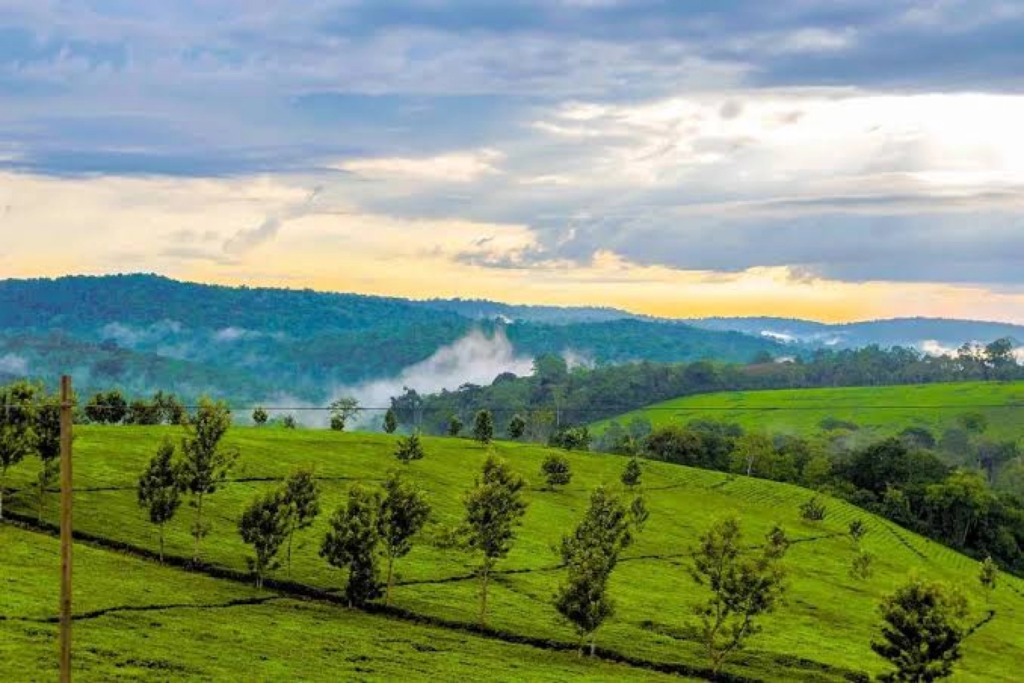
The drive reveals how dramatically Uganda’s scenery changes between regions. The open landscapes around Murchison gradually give way to cultivated countryside, villages, trading centres and greener highlands.
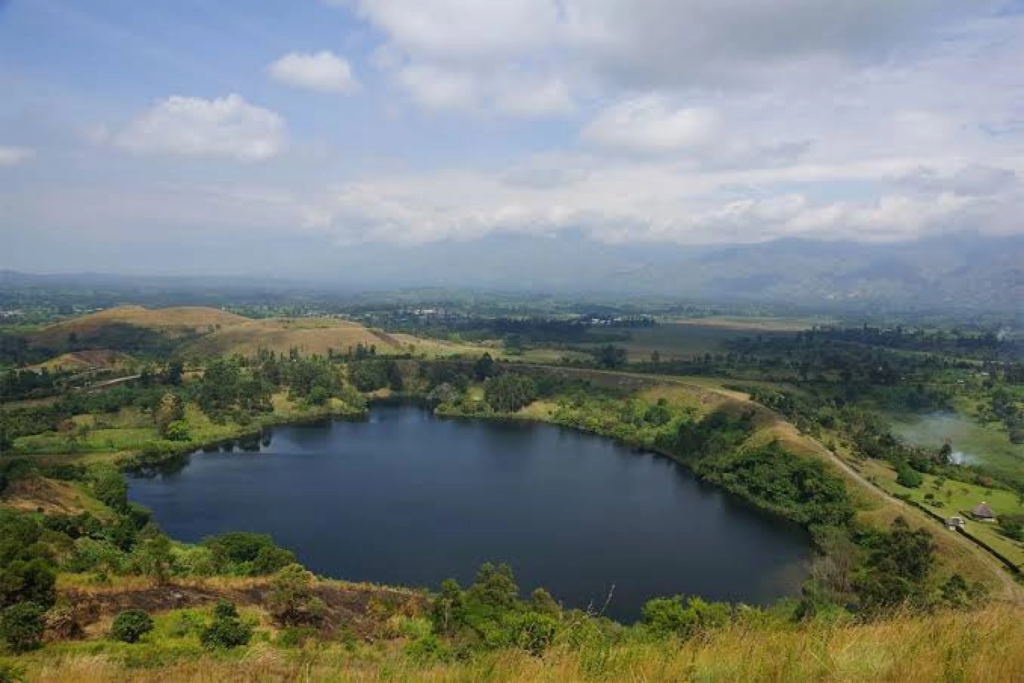
As you approach Fort Portal and Kibale, tea plantations, banana gardens, crater landscapes and forest fragments become increasingly visible. On a clear day, parts of the Rwenzori Mountains may be seen in the distance.
This is primarily a transfer day, but it offers valuable insight into everyday life outside the national parks. Your guide can explain farming systems, regional crops, local languages and the communities encountered along the route.
Lunch and Comfort Stops
Lunch is taken at a suitable restaurant or hotel along the route. The location depends on departure time, road conditions and overall progress.

Stops are planned to provide enough time to eat and stretch without creating an unnecessarily late arrival. If you experience motion sickness or require more regular breaks, communicate this during booking and remind the guide at the start of the day.
Fort Portal and the Kibale Region
Fort Portal is an important tourism centre in western Uganda and a gateway to Kibale National Park, crater lakes, tea estates and the Rwenzori region.

The wider landscape is greener and more elevated than Murchison’s savannah. Rain is possible throughout the year, and temperatures can feel cooler in the evening.
Continue from Fort Portal toward your lodge in the Kibale or Bigodi area. The final drive may pass through tea-growing country, forest edges and local communities.
Arrival at the Forest Lodge
Check in during the late afternoon or early evening. Take time to enjoy the forest atmosphere, which contrasts strongly with the open grasslands of Murchison Falls.
Depending on the property, monkeys, forest birds and butterflies may be seen around the lodge grounds. Wildlife sightings are possible but should not be expected or approached without staff guidance.
Enjoy dinner and prepare for the next morning’s chimpanzee trek. Confirm the breakfast time, departure to the visitor centre and whether lunch will be served at the lodge or packed.
Why No Major Activity Is Promised on Day 4
Some itineraries advertise crater-lake hikes, cultural visits or wetland walks immediately after the Murchison-to-Kibale transfer. In practice, road journeys can take longer than expected.
Promising a fixed afternoon activity can create a rushed journey, late arrival or disappointment. This itinerary treats the evening as time to rest. If you arrive early and the lodge offers a short safe activity, it may be discussed locally, but it should not replace a properly planned excursion.
Travellers who want a complete Fort Portal, crater-lake or tea experience should add another night to the itinerary.
Day 4 Summary
- Route: Murchison Falls to Hoima, Fort Portal and the Kibale National Park area
- Estimated driving time: Approximately seven to nine hours, subject to route and road conditions
- Main experience: Scenic cross-country journey from savannah to rainforest
- Activity level: Low physical exertion but a long day in the vehicle
- Meal plan: Breakfast, lunch and dinner
- Accommodation: Kibale or Bigodi area
Suggested Kibale Accommodation
Budget: Kibale Forest Camp, Chimpanzee Forest Lodge or a comparable value property.
Mid-range: Turaco Treetops, Isunga Lodge or a comparable property.
Luxury: Chimpundu Lodge or another premium forest property.
Lodge location matters. A property with a beautiful crater or hill view may require an earlier transfer to the chimpanzee briefing point. Your quotation will balance comfort, atmosphere and practical access to the confirmed trekking location.
Prepare for Chimpanzee Trekking
Before going to bed, prepare the following items:
- Long trousers
- Long-sleeved shirt
- Closed walking shoes or waterproof hiking boots
- Long socks or gaiters
- Light rain jacket
- Small daypack
- Drinking water
- Insect repellent
- Sunscreen
- Camera and rain protection
- Spare battery and memory card
- Required identification
- Essential medication
The forest can be muddy, humid and uneven. Protect electronic equipment and avoid carrying an unnecessarily heavy bag.
Chimpanzee Trekking in Kibale National Park

Early Breakfast and Transfer to the Visitor Centre
Wake early for breakfast and meet your guide for the transfer to the visitor centre stated on your trekking permit.

Many standard Kibale chimpanzee treks begin at Kanyanchu, but your final permit and safari documents determine the correct reporting point and briefing time.
Carry the identification requested for permit verification and arrive early enough to complete registration without delaying the trekking group.
Chimpanzee Trekking Briefing
Before entering the forest, Uganda Wildlife Authority rangers or the responsible authorised team provide a detailed briefing. The briefing normally covers:

- Expected forest conditions
- How trekking groups are organised
- Minimum distance from chimpanzees
- Health and hygiene procedures
- Photography restrictions
- What to do if chimpanzees approach
- How to move when chimpanzees travel
- Rules regarding food and drinks
- Safety around other forest wildlife
Listen carefully even if you have previously completed another primate trek. Rules can change, and chimpanzee behaviour differs significantly from gorilla behaviour.
Enter Kibale Forest
Accompanied by an experienced ranger, begin walking beneath Kibale’s tall rainforest canopy. The trek follows forest trails but may require movement over roots, mud, uneven ground and dense vegetation.

The ranger and trackers listen for chimpanzee vocalisations and look for feeding signs, nests, dung and recent movement. Chimpanzees are highly mobile and can cover substantial distances, particularly when searching for seasonal fruit.
The forest experience begins long before the chimpanzees are found. Shafts of light pass through the canopy, butterflies gather near damp ground and birds call from different levels of the forest.
Other Primates in Kibale
Kibale is known for its exceptional primate diversity. During the trek, you may also encounter:

- Black-and-white colobus monkeys
- Ugandan red colobus monkeys
- Red-tailed monkeys
- Blue monkeys
- Grey-cheeked mangabeys
- Olive baboons
- Other smaller primates
Supporting primate sightings depend on luck, route and forest conditions. The primary objective remains finding the habituated chimpanzee community assigned to the trekking area.
Listen for Chimpanzee Calls
Chimpanzees are often heard before they are seen. A pant-hoot can begin with low calls and build into a powerful series of rising vocalisations. Other individuals may answer from different parts of the forest.
Chimpanzees also drum on large tree roots, producing a deep sound that travels through the forest. Rangers use these calls and movements to understand where the community may be travelling.
The forest can shift quickly from quiet anticipation to intense activity when chimpanzees begin calling or moving nearby.
Meeting the Chimpanzees
Once the habituated community is located, the ranger positions the group according to current regulations and the chimpanzees’ behaviour.
The animals may be feeding high in fruiting trees, grooming one another near the ground, resting, travelling through vegetation or displaying social behaviour. Visibility can change rapidly as individuals move between branches and forest levels.
Chimpanzees are more energetic and mobile than gorillas. Guests may need to walk briskly when the community moves, but everyone must continue following the ranger and avoid running independently through the forest.
The authorised observation period is determined by the permit and current park rules. The ranger manages the time and decides when the group must move or end the encounter.
Chimpanzee Trekking Rules
- Maintain the distance instructed by the ranger.
- Keep voices low.
- Do not imitate chimpanzee calls.
- Do not use flash photography.
- Do not eat close to the chimpanzees.
- Do not touch or attempt to attract an animal.
- Remain with the ranger and trekking group.
- Follow current mask and health requirements.
- If a chimpanzee approaches, remain calm and follow instructions.
- Never block an animal’s path.
Chimpanzee Photography
Chimpanzee photography can be challenging. Forest light is often low, while the animals can move quickly between bright gaps and deep shade.
A camera capable of focusing quickly in low light is useful. A moderate telephoto lens is generally more practical than carrying an extremely heavy lens through the forest.
Increase the camera’s ISO when necessary instead of using flash. Protect equipment from rain and humidity, and keep the lens cloth accessible.
Do not spend the entire observation period looking through the camera. Chimpanzee calls, movements and social interactions are an important part of the experience and cannot be captured fully in a photograph.
Standard Chimpanzee Trek Versus Habituation
The standard chimpanzee trek and the Chimpanzee Habituation Experience are separate activities.
The standard 10-day itinerary includes the ordinary chimpanzee trek unless your written quotation states otherwise. The habituation experience generally involves a longer period in the field and requires a different permit, schedule and price.
Travellers interested in habituation should request it before booking. Availability can be limited, and the itinerary may need to be adjusted.
Return to the Lodge
After completing the trek, return to the visitor centre and meet your driver-guide. Depending on the morning schedule, you will return to the lodge for lunch or continue according to the confirmed meal arrangement.
Take time to rest, shower and review photographs. The afternoon can remain free, particularly for travellers who found the forest conditions tiring.
Optional Bigodi Wetland Sanctuary Walk
Guests who still have energy can request or complete a pre-booked guided walk through Bigodi Wetland Sanctuary.
Bigodi is a community-linked conservation area near Kibale. A local guide leads visitors through wetland, woodland, village and agricultural environments while explaining wildlife, plants and community life.
Possible sightings include:
- Great blue turacos
- Hornbills
- Kingfishers
- Weavers
- Monkeys
- Butterflies
- Wetland and forest-edge plants
The experience is not only about finding wildlife. A knowledgeable local guide can explain farming, useful plants, conservation initiatives and the relationship between the community and the wetland.
Trail conditions vary and can be wet after rain. Wear suitable walking shoes and carry rain protection.
Bigodi should be listed clearly as included or optional in your quotation. It should not appear as a surprise extra cost during the safari.
What Chimpanzee Trekking Feels Like
Chimpanzee and gorilla trekking are often marketed together, but the experiences feel very different.
Gorillas frequently remain within a relatively contained feeding or resting area once located. Chimpanzees can be faster, louder and more unpredictable. They travel through the canopy, descend suddenly, call across long distances and interact in complex social groups.
This energy makes chimpanzee trekking particularly exciting. Rather than simply standing and observing, you may feel surrounded by an active community communicating through the forest.
Day 5 Summary
- Location: Kibale National Park
- Main activity: Guided chimpanzee trekking
- Typical trekking duration: Variable; reserve a substantial part of the morning
- Observation time: Determined by the current permit and ranger rules
- Optional afternoon activity: Bigodi Wetland Sanctuary walk
- Activity level: Moderate, with uneven and potentially muddy forest terrain
- Meal plan: Breakfast, lunch and dinner
- Accommodation: Same Kibale-area lodge as Day 4
Health and Primate Protection
Chimpanzees are vulnerable to diseases carried by humans. If you develop flu-like symptoms, fever, diarrhoea or another potentially transmissible illness, inform Uganda Safari Tours and your guide immediately.
Do not hide an illness to protect the financial value of the permit. The ranger has final authority over participation, and protecting the chimpanzees must take priority.
Refunds, permit changes and insurance claims depend on the applicable authority rules, booking conditions and insurance policy. The website should not promise an automatic refund.
Minimum Age
Chimpanzee trekking is subject to the minimum-age rules in effect when the permit is issued. Families must provide children’s correct ages before booking.
If a child is not eligible, an appropriate alternative activity and responsible supervision must be arranged in advance. The driver-guide should not automatically be assumed to provide childcare while other guests are trekking.
Your Uganda Safari After Five Days
By the end of Day 5, you will have travelled through several of Uganda’s most important ecosystems and completed an exceptional collection of wildlife experiences.
You will have:
- Tracked southern white rhinos on foot at Ziwa Rhino Sanctuary
- Visited the top of Murchison Falls
- Explored Murchison Falls National Park on a game drive
- Travelled along the Victoria Nile by boat
- Crossed western Uganda from savannah to rainforest
- Tracked habituated chimpanzees in Kibale National Park
- Had the option to explore Bigodi Wetland Sanctuary
The second half of the itinerary introduces Queen Elizabeth National Park, the Kazinga Channel, the Ishasha sector, Bwindi’s mountain gorillas and Lake Bunyonyi.
The pace also begins to change. Day 6 involves a shorter inter-park transfer and a relaxing boat safari. Day 7 combines game viewing with the journey into the highlands. Day 8 is devoted to gorilla trekking, and Day 9 provides time to recover beside Lake Bunyonyi.
Would You Like to Customise the First Five Days?
We can add another night in Murchison Falls, include a fuller Fort Portal experience, arrange chimpanzee habituation, add specialist birding or recommend a slower twelve-day version.
Tell us which experiences matter most, and we will design the route around your interests, travel dates, permit availability and preferred accommodation level.
Days 6–10: Queen Elizabeth, Bwindi Gorillas and Lake Bunyonyi
The second half of your 10-day Uganda safari introduces the open plains and wildlife waterways of Queen Elizabeth National Park, the tree-climbing lions of Ishasha, the mountain gorillas of Bwindi Impenetrable National Park and the tranquil highlands surrounding Lake Bunyonyi.
After chimpanzee trekking in Kibale, you travel south toward the Albertine Rift and the Rwenzori Mountains. A boat safari on the Kazinga Channel brings you close to hippos, buffalo, elephants and waterbirds. The following morning begins with a game drive across the Kasenyi Plains before the journey continues through Ishasha and into the hills surrounding Bwindi.
Day 8 is dedicated to mountain gorilla trekking. Because the gorillas move freely through the forest, the trek can be short and relatively manageable or long and physically demanding. After this extraordinary encounter, Day 9 offers time to slow down beside Lake Bunyonyi before the final journey to Entebbe or an alternative departure through Kigali.
Important Itinerary Note
The precise order of game drives, boat activities and transfers can change according to confirmed departure times, weather, road conditions, lodge location and park operations.
The gorilla trekking date and Bwindi sector are determined by the confirmed permit. Your lodge must be selected in relation to that sector. Uganda Safari Tours will provide the final operational itinerary after permits, accommodation and activities have been secured.
Kibale to Queen Elizabeth National Park and Kazinga Channel Boat Safari
Breakfast and Departure From Kibale
After breakfast, check out of your Kibale lodge and meet your driver-guide for the journey south toward Queen Elizabeth National Park.

This is one of the itinerary’s shorter inter-park transfers, allowing you to enjoy the changing landscape without spending the entire day on the road. The route commonly passes through or near Fort Portal and Kasese before descending into the Albertine Rift.
The exact route depends on your lodge, road conditions and the confirmed location of your accommodation in Queen Elizabeth National Park.
Views of the Rwenzori Mountains
On a clear day, sections of the journey may provide views of the Rwenzori Mountains. Often called the Mountains of the Moon, the Rwenzoris rise dramatically along Uganda’s western border.

Cloud frequently covers the highest peaks, so mountain views are never guaranteed. When conditions are clear and the schedule allows, your guide can stop at a safe viewpoint for photographs.
The mountain backdrop, crater landscapes and broad Rift Valley views create a striking transition between Kibale’s rainforest and Queen Elizabeth’s open savannah.
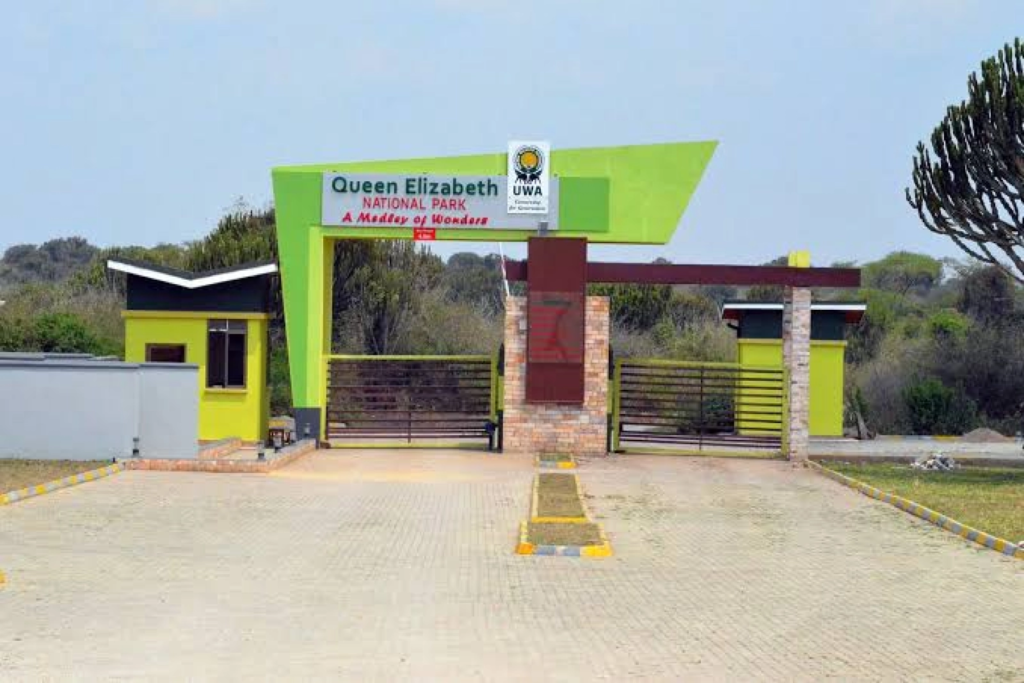
Enter Queen Elizabeth National Park
Queen Elizabeth National Park is one of Uganda’s most varied protected areas. Its habitats include open plains, wetlands, crater lakes, woodland, channels and riverine vegetation.
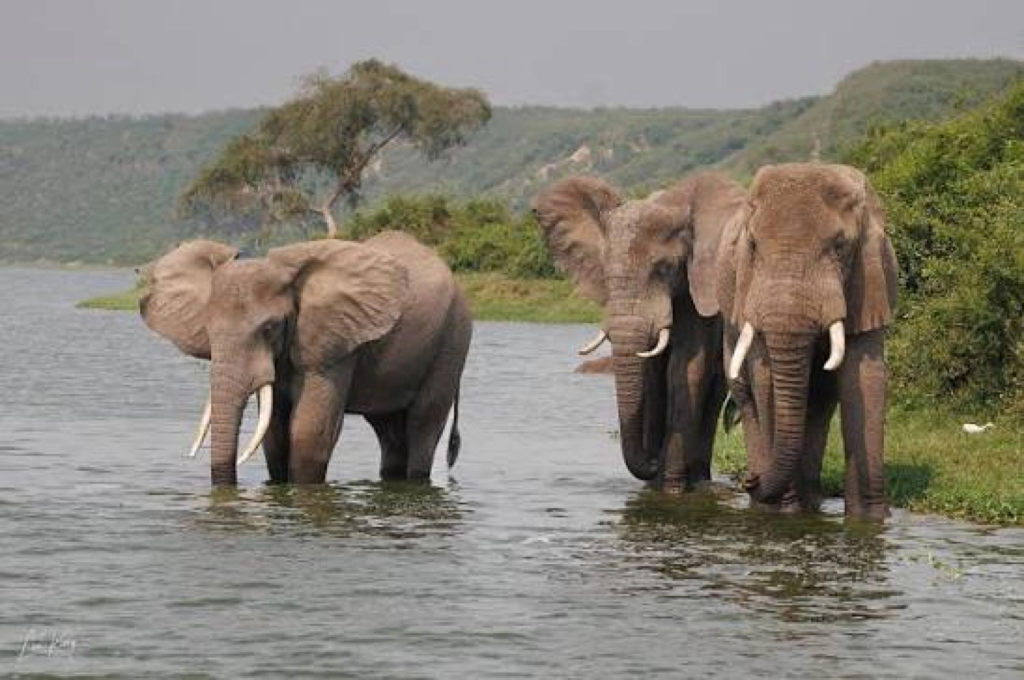
This environmental variety supports elephants, buffalo, lions, leopards, hippos, antelope, primates and an exceptional range of birdlife.
As you approach your lodge, wildlife may appear beside the road or across the plains. Warthogs, waterbuck, Uganda kob, elephants, buffalo and baboons are possible, although sightings depend on the route and time of day.
Check in at the lodge and enjoy lunch before preparing for the afternoon boat safari.
Kazinga Channel Boat Safari
After lunch, transfer to the jetty for a scheduled boat safari along the Kazinga Channel.

The Kazinga Channel is a natural waterway connecting Lake George and Lake Edward. Its banks attract wildlife throughout the year, making the cruise one of the most reliable and enjoyable wildlife experiences in Queen Elizabeth National Park.
The boat provides a low viewing angle and allows you to watch animals drinking, bathing, resting and moving along the water’s edge.
Wildlife Along the Kazinga Channel
Possible sightings include:
- Large pods of hippopotamuses
- African buffalo resting in the shallows
- Elephants drinking or bathing
- Nile crocodiles
- Monitor lizards
- Waterbuck
- Uganda kob
- Warthogs
- Baboons and vervet monkeys
- Occasional predators near the banks
The channel is especially well known for its concentration of hippos. These animals can appear relaxed when resting in the water, but they are powerful and potentially dangerous. The boat captain determines the safe route and distance.
Passengers must remain seated or balanced as instructed and should not ask the crew to approach animals more closely than is considered safe.
Birdwatching on the Kazinga Channel
The boat safari is one of the best birding experiences included in the itinerary. Even travellers who do not consider themselves birdwatchers often become absorbed by the diversity and proximity of the birds.
Possible species include:
- African fish eagles
- Pied kingfishers
- Malachite kingfishers
- Giant kingfishers
- African skimmers
- Great white and pink-backed pelicans
- Cormorants
- Herons and egrets
- Yellow-billed storks
- African spoonbills
- Open-billed storks
- Various plovers, lapwings and waders
Season and water levels influence which birds are present. Bring binoculars if possible, even if wildlife photography is your main interest.
Photography From the Boat
The Kazinga Channel provides excellent opportunities for photographing hippos, elephants, buffalo and birds from water level.
A moderate telephoto zoom is often more practical than an extremely long fixed lens because animals can appear at different distances. Use a fast shutter speed when photographing birds in flight and check exposure carefully when dark animals are surrounded by bright reflective water.
Keep cameras secured with straps and avoid moving suddenly from one side of the boat to the other. Carry a dry bag or waterproof cover to protect equipment from spray or unexpected rain.
Return to the Lodge
After the cruise, return to your lodge. Depending on the jetty, lodge location and daylight, the transfer may include a short wildlife-viewing drive.
Enjoy dinner and prepare for the early-morning game drive. Charge your camera batteries, organise binoculars and keep a light jacket accessible because the morning can feel cool before sunrise.
Day 6 Summary
- Route: Kibale National Park area to Queen Elizabeth National Park
- Estimated driving time: Approximately two to four hours, depending on the lodges and stops
- Main activity: Afternoon Kazinga Channel boat safari
- Activity level: Low physical exertion
- Meal plan: Breakfast, lunch and dinner
- Accommodation: Queen Elizabeth National Park area
Suggested Queen Elizabeth Accommodation
Budget: Pumba Safari Cottages or a comparable value property.
Mid-range: Parkview Safari Lodge, an appropriate room at Mweya Safari Lodge or a comparable property.
Luxury: Elephant Plains Lodge, a premium Mweya option or another comparable high-end property.
These are illustrative examples. The final choice depends on availability, room requirements, budget and practical access to the Kazinga Channel, Kasenyi Plains and the following day’s Ishasha route.
Optional Queen Elizabeth Activities
Guests with additional time can request activities such as:
- An additional game drive
- A crater-lake or crater-viewpoint excursion
- A community experience
- A private Kazinga Channel boat
- A specialised birdwatching excursion
- An authorised wildlife research or conservation experience where officially available
Most of these options require an extra night. Attempting to add several activities to the standard Day 6 programme can make the journey rushed and reduce rest time.
Kasenyi Plains Game Drive, Ishasha and Transfer to Bwindi
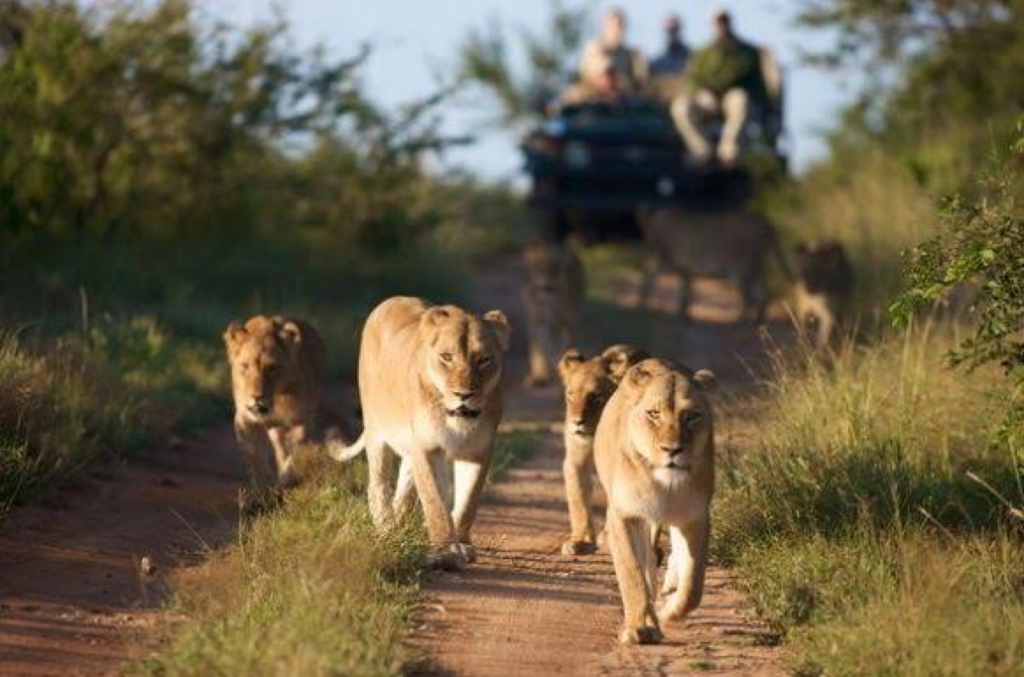
Early-Morning Game Drive
Wake early and meet your guide for a game drive across the Kasenyi Plains or another suitable game-viewing circuit selected according to current wildlife conditions.
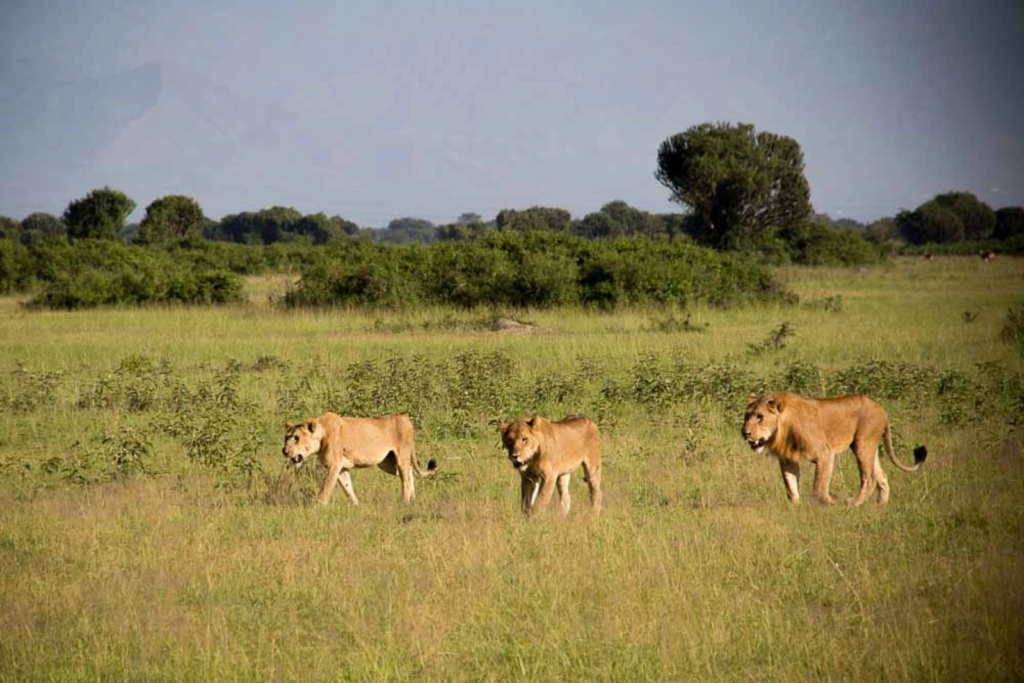
The cooler morning hours are often productive because grazers are feeding and predators may still be active. Visibility can also be better before heat haze develops across the open landscape.
Depending on lodge location and the day’s plan, breakfast may be taken before departure, after the game drive or packed for an approved stop.
Wildlife on the Kasenyi Plains
The Kasenyi Plains are known for concentrations of Uganda kob. These antelope gather in open grassland, where males defend breeding territories and predators search for opportunities.
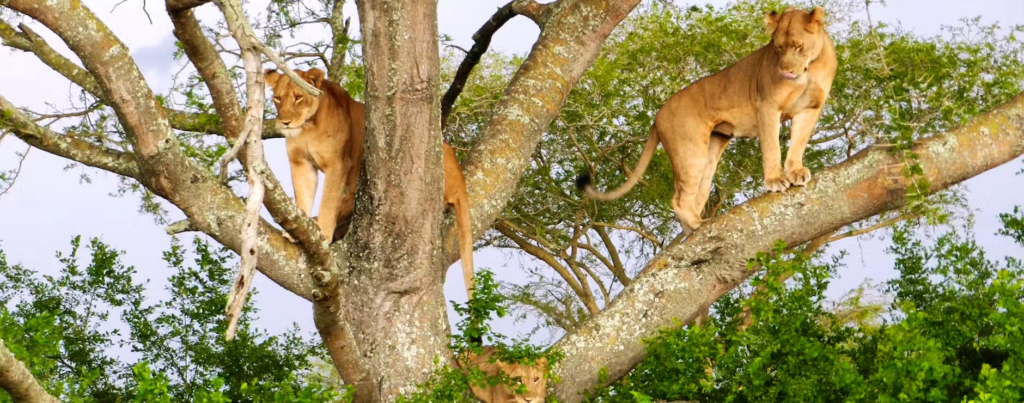
Possible wildlife includes:
- Uganda kob
- African elephants
- African buffalo
- Warthogs
- Waterbuck
- Bushbuck
- Lions
- Leopards
- Spotted hyenas
- Baboons
- Vervet monkeys
- Numerous savannah birds and raptors
Lions are one of the main targets of the game drive, but sightings cannot be guaranteed. They may be resting in grass, following prey or moving outside the accessible circuit.
Leopards inhabit the park but are even more elusive. A professional guide improves your chances by recognising tracks, alarm calls and animal behaviour, but no guide controls where a wild predator appears.
Responsible Predator Viewing
If lions or another predator are located, remain quiet and allow your guide to position the vehicle responsibly. Do not pressure the guide to drive off authorised tracks, block the animal’s route or crowd it with other vehicles.
Predator sightings can attract several safari vehicles. Patience and consideration help every visitor enjoy the experience without placing unnecessary pressure on the animal.
Continue Toward the Ishasha Sector
After the game drive, continue south through Queen Elizabeth National Park toward Ishasha.

Ishasha has a quieter and more remote atmosphere than the central Kasenyi and Mweya areas. Its open plains, woodland and large fig trees support topi, buffalo, elephants, kob, waterbuck and a variety of predators.
The journey through Ishasha is both a wildlife experience and part of the route toward Bwindi Impenetrable National Park.
Search for Ishasha’s Tree-Climbing Lions
The Ishasha sector is internationally known for lions that sometimes rest in large fig trees.
Seeing a lion stretched along a broad branch or looking across the plains from above is an extraordinary sight. However, tree-climbing is a natural behaviour and cannot be scheduled.
The lions may be hunting, resting in tall grass, moving through woodland or outside the accessible area. Your guide will check known habitats and suitable trees, but a tree-climbing lion sighting should never be guaranteed.
Even when lions remain out of view, Ishasha can provide rewarding encounters with topi, elephants, buffalo, kob and birdlife.
Why Do the Ishasha Lions Climb Trees?
Several explanations are commonly suggested. The lions may climb to avoid heat or biting insects, catch a breeze, rest away from disturbance or gain a better view over the surrounding plains.
These explanations should be treated as informed possibilities rather than one scientifically proven reason for every lion. The behaviour can vary according to individual animals and conditions.
Lunch During the Journey
Lunch is provided according to the confirmed itinerary. It may be packed and enjoyed at an approved location or arranged at a suitable lodge or restaurant.
Your guide manages the schedule carefully because the journey continues from Ishasha into the highlands surrounding Bwindi. Reaching the correct lodge before dark is important, especially when roads are wet or unfamiliar.
From Savannah to the Kigezi Highlands
After leaving Ishasha, the landscape changes dramatically. Open plains gradually give way to cultivated slopes, winding roads, forested ridges and densely settled highlands.
The Kigezi region is known for its terraced hills, small farms and expansive views. Weather can change quickly, and rain may make sections of the road muddy or slippery.
A suitable 4×4 vehicle and realistic timing are essential. The guide will adjust driving speed to road and weather conditions rather than attempting to maintain an unrealistic arrival time.
Understanding Bwindi’s Four Trekking Sectors
Bwindi Impenetrable National Park has four principal gorilla trekking areas:
- Buhoma: Located in the northern part of Bwindi and known as the park’s longest-established trekking sector.
- Ruhija: Located in the eastern part of the forest and known for elevated scenery and strong birding.
- Rushaga: Located in southern Bwindi and associated with several habituated gorilla families.
- Nkuringo: Located in the south and known for dramatic highland scenery and physically demanding terrain.
These sectors are not interchangeable neighbourhoods. Road transfers between them can take several hours. Your accommodation must be selected according to the sector shown on your confirmed permit.
A highly rated lodge in the wrong sector can create an impractical or impossible morning transfer. Uganda Safari Tours coordinates the permit and lodge location as part of the booking process.
Arrival at Your Bwindi Lodge
Arrive at the lodge during the late afternoon or early evening, check in and receive the property briefing.
Before dinner, confirm the following details with your guide:
- Morning wake-up time
- Breakfast time
- Departure time for the ranger station
- Permit-related identification
- Packed-lunch arrangement
- Drinking-water arrangement
- Porter hire
- Footwear and clothing
- Weather expectations
Pack your trekking bag before going to sleep. Gorilla trekking mornings begin early, and preparing the night before prevents unnecessary stress.
Day 7 Summary
- Route: Queen Elizabeth National Park to Kasenyi, Ishasha and the assigned Bwindi sector
- Estimated duration: A full touring day, commonly six to eight hours when game viewing and wildlife stops are included
- Main activities: Morning game drive, Ishasha wildlife search and scenic highland transfer
- Activity level: Low physical exertion but substantial time in the vehicle
- Meal plan: Breakfast, lunch and dinner
- Accommodation: Lodge near the confirmed Bwindi trekking sector
Illustrative Bwindi Accommodation
Budget and value: Broadbill Forest Camp, Trekkers Tavern, Gorilla Mist Camp or a comparable property in the appropriate sector.
Mid-range: Ichumbi Gorilla Lodge, Bakiga Lodge, Rushaga Gorilla Haven or another comparable property matched to the permit location.
Luxury: Clouds Mountain Gorilla Lodge, Gorilla Forest Lodge or another premium property in the correct operational area.
These properties serve different sectors and should not be presented as alternatives for every permit. Your final quotation will identify accommodation that is practical for the assigned trekking headquarters.
What to Pack for Tomorrow’s Gorilla Trek
- Broken-in waterproof hiking boots
- Long lightweight trousers
- Long-sleeved shirt
- Long socks or gaiters
- Gardening-style gloves
- Lightweight waterproof jacket
- Small comfortable daypack
- Drinking water
- Packed lunch
- Sun hat and sunscreen
- Insect repellent
- Camera and waterproof cover
- Spare camera battery
- Required identification
- Essential personal medication
Mountain Gorilla Trekking in Bwindi Impenetrable National Park

The Most Anticipated Day of Your Uganda Safari
Wake early for breakfast and prepare for one of Africa’s most extraordinary wildlife experiences: trekking through Bwindi Impenetrable National Park to meet a habituated mountain gorilla family.
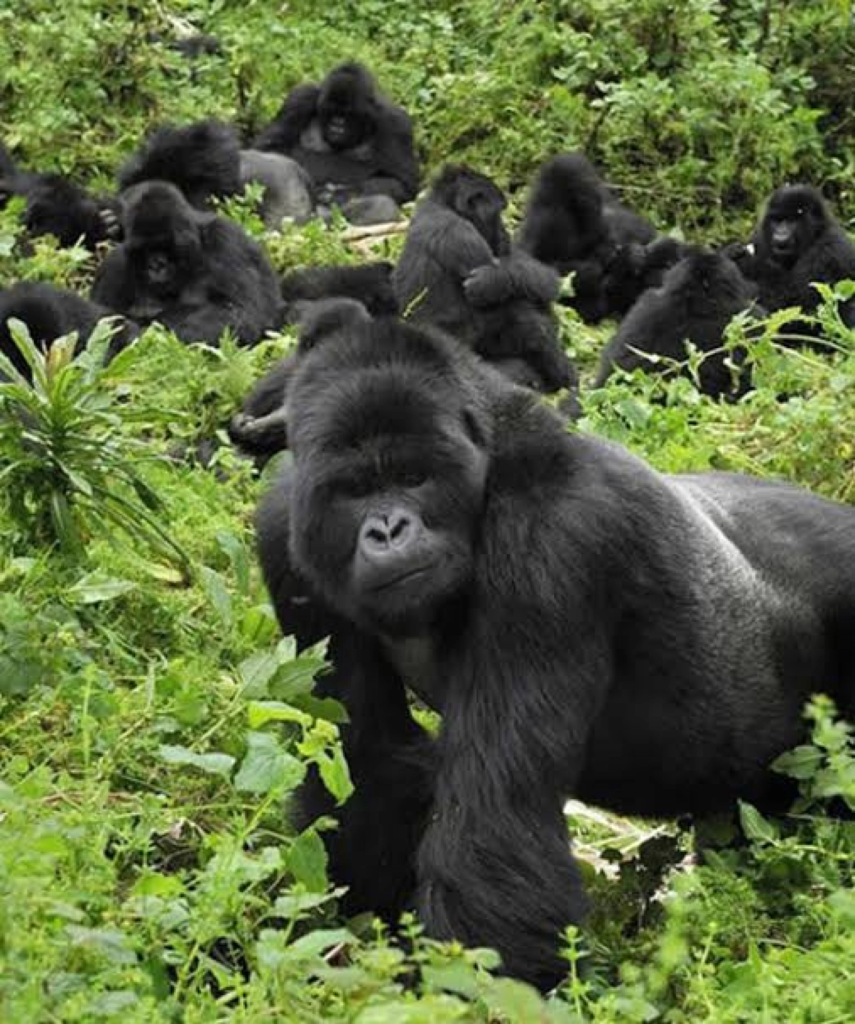
Carry the required identification, packed lunch, drinking water and trekking equipment. Your driver-guide will transfer you to the ranger station assigned to your permit.
Arrive with enough time to complete registration, organise a porter and attend the full briefing.
Gorilla Trekking Briefing
Before entering the forest, the authorised ranger team explains:

- How trekking groups are organised
- How gorilla families are assigned
- Expected forest and trail conditions
- The required distance from gorillas
- Health and mask procedures
- Photography restrictions
- What to do if a gorilla approaches
- How to respond to a silverback display
- Rules concerning food and drinks
- How the observation period is managed
Listen carefully and follow every instruction. The ranger’s decisions are made for the safety of guests and the welfare of the gorillas.
Hiring a Porter
Hiring a porter is strongly recommended, even for travellers who are physically fit.

A porter can carry your daypack, water, lunch and camera equipment. The porter can also provide steadying assistance on steep, slippery or muddy sections.
The length and difficulty of the trek cannot be known before entering the forest. A walk that begins easily can become more demanding if the gorillas move across a steep valley or through dense vegetation.
Porter work also provides direct income to people living near the national park. Ask your guide about the current porter fee and appropriate gratuity.
Entering Bwindi Impenetrable Forest
Enter the forest with your ranger, trackers and trekking group. The route may begin on a defined trail before continuing through thicker vegetation according to the gorillas’ location.

Bwindi’s terrain differs between sectors and even between gorilla families within the same sector. Possible conditions include:
- Steep climbs and descents
- Muddy paths
- Exposed roots
- Vines and thick vegetation
- Stream crossings
- Wet leaves and slippery ground
- Warm open sections
- Cool shaded forest
Rain can occur at any time of year. Wear suitable clothing and protect cameras, phones and important documents.
How Trackers Find the Gorillas
Trackers monitor the habituated gorilla families and commonly begin work before visitors enter the forest. They look for nests, dung, broken vegetation, feeding signs and the direction in which the family travelled.

Information is communicated to the ranger leading your group, but the gorillas continue moving naturally. The trekking route can therefore change during the morning.
Remain patient, pace yourself and tell the ranger if you need a break. Do not attempt to move ahead of the group.
The Forest Experience
Bwindi is much more than the setting for a gorilla trek. It is an ancient montane forest supporting exceptional plant, bird, mammal and insect diversity.
During the walk, the ranger may identify forest plants, butterflies, birds, monkeys and signs of other animals. These supporting encounters depend on the route and the need to reach the gorilla family.
The sound of the forest, the changing light and the messages received from trackers gradually build anticipation. When the gorillas are close, the ranger will normally ask the group to prepare cameras, secure loose items and follow the final approach instructions.
Your Mountain Gorilla Encounter
Once the gorilla family is located, the ranger manages the group’s position and begins the authorised observation period according to current procedures.
Every encounter is different. The gorillas may be feeding, travelling, resting or interacting. You may observe:
- A silverback watching over the family
- Adults feeding on leaves, shoots or stems
- Mothers caring for infants
- Juveniles climbing, wrestling or playing
- Gorillas grooming one another
- Family members communicating through movements and vocalisations
Vegetation may partly obstruct the view, and guests are not guaranteed a perfect photography position. Rangers may guide the group to a clearer point where this can be done without disturbing the gorillas.
Rules During the Gorilla Encounter
- Maintain the distance instructed by the ranger whenever possible.
- Keep your voice low.
- Do not use flash photography.
- Do not eat or drink near the gorillas.
- Do not touch a gorilla.
- Do not make sudden independent movements.
- Do not imitate gorilla sounds unless specifically directed by a ranger.
- Follow current mask requirements.
- If a gorilla approaches, remain calm and follow the ranger.
- Never block the path of a gorilla.
If a Silverback Displays or Approaches
Silverbacks may beat their chests, vocalise, move quickly or perform other displays. These behaviours can be part of communication, dominance or group protection.
Do not run. Running can create additional risk and ignores the ranger’s experience with the family.
Remain calm, lower your body if instructed, avoid sudden movements and follow every direction given by the ranger. The ranger understands the gorilla family’s behaviour and will manage the situation.
Gorilla Photography
Forest photography can be difficult because of low light, vegetation and changing subject distance.
Use a camera setting that allows a reasonably fast shutter speed without flash. A versatile telephoto zoom is useful, but avoid carrying equipment so heavy that it makes the trek unsafe or exhausting.
Keep the camera protected from rain and humidity. A lens cloth, spare battery and empty memory card should be easily accessible.
Take photographs, but also lower the camera. Watching a gorilla family directly often becomes more meaningful than returning with hundreds of nearly identical images.
Leaving the Gorilla Family
When the authorised observation period ends, the ranger directs the group away from the gorillas. Respect the ending time and do not attempt to remain behind for another photograph.
Begin the return journey through the forest. The route back may be shorter or longer than the approach, depending on the family’s location.
At the ranger station, successful participants may receive a gorilla trekking certificate under the current operating system.
Return to the Lodge
Meet your driver-guide and return to the lodge for a shower, meal and rest.
The finishing time is unpredictable. Some trekking groups return early in the afternoon, while others remain in the forest much longer. For this reason, no demanding fixed afternoon activity should be promised on gorilla trekking day.
If you return early and still have energy, the guide can discuss a short optional experience, but rest should remain the standard plan.
Day 8 Summary
- Location: Assigned sector of Bwindi Impenetrable National Park
- Main activity: Mountain gorilla trekking
- Trekking duration: Highly variable; reserve the full day
- Observation period: Determined by the current permit and ranger regulations
- Activity level: Moderate to strenuous
- Meal plan: Breakfast, packed lunch and dinner
- Accommodation: Same Bwindi lodge as Day 7
How Fit Do You Need to Be?
You do not need to be an elite athlete, but reasonable walking fitness, endurance and balance improve the experience.
In the weeks before travel, prepare through regular walking, hills, stairs or other suitable exercise. Wear your hiking boots several times before the safari so they are properly broken in.
Guests with knee, back, heart, respiratory or mobility concerns should obtain appropriate medical advice and tell Uganda Safari Tours during the planning stage.
Specific mobility assistance may be available locally, but it must be investigated and arranged in advance. Availability, safety, cost and suitability cannot be assumed.
Gorilla Trekking Age and Health Requirements
Gorilla trekking is subject to the minimum-age rule set by the responsible wildlife authority. The current rule must be verified when permits are booked.
Families must provide children’s correct ages and identification details before permits are purchased. An ineligible child cannot be guaranteed permission to trek.
Anyone experiencing symptoms that could place gorillas at risk must inform the guide. Gorillas are vulnerable to human illnesses, particularly respiratory infections.
Refunds, permit changes and insurance claims depend on the applicable terms. Do not hide symptoms because of the permit cost.
Bwindi to Lake Bunyonyi: Highland Scenery, Culture and Relaxation
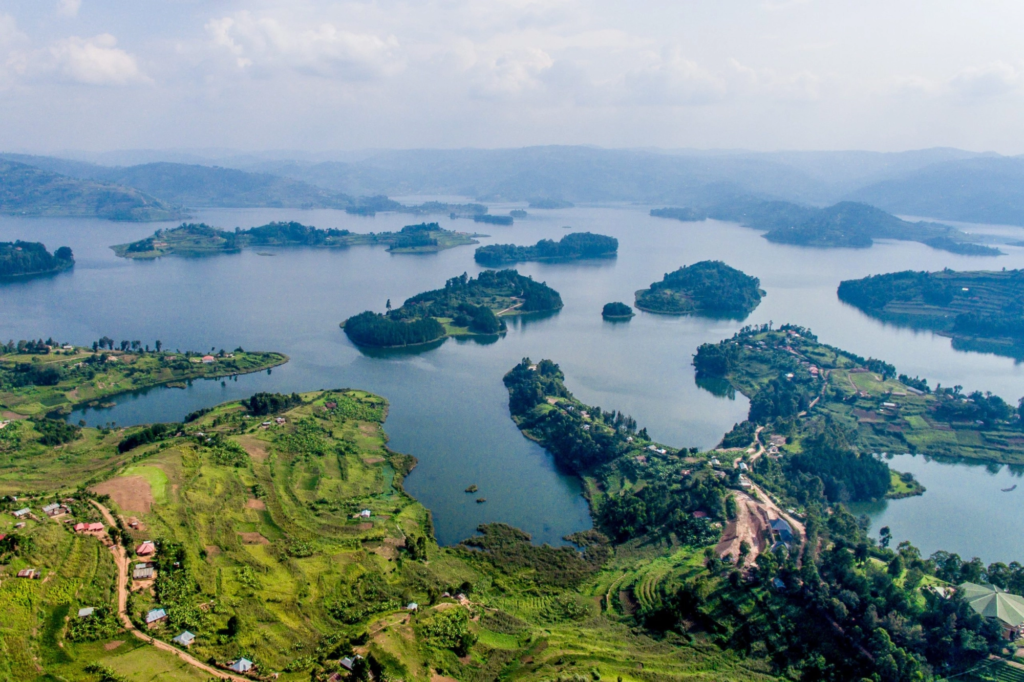
A Relaxed Morning After Gorilla Trekking
Enjoy breakfast at the lodge and take time to reflect on the previous day’s gorilla encounter.
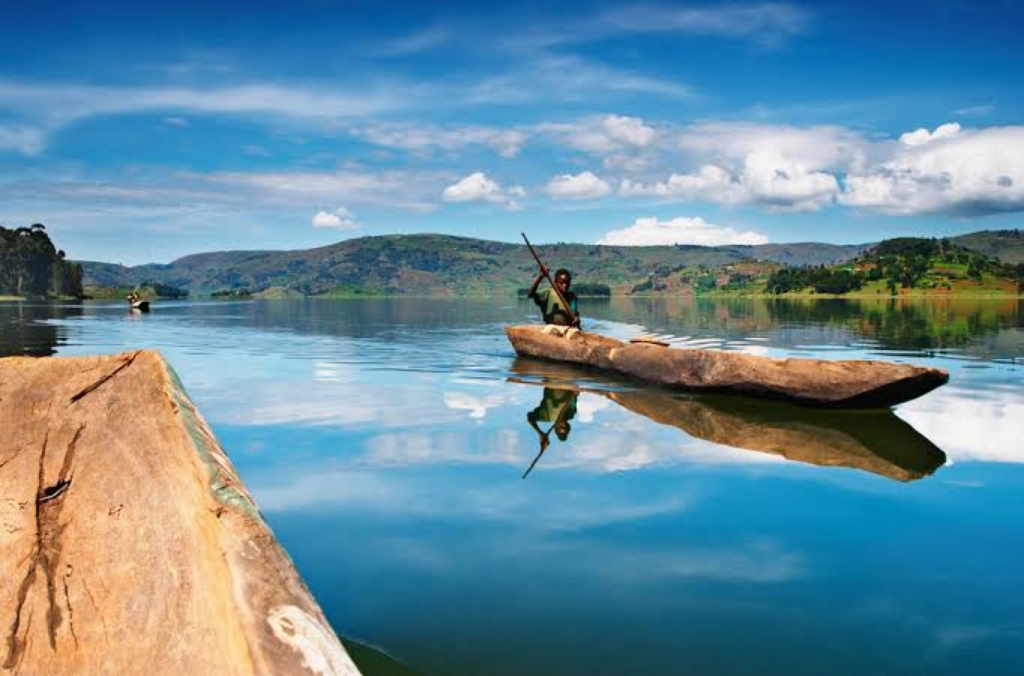
Depending on your lodge, trekking sector and confirmed itinerary, the morning can remain relaxed or include a carefully arranged cultural or nature experience.
Check out and begin the journey through the Kigezi highlands toward Lake Bunyonyi.
Driving Time Depends on Your Bwindi Sector
The distance from Bwindi to Lake Bunyonyi varies substantially. Buhoma, Ruhija, Rushaga and Nkuringo are located in different parts of the forest and connect to the lake by different roads.

The website should therefore avoid promising one fixed driving time for every departure. Your personalised itinerary will provide the most realistic estimate for the confirmed lodge and route.
Scenery of the Kigezi Highlands
The drive passes through one of Uganda’s most distinctive landscapes. Steep hills are shaped by terraces, small farms and villages. Valleys and distant ridges create constantly changing views.

Roads can be winding and occasionally rough. Travellers who experience motion sickness should prepare appropriately and inform the guide when a short stop is needed.
Arrive at Lake Bunyonyi
Lake Bunyonyi is surrounded by green hills and dotted with islands. Its cooler highland atmosphere and calm scenery provide a dramatic contrast to Bwindi’s dense rainforest.
Check in at your lodge and enjoy lunch overlooking the lake where possible.
The remainder of the day is deliberately flexible. After eight active safari days, some guests prefer an afternoon without a demanding schedule.
Guided Boat or Canoe Experience
A guided boat or canoe excursion can be arranged as part of the confirmed itinerary.
A local guide may introduce the lake’s islands, landscapes, communities and stories. The exact route depends on the departure point, available time, weather and selected boat.
Traditional dugout canoes require balance and local skill. Guests should not paddle independently without an appropriate guide. A motorboat may be more suitable for travellers who prefer additional stability or want to cover a greater distance.
Wear the provided safety equipment and follow the operator’s instructions. Weather on highland lakes can change, and the activity should be postponed or adjusted when conditions are unsuitable.
Bakiga Cultural Experience
The communities surrounding Lake Bunyonyi are strongly associated with Bakiga culture and highland farming traditions.
A responsibly organised cultural experience may include local food, music, crafts, farming, storytelling or conversation about life in the region. The exact content must reflect the host programme rather than a generic promise.
Culture is living and changing. Community members should not be presented as performers frozen in the past. Ask permission before photographing people and support host-led projects through agreed fees or direct craft purchases.
Batwa Cultural Experience
If clients do not participate in gorilla trekking or if a Batwa experience is an important part of their journey, it should be planned in advance at an appropriate location.
The Batwa have a complex history connected to the forests of southwestern Uganda. Visits should be community-led, respectful and accurately described. Avoid romanticised language or treating poverty and displacement as entertainment.
The quotation should explain what the activity includes, how long it lasts and whether the fee supports a particular community initiative.
Other Lake Bunyonyi Activities
Depending on the lodge and confirmed arrangements, guests may choose:
- Birdwatching
- A guided nature walk
- A community visit
- A boat excursion
- A canoe experience
- Photography from the shoreline
- Relaxation at the lodge
- Swimming only where current local advice confirms suitable conditions
Do not rely on broad internet statements that any natural lake is universally safe for swimming. Ask the lodge about the designated area, weather, depth, boat traffic and current health considerations. Never swim alone.
Why Lake Bunyonyi Is Included
Lake Bunyonyi is not merely an additional destination added to make the itinerary appear longer. It serves an important practical and emotional purpose.
The stop allows guests to recover after gorilla trekking, enjoy the highland landscape and process the experiences of the previous days. It also breaks the journey before the long return toward central Uganda.
Its strength is tranquillity, scenery and small-scale activity rather than large wildlife sightings. Presenting the lake honestly helps travellers understand why it complements the national parks.
Day 9 Summary
- Route: Assigned Bwindi sector to Lake Bunyonyi
- Estimated driving time: Depends on the confirmed Bwindi sector, lodge and road conditions
- Main experiences: Scenic highland transfer and relaxation beside Lake Bunyonyi
- Optional activities: Boat trip, canoe excursion, birdwatching or a cultural experience
- Activity level: Easy unless a longer walk is arranged
- Meal plan: Breakfast, lunch and dinner
- Accommodation: Lake Bunyonyi
Suggested Lake Bunyonyi Accommodation
Budget: Crater Bay Cottages, Bunyonyi Overland Resort or a comparable property.
Mid-range: Lake Bunyonyi Rock Resort, BirdNest Resort in an appropriate room category or a comparable lodge.
Luxury: A premium lake-facing room, private cottage or the best suitable high-comfort property available for the dates.
Lake properties can involve steep paths and steps. Travellers with mobility concerns should request detailed access information. A room with an exceptional view may not be suitable if reaching it requires a difficult climb.
Lake Bunyonyi to Entebbe via the Equator or Alternative Kigali Departure

Begin the Return Journey
Enjoy an early breakfast overlooking Lake Bunyonyi before checking out and beginning the final journey.
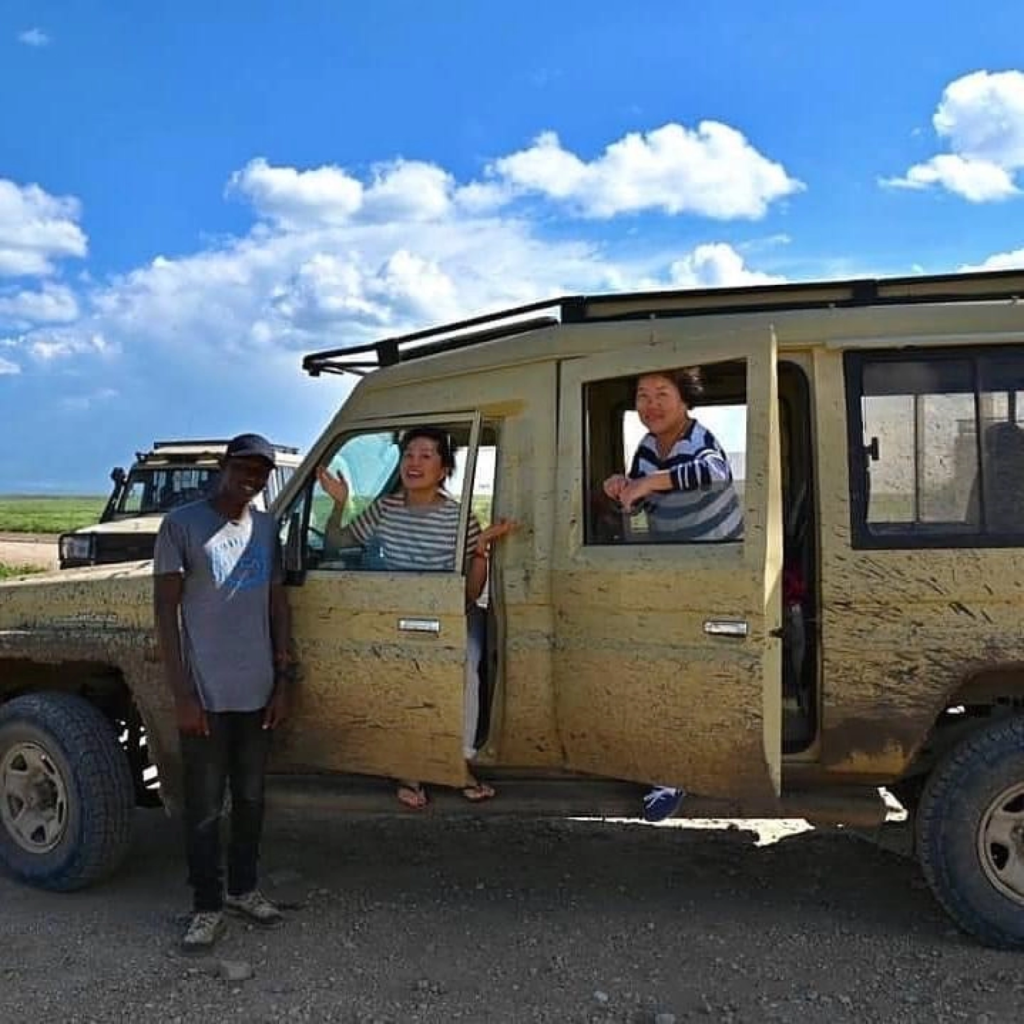
The standard route travels toward Kabale, Mbarara, Masaka, the Equator at Kayabwe and Entebbe. This is a long driving day and must be planned carefully around your international flight time.
The highland scenery gradually gives way to western Uganda’s cattle country, broader farmland and the busier central corridor.
Travel Through Mbarara and Uganda’s Cattle Country
The route passes through or near Mbarara, an important commercial centre in western Uganda.

The surrounding region is closely associated with Ankole cattle, which are recognised for their distinctive long horns. Cattle may be seen from the road, but meaningful cultural or farm experiences require separate arrangements and should not be promised as a roadside stop.
Your guide will select appropriate locations for comfort breaks, fuel and lunch.
Stop at the Equator
When timing allows, stop at the Equator landmark near Kayabwe.
The stop provides an opportunity to stretch, take photographs and browse locally produced crafts. Lunch may be arranged here or at another suitable restaurant along the route.
Some Equator stops offer demonstrations involving water and the Coriolis effect. These demonstrations are popular entertainment but should not be presented as controlled scientific proof. The real value of the stop is marking the transition between the Southern and Northern hemispheres.
Continue to Entebbe
Continue through the Masaka corridor toward Entebbe. Traffic can increase substantially as you approach the greater Kampala and Entebbe region.

Your guide will take you to Entebbe International Airport or a confirmed Entebbe hotel.
Evening and late-night international departures are generally more suitable for a same-day road transfer from Lake Bunyonyi. Morning or early-afternoon flights normally require an additional overnight stay in Entebbe.
Important Flight-Planning Advice
Do not book a tightly timed flight without discussing it with Uganda Safari Tours.
Road construction, traffic, weather, vehicle problems or other delays can affect the arrival time. A safe schedule includes a generous airport margin rather than depending on the fastest possible drive.
If your international flight is unsuitable for a same-day transfer, we recommend adding a final night in Entebbe and departing the following day.
Any additional night should be included in the quotation before the safari is confirmed.
Alternative Kigali Departure
Travellers with suitable flights can request an alternative finish in Kigali, Rwanda.
From Lake Bunyonyi or parts of southern Bwindi, Kigali may be reached more quickly than Entebbe. However, the most practical route depends on:
- Your confirmed Bwindi sector
- The location of your Lake Bunyonyi lodge
- Border operating procedures
- Your nationality and visa requirements
- Health and entry documentation
- Vehicle and cross-border arrangements
- Your Kigali flight time
The route may use the Katuna–Gatuna or Cyanika border, depending on the starting location and current operational advice.
What the Kigali Transfer Should Include
If a Kigali finish is selected, your written quotation should state:
- The planned border crossing
- Whether border assistance is included
- Whether the same vehicle continues into Rwanda
- Whether a vehicle change is required
- The final Kigali hotel or airport drop-off
- Estimated driving and border-processing time
- Any additional cross-border transfer costs
Travellers remain responsible for carrying valid passports, visas and any required health documents. Entry requirements vary according to nationality and can change.
Do not rely solely on an old blog post or assume that every traveller qualifies for the same visa arrangement. Verify current requirements through the relevant immigration authorities before travel.
Is Entebbe or Kigali the Better Ending?
Neither option is automatically better for every traveller.
Entebbe may be better when:
- Your return flight departs from Uganda.
- You prefer to remain within one country.
- You want an Equator stop and road journey through western Uganda.
- Your visa or flight arrangements make Rwanda unnecessary.
- You have added Lake Mburo or another Uganda extension.
Kigali may be better when:
- Your international flight is more convenient from Rwanda.
- Your Bwindi sector provides efficient access to the border.
- You want to reduce final road time.
- You plan to continue travelling in Rwanda.
- Cross-border requirements are straightforward for your booking.
Uganda Safari Tours can compare both routes before you finalise international flights.
Day 10 Summary
- Standard route: Lake Bunyonyi to Kabale, Mbarara, the Equator and Entebbe
- Estimated road time to Entebbe: Commonly eight to ten hours before major traffic delays and extended stops
- Alternative route: Lake Bunyonyi or southern Bwindi to Kigali, subject to the confirmed starting point and border arrangements
- Main experience: Scenic return journey with an Equator stop when time permits
- Meal plan: Breakfast and lunch; dinner depends on the flight or added hotel night
- Ending point: Entebbe International Airport, Entebbe hotel, Kigali hotel or Kigali International Airport
Departure-Day Luggage and Document Checklist
- Passport
- Flight ticket or electronic itinerary
- Visa documentation where required
- Health documents where required
- Travel-insurance information
- Phone and charger
- Essential medication
- Valuables removed from the lodge safe
- Personal lodge bills settled
- All bags checked before departure
Complete 10-Day Uganda Safari Route
- Day 1: Arrival at Entebbe International Airport and hotel transfer.
- Day 2: Rhino tracking at Ziwa and transfer to Murchison Falls.
- Day 3: Murchison Falls game drive and Victoria Nile boat safari.
- Day 4: Scenic transfer from Murchison Falls to Kibale.
- Day 5: Chimpanzee trekking in Kibale National Park.
- Day 6: Transfer to Queen Elizabeth and Kazinga Channel cruise.
- Day 7: Kasenyi game drive, Ishasha and transfer to Bwindi.
- Day 8: Mountain gorilla trekking in Bwindi.
- Day 9: Transfer to Lake Bunyonyi for scenery and relaxation.
- Day 10: Return to Entebbe via the Equator or depart through Kigali.
Would You Prefer a Longer or Shorter Uganda Safari?
If You Have More Than 10 Days
Adding two to four days creates a more relaxed itinerary and allows deeper exploration.
Recommended additions include:
- An extra night in Murchison Falls for another game drive or Nile Delta cruise
- An additional Kibale night for Bigodi, crater lakes or a tea experience
- Another Queen Elizabeth night for more game viewing
- A second gorilla trek or Gorilla Habituation Experience
- A dedicated Batwa or Bakiga cultural experience
- Lake Mburo National Park to break the return journey
- Mabamba wetland for shoebill birding
- Jinja and the source of the Nile
A twelve- to fourteen-day itinerary is better for travellers who want fewer long days and more time at each lodge.
If You Have Fewer Than 10 Days
With seven to nine days, it is usually better to focus on fewer regions than to rush through the full route.
A seven-day itinerary can combine Kibale, Queen Elizabeth and Bwindi. A five-day itinerary can focus on chimpanzees and gorillas. A three-day safari generally concentrates on gorilla trekking and includes substantial transfer time.
Removing destinations strategically produces a better safari than keeping every park and shortening all the activities.
Essential Gorilla Trekking Preparation
Physical Preparation
Begin regular walking several weeks before travel. Include hills or stairs where possible. The objective is not extreme fitness but improved balance, leg strength and endurance.
Travellers who are normally inactive should begin gradually and obtain medical advice where appropriate.
Footwear
Wear waterproof hiking boots with strong grip and ankle support. Test the boots before travelling. Brand-new footwear can cause blisters and discomfort.
Smooth trainers and open shoes are unsuitable for steep, muddy forest terrain.
Clothing
Wear long trousers and a long-sleeved shirt to protect against vegetation and insects. Neutral colours are practical. Bring a lightweight rain jacket, long socks or gaiters and gardening-style gloves.
Dress in layers because the morning can begin cool and become warm during steep walking.
Food and Water
Eat a proper breakfast and carry sufficient drinking water. The lodge will normally provide a packed lunch under the confirmed meal plan.
Do not eat near gorillas. Follow the ranger’s instructions regarding food and waste.
Camera Equipment
Choose equipment you can carry comfortably or hire a porter. Protect cameras from rain and moisture. Flash photography is not permitted around gorillas.
Porter Support
Use a porter even if you expect an easy trek. Gorilla movements can change the route, and the additional assistance can make a major difference on steep or muddy ground.
Ready to Experience Uganda’s Gorillas, Chimpanzees and Wildlife?
Send Uganda Safari Tours your preferred dates, number of travellers, children’s ages, room arrangement and accommodation level.
We will check:
- Gorilla permit availability
- Chimpanzee permit availability
- Lodges in the correct Bwindi sector
- Budget, mid-range and luxury accommodation
- Entebbe and Kigali ending options
- Suitable room arrangements
- Optional activities and extensions
Your personalised proposal will show the complete route, named accommodation, included permits, meal plan, activities, exclusions, total price and booking steps.
Request My 10-Day Safari Quote
Chat With a Uganda Safari Planner
Permits, lodges and services remain subject to availability until the required payment has been received and your booking has been confirmed in writing.
How Much Does a 10-Day Uganda Safari Cost?
The price of a 10-day Uganda safari depends on your travel dates, number of travellers, accommodation standard, room arrangement, permit category and optional activities.
Two travellers sharing one private safari vehicle and one double or twin room normally pay less per person than a solo traveller. This is because major operational expenses such as the vehicle, fuel and driver-guide are shared.
Families and larger groups may also benefit from sharing transport costs, but another vehicle may be required when the group becomes too large to travel comfortably in one safari vehicle.
Gorilla and chimpanzee permits represent a significant part of the safari price. These permits are generally charged per participant and are not reduced simply because more people are travelling together.
Uganda Safari Tours offers three principal accommodation levels:
- Budget
- Mid-range
- Luxury
The wildlife experiences can remain broadly similar across all three packages. The main differences concern lodge location, room quality, service, dining, privacy and additional amenities.
Sample 10-Day Uganda Safari Prices
| Accommodation Level | Sample Price Per Person | Pricing Basis | Recommended For |
|---|---|---|---|
| Budget | [INSERT APPROVED BUDGET PRICE] | Two adults sharing a room and private safari vehicle | Travellers prioritising wildlife experiences and comfortable but simple accommodation |
| Mid-range | [INSERT APPROVED MID-RANGE PRICE] | Two adults sharing a room and private safari vehicle | First-time visitors wanting comfortable rooms, good locations and dependable service |
| Luxury | [INSERT APPROVED LUXURY PRICE] | Two adults sharing a room and private safari vehicle | Travellers seeking premium lodges, spacious rooms, refined dining and personal service |
Important: These sample prices are indicative and must be updated with rates approved by Uganda Safari Tours. Prices are subject to travel dates, permit tariffs, lodge availability, room type, group size and the final itinerary. Add a genuine “Rates reviewed” month and year when publishing.
What a Published Safari Price Should Explain
A price is only useful when travellers understand what it includes. Every sample rate shown on this page should identify:
- Whether it is per person or per safari
- How many travellers are sharing the vehicle
- Whether two travellers are sharing one room
- The accommodation level
- The travel season or date range
- Whether the gorilla permit is included
- Whether the chimpanzee permit is included
- Whether park entrance fees are included
- Whether meals are included
- Whether international flights are excluded
A very low “from” price should not be advertised if it only applies to an unusually large group, a rare room arrangement or dates with highly restrictive conditions.
Transparent pricing helps travellers compare safari proposals properly and reduces the possibility of unexpected charges later.
Get an Exact Price for Your Travel Dates
Send us your preferred dates, number of travellers, children’s ages, room preferences and accommodation level. We will check permits and lodge availability before preparing a complete written quotation.
What Determines the Price of Your Uganda Safari?
Gorilla Trekking Permits
A mountain gorilla trekking permit is one of the most important and expensive components of this itinerary.
The permit allows an eligible traveller to participate in the authorised trek on a specific date and in a particular trekking area. It does not independently include your accommodation, road transport, meals or unrelated national park activities.
Permit tariffs depend on the activity and traveller category established by the responsible wildlife authority. These tariffs can change, so every published price should carry a genuine review date.
A normal gorilla trekking permit and a Gorilla Habituation Experience permit are different products. Habituation usually has a higher permit cost, different availability and a different field experience.
Chimpanzee Trekking Permits
The standard itinerary includes chimpanzee trekking in Kibale National Park. The permit is date-specific and normally has a defined reporting point and session.
A standard chimpanzee trek should not be confused with the longer Chimpanzee Habituation Experience. Travellers requesting habituation need a different permit and may require changes to the itinerary.
Number of Travellers
The private safari vehicle, fuel and driver-guide represent substantial operating costs. These expenses are shared between the travellers using the vehicle.
A couple will generally pay less per person than a solo traveller. Four travellers may pay less per person than two, provided that everyone can travel comfortably in the selected vehicle.
As group size increases, Uganda Safari Tours considers seating, window access, luggage and camera equipment. A vehicle that technically has enough seats may still be uncomfortable for a long safari.
A second vehicle may be recommended for a large group or a group of serious photographers. This improves comfort and viewing but increases the total cost.
Room Arrangement
Two guests sharing a double or twin room normally receive the most favourable per-person rate.
A solo traveller generally pays a single supplement because one person occupies a room priced for two guests. Triple rooms, family cottages and interconnecting rooms are available only at selected properties.
Families should provide the children’s ages and preferred room arrangement during the enquiry. Lodge child policies differ, and the cheapest room configuration may not always be the most comfortable or appropriate.
Accommodation Level
Accommodation can make a significant difference to the safari cost.
Budget lodges offer simple comfort and value. Mid-range lodges generally provide improved rooms, settings and services. Luxury properties focus on premium locations, privacy, design, dining and personalised service.
Location is as important as room quality. A cheaper lodge far from the following day’s activity may create additional driving, fuel use and an earlier departure.
In Bwindi, the accommodation must match the trekking sector stated on the permit. Selecting a cheaper property in the wrong sector can make the gorilla trek impractical.
Travel Season
Safari prices can vary according to travel season. Popular dry-season months, festive periods and international holiday dates often create stronger demand for permits, vehicles and lodge rooms.
Some properties use different rates for high, low and shoulder seasons. A safari crossing from one rate season into another may include different nightly prices.
Lower-demand periods can offer greater room availability, greener scenery and possible lodge promotions. However, forest trails and some roads may be muddier during wetter periods.
Safari Vehicle
The proposed vehicle influences both price and comfort. A safari Land Cruiser, a larger extended vehicle, a specialised photography setup or two vehicles will cost more than a smaller arrangement.
Your quotation should identify the vehicle category rather than relying only on the phrase “4×4 safari vehicle.” Ask about passenger seating, luggage space, pop-up roof access and air conditioning where this matters.
Domestic Flights
Domestic flights can reduce selected road journeys, but they add airfare, airstrip transfers, luggage restrictions and operational coordination.
A fly-in safari may still require a vehicle at the destination for game drives and transfers. Flying therefore does not eliminate all road transport.
Flight schedules can change by season and route. Any fly-in version should be costed as a distinct itinerary rather than added casually to the road-safari price.
Entebbe or Kigali Ending
Finishing in Kigali may reduce road time from parts of southwestern Uganda, but it introduces border, visa, vehicle and transfer considerations.
Compare the complete journey rather than assuming Kigali is automatically cheaper. The best option depends on the confirmed Bwindi sector, international airfare, entry requirements and flight times.
Optional Activities
Optional activities that can affect the safari price include:
- Bigodi Wetland Sanctuary walk
- Batwa cultural experience
- Bakiga cultural experience
- Lake Bunyonyi boat or canoe excursion
- Private boat safaris
- Additional game drives
- Specialist birding guide
- Gorilla Habituation Experience
- Chimpanzee Habituation Experience
- Additional gorilla trek
- Room upgrades
- Domestic flights
- Extra accommodation nights
The quotation should show optional experiences separately. Core activities should not be removed from the headline price simply to make the package appear cheaper.
What Is Included in the 10-Day Uganda Safari?
The following services should normally be included in the standard quotation. Your written proposal and invoice remain the authoritative documents for your specific booking.
- Airport pickup at Entebbe International Airport
- Airport or hotel drop-off at the end of the confirmed itinerary
- Private transport in the stated 4×4 safari vehicle
- Services of a professional English-speaking driver-guide
- Fuel for the confirmed safari route
- Nine nights of accommodation
- Room arrangement stated in the quotation
- Meals indicated for each day
- One standard mountain gorilla trekking permit for each eligible participating guest
- One standard Kibale chimpanzee trekking permit for each eligible participating guest
- Guided rhino tracking at Ziwa Rhino Sanctuary
- National park entrance fees for the scheduled visits
- Morning and afternoon game drives described in the itinerary
- Scheduled Victoria Nile boat safari in Murchison Falls National Park
- Scheduled Kazinga Channel boat safari
- Guide and vehicle park-entry charges
- Drinking water in the safari vehicle under the company’s confirmed policy
- Applicable government taxes included by the operator
- Operational assistance from Uganda Safari Tours during the safari
Services That Must Be Labelled Clearly
The website and quotation should state whether the following are included or optional:
- Bigodi Wetland Sanctuary walk
- Lake Bunyonyi boat trip
- Batwa or Bakiga cultural experience
- Porter hire
- Private boat services
- Alcoholic and soft drinks
- Laundry
- Entebbe dinner on late arrival
- Kigali border transfer
- Final Entebbe hotel night
A broad statement such as “all activities included” should not be used unless every activity mentioned on the page is genuinely part of the price.
What Is Not Included?
Unless your quotation states otherwise, the following items are normally excluded:
- International flights
- Regional flights
- Domestic flights unless added to the itinerary
- Uganda or Rwanda visa fees
- Passport expenses
- Travel insurance
- Medical and evacuation insurance
- Vaccinations and health consultations
- Personal medication
- Tips and gratuities
- Alcoholic drinks
- Premium beverages
- Laundry unless included by the lodge
- Porter hire unless explicitly included
- Souvenirs and personal purchases
- Telephone and internet expenses
- Activities identified as optional
- Additional accommodation caused by flight changes or circumstances outside the confirmed itinerary
- Bank, card or transfer charges stated in the payment terms
- Services requested after the safari begins that were not included in the original quotation
Review the complete inclusions, exclusions, payment schedule and cancellation terms before paying the deposit.
Choosing Your Uganda Safari Accommodation
Budget Safari Accommodation
A well-planned budget safari protects the essential parts of the journey: a dependable vehicle, professional guide, valid permits, park fees, safe accommodation and a logical route.
Budget lodges normally provide simple private rooms, mosquito protection and basic bathroom facilities. Some are permanent buildings, while others offer safari tents or cottages.
Electricity may be solar-powered or available during selected hours. Hot water can be solar-heated or provided according to the property’s system. Wi-Fi may work mainly in common areas and can become unreliable in remote locations.
Budget should not be confused with the cheapest possible safari. Extremely low quotations may exclude permits, park fees, meals or appropriate transportation. Compare complete inclusions before choosing.
Mid-Range Safari Accommodation
Mid-range accommodation offers the most popular balance of comfort, atmosphere and price.
Guests can generally expect:
- Private en-suite rooms
- Comfortable beds
- Reliable meals
- Attractive natural settings
- Established service
- Hot water
- Charging facilities
- Wi-Fi in at least part of the property
Facilities still vary. One lodge may have a swimming pool and spacious cottages, while a forest lodge may focus on privacy, views and proximity to a park.
Your quotation should identify the exact property and room category. The term “mid-range” alone does not explain the accommodation sufficiently.
Luxury Safari Accommodation
Luxury lodges focus on premium locations, space, privacy, food, service and design. Some offer private decks, fireplaces, butler-style assistance, spa treatments, selected drinks or laundry.
Inclusions vary significantly, so they should be confirmed property by property.
A famous lodge is not always the best choice for the route. Operational location remains essential. A premium lodge in the wrong Bwindi sector can create an impossible trekking morning.
Accommodation Selection by Destination
Entebbe: Choose a property based on arrival time, airport access and whether you want Lake Victoria views or boutique comfort.
Murchison Falls: Consider access to game-drive circuits, the Nile, boat jetties and the following transfer route.
Kibale: Balance forest atmosphere and views with practical access to the confirmed chimpanzee briefing point.
Queen Elizabeth: Consider access to the Kazinga Channel, Kasenyi Plains and Ishasha departure route.
Bwindi: Match the property to the confirmed gorilla trekking sector.
Lake Bunyonyi: Consider lake views, room access, steps, boat-transfer requirements and the final departure route.
Room Requests
Tell Uganda Safari Tours whether you require:
- One double room
- One twin room
- Separate single rooms
- A triple room
- A family cottage
- Interconnecting rooms
- A honeymoon room
- A room with minimal steps
- A ground-floor room
- A room close to reception
Special requests remain subject to lodge availability. A request is not confirmed until it appears in the final booking documents or has been acknowledged by the relevant property.
Best Time for a 10-Day Uganda Safari
Uganda is a year-round safari destination. Mountain gorilla and chimpanzee trekking operate throughout the year, and the national parks contain resident wildlife in every season.
Weather patterns vary between regions and are becoming increasingly unpredictable. Rain can occur during a generally dry month, while sunny periods can occur during the rainy season.
June to September
June to September is one of Uganda’s most requested safari periods. Conditions are often relatively drier in many areas, which can make forest trails and park roads easier to navigate.
Wildlife may gather near permanent water sources, and mornings can provide pleasant game-drive conditions.
These months also attract strong demand. Gorilla permits, chimpanzee permits, safari vehicles and preferred lodges should be booked early.
December to February
December to February is another popular travel period. Many travellers combine a Uganda safari with Christmas, New Year or a winter holiday.
Conditions may be relatively dry in several safari regions, but rain remains possible. Festive dates can carry special lodge rates, minimum stays or stricter payment terms.
Early booking is especially important around Christmas and New Year.
March to May
March to May is commonly associated with longer rains in parts of Uganda.
The landscape becomes exceptionally green, skies can be dramatic and visitor numbers may be lower. Photographers can benefit from saturated colours and softer light between showers.
Forest trails can be muddy, and some road journeys may take longer. Waterproof boots, rain protection and a suitable vehicle become particularly important.
Some lodges may offer seasonal value, but any promotion must be checked for the exact travel dates.
October and November
October and November can bring additional rainfall to several regions. The countryside is green, birdlife is rewarding and parks can feel less crowded than during the busiest dry-season months.
Road and trekking conditions vary. Travellers should prepare for mud and showers rather than expecting uninterrupted rain every day.
Any low-season permit offer or special resident tariff must be verified for the specific year before it is advertised.
Best Time for Gorilla Trekking
Relatively drier months can make steep forest trails less muddy, but gorilla trekking takes place in rainforest and rain is possible throughout the year.
During wetter periods, the forest can be lush and atmospheric. There may also be fewer visitors. The principal disadvantage is slippery terrain.
The gorillas do not migrate away during the rainy season. Trekking difficulty depends more on the family’s daily position, terrain and weather than on one general monthly label.
Best Time for Wildlife Viewing
Drier conditions can concentrate animals around water and reduce grass height in some areas. Wetter months create green landscapes, newborn animals and strong birding.
Murchison Falls and Queen Elizabeth support wildlife throughout the year. The quality of each sighting still depends on animal movement, guide experience and luck.
Best Time for Birdwatching
Uganda’s resident bird diversity makes birdwatching rewarding throughout the year. Seasonal migrants add interest during particular periods.
Specialist birders should request a birding guide, slower game drives and additional time in key habitats. A general ten-day wildlife itinerary cannot optimise every specialist bird target.
How Far in Advance Should You Book?
For popular travel months, begin planning approximately six to twelve months in advance if your dates, gorilla sector or lodge preferences are important.
Small premium lodges have limited rooms, and gorilla permits can become restricted around popular holiday periods.
Short-notice safaris are still possible when travellers are flexible. Uganda Safari Tours may suggest alternative dates, a different Bwindi sector or comparable accommodation.
Recommended Booking Sequence
- Send your preferred travel dates and any flexible alternatives.
- Provide the number of adults and children.
- Provide children’s ages.
- State your preferred accommodation level.
- Explain the required room arrangement.
- Receive the proposed itinerary and quotation.
- Review inclusions, exclusions and booking conditions.
- Confirm permit and lodge availability.
- Pay the required deposit through an approved payment method.
- Receive written confirmation as permits and lodges are secured.
- Finalise international flights with suitable arrival and departure margins.
- Arrange travel insurance and medical preparation.
- Provide required traveller details through the approved process.
- Review the final itinerary and pre-departure information.
An enquiry or quotation does not reserve permits or rooms indefinitely. Confirmation occurs after the required payment has been received and services have been secured in writing.
Transport and Driving Times
Private 4×4 Safari Vehicle
The standard journey is operated in a private 4×4 safari vehicle appropriate for the route and group size.
The vehicle generally includes a pop-up roof for wildlife viewing in suitable park areas. The roof remains closed on highways and whenever weather, road or safety conditions require it.
The quotation should identify the proposed vehicle type, seating arrangement and luggage guidance.
Why Uganda Safaris Involve Long Drives
Uganda’s leading wildlife areas are distributed across different parts of the country. Murchison Falls lies to the north, Kibale and Queen Elizabeth are in western Uganda, and Bwindi is in the southwest.
Road travel connects these different ecosystems and creates opportunities to observe Uganda beyond the national parks. However, travellers should understand the distances before booking.
Approximate Daily Travel Expectations
| Day | Route | Travel Expectation |
|---|---|---|
| Day 1 | Entebbe airport to hotel | Short local transfer in Entebbe; longer if continuing to Kampala |
| Day 2 | Entebbe to Murchison via Ziwa | Full touring day with rhino tracking and comfort stops |
| Day 3 | Inside Murchison Falls | Game-drive and boat movements rather than an inter-park transfer |
| Day 4 | Murchison Falls to Kibale | One of the itinerary’s longest road journeys |
| Day 5 | Kibale area | Local transfers for chimpanzee trekking and optional Bigodi |
| Day 6 | Kibale to Queen Elizabeth | Comparatively short inter-park transfer |
| Day 7 | Queen Elizabeth to Bwindi via Ishasha | Full day combining game viewing and transfer |
| Day 8 | Bwindi sector | Local transfer to ranger headquarters and forest trekking |
| Day 9 | Bwindi to Lake Bunyonyi | Depends on the confirmed Bwindi sector |
| Day 10 | Lake Bunyonyi to Entebbe | Long departure-day journey; Kigali can be shorter for some routes |
Road-Travel Comfort
Uganda’s safari route includes paved highways, town roads, gravel park tracks and winding highland roads.
Guests who experience motion sickness should seek suitable medical advice before travelling. Keep medication accessible rather than packed deep inside the luggage.
Wear comfortable clothing, carry water and tell the guide if you need a stop. Private travel gives greater flexibility, but activity times and safe arrival before dark must still be protected.
What to Pack for the 10-Day Uganda Safari
Gorilla and Chimpanzee Trekking Clothing
- Waterproof hiking boots with ankle support
- Long lightweight trousers
- Long-sleeved shirts
- Long socks or gaiters
- Gardening-style gloves
- Lightweight waterproof jacket or poncho
- Comfortable daypack
- Hat and sunscreen
- Insect repellent
Game-Drive Clothing
- Neutral-coloured shirts and trousers
- Light fleece or jacket for cool mornings
- Sun hat
- Sunglasses
- Comfortable closed shoes
- Casual lodge clothing
- Swimwear where the lodge has suitable facilities
Photography and Electronics
- Camera and suitable lenses
- Spare batteries
- Memory cards
- Battery charger
- Power bank within airline rules
- Type G plug adaptor where required
- Camera rain cover
- Dust protection
- Lens cloth
- Binoculars
- Small dry bag for boat trips
Travel Documents
- Passport
- Required visas
- Flight information
- Travel-insurance documents
- Emergency contact information
- Health documents required for the journey
- Copies of important documents stored securely
Health and Personal Items
- Prescription medication
- Compact personal first-aid supplies
- Hand sanitiser
- Personal toiletries
- Sun protection
- Insect repellent
- Reusable water bottle
- Any medical equipment required during the safari
Luggage
Soft-sided luggage is normally easier to fit into safari vehicles than rigid oversized suitcases.
Travellers using domestic flights must follow the airline’s current luggage limits. These limits may be lower than international airline allowances.
Carry medication, documents, valuables and one change of clothing in your hand luggage.
Health, Safety and Travel Insurance
Travel Health Preparation
Consult a qualified travel-health professional early enough to discuss vaccinations, malaria prevention, personal medical conditions and medication.
Health and entry requirements can change. Verify current rules through appropriate official sources before travel.
Uganda Safari Tours can provide general operational information but cannot replace personalised medical advice.
Travel Insurance
Comprehensive travel insurance is strongly recommended and may be required under the booking conditions.
Your policy should be reviewed for:
- Emergency medical treatment
- Medical evacuation
- Trip cancellation
- Trip interruption
- Missed departure
- Lost or delayed baggage
- Personal belongings and camera equipment
- Gorilla and chimpanzee trekking
- Existing medical conditions
Do not assume that every policy covers trekking or non-refundable permits. Read the policy wording and declare medical conditions accurately.
Uganda Safari Tours can provide relevant booking documents for an insurance claim but cannot guarantee that the insurer will approve payment.
Safety Around Wildlife
- Follow instructions from guides, rangers and lodge staff.
- Remain in the vehicle unless the guide confirms that leaving is permitted.
- Do not walk alone around unfenced lodges at night.
- Do not feed wildlife.
- Do not approach animals for photographs.
- Keep room doors and windows secured as instructed.
- Use lodge escorts where required.
- Keep food stored according to lodge guidance.
Safety on Boats and Near Water
- Follow the boat crew’s instructions.
- Use provided safety equipment.
- Remain balanced and avoid sudden group movement.
- Keep cameras secured.
- Do not request unsafe approaches to hippos or crocodiles.
- Do not swim unless the lodge confirms a suitable designated area.
- Never swim alone.
Safety During Gorilla and Chimpanzee Trekking
- Remain with the ranger and trekking group.
- Do not trek when experiencing symptoms that may threaten primates.
- Maintain the required distance.
- Do not use flash photography.
- Do not eat near primates.
- Do not touch or attempt to attract an animal.
- Remain calm if a gorilla or chimpanzee approaches.
- Follow all current mask and hygiene procedures.
Meals and Dietary Requirements
Most safari lodges provide set menus or buffets featuring a combination of Ugandan, African and international dishes.
Breakfast may include fruit, eggs, bread, tea, coffee and hot options. Lunch may be served at the lodge, taken at a restaurant or packed for a game drive or trek. Dinner is normally served at the overnight lodge.
Special Dietary Requirements
Tell Uganda Safari Tours in advance if you require:
- Vegetarian meals
- Vegan meals
- Gluten-aware meals
- Lactose-free options
- Halal meals
- Meals without particular ingredients
- Support for a medically diagnosed allergy
Remote lodges operate with limited supply chains, so early notice is essential.
Guests with severe allergies should communicate precise details, carry prescribed medication and understand that remote kitchens may not provide the same cross-contamination controls as specialist facilities.
The final travel information should list the dietary needs sent to each property. Guests should also reconfirm them during lodge check-in.
Information for Families, Solo Travellers and Older Guests
Families With Children
Families must provide children’s ages because primate trekking has minimum-age requirements and lodges apply different child policies.
Children who are not eligible for trekking need an agreed alternative activity and responsible supervision. This must be arranged before arrival.
The driver-guide should not automatically be assumed to provide childcare while adults are trekking, because the guide may be required for transport and other safari operations.
Solo Travellers
A solo traveller can book the itinerary privately and enjoy the full attention of the guide.
The per-person price is higher because the vehicle, fuel, guide and room are not shared. Ask for the total solo price and confirm whether a single supplement is included.
If scheduled shared departures are available, Uganda Safari Tours should provide exact dates, maximum group size, accommodation arrangements and guaranteed-departure conditions.
Older Travellers
Many active older travellers successfully complete this itinerary. Fitness, balance, joint health and recovery are more important than age alone.
Helpful arrangements can include:
- Hiring a porter
- Adding rest nights
- Choosing rooms with fewer steps
- Using a Kigali ending when practical
- Reducing optional walks
- Choosing lodges closer to activity starting points
- Requesting regular comfort stops
Provide mobility and medical information honestly during planning so the team can make suitable recommendations.
Travellers With Limited Mobility
Some assistance may be available for gorilla trekking, but it must be researched and arranged in advance. Suitability, cost and availability depend on the individual’s needs and the local system operating at the time.
Also consider vehicle access, lodge steps, bathroom layout, boat boarding and uneven paths. A property described as luxurious may still be difficult for someone with limited mobility.
Payment and Booking Process
Step 1: Send Your Safari Details
Provide:
- Preferred travel dates
- Alternative dates if available
- Number of adults
- Number and ages of children
- Nationality or residency category where relevant to permits
- Preferred accommodation level
- Room arrangement
- Arrival and departure flights if already booked
- Dietary requirements
- Mobility or medical considerations affecting the itinerary
- Activities you want included
Step 2: Receive Your Proposal
Uganda Safari Tours will prepare a personalised itinerary showing:
- The day-by-day route
- Proposed accommodation
- Room and meal basis
- Included permits
- Included activities
- Safari vehicle
- Total price
- Exclusions
- Payment schedule
- Booking terms
Step 3: Review Availability and Terms
Permit and lodge availability can change while you are reviewing the proposal. Ask how long the quoted rates remain valid.
Read the payment, amendment and cancellation conditions carefully. Permit payments may become non-refundable or subject to authority rules once issued.
Step 4: Pay the Required Deposit
Use only the approved payment details supplied through Uganda Safari Tours’ official communication channels.
If you receive an unexpected request to pay a different bank account, verify the change by calling a known company telephone number. Do not rely only on an email announcing new banking details.
Step 5: Receive Written Confirmation
After payment has been received, Uganda Safari Tours will begin or complete the process of securing permits, accommodation and other services.
You should receive written confirmation explaining what has been secured and whether any item remains pending.
Step 6: Complete Pre-Departure Preparation
Before travel:
- Arrange travel insurance.
- Complete health preparation.
- Check entry requirements.
- Provide required traveller information securely.
- Review luggage guidance.
- Confirm flight details.
- Read the packing list.
- Save emergency contact details.
- Review the final itinerary.
Why Book With a Local Uganda Safari Operator?
Booking directly with an experienced Uganda-based operator gives you direct access to the team coordinating your permits, vehicle, guide, lodges and daily safari operations.
A local operator can provide practical guidance about driving times, Bwindi sectors, lodge locations,, seasonal road conditions and alternative routes.
Uganda Safari Tours can also assist during the journey if a flight changes, a road becomes unavailable or an activity schedule is adjusted.
Before booking any operator, verify its business identity, tourism credentials, contact details, payment instructions, booking conditions and independent client reviews.
Do not choose based only on the lowest price. Compare the vehicle, guide, permits, lodge locations, meals, activities and support included in each quotation.
Get Budget, Mid-Range and Luxury Prices for Your Dates
Would you like to compare accommodation levels without changing the main safari experiences?
Send us your travel details and request three versions of the same itinerary. We will provide budget, mid-range and luxury options based on current permit and lodge availability.
Request My 10-Day Safari Quote
Chat With a Uganda Safari Planner
Your quotation will identify the proposed lodges, included permits, vehicle, meal plan, optional activities and complete price.
Frequently Asked Questions About the 10-Day Uganda Safari
Planning a Uganda safari involves important decisions about permits, costs, driving times, accommodation, trekking fitness and international flights. The following answers address the most common questions travellers ask before booking this 10-day Uganda gorilla, chimpanzee and wildlife safari.
Is 10 Days Enough for a Uganda Safari?
Ten days is enough for a well-planned introduction to Uganda’s mountain gorillas, chimpanzees, savannah wildlife, waterways and highland scenery.
This itinerary includes Ziwa Rhino Sanctuary, Murchison Falls National Park, Kibale National Park, Queen Elizabeth National Park, the Ishasha sector, Bwindi Impenetrable National Park and Lake Bunyonyi.
However, the journey is active. Two days involve long road transfers, and most destinations include one or two nights. Travellers wanting a slower pace, additional game drives, specialist photography, cultural activities or a second gorilla trek should consider twelve to fourteen days.
If you have only seven days, it is usually better to concentrate on southwestern Uganda rather than attempting to include both Murchison Falls and Bwindi.
What Is the Best 10-Day Uganda Safari Itinerary?
For a first-time visitor, one of the most rewarding 10-day routes combines:
- Rhino tracking at Ziwa Rhino Sanctuary
- Game drives and a Nile boat safari in Murchison Falls
- Chimpanzee trekking in Kibale
- A Kazinga Channel boat safari
- Game viewing in Queen Elizabeth National Park
- A search for tree-climbing lions in Ishasha
- Mountain gorilla trekking in Bwindi
- Relaxation beside Lake Bunyonyi
The best itinerary still depends on your interests. A traveller focused mainly on primates may prefer more time in Kibale and Bwindi. A wildlife photographer may add nights in Murchison Falls and Queen Elizabeth. Someone who dislikes long road journeys may use selected domestic flights or finish in Kigali.
The best itinerary is therefore the route that fits your priorities, flights, physical ability and preferred pace.
Does the Safari Include Gorilla and Chimpanzee Permits?
The standard quotation should include one normal mountain gorilla trekking permit and one standard Kibale chimpanzee trekking permit for every eligible traveller participating in those activities.
Check the written quotation before paying. It should state the permits clearly rather than relying on a general phrase such as “all activities included.”
Gorilla Habituation and Chimpanzee Habituation are different experiences with separate permits, schedules and prices. They are not automatically included in the standard itinerary.
How Much Is a Gorilla Trekking Permit in Uganda?
The gorilla permit tariff depends on the traveller category and the activity selected. Rates are determined by the responsible wildlife authority and can change.
The live website should display only a currently verified price and should show when the information was reviewed. Uganda Safari Tours will confirm the permit tariff applicable to your nationality or residency category and travel date before you book.
The permit generally covers participation in the authorised trek, ranger services and the regulated gorilla observation period. It does not independently include your hotel, road transport, meals or unrelated safari activities.
How Much Does a 10-Day Uganda Safari Cost?
The price depends on accommodation level, number of travellers, room arrangement, travel season, permit tariffs, vehicle type and optional activities.
A solo traveller normally pays more per person because the vehicle, fuel, guide and room are not shared. Two or four travellers can divide transport costs, although every trekking participant still requires an individual permit.
Budget accommodation reduces room costs, but it does not remove essential expenses such as permits, park fees, fuel and professional guiding.
For an accurate comparison, ask for budget, mid-range and luxury quotations using the same route and activities.
Is This a Private or Group Safari?
The standard 10-day itinerary is operated as a private safari unless a particular scheduled group departure is advertised.
Your driver-guide and safari vehicle are reserved for the people named in your booking. This gives you more flexibility with comfort stops, photography and the pace of ordinary game drives.
Some activities remain shared. Gorilla trekking, chimpanzee trekking and rhino tracking are organised in groups under the responsible authority’s procedures. Scheduled boat safaris also normally include other passengers.
A private safari vehicle does not mean that you receive a private gorilla family or exclusive national park access.
What Animals Can I See During the Safari?
Possible wildlife includes:
- Mountain gorillas
- Chimpanzees
- Southern white rhinos
- Lions
- Leopards
- Spotted hyenas
- African elephants
- African buffalo
- Rothschild’s giraffes
- Hippopotamuses
- Nile crocodiles
- Uganda kob
- Jackson’s hartebeest
- Topi
- Waterbuck
- Bushbuck
- Oribi
- Warthogs
- Several monkey species
- Numerous forest, savannah and waterbirds
Every sighting takes place in a natural environment and remains subject to animal movement, season, weather and luck.
Will I See All of the Big Five?
The itinerary gives you an opportunity to encounter all five species within the wider Uganda safari circuit.
Rhinos are tracked at Ziwa Rhino Sanctuary. Lions, leopards, elephants and buffalo inhabit Murchison Falls and Queen Elizabeth national parks.
Leopards are secretive and cannot be guaranteed. Lions can also remain hidden in tall grass or woodland. Uganda Safari Tours should describe the itinerary as offering an opportunity to see the Big Five rather than guaranteeing all five animals.
Are the Tree-Climbing Lions Guaranteed?
No. Ishasha is known for lions that sometimes rest in large fig trees, but tree-climbing is natural behaviour rather than a scheduled attraction.
The lions may be in the trees, resting in grass, hunting, travelling through woodland or beyond the accessible game-drive area.
Your guide will search suitable habitats while also looking for topi, buffalo, elephants, kob and other Ishasha wildlife.
What Is the Best Time to Visit Uganda?
Uganda can be visited throughout the year.
June to September and December to February are commonly popular because many safari regions may experience relatively drier conditions. Forest trails can be less muddy, and wildlife viewing can be productive.
These periods can also have stronger demand and reduced availability.
Wetter months provide green scenery, dramatic skies and potentially fewer visitors. The main disadvantages are muddier trekking trails and slower road conditions.
Weather is never completely predictable, and rain can occur during any month.
How Difficult Is Gorilla Trekking?
Gorilla trekking difficulty varies from day to day.
The trek may be relatively short, or it may continue for several hours through steep, muddy and uneven terrain. Difficulty depends on the gorilla family’s location, the trekking sector, weather and trail conditions.
No tour operator can guarantee an easy trek because gorillas move freely.
Regular walking, hills or stair training before travel can help. Wear broken-in waterproof hiking boots, use a porter and tell Uganda Safari Tours about mobility or medical concerns during planning.
How Difficult Is Chimpanzee Trekking?
Chimpanzee trekking commonly involves forest trails, roots, mud and uneven ground.
Chimpanzees are mobile and may travel quickly when feeding. Guests sometimes need to walk briskly to follow the ranger while the community moves through the forest.
Wear closed walking shoes, long clothing and rain protection. If you have mobility concerns, disclose them before the safari.
What Is the Minimum Age for Gorilla Trekking?
The minimum age is determined by the responsible wildlife authority and must be verified when permits are booked.
Families should provide every child’s correct age and date of birth before paying for permits. An operator cannot guarantee that an ineligible child will be allowed to trek.
If a child is below the minimum age, Uganda Safari Tours can discuss an alternative activity and suitable supervision. This must be agreed in advance.
What Is the Minimum Age for Chimpanzee Trekking?
Chimpanzee trekking also has an authority-determined minimum age. The applicable rule should be reconfirmed for the selected activity and permit.
Do not assume that the age requirement is identical for every primate activity or destination. Provide children’s ages during the initial enquiry.
What Happens If I Am Sick on Trekking Day?
Inform your guide immediately if you develop flu-like symptoms, fever, diarrhoea or another potentially transmissible illness.
Gorillas and chimpanzees are vulnerable to diseases carried by humans. A ranger may prevent an unwell visitor from participating.
Do not hide symptoms because of the permit cost. Primate welfare must come first.
Refund, rescheduling and insurance outcomes depend on the authority’s permit conditions, Uganda Safari Tours’ booking terms and your insurance policy. An automatic refund should not be assumed.
How Close Can I Get to the Gorillas?
Visitors must maintain the distance specified under current trekking regulations and follow the ranger’s instructions.
A gorilla may sometimes move closer independently. If this happens, remain calm and allow the ranger to manage the situation. Do not step toward the gorilla, reach out or attempt to touch it.
Current ranger instructions always take priority over a distance figure remembered from an older website or previous trek.
What Should I Do If a Silverback Charges?
Do not run.
Remain calm, avoid sudden movements and follow the ranger’s directions. The ranger may ask you to lower your body, avoid direct eye contact or remain still.
Silverbacks sometimes perform displays involving chest beating, vocalisations or rapid movement. Rangers understand the habituated family’s behaviour and are responsible for directing the group.
Never react independently or attempt to photograph the situation while ignoring safety instructions.
Can I Choose My Gorilla Family?
You can express a preference, but a particular family cannot always be guaranteed.
Family assignment is handled through the authorised trekking system and can consider permit availability, sector operations and the day’s conditions.
Visitors should not choose a family based only on claims that one trek is always easier. Gorillas move every day, and the same family can require a short walk on one morning and a much longer trek on another.
Can I Choose My Bwindi Trekking Sector?
You can request Buhoma, Ruhija, Rushaga or Nkuringo, but confirmation depends on permit availability, route and travel date.
The sectors have different landscapes, access routes and accommodation options. They are separated by considerable road distances.
Do not reserve a non-refundable Bwindi lodge independently until the trekking sector has been confirmed. Uganda Safari Tours will match your lodge to the correct permit location.
What Is the Difference Between Gorilla Trekking and Gorilla Habituation?
Standard gorilla trekking visits a habituated family and follows the observation time permitted under the normal trekking regulations.
The Gorilla Habituation Experience is a separate activity involving a family still undergoing the habituation process. It generally offers a longer field experience with the authorised team and uses a different permit.
Habituation is not automatically better. The tracking can be more demanding, the gorillas can be less settled around people and clear photography may be more difficult.
Standard trekking is usually the best choice for first-time visitors who want an established gorilla encounter. Travellers interested in conservation and research processes may prefer habituation.
What Is the Difference Between Gorilla and Chimpanzee Trekking?
Gorillas often feed or rest within a more contained area once located. Their movements can be deliberate, and the encounter may feel quiet and intimate.
Chimpanzees are generally more vocal, energetic and mobile. They may travel rapidly, feed high in trees or communicate through loud calls and drumming.
Chimpanzee photography is often harder because of movement, branches and strong forest contrast.
Including both experiences is one of this safari’s greatest strengths. They reveal very different primate behaviour and forest environments.
Are Gorilla Sightings Guaranteed?
Habituated gorilla families are monitored by experienced trackers, and sightings are generally highly successful. However, these are wild animals living in a large forest, so no responsible operator should offer an absolute guarantee.
Weather, animal movement, visitor health and park operations can influence the day.
How Long Do We Spend With the Gorillas?
The observation period is determined by the permit and the current wildlife authority regulations.
The trekking time required to locate the family is separate from the observation period. You may walk for several hours before reaching the gorillas.
The ranger controls the timing and can end or adjust the encounter when animal welfare, health or safety requires it.
What Should I Wear for Gorilla Trekking?
Wear:
- Waterproof hiking boots with strong grip
- Long lightweight trousers
- A long-sleeved shirt
- Long socks or gaiters
- Gardening-style gloves
- A lightweight rain jacket
- A hat
Carry drinking water, packed lunch, sunscreen, insect repellent, essential medication and camera protection in a small comfortable daypack.
Break in your hiking boots before travelling. New footwear can cause blisters and discomfort.
Do I Need a Porter for Gorilla Trekking?
A porter is strongly recommended.
The porter carries your daypack, water, lunch and camera equipment and can provide steadying assistance on steep or muddy terrain.
The trek’s difficulty cannot be known in advance. Hiring a porter can improve the experience even if the walk turns out to be relatively short.
Porter work also provides direct income to community members living around Bwindi.
What Camera Equipment Should I Bring?
A versatile telephoto zoom is practical for game drives, primates and boat safaris. A wider lens is useful for landscapes, lodges and travel context.
Forest light can be low, so a camera with good autofocus and high-ISO performance is helpful.
Bring:
- Spare batteries
- Memory cards
- Camera rain protection
- Lens cloth
- Dust protection
- Battery charger
- Secure camera strap
- Small dry bag for boat activities
Flash is not permitted around gorillas or chimpanzees.
Can I Use a Drone?
Do not bring a drone expecting to use it freely.
Drone operation is restricted and can require permissions from several authorities. Protected areas, airports, borders and security-sensitive locations have additional controls.
Unless all permissions have been secured formally in advance, plan the safari without drone photography.
How Long Are the Road Journeys?
The itinerary contains several moderate journeys and two particularly long road days.
The transfer from Murchison Falls to Kibale can take most of the day. The return from Lake Bunyonyi to Entebbe is also long.
Day 7 combines a game drive, Ishasha wildlife search and transfer to Bwindi, making it another full day.
Driving times change with weather, road work, traffic, lodge location and wildlife stops. The published estimates should be treated as planning ranges rather than guarantees.
What Type of Safari Vehicle Will We Use?
The standard road safari uses a private 4×4 vehicle suitable for the route and group size.
A pop-up roof is used for wildlife viewing in appropriate national park areas. The roof remains closed on public highways and whenever conditions require it.
Your quotation should state the proposed vehicle category, seating plan and luggage guidance. Ask whether the vehicle is a Land Cruiser or another 4×4 if this distinction matters to you.
Will Every Traveller Have a Window Seat?
This depends on the vehicle and group size.
Uganda Safari Tours should explain the seating arrangement before booking. A vehicle with enough legal seats may not provide the best photography or viewing comfort for the maximum number of passengers.
Large groups or travellers carrying substantial camera equipment may benefit from using two vehicles.
Can I Finish the Safari in Kigali?
Yes. A Kigali finish can be arranged when the route, border requirements and flight schedule make it practical.
From southern Bwindi or Lake Bunyonyi, Kigali may require less road time than Entebbe. The actual journey depends on the starting point, border used and traffic.
Your quotation should state whether border assistance, cross-border transport and airport or hotel drop-off are included.
Travellers remain responsible for valid passports, visas and required health documents.
Can the Safari Start in Kigali?
Yes, but the full itinerary must be redesigned rather than changing only the airport pickup.
Beginning in Kigali can work particularly well for a Bwindi-focused safari. For this complete northern and southwestern circuit, the most logical sequence depends on where you want to finish.
Ask Uganda Safari Tours to compare Entebbe and Kigali versions before buying inflexible flights.
Do I Need a Uganda Visa?
Visa requirements depend on nationality, passport type, residency and the countries included in your journey.
Requirements can change, so check the appropriate official immigration sources before travel. Do not rely entirely on an old travel article or another traveller’s experience.
If your itinerary enters Rwanda, confirm the requirements for both countries and whether your chosen visa arrangement allows the planned entries.
Do I Need a Yellow Fever Certificate?
Health-entry requirements can change and may depend on travel history and origin.
Consult official authorities and a qualified travel-health professional before departure. Carry any required certificate in the form accepted for your journey.
Uganda Safari Tours can provide general travel guidance but cannot replace medical or immigration authorities.
Is Uganda Safe for Tourists?
Many travellers complete Uganda safaris safely with reputable planning and professional guides. However, no destination is entirely risk-free, and local or regional conditions can change.
Use a recognised operator, follow guide advice, protect valuables, avoid walking alone in unfamiliar places at night and observe lodge and park rules.
Before travel, review current official advice issued by your government and relevant Ugandan authorities.
A tour operator can explain local arrangements but should not dismiss official travel notices or promise complete safety.
Do I Need Travel Insurance?
Comprehensive travel insurance is strongly recommended and may be required by the booking conditions.
Your policy should cover the activities included in the itinerary and should be reviewed for:
- Emergency medical treatment
- Medical evacuation
- Trip cancellation
- Trip interruption
- Non-refundable permits
- Missed departures
- Baggage loss or delay
- Camera equipment
- Existing medical conditions
Read exclusions carefully. Uganda Safari Tours can provide supporting booking documents but cannot guarantee that an insurer will accept a claim.
Is Wi-Fi Available During the Safari?
Many lodges provide Wi-Fi in reception, dining or lounge areas. Some also provide a connection in guest rooms.
Speed and reliability vary considerably, especially in national parks, forests and highland areas. Mobile coverage can also be inconsistent.
Download essential documents before travelling and avoid scheduling important online meetings during remote safari days.
Can I Charge My Camera and Phone?
Most lodges provide charging facilities, but electricity may be solar-powered or available only during selected hours.
Bring the correct Type G adaptor where needed, spare camera batteries and a power bank that complies with airline rules.
Charge equipment whenever reliable power is available rather than waiting until the night before an important activity.
Can Dietary Requirements Be Accommodated?
Most established lodges can provide vegetarian and other common dietary options with advance notice.
Tell Uganda Safari Tours about dietary needs during booking. Severe allergies require particularly careful communication because remote lodge kitchens may have limited ingredients and cross-contamination controls.
Carry prescribed emergency medication and reconfirm the requirement when checking in at each lodge.
Is the Safari Suitable for Vegetarian or Vegan Travellers?
Yes, vegetarian and vegan meals can generally be arranged when requested in advance.
Choice can be more limited at remote lodges than in major cities. Early notice gives kitchens time to plan suitable meals and supplies.
Is the Safari Suitable for Older Travellers?
Many active older travellers complete this itinerary successfully.
Age alone does not determine suitability. Walking fitness, balance, joint health, recovery and comfort during long drives are more relevant.
Helpful arrangements include hiring a porter, adding rest nights, choosing accessible rooms, reducing optional walks and finishing in Kigali when practical.
Discuss mobility and medical needs honestly during planning.
Is the Safari Suitable for Families?
Yes, provided children meet the age requirements for the selected primate activities and the itinerary’s travel pace suits the family.
Family rooms and interconnecting rooms are available only at certain lodges. Book early if these room types are important.
For children who cannot participate in gorilla or chimpanzee trekking, an alternative activity and responsible supervision must be arranged in writing.
Can Solo Travellers Book This Safari?
Yes. Solo travellers can book a private departure and enjoy the flexibility of their own vehicle and guide.
The cost per person is higher because transport, guiding and room expenses are not shared.
Ask whether Uganda Safari Tours has any scheduled small-group departures if you prefer to share. A shared departure should identify the dates, maximum group size, room policy and conditions clearly.
Can This Be a Honeymoon Safari?
Yes. The itinerary can be upgraded with romantic lodges, premium rooms, private dining or additional relaxation time.
Tell Uganda Safari Tours that you are planning a honeymoon before the accommodation is booked. Special arrangements depend on lodge availability and may carry extra costs.
For a more relaxed honeymoon, consider adding one or two nights so that the journey does not involve frequent packing and long transfers every day.
Can the Itinerary Be Customised?
Yes. Possible changes include:
- Adding or removing destinations
- Changing accommodation level
- Adding a second gorilla trek
- Selecting Gorilla Habituation
- Selecting Chimpanzee Habituation
- Adding a domestic flight
- Adding Lake Mburo National Park
- Adding Mabamba wetland
- Adding Jinja
- Adding cultural activities
- Finishing in Kigali
- Extending the safari to twelve or fourteen days
Changes remain subject to permit availability, lodge availability, operating schedules and practical routing.
What Happens If a Road or Activity Becomes Unavailable?
The guide and operations team will assess the situation and make the safest practical adjustment.
Road work, weather, park decisions, water conditions, wildlife movement and other events can affect the original plan.
A responsible operator does not continue through an unsafe situation merely to preserve a sentence in the itinerary.
Material changes should be communicated, and the booking conditions determine any price difference, replacement activity or refund.
How Do I Book the 10-Day Uganda Safari?
Send Uganda Safari Tours:
- Your preferred travel dates
- Alternative dates if available
- Number of adults
- Number and ages of children
- Nationality or residency category where relevant to permits
- Preferred accommodation level
- Room arrangement
- Arrival and departure flights if already booked
- Dietary requirements
- Mobility considerations
- Activities you want included
You will receive a personalised itinerary and quotation. Review the route, lodges, permits, inclusions, exclusions, payment schedule and booking conditions.
After the required deposit is received through an approved payment method, the team will secure the agreed services and provide written confirmation.
How Early Should I Book?
For popular travel months, begin planning approximately six to twelve months in advance if your dates and lodge preferences are important.
Short-notice bookings can still work when travellers are flexible on dates, Bwindi sector or accommodation.
Do not purchase inflexible international flights without considering permit availability and the safest departure-day schedule.
What Deposit Is Required?
The required deposit depends on the current permit costs, lodge terms and Uganda Safari Tours’ booking conditions.
Your quotation or invoice should show:
- The deposit amount
- The payment deadline
- The balance amount
- The final payment deadline
- The currency
- Accepted payment methods
- Applicable transaction charges
- Cancellation and amendment conditions
Do not rely on a verbal payment agreement. Keep the written itinerary, invoice and payment confirmation.
Are Gorilla Permits Refundable?
Permit amendments, cancellations and refunds are governed by the responsible authority’s current terms.
Once Uganda Safari Tours has committed payment to a permit, the amount may become non-refundable or subject to restrictions.
Review the booking conditions and obtain appropriate travel insurance before confirming.
What Happens After I Pay?
Uganda Safari Tours will begin or complete the process of securing the agreed permits, accommodation and services.
You should receive written confirmation explaining what has been secured and whether any item remains pending.
Before travel, you will receive or confirm the final itinerary, accommodation, meeting instructions, guide arrangements and practical information.
Why Plan Your Safari With Uganda Safari Tours?
Local Route Knowledge
Uganda Safari Tours plans the journey based on real distances, park locations, Bwindi trekking sectors and lodge access.
Local route knowledge is particularly important on this itinerary because a poorly selected lodge or activity time can create unnecessary driving and missed experiences.
Permit Coordination
The team coordinates gorilla and chimpanzee permits with your confirmed travel dates and itinerary.
In Bwindi, accommodation is selected in relation to the trekking sector rather than choosing a lodge first and attempting to solve the distance later.
Private Safari Planning
The standard journey is tailored to your group. The proposal can reflect your accommodation preference, room arrangement, dietary needs, mobility considerations and arrival or departure flights.
Dedicated Driver-Guide
Your professional driver-guide supports the journey from the beginning of the road safari to the confirmed final drop-off.
The guide interprets wildlife, manages timing, coordinates with lodges and activities and provides practical assistance throughout the route.
Budget, Mid-Range and Luxury Choices
You can request different accommodation levels while preserving the main wildlife experiences.
Each quotation should identify the proposed lodges and room categories rather than relying only on general comfort labels.
Support Before and During the Safari
The reservations and operations teams remain available to help with confirmed arrangements, flight changes and practical safari questions.
Contact details and emergency procedures are provided to confirmed travellers before departure.
Book With Confidence
Before confirming your safari, you should receive:
- A complete day-by-day itinerary
- A written quotation
- Named or clearly identified proposed accommodation
- The room and meal basis
- A precise inclusion list
- A precise exclusion list
- Permit information
- The proposed vehicle category
- Payment instructions
- Cancellation and amendment terms
- Official company contact information
Verify any unexpected change in payment instructions using a known official telephone number. Do not transfer money to new details solely because they appear in an email or message.
After payment, retain your invoice, receipt, itinerary and written confirmation.
Plan Your 10-Day Uganda Gorilla, Chimpanzee and Wildlife Safari
Experience Uganda’s most memorable wildlife encounters on one carefully planned private journey.
Track rhinos on foot at Ziwa, explore Murchison Falls by vehicle and boat, follow chimpanzees through Kibale Forest, cruise the Kazinga Channel, search for tree-climbing lions and trek mountain gorillas in Bwindi.
Tell us when you would like to travel, who is joining you and whether you prefer budget, mid-range or luxury accommodation.
We will prepare a personalised proposal containing:
- Your complete day-by-day route
- Named accommodation
- Gorilla and chimpanzee permits
- Private 4×4 transport
- Meal arrangements
- Included activities
- Optional experiences
- Entebbe or Kigali departure options
- Total safari price
- Booking and payment steps
Request My 10-Day Safari Quote
Chat With a Uganda Safari Planner
No-obligation tailor-made proposal. We normally respond within one business day.
What's included
- Gorilla and chimp permits, Ziwa rhino fee
- Park fees, game drives, Kazinga cruise
- 9 nights accommodation, 4×4, guide
- Meals as indicated


What's not included
- Flights, visa, insurance, tips

Accommodation & comfort level
Entebbe hotel, Paraa lodge, Kibale forest lodge, QE camp, Bwindi lodge, Bunyonyi resort.
10-Day Uganda Safari Cost
Indicative per-person prices for this private itinerary when sharing a room. Final quotes depend on dates, group size, lodges and permits.
Budget
USD 3,100
Mid-range
USD 3,500
Luxury
USD 5,500
Request Pricing & booking information
Request Quote: Fill in the contact form below.
Indicative per-person prices (sharing): Budget from $3,100 · Mid-range from $3,500 · Luxury from $5,500. Final quote depends on dates, group size, lodge choice and permit availability.
Per person sharing (indicative). Final cost depends on dates, group size, and lodge selection.
You may also like
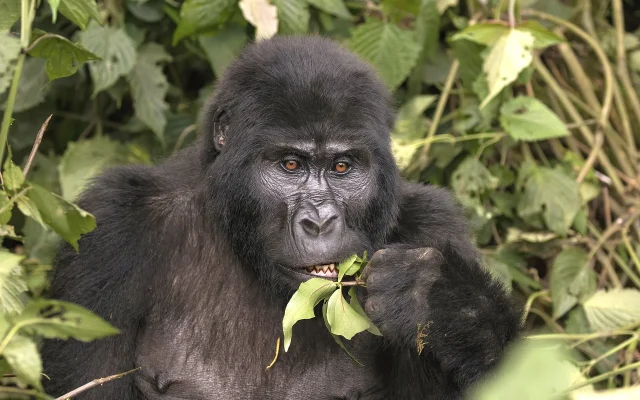
3 Days Uganda Gorillas from Kigali, Rwanda
Cyanika Border (Rwanda–Uganda), Bwindi Forest, Kisoro Highlands, Kigali
This 3-day Uganda gorilla safari from Kigali is one of the smartest shortcuts in East Africa: Kigali's international airport sits only 3–4 hours from southern Bwindi Impenetrable National Park via the…
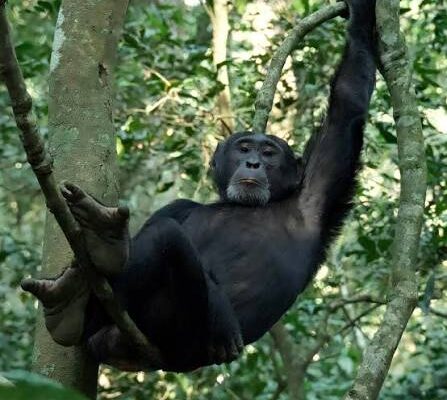
2 Days Kibale Chimpanzee Safari
Entebbe (Start, End)
Kibale Forest protects the highest primate diversity in East Africa — 13 species including a habituated population of chimpanzees often reached within 2–4 hours of trekking. This 2-day Kibale chimp sa…
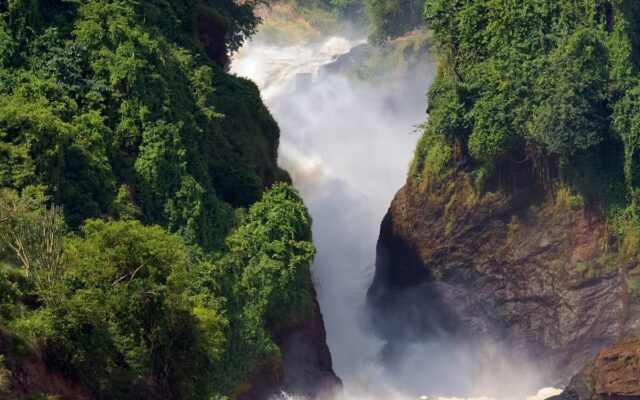
2 Days Murchison Falls National park Safari
Entebbe (Start, End)
Uganda’s largest park, Murchison Falls National Park, packs elephant herds, Rothschild’s giraffes, lions and the Nile’s most dramatic waterfall into a compact 2-day Murchison Falls safari from Kampala…