
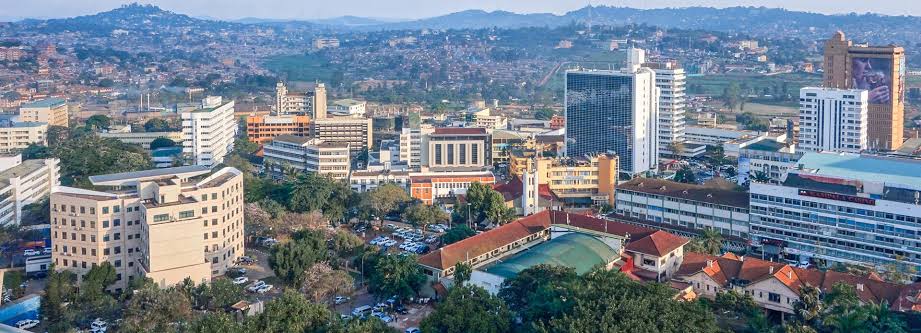
Tour overview
Kampala is one of East Africa’s most energetic capitals — seven hills, matatu traffic, rooftop views and a layered history from the Buganda Kingdom through British colonial rule to modern Uganda. This guided city day covers the highlights without rushing: royal tombs and parliament precincts, a major mosque or cathedral viewpoint, the Namugongo Martyrs Shrine, and curated stops at craft centres and the Nakasero market district.
The tour suits first-day acclimatisation before a safari, or a final cultural day before your flight home. Traffic is unpredictable; we build the route around morning priorities and lighter afternoon legs.
Places you visit
Key stops along this itinerary — customise dates and lodges when you enquire.
- Kampala hotel (Start)
- Kasubi Tombs / Bulange Mengo
- Uganda National Mosque
- Namugongo Martyrs Shrine
- Kampala hotel (End)
Day-by-day itinerary
Kampala city highlights — Buganda heritage, faith landmarks and modern capital
Your private vehicle and English-speaking city guide collect you from your Kampala hotel after breakfast — typically between 8:00 and 8:30 am — for a full-day circuit through Uganda's capital. Kampala spreads across roughly 24 hills (locals still speak of the historic seven: Mengo, Namirembe, Rubaga, Nakasero, Lubaga, Nsambya and Kampala Hill itself), and the skyline mixes matatu minibuses, boda-boda motorcycles, new office towers and tin-roofed neighbourhoods that climb every slope. Traffic on Jinja Road, Entebbe Road and the city centre is unpredictable; we sequence the route with morning priorities on Mengo Hill and Old Kampala, then lighter afternoon legs toward Namugongo and craft markets before peak evening congestion.
The day is structured as cultural orientation rather than checklist tourism: you hear how the Buganda Kingdom predates British annexation in 1894, how Kabaka Muteesa I welcomed the first Protestant missionaries in 1877 while simultaneously negotiating with Arab traders and British explorers, and how independence arrived in 1962 with Milton Obote as prime minister and Sir Edward Mutesa II — kabaka of Buganda — as ceremonial president. Modern Kampala functions as East Africa's most energetic inland capital: roughly 3.5 million people in the greater metropolitan area, a young population, a thriving music and nightlife scene, and a street economy built on rolex stalls, mobile-money agents and second-hand clothing markets. This is a useful first-day acclimatisation before a longer safari, or a final urban contrast before your flight home from Entebbe.
Morning — Mengo Hill and royal Buganda: Begin at Kasubi Tombs when the site is open to visitors. This UNESCO World Heritage ensemble is the principal burial ground of four kabakas (kings) of Buganda — Muteesa I, Mwanga II, Daudi Chwa II and Muteesa II — rebuilt in traditional form after the devastating 2010 fire that destroyed the main structure. The Muzibu Azaala Mpanga building is a monumental thatched dome roughly 30 metres in diameter, one of the largest grass-thatched structures in the world, ringed by bark-cloth panels (olubugo) and enclosures for royal regalia including drums, spears and stools that symbolise each kabaka's reign.
Your guide explains Ganda cosmology: the kabaka is not merely a political head but a cultural custodian linking the living to the ancestors. Buganda's clan system (obutaka) organises society into roughly 52 clans, each with totems, burial grounds and roles at court — the Ngo (leopard) clan traditionally supplies the queen mother; the Mbogo (buffalo) clan provides regents. At Kasubi you see how circular architecture, thatched reeds and sacred forest groves express a worldview older than the brick churches on neighbouring hills. Remove hats inside the main enclosure; photography rules vary — your guide will confirm what is permitted on the day.
A short drive along Lubaga Road brings you to Bulange Mengo, the Buganda parliament building, and the nearby Lubiri (kabaka's palace) precinct on Mengo Hill. Bulange's cream colonnaded façade houses the Lukiiko — Buganda's parliament — which still convenes under the current kabaka, Ronald Muwenda Mutebi II, crowned in 1993 after kingdoms were restored. Even when palace interiors are closed, the exterior gates, royal drum house (ndoga) and parliamentary steps tell the story of a kingdom that retained substantial cultural authority after Uganda became a republic in 1967.
Pause at the palace gate to hear about the 1966 crisis: Milton Obote's government attacked the Lubiri, forcing Kabaka Muteesa II into exile; the abolition of kingdoms followed. Bullet scars on older walls and the contrast between traditional courtyards and the underground prison reputedly used during Idi Amin's regime give weight to living memory. On ceremonial days you may see royal guards in kanzu and bark-cloth sashes, clan banners on poles, and the large royal drums that are sounded only on the kabaka's command.

Safari activity | Kampala cultural city tour
Guided circuit through Kasubi Tombs, Bulange Mengo, the Uganda National Mosque minaret, Namugongo Martyrs Shrine and Nakasero craft markets — the essential cultural introduction to Uganda before or after your safari.
Mid-morning — Old Kampala and faith on the skyline: Continue to the Uganda National Mosque (widely known as Gaddafi Mosque) on Old Kampala hill — the largest mosque in East Africa, with capacity for roughly 15,000 worshippers, completed with Libyan support and opened to all visitors regardless of faith. After removing shoes and covering shoulders (scarves are provided on request), climb the minaret tower — approximately 50 metres — for a 360-degree panorama: Nakasero market's corrugated roofs, the parliamentary buildings on Parliamentary Avenue, Namirembe and Rubaga cathedral spires, Makerere University's hilltop campus, and the haze toward Lake Victoria on clear mornings.
Your guide outlines Kampala's Muslim history from the 19th-century Swahili-Arab traders who reached Buganda during Muteesa I's reign, through the establishment of the Uganda Muslim Supreme Council, to the cosmopolitan congregations of today. The main prayer hall's carpeted expanse and chandelier-lit dome offer a calm contrast to the street noise below; ask about the difference between the Old Kampala mosque and the smaller but historic Kibuli Mosque on the opposite hill if you want to compare traditions within Ugandan Islam.
Depending on your interests and the day's traffic, choose either the Uganda Museum on Kira Road — Uganda's oldest museum, founded in 1908 — or Namirembe Cathedral (St Paul's Cathedral) on Namirembe Hill, seat of the Anglican Church of Uganda since 1919. The museum's ethnographic galleries display bark-cloth production tools, iron-smelting furnaces, Bagisu circumcision artefacts, Ankole cattle regalia, and musical instruments including the adungu harp and amadinda xylophone. Outdoor exhibits include a traditional Bakiga homestead, a Banyankole house and a vintage East African railway carriage — useful context before you encounter lodge architecture in the bush.
Namirembe Cathedral offers red-brick Gothic revival architecture, stained-glass memorials to early missionaries, and hilltop views over the taxi park and Nakasero. The adjacent cemetery holds Bishop James Hannington — martyred in 1885 on Kabaka Mwanga's orders — and Ugandan church leaders who bridged colonial and independent eras. Together, museum and cathedral cover the missionary chapter that intersected with Buganda court politics throughout the 1880s.
Lunch — Nakasero and Kololo: Break for lunch in the Nakasero or Kololo district. Nakasero market is a sensory immersion: pyramids of matoke (steamed green bananas — Uganda's staple starch), pineapples, passion fruit, avocados and jackfruit; stalls of groundnut paste, smoked tilapia from Lake Victoria, and piles of red onions; and the street-food counters where vendors roll rolex — chapati wrapped around scrambled egg, cabbage and tomato, named for its resemblance to a rolled watch strap and now a national icon.
Sit-down options in Kololo and Nakasero serve Ugandan staples — luwombo (meat or chicken steamed in banana leaves), groundnut sauce with sweet potato, and posho (maize meal) — alongside Indian-influenced dishes (chapati, samosa, biryani) reflecting Kampala's long South Asian trading community centred on Old Kampala and Kikuubo Lane. Lunch is included in your package; vegetarians are well served with matoke, beans, chapati and fresh fruit.
Afternoon — Namugongo and craft heritage: Drive northeast on the Jinja Road corridor to Namugongo Martyrs Shrine — Uganda's most important Christian pilgrimage site and a place of quiet power even on ordinary weekdays. Between 25 May and 3 June 1886, Kabaka Mwanga II ordered the execution of young pages who refused to renounce their Christian faith; 22 Catholic and Anglican martyrs were killed at Namugongo and other sites across Buganda. Their story shaped Uganda's identity as one of Africa's most strongly Christian nations — churches on almost every corner, gospel music in matatus, and the annual 3 June Martyrs Day public holiday.
Safari activity | Namugongo Martyrs Shrine visit
Walk the martyrs' path at Uganda's principal pilgrimage site — Catholic basilica, Anglican shrine and relics museum — and hear how the 1886 executions intertwined with Buganda court politics, missionary influence and Kabaka Mwanga's struggle to retain authority.
The Catholic basilica, completed in 1968, seats thousands under a central dome inspired by an African hut; the lake in the courtyard represents the spot where Charles Lwanga and companions were burned on 3 June 1886. The Anglican shrine across the road marks the exact pyre site with a simple wooden structure and memorial wall. On Martyrs Day each year, more than a million pilgrims walk barefoot from across East Africa — but on a normal afternoon you can follow the stations of the martyrs, visit the museum of relics (chains, spears, oral histories), and hear how this event intersected with European scramble politics and the kabaka's attempt to control foreign religions at court.
Return toward the city centre via the Buganda Road Craft Village behind the National Theatre and selected workshops where artisans demonstrate bark-cloth beating — UNESCO-listed intangible heritage worked from the inner bark of the mutuba fig tree. Craftsmen soak, beat and stretch the bark with grooved mallets on a log for hours until sheets emerge in terracotta tones; the cloth was Buganda's ceremonial textile long before cotton arrived, used for coronations, burials and gifts to foreign dignitaries. Also browse woven baskets from Ankole and Kigezi, carved wooden masks, ndingidi fiddles, drums and jewellery.
Prices are negotiable; buying directly supports makers rather than airport souvenir middlemen. Ask your guide to explain the difference between tourist-grade carvings and workshop pieces made for local use — the conversation itself is part of the cultural experience. If time allows, a brief stop at the Independence Monument on Speke Road (unveiled 1962, depicting a mother lifting a child toward freedom) frames Uganda's post-colonial story before you return to your hotel.
Optional extensions if time and energy allow: Rubaga Cathedral (Roman Catholic counterpart to Namirembe, completed 1925 on the hill where the White Fathers first raised a cross), the Baháʼí Temple on Kikaya Hill — the only Baháʼí House of Worship in Africa, set in terraced gardens with bird-filled grounds — or an evening drink on a Kololo rooftop bar overlooking the city lights. Most guests return to their hotel between 4:00 and 5:30 pm, leaving the evening free for rest, a final rolex from a street cart, or live music at a venue near Bugolobi if you want one more taste of Kampala after dark.
What to wear: Modest clothing for mosques, cathedrals and Namugongo (cover shoulders and knees); comfortable closed shoes for tomb grounds and minaret stairs; light scarf useful for mosque entry. Small notes for craft-market purchases; photography is restricted in parts of Kasubi and inside active prayer halls — follow your guide's advice.
Duration: 6–8 hours door to door
Drive time: Short hops between hills (15–45 minutes per leg; total driving approx. 2–3 hours depending on traffic)
Walking: Moderate — minaret stairs (272 steps), tomb grounds and shrine paths; comfortable shoes recommended
Meals: Lunch included (breakfast at hotel; dinner on your own)
Accommodation: City day tour — assumes Kampala hotel already booked
 Day 1 | Accommodation
What's included
- Private vehicle and English-speaking city guide
- Entrance fees to Kasubi, mosque minaret and Namugongo
- Lunch
- Bottled water


What's not included
- Souvenirs and market purchases
- Evening meals and drinks
- Gratuities


Accommodation & comfort level
City day tour — assumes you already have a Kampala hotel booked.
Request Pricing & booking information
Request Quote: Fill in the contact form below.