

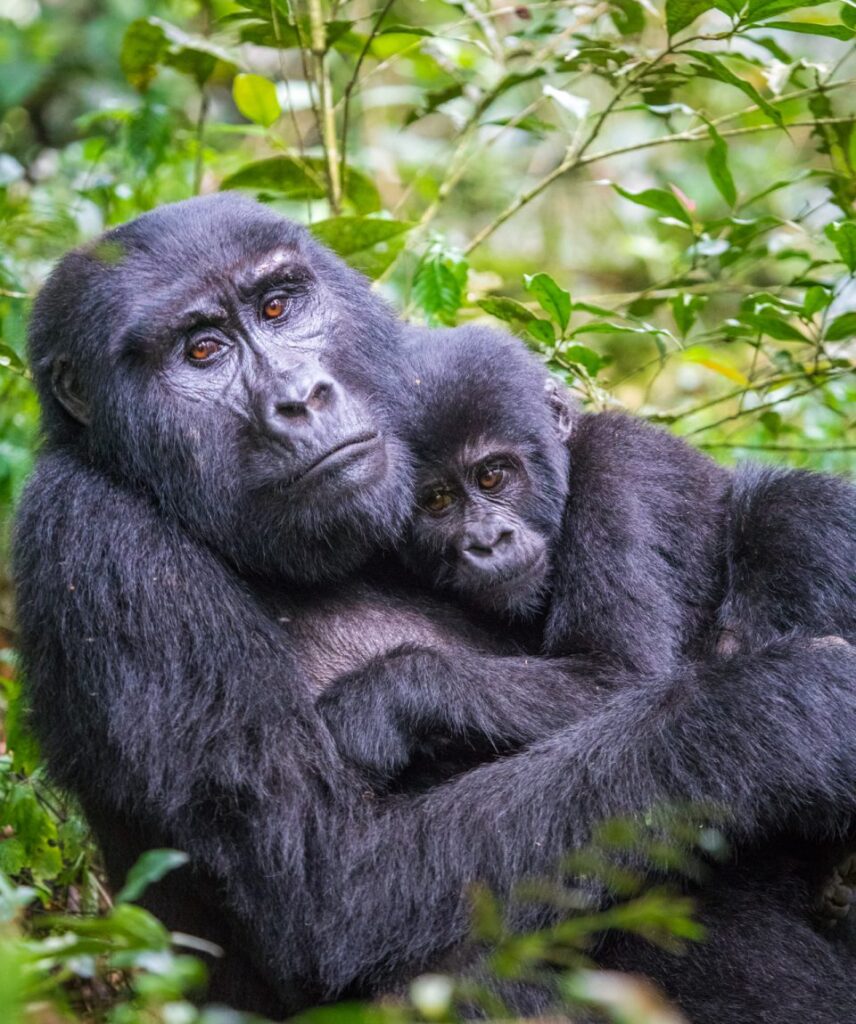
Introduction: Uganda Gorilla Trekking Safaris
Uganda gorilla trekking puts you on foot in ancient rainforest, following ranger trackers until a habituated mountain gorilla family appears through the foliage. For many travelers it is the reason they choose East Africa—and Uganda often wins on combination value: world-class primate encounters, diverse savannah parks, and permit pricing that remains below Rwanda’s premium model.
This guide explains where trekking happens, how permits work, what fitness level you need, and how to fold gorillas into a broader Uganda safari plan without unrealistic drive times.
Where Gorilla Trekking Takes Place
Uganda protects mountain gorillas in two national parks:
Bwindi Impenetrable National Park
Bwindi hosts the majority of habituated families and the widest lodge choice. Trekking sectors include Buhoma, Ruhija, Rushaga, and Nkuringo. Your permit is tied to a sector; lodging should match that briefing point—otherwise you add hours on rough roads before dawn.
Mgahinga Gorilla National Park
Mgahinga is smaller and quieter, with dramatic Virunga volcano scenery. One habituated group typically treks here. It suits travelers combining Uganda with Volcanoes National Park access via Kisoro and the southwestern border region.
Permits, Prices, and Booking
Gorilla trekking requires a daily permit issued by the Uganda Wildlife Authority (UWA). For foreign non-residents the standard tariff through June 2026 is USD 800 per person per trek, with lower tiers for foreign residents, other African nationalities, and East African citizens. The fee generally includes ranger guiding, park entry for the trekking day, and community levies.
A separate gorilla habituation experience permit costs more (around USD 1,500 for foreign non-residents) and allows a longer, more intensive field day with a group undergoing habituation—only in Bwindi’s Rushaga sector under current rules.
Permits sell out months ahead for June–September and December–February. Book before flights when dates are fixed. Low-season discounts have applied in select months—confirm current UWA policy when budgeting. Full cost context sits in our gorilla trekking cost and gorilla permit cost guides.
Trek Day: What to Expect
After an early briefing, rangers assign you to a gorilla group based on permit sector and fitness questions. Treks may last from under an hour of walking to four hours or more on steep, muddy paths. Once gorillas are located, you usually spend one hour observing at regulated distance (about 10 metres).
Rules protect both apes and visitors: no trekking if you are ill, no flash photography, no eating near gorillas, minimum age 15, and group size capped at eight visitors per family per day.
Hire a porter if offered—they carry daypacks and help on slick trails while providing local income.
Best Time and Weather
Trekking runs year-round; gorillas do not migrate with seasons. Many travelers prefer drier months (roughly June–September and December–February) for firmer trails, though Bwindi can rain any day. Shoulder months can offer permit availability with lush forest scenery. Compare seasonal patterns in best time to visit Uganda and gorilla trekking in November.
Getting There: Entebbe or Kigali
Most safaris start from Entebbe International Airport, with two long driving days to Bwindi unless you use scheduled or charter flights to Kisoro or Kihihi airstrips. Flying cuts road time but adds cost.
Many travelers fly into Kigali, Rwanda and drive 3–4 hours to southern Bwindi (Rushaga/Nkuringo) or Mgahinga—efficient for short gorilla-only trips. Border formalities and East Africa visa strategy matter; review border crossings and Uganda vs Rwanda gorilla trekking before choosing routing.
Combining Gorillas with Wider Safari
Uganda’s strength is stacking experiences: chimps in Kibale, tree-climbing lions in Queen Elizabeth, boat cruises on the Kazinga Channel, Murchison Falls game drives, and shoebill tracking near Entebbe. A realistic 8–12 day route might pair two primate days with two savannah days rather than chasing every park on a map.
Match lodge tier to route—luxury fly-in combos differ sharply from mid-range overland loops in total price. Use our Uganda safari cost hub to align expectations before requesting a tailored quote.
Choosing Sectors and Lodge Location
Permit sector dictates where you sleep. Buhoma suits classic first-trek travelers with the widest lodge spread; Rushaga and Nkuringo pair well with Kigali arrivals; Ruhija attracts birders and cooler forest scenery. Mgahinga adds golden monkey trekking and volcano views with a smaller permit pool. Discuss fitness and arrival airport with your planner before locking lodges—saving USD 80 on a room but adding three hours on murram roads is poor economics.
What Successful Travelers Do Early
Confirm permit payment receipts, pack broken-in boots, download offline maps, and share trekking dates with your travel insurer. Gorilla trekking rewards preparation more than last-minute gear shopping in Kampala. If dates are flexible, compare safari seasons before you buy non-refundable flights.
Packing and Photography Essentials
Garden gloves, gaiters, and neutral clothing matter as much as the permit. Telephoto reach helps but forest light is dim—many successful trekkers shoot at moderate focal lengths when animals feed close. Waterproof pack covers protect bodies and lenses during sudden showers at briefing points.
 Read
Read