Akagera National Park is Rwanda’s only savannah Big Five destination — a remarkable conservation comeback story on the country’s eastern border with Tanzania, where open plains, acacia woodland, and one of Central Africa’s largest protected wetland systems meet. Managed by African Parks in partnership with the Rwanda Development Board since 2010, the park has transformed from near-collapse in the 1990s into one of East Africa’s most inspiring wildlife recovery examples, now home to thriving lion, leopard, elephant, buffalo, rhino, giraffe, zebra, and hippo populations alongside exceptional birdlife.
For travelers who want classic African safari atmosphere within Rwanda’s compact, well-organized travel circuit, Akagera National Park safaris deliver game drives across rolling savannah, boat safaris on Lake Ihema, optional night drives, and photographic landscapes that contrast beautifully with the mountain forests of gorilla country.
Unlike Rwanda’s primate parks, Akagera is defined by water and openness. The Kagera River forms the park’s eastern boundary, feeding Lake Ihema and a chain of smaller lakes linked by papyrus swamps and floodplains that cover roughly one-third of the park’s 1,122 square kilometres. That wetland–savannah mosaic creates exceptional biodiversity and makes Akagera one of the few places in the region where land-based and water-based safari experiences combine naturally on the same itinerary.
This destination combines naturally with Kigali, Volcanoes National Park, Nyungwe National Park, and Lake Kivu in a well-planned Rwanda safari route.
Whether you are planning a short Big Five add-on after gorilla trekking, a standalone wildlife escape from Kigali, a photography safari focused on rhino and wetland birds, or a comprehensive Rwanda circuit, Akagera safaris reward travelers who appreciate conservation success, accessible logistics, and uncrowded game viewing.
Quick Facts About Akagera National Park
| Feature | Details |
|---|---|
| Location | Eastern Rwanda, bordering Tanzania |
| Established | 1934 — Rwanda’s oldest national park |
| Size | Approximately 1,122 square kilometres |
| Management | African Parks & Rwanda Development Board (since 2010) |
| Main Attractions | Big Five game drives, Lake Ihema boat safari, night drives, birding |
| Landscape | Savannah plains, acacia woodland, lakes, papyrus wetlands |
| Best Time to Visit | June–September dry season; year-round access |
| Major Wildlife | Lion, leopard, rhino, elephant, buffalo, giraffe, zebra, hippo, crocodile |
| Bird Species | 500+ recorded species |
| Nearest Gateway | Kigali (roughly 110 km, 2–2.5 hours) |
Overview of Akagera National Park
Akagera National Park occupies a unique position on the East African safari map. Rwanda is celebrated globally for mountain gorillas in the Virunga volcanoes and for chimpanzees in Nyungwe’s ancient rainforest — yet Akagera answers a different question entirely: where can you see lion, rhino, elephant, and hippo in the same country, on paved-road day-trip distance from a capital city?
The park’s name comes from the Kagera River, which drains into a spectacular system of forest-fringed lakes and papyrus swamps along the Tanzanian frontier. Lake Ihema, the largest lake in the park, anchors the southern sector where many lodges sit and where afternoon boat safaris reveal hippos, crocodiles, waterbirds, and shoreline mammals at close range. Northward, open savannah and rolling hills support predator territories, rhino monitoring zones, and classic East African plains scenery.

What makes Akagera especially compelling today is its conservation narrative. After the 1994 genocide and years of poaching pressure, wildlife populations collapsed and much of the park was degazetted. When African Parks assumed management in 2010 at the invitation of the Rwandan government, anti-poaching patrols, community engagement, tourism investment, and strategic reintroductions reversed the trajectory. Lions returned in 2015. Eastern black rhinos were reintroduced in 2017 and 2019. Southern white rhinos arrived in 2021, with further translocations strengthening the population through the mid-2020s. Tourism revenue now covers the vast majority of park operating costs — a model that directly funds protection and local livelihoods.
For international visitors, Akagera is often the savannah chapter that completes a Rwanda itinerary already built around primates. For Rwandan nationals — who represent a growing share of park visitors — it is increasingly a weekend wildlife destination accessible from Kigali without the logistics of flying to Kenya or Tanzania.
Wildlife commonly encountered includes:
- lion
- leopard
- black rhino and white rhino
- African elephant
- African buffalo
- giraffe
- zebra
- hippopotamus
- Nile crocodile
- topi, impala, waterbuck, and other antelope
Visitor numbers remain modest compared with marquee Serengeti or Maasai Mara circuits, which preserves a sense of space on game drives and makes Akagera especially attractive for photographers and repeat East Africa travelers seeking fresher terrain.
Why Visit Akagera National Park?
Akagera National Park rewards travelers for reasons that extend beyond checklist wildlife. It is simultaneously a Big Five destination, a wetland birding stronghold, a conservation case study, and one of the most logistically efficient safari parks in the region.
Rwanda’s Only Big Five Safari
No other protected area in Rwanda offers lion, leopard, rhino, elephant, and buffalo in savannah context. After gorilla trekking in Volcanoes, Akagera provides the classic wildlife complement without crossing a border or adding a long transfer.
African Parks Conservation Success
Visiting Akagera supports a management model that has become a reference point across Africa. Park fees and lodge revenue fund rangers, veterinary care, rhino monitoring, and community projects. Travelers who care about where their safari dollars go find transparent impact here.
Lake Ihema Boat Safaris
Water-based safari is not an afterthought — it is central to the Akagera experience. Hippos surface beside the boat, crocodiles bask on mud banks, African fish eagles call from dead trees, and elephants or buffalo sometimes appear on shore at dusk.
Accessibility from Kigali
Roughly two to two-and-a-half hours on good paved roads makes Akagera viable as a two-night safari, a long day trip for determined travelers, or the opening wildlife leg of a one-week Rwanda circuit. That proximity is rare among genuine Big Five parks.
Wetland and Savannah Biodiversity
The park protects the largest protected wetland in central-eastern Africa. Papyrus gonolek, shoebill possibility in season, and Lake Victoria-basin endemic birds share the list with martial eagles, secretary birds, and savannah specialists — a dual habitat appeal that mammal-focused itineraries sometimes overlook.
Uncrowded Game Viewing
Vehicle density on drives remains lower than in many East African flagship parks. Patient guiding, dawn starts, and two-night minimum stays produce rewarding predator and rhino encounters without the queue atmosphere of busier reserves.
Top Things to Do in Akagera National Park
Akagera National Park safaris center on guided game drives, boat excursions, and optional nocturnal exploration — with cultural and behind-the-scenes experiences available for travelers who want deeper context.
Game Drives
Morning and afternoon drives across savannah plains, woodland edges, and lake viewpoints — the core of every Akagera itinerary.
Lake Ihema Boat Safari
Afternoon boat trips on the park’s largest lake for hippos, crocodiles, waterbirds, and shoreline mammals.
Night Drives
Spotlight safaris in designated areas for nocturnal species and a different perspective on predator activity.
Bird Watching
Wetland and savannah birding from vehicles, boats, and lodge grounds — 500-plus species recorded.
Behind-the-Scenes Conservation Tours
Selected programs offer insight into African Parks operations, anti-poaching, and rhino monitoring.
Photography Safaris
Open plains, wetland reflections, and recovering megafauna populations create strong portfolio material.
Learn more about things to do in Akagera
Game Drives in Akagera National Park
Game drives are the defining activity of every Akagera National Park safari. The park’s network of tracks crosses savannah hills, acacia woodland, and lake viewpoints where guides read tracks, scan kopjes for lion, and navigate rhino zones with ranger coordination.
Morning drives typically depart at first light when predators are still active and temperatures are comfortable. Afternoon sessions build toward sunset gold on open plains — excellent for elephant, giraffe, zebra, and buffalo photography. Guides communicate by radio, improving chances of lion or rhino sightings without crowding animals.
Wildlife commonly encountered during game drives in Akagera includes:
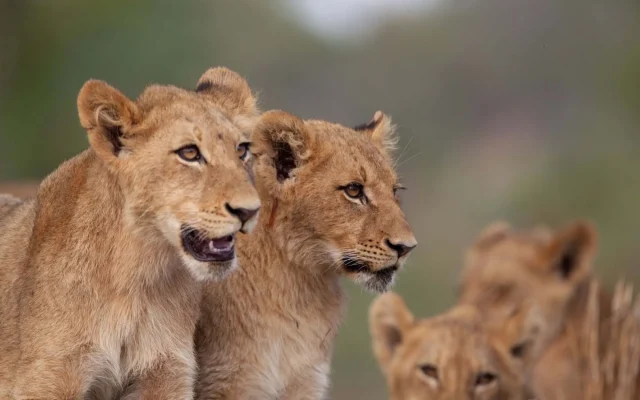
- Lions — reintroduced in 2015, now breeding successfully
- Leopards — present but shy; bonus sightings on patient itineraries
- Rhinos — black and white rhino populations monitored daily
- Elephants — increasing herds across savannah and lakeshore
- Buffalo — large herds on plains and wetland margins
- Giraffes and zebras — classic savannah compositions
- Hippos and crocodiles — often viewed from land near lakes
Self-drive is permitted for visitors with suitable 4×4 vehicles and park registration, though most international guests book guided safaris for navigation, radio networks, and interpretive depth. Night drives require authorized guides and lodge or operator arrangement.
Lake Ihema Boat Safari
The Lake Ihema boat safari is among the most memorable experiences in eastern Rwanda. While land-based drives reveal savannah species, the boat shifts perspective to Akagera’s aquatic heart — hippos yawning beside the hull, enormous Nile crocodiles on mud banks, pied kingfishers diving, and African fish eagles overhead.
Afternoon departures are popular because light softens toward sunset and mammals sometimes approach the shoreline to drink. Guides maintain safe distance from hippos while positioning the boat for photography and bird identification. The wetland fringe supports papyrus specialists including the sought-after papyrus gonolek for birders.
Combining a morning game drive with an afternoon boat session is the classic one-day Akagera rhythm. On two-night stays, repeat either activity based on first-day sightings — rhino-focused mornings, for example, paired with a second boat trip for species missed earlier.
Big Five and Conservation in Akagera
Akagera National Park is one of Africa’s clearest illustrations of what focused management can achieve in a single decade. When African Parks and the Rwanda Development Board began their partnership, tourism was minimal and key species had vanished. Today the park is a genuine Big Five destination with revenue-driven sustainability.
Lion Reintroduction
Lions were absent for years after local extinction. Seven lions translocated from South Africa in 2015 founded a population that has since grown through natural breeding — a milestone that restored apex predator ecology and elevated Akagera’s safari profile.
Rhino Recovery
Black rhinos returned in 2017 and 2019. White rhinos followed in 2021 and through subsequent large-scale translocations in the 2020s, making Akagera one of the most significant rhino restoration sites in East Africa. Sightings are increasingly regular though never guaranteed on a single drive.
Elephant and Buffalo
Elephant and buffalo populations have rebounded under intensive protection. Herd encounters on plains and at lake edges are among the most reliable megafauna experiences in the park.
Leopard
Leopards occur throughout woodland and riverine habitat. They remain elusive — plan multiple drives if cats are a priority.
Behind the sightings lies continuous work: canine anti-poaching units, ranger training, community revenue sharing, and veterinary monitoring. Optional behind-the-scenes tours offer travelers direct insight into that machinery.
Wildlife in Akagera National Park
Akagera National Park wildlife reflects a savannah–wetland ecosystem unlike anything else in Rwanda. The park is not a high-density Mara-style plains system; it is a mosaic where water shapes distribution and recovering predator populations are closely monitored.
Large Mammals
Elephant, buffalo, giraffe, zebra, hippo, and antelope diversity form the daily safari backbone. Topi, impala, waterbuck, bushbuck, and oribi occupy different grass heights and woodland edges — guides read habitat transitions rather than scanning only open centers.
Predators
Lions are the headline carnivore, often seen on kopjes or moving through grassland at dawn. Hyena and side-striped jackal occur; leopard rewards patience. Cheetah is not a feature species here — Akagera’s story is Big Five recovery in wetland savannah, not cheetah plains.
Rhinos
Both black and white rhino occur within managed zones. Rangers track individuals daily; guests benefit from that data during drives. Treat rhino encounters as conservation highlights, not guaranteed ticks.
Aquatic Species
Hippos and Nile crocodiles dominate Lake Ihema and connected waterways. Shoreline drives at dusk can overlap with boat-safari sightings for complementary perspectives.
For deeper species and habitat detail, see our dedicated {{LINK:akagera-national-park:Akagera wildlife guide}}.
Read more about wildlife in Akagera
Bird Watching in Akagera National Park
Bird watching in Akagera National Park benefits from dual habitat access — open savannah raptors and ground birds on drives, papyrus swamp specialists from boats and lake margins. More than 500 bird species have been recorded, including several Lake Victoria-basin endemics.
Notable targets include African fish eagle, martial eagle, shoebill (seasonal and location-dependent), papyrus gonolek, red-faced barbet, lilac-breasted roller, and numerous herons, storks, and kingfishers along the wetland fringe. Serious listers should communicate birding priorities when booking shared vehicles — mammal-focused groups and bird-focused groups want different drive pacing.
See our {{LINK:akagera-national-park:Akagera bird watching}} section for habitat strategies and seasonal notes.
Bird watching guide for Akagera
Best Time to Visit Akagera National Park
The best time to visit Akagera National Park depends on whether you prioritize dry-season wildlife concentration, green-season scenery, or gorilla-permit timing elsewhere in Rwanda — but the park remains accessible year-round on good roads from Kigali.
Dry Season (June–September)
The most popular safari window aligns with Rwanda’s drier months, often highlighted from June through September. Wildlife concentrates near permanent water, grass is shorter, and photography conditions are predictable. This period overlaps with peak gorilla trekking demand — book lodges and permits together when combining Volcanoes and Akagera.
Short Rains and Shoulder Months
October–November and March–May bring greener landscapes, dramatic skies, and strong bird activity. Some tracks may soften after heavy rain, but Rwanda’s compact scale keeps logistics manageable compared with remote frontier parks.
Combining with Gorilla Season
Travelers pairing Akagera with Volcanoes National Park should secure gorilla permits first, then anchor Akagera nights around confirmed trek dates. Two nights in Akagera after trekking is a common and satisfying rhythm.
Month-by-month detail lives in our {{LINK:akagera-national-park:best time to visit Akagera}} guide.
Best time to visit Akagera — full guide
Weather & Climate in Akagera National Park
Akagera National Park sits at lower elevation than Rwanda’s mountain parks, with a warmer, more open climate suited to savannah ecology. Days are generally mild to warm; early mornings and evenings are comfortable for drives. Afternoon temperatures can rise on open plains — hydration and sun protection matter.
Rainfall follows Rwanda’s broader bimodal pattern: longer rains around March–May, shorter rains toward year-end. Wetland areas remain productive year-round; savannah visibility improves when seasonal pools contract during drier months.
Pack neutral safari clothing, a light rain layer, binoculars, and dust protection for cameras. Mountain fleece needed in Volcanoes is usually excessive here except on cool morning drives.
How to Get to Akagera National Park
Reaching Akagera National Park is straightforward by East African standards — one of the park’s strongest selling points for time-limited travelers.
From Kigali by Road
The park lies roughly 110 kilometres east of Kigali, commonly two to two-and-a-half hours on paved roads through Rwanda’s Eastern Province. Most safaris use private 4×4 vehicles with driver-guides; self-drivers register at the southern or northern park gates depending on lodge location.
Day-Trip Feasibility
A long day trip from Kigali is possible for determined travelers — early departure, morning drive, afternoon boat, evening return — but two nights inside or near the park produces far better wildlife odds and a calmer pace.
Within Rwanda Circuits
Akagera fits logically after arrival in Kigali and before or after Volcanoes, Nyungwe, or Lake Kivu depending on routing. Counter-clockwise loops from Kigali are popular: Akagera first, then gorillas, then forest or lake extensions.
Gate procedures, self-drive rules, and routing tips are expanded in our {{LINK:akagera-national-park:getting to Akagera}} section.
How to get to Akagera — routes & drive times
Where to Stay in Akagera National Park
Accommodation in Akagera National Park ranges from luxury tented camps overlooking savannah or Lake Ihema to mid-range lodge options and camping for adventurous travelers. Staying inside the park maximizes dawn drive time and night-drive access; Kigali-based day trips sacrifice those edges.
Luxury and Upper Mid-Range
Properties such as Magashi Camp, Ruzizi Tented Lodge, and Karenge Bush Camp position guests within the park for boat and drive access. Premium pricing reflects exclusivity, guided activities, and conservation-linked operations.
Mid-Range
Akagera Game Lodge and similar options suit travelers who want in-park convenience without ultra-luxury rates.
Planning Tips
Book peak-season rooms when confirming gorilla permits. Southern-sector lodges pair naturally with Lake Ihema boats; northern sectors suit rhino-focused drives. Confirm whether packages include park fees, guide costs, and activity slots.
Akagera Safari Tours & Sample Itineraries
Akagera safari tours integrate easily into Rwanda’s standard one-week templates and also work as standalone wildlife weekends from Kigali.
2-Night Akagera Wildlife Safari
Arrival day drive and optional sunset boat; full day two with morning drive, afternoon boat, optional night drive; departure morning drive on day three. The minimum serious wildlife allocation.
5–7 Day Rwanda Highlights
Kigali → Akagera (2 nights) → Volcanoes gorilla trek (2–3 nights) → Lake Kivu or Nyungwe extension. Covers Big Five, primates, and scenery without cross-border complexity.
Gorilla-First Routing
Volcanoes trekking first, then Akagera as a celebratory savannah finale — psychologically satisfying after forest exertion, though permit availability may dictate order.
Photography and Birding Focus
Three nights allow repeat drives for rhino and cats, dual boat sessions, and dedicated birding along papyrus channels.
Responsible Tourism in Akagera
Akagera’s recovery depends on visitor compliance with park rules: stay on designated tracks, maintain distance from rhinos and predators, never feed wildlife, and follow guide instructions on boats where hippo approach risk is real. Community benefits flow through employment, revenue sharing, and tourism supply chains — choosing licensed operators strengthens that loop.
Rwanda’s national plastic-bag ban and cleanliness standards extend to park conduct. Treat the park as an active conservation site, not only a viewing arena.
Akagera National Park FAQs
- Is Akagera National Park worth visiting?
-
Yes. Akagera National Park is Rwanda’s only Big Five savannah destination and one of Africa’s most remarkable conservation recoveries. It combines accessible logistics from Kigali with game drives, Lake Ihema boat safaris, and wildlife viewing that complements gorilla trekking perfectly.
- Are lions found in Akagera National Park?
-
Yes. Lions were reintroduced in 2015 after local extinction and have since bred successfully. Lion sightings are increasingly common on morning and afternoon game drives, though they are never guaranteed on a single outing.
- Are rhinos found in Akagera?
-
Yes. Both eastern black rhinos and southern white rhinos occur in Akagera following reintroduction programs led by African Parks and the Rwanda Development Board. Rhinos are closely monitored; sightings are rewarding but require patience and multiple drives.
- How far is Akagera National Park from Kigali?
-
Roughly 110 km east of Kigali — typically two to two-and-a-half hours by road on paved routes. That proximity makes Akagera one of the most accessible Big Five parks in East Africa.
- How many days should I spend in Akagera National Park?
-
Plan two nights minimum for meaningful game drives and a Lake Ihema boat safari. One night works for a rushed add-on; three nights suits photographers, birders, and travelers prioritizing rhino and predator searches.
- Can I combine Akagera and gorilla trekking?
-
Yes — this is one of Rwanda’s most popular combinations. A typical week might include two nights in Akagera, two to three nights near Volcanoes National Park for gorillas, and optional Lake Kivu or Nyungwe extensions. Secure gorilla permits first, then anchor Akagera around confirmed trek dates.
- Is Akagera National Park good for birdwatching?
-
Excellent. More than 500 bird species have been recorded across savannah and wetland habitats. Papyrus gonolek, African fish eagle, and numerous Lake Victoria-basin specialists reward birders on drives and boat safaris.
- Can I self-drive in Akagera National Park?
-
Yes. Self-drive is permitted with park entry fees paid and a suitable vehicle — typically high-clearance 4×4. Most international visitors prefer guided safaris for radio networks, navigation, and interpretive guiding, especially for rhino zones and night drives.
- What is the best time to visit Akagera National Park?
-
The June–September dry season is most popular for wildlife viewing and photography. The park remains accessible year-round; green months offer lush scenery and strong bird activity with occasional track softness after rain.
- Who manages Akagera National Park?
-
African Parks manages Akagera in partnership with the Rwanda Development Board under a public–private conservation agreement since 2010. Tourism revenue funds the majority of park operations, anti-poaching, and community programs.
Nearby Destinations to Combine with Akagera National Park
One of the strongest reasons to visit Akagera National Park is how cleanly it slots into a broader Rwanda itinerary. The country’s small size and excellent roads make multi-park journeys practical without the multi-day transfers required in larger neighbours.
Kigali
Rwanda's capital and international gateway — most Akagera safaris start or end here, roughly two hours west on paved roads.
Volcanoes National Park
Rwanda's mountain gorilla trekking park in the Virunga Mountains — the classic primate complement to Akagera's Big Five savannah experience.
Nyungwe National Park
Ancient montane rainforest in southern Rwanda — chimpanzee trekking, canopy walks, and forest birding on longer national circuits.
Lake Kivu
Scenic freshwater lake on Rwanda's western border — ideal relaxation, kayaking, and lakeside towns after gorillas or forest trekking.
Nearby destinations to combine
Plan Your Akagera Safari
Akagera National Park delivers what Rwanda lacked for decades: a credible savannah Big Five experience on the doorstep of one of Africa’s best-managed capital gateways. From lion on open plains to hippos beside a Lake Ihema boat, from rhino conservation success to papyrus gonolek in morning light, the park rewards travelers who want wildlife depth inside a compact, safe, and well-run country.
Whether you are adding two nights after gorilla trekking, building a standalone wildlife escape from Kigali, or designing a full Rwanda circuit through forests, lakes, and volcanoes, Akagera safaris belong in the conversation whenever classic African wildlife is part of your goal.
Our expertly crafted Rwanda safari tours can be customized to your travel dates, lodge preferences, and permit timing — with Akagera positioned where it serves your route best.
Explore Akagera Safari Packages