Wildlife in Akagera National Park
Covering roughly 1,122 km² along Rwanda's eastern border with Tanzania, Akagera National Park wildlife thrives in a savannah–wetland mosaic unlike anything else in this small, mountainous country. Where Volcanoes National Park is bamboo forest and mountain gorillas, and Nyungwe National Park is ancient montane rainforest, Akagera is open plains, acacia woodland, papyrus swamps, and the lake system fed by the Kagera River — the largest protected wetland in central-eastern Africa.
Since African Parks assumed management in partnership with the Rwanda Development Board in 2010, wildlife numbers have rebounded dramatically. Lions returned in 2015. Rhinos followed through black and white reintroduction programs in the 2010s and 2020s. Tourism revenue now funds the majority of park operations — a conservation model travelers directly support when they book drives and boat safaris here.
The Big Five in Rwandan context
Akagera is Rwanda's only Big Five destination. That status matters for itinerary design: travelers who want lion, leopard, rhino, elephant, and buffalo without leaving the country or crossing into Uganda or Tanzania anchor their savannah nights here.
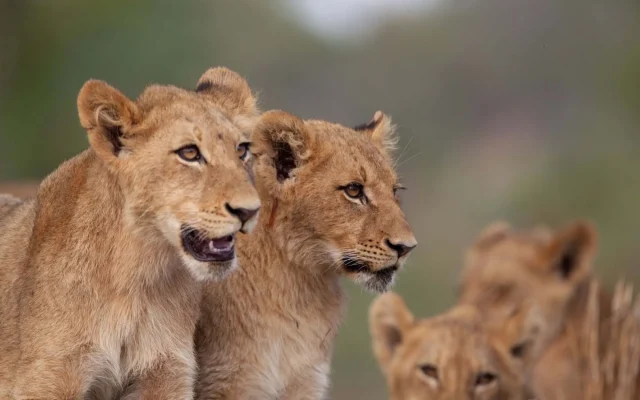
Lions were reintroduced from South Africa in 2015 after years of local absence. The founding population has bred successfully, and sightings on morning drives are increasingly regular — particularly when guides coordinate via radio across the savannah sectors. Lions use kopjes and grassland edges as vantage points; dawn departures improve odds before heat haze builds.
Rhinos represent Akagera's most celebrated recovery chapter. Eastern black rhinos returned in 2017 and 2019. Southern white rhinos arrived in 2021, with further large-scale translocations strengthening the population through the mid-2020s as part of broader rewilding initiatives. Both species are intensively monitored; rangers track individuals daily. Rhino encounters on game drives are a highlight but never guaranteed on a single half-day visit — plan two or more drives and communicate interest to your guide early.
Elephants and buffalo form the reliable megafauna backbone. Buffalo herds graze open plains and wetland margins; elephants appear on savannah loops and sometimes approach Lake Ihema shores at dusk — overlapping with boat-safari sightings for complementary perspectives. Population growth under anti-poaching patrols is visible year on year.
Leopards occur throughout woodland and riverine habitat but remain shy. Treat leopard as a bonus species unless you book multiple drives with patient cat-focused guiding. Spotted hyena and jackals add carnivore depth without the Mara-style density of a mature lion ecosystem.
Savannah herbivores and classic plains scenery
Beyond the Big Five, Akagera delivers the East African savannah species mix that primate-focused Rwanda itineraries otherwise lack. Giraffes and plains zebra create instantly recognizable photographic compositions on rolling hills. Topi, impala, waterbuck, bushbuck, oribi, and warthog occupy different grass heights and woodland transitions — skilled guides read habitat edges rather than scanning only open centers.
Open visibility across much of the park favors photography and relaxed game viewing. Vehicle density remains lower than in Kenya's headline reserves, which preserves a sense of space — especially valuable for repeat East Africa travelers fatigued by crowded sightings.
Lake Ihema and aquatic wildlife
Roughly one-third of Akagera is water — lakes, swamps, and floodplains linked by papyrus channels. Lake Ihema, the park's largest lake, anchors the southern sector where many lodges sit. Hippos cluster in shallows; Nile crocodiles bask on mud banks. Boat safaris bring aquatic species to eye level in ways land drives cannot replicate.
Shoreline mammals — elephant, buffalo, antelope — sometimes appear at drinking time near dusk. Combining a morning savannah drive with an afternoon boat session is the classic one-day rhythm; two-night stays allow repeating whichever activity missed targets on day one.
Habitat zones and wildlife distribution
Akagera is not a single uniform plain. The southern lake sector blends wetland fringe, woodland patches, and boat-access waterways — strong for hippo, crocodile, waterbirds, and shoreline mammals. Central and northern savannah sectors favor open-habitat species, predator searching, and rhino monitoring zones where ranger coordination matters.
Season reshapes distribution. In drier months, wildlife concentrates near permanent water — Lake Ihema margins, the Kagera River system, and residual pools across plains. Green months spread animals across fresher grass but deliver lush scenery and strong bird activity along papyrus edges. See best time to visit Akagera for month-by-month planning.
Conservation management and what visitors support
Wildlife recovery here is not accidental. African Parks operates canine anti-poaching units, aerial surveillance, veterinary programs, and community revenue-sharing that ties local livelihoods to park success. Optional behind-the-scenes tours reveal rhino monitoring, ranger operations, and the economics of a park that has moved toward revenue self-sufficiency.
Visitors should follow track rules, maintain distance from rhinos and predators, and never pressure guides to off-road for closer photos. The fenced northern sector and intensive monitoring that protect rhinos also shape where drives can go — respect those protocols as part of the conservation story.
How Akagera compares with regional parks
Travelers familiar with Queen Elizabeth National Park in Uganda or Tanzania's northern circuit should calibrate expectations. Akagera is smaller, younger in its Big Five restoration, and less dense than the Serengeti — but more accessible from a capital city and far less crowded. It fits Rwanda's compact national circuit: Kigali gateway, gorillas, then savannah here.
Cheetah is not a headline species in Akagera; the park's distinctive appeal is wetland-savannah combination, rhino recovery, and boat safaris — not cheetah plains drama.
Practical wildlife viewing tips
Book two nights minimum for fair odds on rhino and cats. Share priority species with your guide at briefing. Carry binoculars for distant kopje scans. Morning drives target predators; afternoon light suits elephant, giraffe, and zebra photography. Night drives in authorized areas add nocturnal species for guests staying at participating lodges.
Access and routing: getting to Akagera. Birding depth: bird watching. Main hub: Akagera National Park guide.
Night sounds and camp awareness
Lion contact calls and hyena activity carry across lakeshore camps after dark — normal big-game presence when lodge security protocols are followed. Hippos sometimes graze near fenced properties at night; stay on lit paths.
Young safari travelers and wildlife pacing
Families appreciate Akagera's boat safaris as seated wildlife activity between drives. Shorter attention spans still engage with hippo, crocodile, and zebra at close range — plan boat afternoons when midday heat reduces plains activity.