
Tour overview
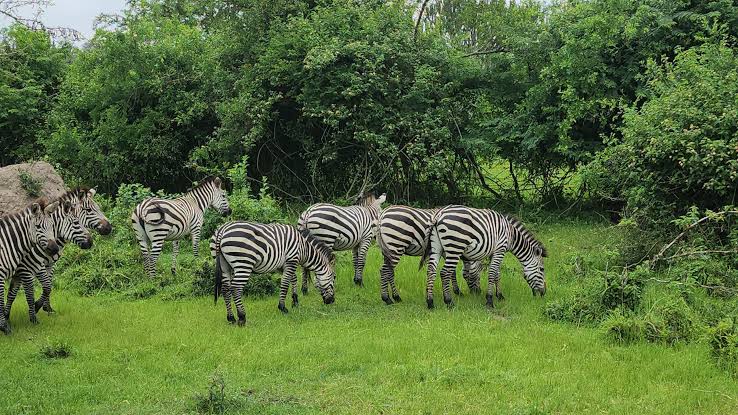
This compact 1-day Lake Mburo safari is the closest national-park wildlife experience to Kampala and Entebbe. Lake Mburo is Uganda’s smallest savannah park but one of the most rewarding for a short trip: it is the only park in Uganda with impala, holds strong populations of plains zebra, Rothschild’s giraffe, eland and buffalo, and pairs easily with a boat cruise for hippos, crocodiles and waterbirds.
You leave early (around 6:00–6:30), reach the park in roughly 3–4 hours via the Masaka–Mbarara corridor, enjoy a guided game drive and afternoon boat trip, then return the same evening. A stop at the Uganda Equator at Kayabwe is usually included for photos.
Places you visit
Key stops along this itinerary — customise dates and lodges when you enquire.
- Kampala or Entebbe (Start)
- Uganda Equator, Kayabwe
- Lake Mburo National Park
- Kampala or Entebbe (End)
Day-by-day itinerary
Lake Mburo game drive & boat cruise — closest savannah park to Kampala
Your private 4×4 safari vehicle and English-speaking driver-guide collect you from your Kampala or Entebbe hotel around 6:00–6:30 am — an early start that maximises wildlife activity and gives you a full morning in the park before the afternoon heat. From Entebbe the route crosses the Kampala–Masaka highway through Mpigi district, where roadside stalls sell roasted maize and fresh pineapple; from Kampala you join the same corridor past the industrial outskirts and into rolling farmland. The drive is smooth tarmac for most of the way, with the landscape shifting from banana plantations to tea-covered hills as you approach Masaka town.
Between Masaka and the park gate, a short stop at the Uganda Equator at Kayabwe is standard on this route. You can photograph the monument straddling latitude 0°, browse craft stalls for bark-cloth and carved wooden animals, and watch the classic water-drain demonstration that shows Coriolis effect on either side of the line. The stop takes 15–20 minutes and is a useful leg-stretch before the final hour southwest to the park. Total driving time from Kampala is roughly 3.5–4 hours; from Entebbe allow an extra 30–45 minutes depending on traffic leaving the airport road.
On arrival at Lake Mburo National Park — Uganda’s smallest savannah park at roughly 370 km², yet one of the most ecologically diverse for its size — you register at the Sanga or Nshara gate with Uganda Wildlife Authority (UWA) rangers. Lake Mburo sits in the Ankole cattle country of western Uganda, where long-horned Ankole cattle graze beside the park boundary and the skyline is a patchwork of acacia woodland, open grassland and five lakes that give the park its name. Unlike the vast northern parks, Mburo rewards visitors with intimate sightings: animals are accustomed to vehicles and often allow close approach along the network of game tracks.
The park was gazetted in 1983 to protect a remnant of the once-vast Ankole savannah that was gradually converted to ranchland. Today it is the only protected area in Uganda where impala still occur naturally, and Rothschild’s giraffe were reintroduced in 2015 to restore a species absent for decades. Community buffer zones around Sanga and Rwonyo mean you often see pastoralists herding cattle within sight of zebra — a visual contrast unique among Uganda’s parks. Dry months (December–February, June–August) concentrate animals at water; the wet season greens the grasslands and brings migratory birds but can make some tracks muddy after heavy rain.
Your guided morning game drive (typically 2.5–3 hours) follows tracks through the Kazuma and Rwonyo sectors, where open savannah meets lake-fringe wetland. Mburo is the only park in Uganda with impala — elegant antelope absent from Murchison, Queen Elizabeth and Kidepo — and herds of plains zebra, reintroduced Rothschild’s giraffe, eland (Africa’s largest antelope), topi, oribi, bushbuck, warthog and African buffalo are seen on most drives. Leopards and spotted hyenas are resident but shy; dwarf mongoose, banded mongoose and side-striped jackal are more often spotted near termite mounds at first light. The park holds over 350 bird species, including the range-restricted red-faced barbet, papyrus gonolek, African finfoot on quiet channels, and raptors such as martial eagle and bateleur overhead.

Safari activity | Lake Mburo morning game drive
Guided 4×4 safari through Kazuma and Rwonyo sectors with a UWA ranger — close-range zebra, impala, Rothschild’s giraffe and eland on compact game tracks, with excellent birding at first light.
Your UWA ranger joins the vehicle at the gate and reads spoor, alarm calls and vulture activity to locate predators. Game tracks loop past Kazuma Lookout, a low ridge with views across the valley toward Lake Mburo, and through acacia thickets where bushbuck freeze in dappled shade. Photographers appreciate the open light and relatively short distances between sightings — a strong contrast to the long drives sometimes needed in Murchison or Queen Elizabeth. If time allows before lunch, a brief stop at the park headquarters near Rwonyo offers interpretive displays on the park’s ecology and community conservation programmes.
After the game drive, break for lunch at Mihingo Lodge (luxury, with sweeping valley views), Rwakobo Rock (mid-range, perched on a granite kopje) or a shaded picnic site near the lake shore — lunch is included in your package. Vegetarian and simple dietary requests can usually be accommodated with advance notice.
Safari activity | Lake Mburo boat cruise
Afternoon launch on the lake itself — hippos and crocodiles at close range, African fish eagles on the papyrus fringe, and excellent waterbird photography in one of Uganda’s most compact wildlife parks.
The afternoon 2-hour boat cruise departs from the Rwonyo jetty on Lake Mburo itself. This is often the day’s wildlife highlight: hippos grunt and yawn from the shallows within metres of the launch, Nile crocodiles bask on mud banks, and African fish eagles call from dead trees along the papyrus fringe. Kingfishers, herons, cormorants and pied kingfishers work the reed edges; lucky cruises add African finfoot or even shoebill in adjacent fringe wetlands. The boat is stable, life jackets are provided, and your guide interprets behaviour as you drift past waterbuck and bushbuck drinking at the shoreline.
By mid-afternoon you begin the return journey northeast on the Masaka–Mbarara corridor, retracing the Equator stop if time allows for a coffee or souvenir purchase. Sunset often catches you on the final stretch into Kampala or Entebbe — expect arrival between 7:00 and 9:00 pm depending on departure point and traffic. This is a long but rewarding day, typically 12–14 hours door to door.
What to pack: Light breakfast before pick-up; binoculars; sun hat and sunscreen; neutral-coloured clothing; comfortable closed shoes; a light jacket for the cool early start; camera with zoom lens; small daypack. UWA permits and park fees are included in your package — carry passport or national ID for gate registration. Optional extras (book in advance) include a guided walking safari with an armed ranger through Rubanga Forest, horseback riding with Mihingo Lodge, or night game drives for leopard and bush babies — ask if you want to extend to an overnight stay.

 Day 1 | Accommodation
What's included
- Private 4×4 vehicle and English-speaking driver-guide
- Lake Mburo National Park entrance fees
- Guided game drive
- Boat cruise on Lake Mburo
- Lunch
- Bottled drinking water in the vehicle
- Equator stop en route


What's not included
- International flights and Uganda visa
- Travel insurance
- Personal expenses, tips and drinks
- Accommodation (day trip)


Accommodation & comfort level
Day trip — no overnight. We can arrange an early pick-up from Entebbe airport if you have a same-day connection (tight scheduling required).
Request Pricing & booking information
Request Quote: Fill in the contact form below.
You may also like

3 Days Lake Mburo & Queen Elizabeth Safari
Entebbe (Start, End)
Linking Lake Mburo and Queen Elizabeth makes geographic sense — both sit on the Masaka–Mbarara corridor — and gives zebra, impala and boat wildlife on Day 1 before the larger QE savannah on Days 2–3.…
2 Days Lake Mburo Safari
Entebbe (Start, End)
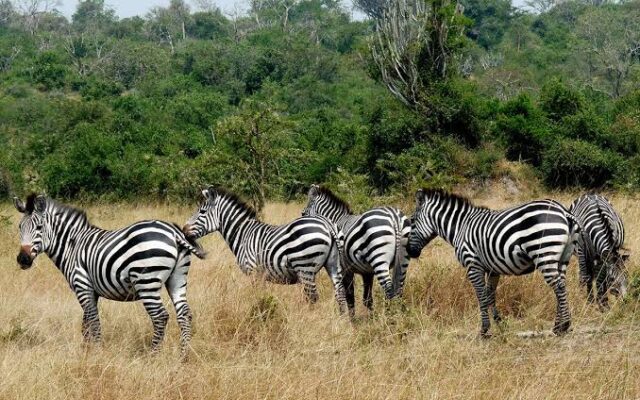
Lake Mburo is the nearest national park to Kampala — roughly 3.5–4 hours on tarmac — making a 2-day Lake Mburo safari ideal for a first taste of Ugandan wildlife without the long haul to the…
12 Days Uganda Wildlife and Gorillas Safari
Murchison Falls, Kibale Forest, Queen Elizabeth NP, Bwindi Forest, Lake Mburo, Entebbe
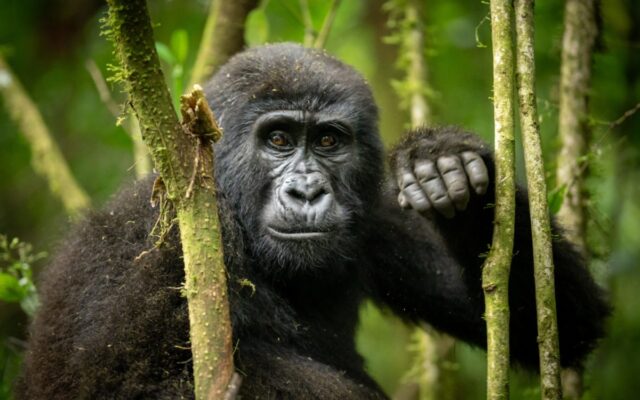
A comprehensive 12-day wildlife and gorillas safari combining Uganda’s northern savannah giants with southwestern primate forests. Murchison Falls delivers elephant, giraffe and the Nile launch; Queen…