Bigodi Wetland Sanctuary is one of the most rewarding community-based nature experiences in western Uganda, located beside Kibale National Park near Fort Portal. Known as the home of the Great Blue Turaco, Bigodi combines Bigodi birding, primate viewing, forest-edge walking, cultural encounters, and a strong conservation story in a compact and accessible destination.
For travelers visiting Kibale for chimpanzee trekking in Uganda, Bigodi Wetland Sanctuary tours are the natural companion experience. Kibale gives you the excitement of tracking chimpanzees in tropical forest; Bigodi slows the pace and lets you walk through papyrus, palms, community land, and swamp boardwalks with guides who explain birds, monkeys, plants, traditional livelihoods, and the role tourism plays in local development.
The sanctuary is managed through the Kibale Association for Rural and Environmental Development, usually known as KAFRED. This community organization was founded in 1992 and has become one of Uganda’s best-known examples of conservation linked directly to village benefits. Tourism revenue supports local projects while helping protect the wetland and the wildlife corridor between Bigodi village and the Kibale ecosystem.
Bigodi is ideal for birders, photographers, families, conservation-minded travelers, and anyone who wants more than a drive-through safari. It is not a big national park or a luxury lodge destination. Its strength is intimacy: you walk with local guides, hear the calls of turacos and monkeys, cross boardwalks through papyrus, and see how a small community can make community-based tourism in Uganda economically meaningful.
Quick Facts About Bigodi Wetland Sanctuary
| Feature | Details |
|---|---|
| Location | Bigodi village, near Kibale National Park in western Uganda |
| Nearest Major Town | Fort Portal |
| Management | Kibale Association for Rural and Environmental Development (KAFRED) |
| Founded / Organized | KAFRED was founded in 1992 |
| Main Activities | Guided wetland walks, bird watching, primate viewing, community visits |
| Signature Bird | Great Blue Turaco |
| Birdlife | 200+ recorded species in the wetland and forest-edge habitat |
| Primate Interest | Several monkey species associated with Kibale and the wetland corridor |
| Typical Walk Length | About 3 hours on guided trails and boardwalks |
| Best Combined With | Kibale chimpanzee trekking, Fort Portal, crater lakes, Queen Elizabeth |
Overview of Bigodi Wetland Sanctuary
Bigodi Wetland Sanctuary protects part of the Magombe swamp and the forest-edge landscape around Bigodi village. It sits on the edge of Kibale National Park, one of Africa’s most important primate forests, and functions as a rich transition zone between protected forest, wetland, farmland, and community settlement.
That location explains why Bigodi is so productive. Forest birds cross into the wetland edge, papyrus species occupy the swamp, monkeys move through the trees, and village life remains visible around the trail. Visitors get a layered experience rather than a single attraction: birding, primates, plants, culture, and community development all appear in one walk.
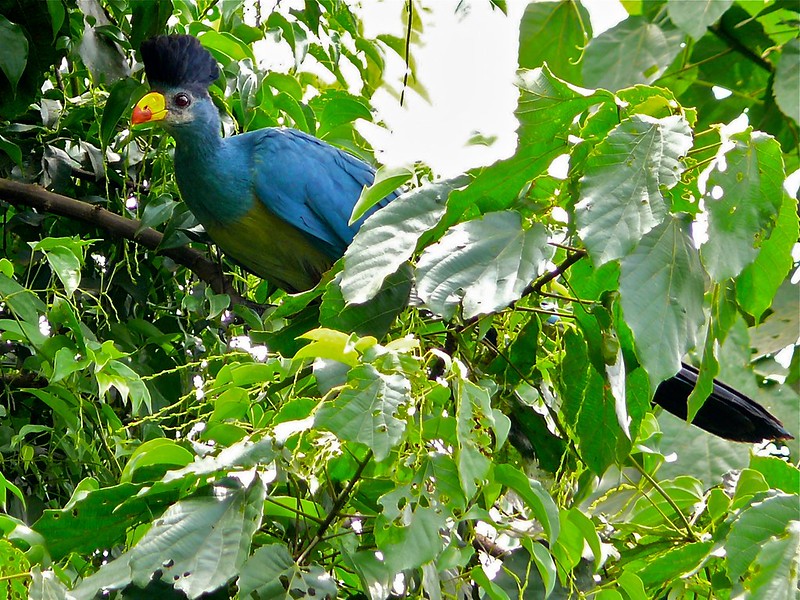
The sanctuary is especially famous for the Great Blue Turaco, one of Uganda’s most striking birds. Its blue, green, and yellow tones, loud calls, and slow gliding flight make it a favorite even for travelers who are not expert birders. Bigodi is also a strong place to look for kingfishers, hornbills, weavers, flycatchers, sunbirds, swamp specialists, and forest-edge species.
Bigodi’s primate interest is also important. Travelers may see black-and-white colobus monkeys, red-tailed monkeys, grey-cheeked mangabeys, vervet monkeys, blue monkeys, olive baboons, and other species depending on season, time of day, and movement around the forest edge. The experience is different from chimpanzee trekking in Kibale: it is gentler, more open, and often easier for mixed-interest groups.
Most importantly, Bigodi is a community conservation story. KAFRED uses tourism income to support conservation and local development. That gives the walk a social dimension: your guide is not only showing you birds and monkeys; they are interpreting a local model where a wetland once seen mainly as a resource is now also protected as a source of sustainable tourism value.
Why Visit Bigodi Wetland Sanctuary?
Bigodi is one of the easiest additions to a Kibale itinerary because it takes only a few hours, lies close to chimpanzee trekking areas, and adds a completely different perspective on western Uganda’s biodiversity. It works for serious birders and casual travelers alike.
Perfect Complement to Kibale Chimpanzee Trekking
A common plan is to trek chimpanzees in Kibale in the morning and visit Bigodi in the afternoon, or reverse the order depending on permit timing. The two experiences support each other: Kibale gives the deep forest primate encounter; Bigodi gives a slower wetland and community experience.
Exceptional Bird Watching
With more than 200 bird species recorded in the area, Bigodi is one of the strongest birding stops around Kibale. The Great Blue Turaco is the headline species, but the wetland also gives birders a chance to search for papyrus, swamp, woodland, and forest-edge birds within a small area.
Community-Based Conservation
Bigodi is not just a scenic boardwalk. It is a practical example of tourism revenue supporting local projects and wetland protection. Travelers who care about responsible tourism will find this one of the most meaningful short experiences in Uganda.
Accessible Nature Walk
The guided walk is active but not as demanding as mountain trekking or long forest hikes. Boardwalks and trails make it manageable for many visitors, though wet conditions can still make footwear and pacing important.
Strong Photography and Interpretation
Bigodi is excellent for travelers who enjoy details: leaves, birds, monkeys, village edges, papyrus reflections, and guide stories. It rewards curiosity more than speed.
Guided Nature Walks in Bigodi Wetland Sanctuary
The guided nature walk is the main activity at Bigodi. Visitors normally walk with a trained sanctuary guide along a trail that passes through wetland, forest-edge vegetation, boardwalk sections, cultivated margins, and viewing points. The experience often takes around three hours, though serious birders may move more slowly.
Guides interpret birds, primates, plants, local uses of wetland resources, and the history of KAFRED. This makes the walk feel personal and educational. You are not just following a path; you are hearing how the wetland fits into the daily lives of surrounding communities.
The trail can be muddy after rain, and boardwalk sections may be damp, so comfortable walking shoes are recommended. The pace is usually flexible, but guests should tell the guide in advance if they are focused on birding, primates, photography, plants, or community stories.
Morning walks are usually best for birding. Afternoon walks can still be rewarding and often fit well after a morning chimpanzee trek in Kibale. If you have only one opportunity, choose the time that fits your permits and energy level rather than forcing an unrealistic schedule.
See things to do in Bigodi Wetland Sanctuary
Bird Watching in Bigodi Wetland Sanctuary
Bird watching in Bigodi Wetland Sanctuary is one of the main reasons the area appears on Uganda birding itineraries. The mix of swamp, papyrus, forest edge, farmland, and village trees creates a productive habitat mosaic. This is especially useful for travelers who want strong birding without spending a full day far from Kibale lodges.
The Great Blue Turaco is the famous bird here and a major reason Bigodi markets itself as its home. The species is large, colorful, vocal, and memorable, making it a highlight even for general safari travelers. Birders may also look for papyrus gonolek, kingfishers, hornbills, weavers, flycatchers, sunbirds, waxbills, raptors, and other forest-edge birds.
Bigodi is particularly useful for birders because guides are motivated and local. Many know the calls, seasonal movements, and productive spots along the trail. They also understand how to pace a mixed group, balancing bird identification with interpretation for non-birders.
For a broader birding trip, Bigodi pairs naturally with Kibale National Park, Semuliki National Park, Queen Elizabeth National Park, Bwindi Impenetrable National Park, Mabamba Swamp, and Budongo Forest. It adds a wetland and community-managed forest-edge component to Uganda’s wider birding circuit.
Read more about bird watching in Bigodi
Primates and Wildlife in Bigodi
Bigodi is not a big mammal safari destination, but it is excellent for smaller wildlife and primates. Because it borders Kibale National Park, monkeys often use the forest-edge and wetland corridor. Sightings vary, but the walk can produce rewarding views of colobus monkeys, red-tailed monkeys, vervet monkeys, baboons, grey-cheeked mangabeys, blue monkeys, and other species associated with the Kibale landscape.
The wildlife experience is more relaxed than chimpanzee trekking. Instead of following a fast-moving chimp group through forest, you may stop to watch monkeys feeding, birds calling, butterflies moving through vegetation, or wetland mammals leaving signs in the swamp. This makes Bigodi a good choice for families, photographers, and travelers who want a slower interpretive activity.
Other possible wildlife includes sitatunga in swamp habitat, bushbuck, otters, reptiles, amphibians, and many insects. Most are not guaranteed, but the wetland’s biodiversity gives the walk depth even when primate sightings are brief.
Community Tourism and KAFRED
The most distinctive part of Bigodi is the link between conservation and community benefit. KAFRED, the Kibale Association for Rural and Environmental Development, was founded in 1992 and helped turn the wetland into a community-managed tourism asset. Tourism income supports local projects while creating incentives to protect the swamp and its wildlife.
This matters because wetlands are often under pressure from farming, resource extraction, settlement, and short-term economic needs. Bigodi shows another path: if visitors pay local guides, buy crafts, and support organized community activities, the wetland becomes valuable while still alive and functioning.
Some visitors combine the wetland walk with a Bigodi community or village experience. Depending on local arrangements, this may include meeting community members, learning about local food, crafts, traditional medicine, farming, coffee, or cultural practices. These experiences should be approached respectfully, with fair payment and an interest in listening rather than performing poverty tourism.
For travelers who want their Uganda safari to support people as well as wildlife, Bigodi is one of the clearest examples of community-based tourism in the country.
Best Time to Visit Bigodi Wetland Sanctuary
Bigodi can be visited year-round because it is a guided walking experience rather than a seasonal migration site. However, weather and timing affect comfort, visibility, bird activity, and trail conditions.
Morning Walks
Morning is usually best for birding and general wildlife activity. It is cooler, the light is gentler, and birds are often more vocal. Serious birders should request an early start where possible.
Afternoon Walks
Afternoon walks work well after morning chimpanzee trekking in Kibale. They can be slightly warmer or quieter for some birds, but they are still rewarding and often easier to fit into a safari schedule.
Dry Months
Drier periods generally make trails easier and more comfortable. They are useful for travelers who prefer firm footing and fewer rain interruptions.
Rainy Months
Wet months can be lush and atmospheric, but trails may be muddy. A light rain jacket, good shoes, and patience are important. Birding can still be excellent.
Plan the best time to visit Bigodi
How to Get to Bigodi Wetland Sanctuary
Bigodi is located near Kibale National Park in western Uganda, with Fort Portal as the nearest major town. Most travelers reach Bigodi as part of a Kibale chimpanzee trekking itinerary rather than as a standalone destination from Kampala.
From Fort Portal
Fort Portal is the main gateway. The drive toward Kibale is scenic and passes through western Uganda’s crater lake and tea-growing landscapes. Bigodi lies near the road network used for Kibale activities, making it easy to combine with lodges around Kanyanchu and Bigodi village.
From Kibale National Park
Bigodi is very close to Kibale’s chimpanzee tourism zone, which is why many itineraries pair the two. Travelers can often do one activity in the morning and the other later in the day, depending on permit times and lodge location.
From Kampala or Entebbe
Travelers coming from Kampala or Entebbe normally include Bigodi within a multi-day western Uganda safari. It can be combined with Kibale, Queen Elizabeth National Park, Bwindi, Lake Bunyonyi, or Murchison Falls National Park depending on route design.
Read how to get to Bigodi Wetland Sanctuary
How Bigodi Fits into Uganda Safari Itineraries
Bigodi is one of those small destinations that can improve the whole feel of an itinerary. It gives travelers a break from vehicle-based travel and adds a human conservation story between major wildlife highlights.
Kibale Chimpanzee Safari Add-On
The simplest combination is Kibale plus Bigodi. This works especially well for two-night Kibale stays: chimp trekking, Bigodi walk, lodge relaxation, and onward travel to Queen Elizabeth or the Fort Portal crater lakes.
Western Uganda Nature Circuit
Travelers interested in forests, birds, primates, and scenic landscapes can combine Bigodi with Kibale, Semuliki, Rwenzori Mountains National Park, Queen Elizabeth, and crater lakes around Fort Portal.
Family and Education Trips
Bigodi is strong for families because guides can explain plants, monkeys, birds, and community projects in a direct way. It is active but not as intense as long treks or full-day drives.
Birding Safaris
For birders, Bigodi adds a high-value wetland and forest-edge stop near Kibale. It can be part of a larger Uganda birding route linking Mabamba, Kibale, Semuliki, Queen Elizabeth, Bwindi, and Budongo.
Browse Uganda safari routes that can include Bigodi
Accommodation for Bigodi Wetland Sanctuary
Most visitors stay in lodges around Kibale National Park, Bigodi village, Kanyanchu, or Fort Portal. The best choice depends on whether your priority is chimpanzee trekking, birding, comfort, scenery, or easy onward travel.
Kibale and Kanyanchu Area Lodges
These are convenient for chimpanzee permits and a Bigodi walk. They reduce transfer time and are useful for travelers with a tight activity schedule.
Bigodi Community Area
Staying close to Bigodi can make the community experience feel more immersive. It also supports local tourism services and keeps the wetland walk logistically simple.
Fort Portal Hotels
Fort Portal offers a wider town base, restaurants, and access to crater lakes. It works well for travelers who want a broader western Uganda stop rather than only Kibale activities.
Compare accommodation options near Bigodi
Responsible Travel Tips for Bigodi
- Book through the official community tourism office or trusted local partners.
- Use trained sanctuary guides rather than informal shortcuts.
- Stay on trails and boardwalks to protect wetland vegetation.
- Keep noise low around birds, primates, and village homes.
- Ask before photographing people.
- Carry cash for local services, crafts, and tips.
- Wear comfortable shoes that can handle mud.
- Bring binoculars even if you are not a specialist birder.
Read Bigodi Wetland travel tips
Bigodi Wetland Sanctuary FAQs
- Is Bigodi Wetland Sanctuary worth visiting?
Yes. Bigodi Wetland Sanctuary is one of the best short activities near Kibale National Park, especially for bird watching, primates, community tourism, and a slower nature walk after chimpanzee trekking.
- What is Bigodi Wetland Sanctuary famous for?
Bigodi is famous for the Great Blue Turaco, community-based conservation through KAFRED, wetland boardwalks, forest-edge birds, several monkey species, and its easy combination with Kibale chimpanzee trekking.
- How long is the Bigodi Wetland walk?
The guided walk commonly takes about three hours, though birders and photographers may move more slowly. The pace depends on sightings, trail conditions, and the interests of the group.
- Can I visit Bigodi after chimpanzee trekking in Kibale?
Yes. Many travelers do a morning chimpanzee trek in Kibale and an afternoon Bigodi Wetland walk, or visit Bigodi first depending on permit timing and lodge location.
- What birds can I see in Bigodi?
The Great Blue Turaco is the best-known species, but Bigodi also offers kingfishers, hornbills, weavers, flycatchers, sunbirds, papyrus and swamp birds, and many forest-edge species depending on season and guide effort.
- Are there monkeys in Bigodi Wetland Sanctuary?
Yes. Bigodi can produce sightings of colobus monkeys, red-tailed monkeys, vervet monkeys, baboons, grey-cheeked mangabeys, blue monkeys, and other primates associated with the Kibale forest edge.
- Who manages Bigodi Wetland Sanctuary?
The sanctuary is managed through KAFRED, the Kibale Association for Rural and Environmental Development, a community-based organization founded in 1992 that links ecotourism income with conservation and local development.
- What should I wear for Bigodi Wetland?
Wear comfortable walking shoes, light long trousers, a breathable shirt, and rain protection. Trails and boardwalks can be damp, so avoid footwear that becomes slippery or uncomfortable in mud.
Nearby Destinations to Combine with Bigodi Wetland Sanctuary
Bigodi is best combined with Kibale National Park and the wider Fort Portal region. It also fits naturally into longer western Uganda routes that continue to Queen Elizabeth, Semuliki, Rwenzori, Bwindi, or Lake Bunyonyi.
Kibale National Park
Kibale National Park is the essential partner for Bigodi, combining chimpanzee trekking with a community wetland walk and forest-edge birding.
Fort Portal
Fort Portal is the main gateway town for Bigodi and Kibale, offering access to crater lakes, lodges, restaurants, and western Uganda route planning.
Lake Nkuruba Nature Reserve
Lake Nkuruba adds crater lake scenery, forest walks, and a relaxed nature stop to a Bigodi and Fort Portal itinerary.
Amabere Caves & Fort Portal Crater Lakes
The Amabere Caves and crater lakes add cultural storytelling, scenic viewpoints, and soft adventure near Fort Portal.
Queen Elizabeth National Park
Queen Elizabeth National Park pairs well with Bigodi and Kibale for travelers combining primates, wetlands, savannah game drives, and boat safaris.
Rwenzori Mountains National Park
The Rwenzori Mountains add high-altitude hiking and dramatic scenery to a western Uganda journey built around Kibale and Bigodi.
Nearby destinations to combine
Plan Your Bigodi Wetland Sanctuary Visit
Bigodi Wetland Sanctuary is one of Uganda’s most meaningful short nature experiences because it blends wildlife, birds, local guiding, and community development in a way that feels personal and practical. It is not just an add-on to Kibale; it is a destination with its own identity.
If you are planning chimpanzee trekking in Kibale, Bigodi should be high on your list. It gives the day balance, adds birding and smaller primates, and supports a local conservation model that has shaped community tourism in western Uganda for decades.
Our team can include Bigodi in a Kibale chimpanzee safari, a western Uganda birding route, a family-friendly nature itinerary, or a longer journey combining forests, savannah parks, crater lakes, and gorilla trekking.