Wildlife at Bigodi Wetland Sanctuary
Bigodi Wetland Sanctuary protects part of the Magombe swamp on the doorstep of Kibale National Park, one of Africa's richest primate forests. Unlike a classic national park drive circuit, the wildlife experience here unfolds on foot — boardwalks through papyrus, forest-edge paths, cultivated margins, and village approaches where daily life continues beside the corridor. That mixture of wetland, farmland, and forest edge is precisely why monkeys, turacos, kingfishers, and shy swamp mammals still share the same working landscape.
Travelers who book chimpanzee trekking in Kibale often treat Bigodi as the afternoon counterweight. Chimp tracking is intense: briefing rules, fast forest pace, and the focused effort of finding a habituated group. The Bigodi walk is gentler, more interpretive, and open enough for mixed groups to enjoy primates and birds without the physical demand of a forest chase. Understanding that contrast helps you appreciate both experiences rather than comparing them unfairly.
Primates of the forest-edge corridor
Bigodi's primate sightings come from real habitat continuity with Kibale, not from enclosures or feeding stations. Troops of black-and-white colobus, red-tailed monkeys, vervet monkeys, olive baboons, blue monkeys, and grey-cheeked mangabeys regularly move through the forest edge and wetland margin. Fruiting figs, seasonal movements, and time of day shape what appears on any given walk, but KAFRED guides know the feeding trees, crossing points, and canopy gaps where colobus silhouette against morning sky.
Families and photographers often prefer this open viewing to the closed-canopy intensity of chimp trekking. A colobus group feeding overhead, baboons along a village-edge path, or a mangabey moving through palm thickets gives everyone in the party something to watch — including travelers who are not focused on formal wildlife lists. Birders in the same group still pick up turacos and hornbills while primate enthusiasts scan the canopy.
Chimpanzees occasionally appear near the forest boundary, but Bigodi is not a chimp trekking destination. Secure Kibale permits for that experience and treat the wetland walk as complementary forest-edge wildlife. Honest expectations keep satisfaction high.
Wetland mammals, reptiles, and the signs you miss
Bigodi Wetland Sanctuary wildlife extends into quieter swamp life. Sitatunga — the antelope adapted to papyrus beds — inhabit suitable Magombe sections, though a full sighting on a standard three-hour walk is uncommon. Bushbuck may appear at forest margins. Otters, monitor lizards, frogs, and rich insect communities fill the gaps between primate moments. Many visitors remember a guide pointing out fresh tracks in mud, a kingfisher dropping from a reed stem, or butterflies along damp trail edges as vividly as any monkey troop.
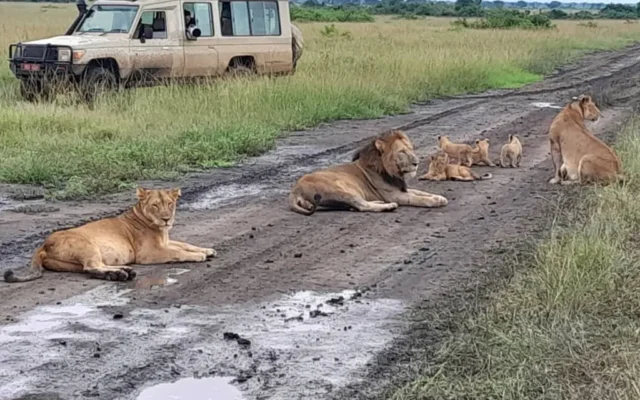
Compared with Queen Elizabeth National Park elephant herds on the Kasenyi plains or Murchison Falls National Park hippo pods on the Nile, Bigodi asks you to read habitat at walking pace inside a lived-in wetland. Guides connect plant names to diets, explain how papyrus filters water, and describe why maintaining the corridor between village and forest supports Kibale's wider biodiversity.
The three-hour guided walk
The main activity is a roughly three-hour guided nature walk on trails and boardwalks through wetland, papyrus stands, and forest-edge vegetation. Recent rain makes boardwalks damp and approach paths muddy — comfortable walking shoes matter more than athletic fitness. Tell your guide at the start whether you prioritize primates, birds, plants, photography, or community stories; route emphasis and pacing shift accordingly.
Morning walks generally suit wildlife activity best. Afternoon slots remain viable and often pair well after a Kibale chimp permit, depending on lodge location near Kanyanchu or Bigodi village. Do not squeeze Bigodi into a rushed hour before a long transfer toward Bwindi Impenetrable National Park or Lake Bunyonyi — the walk rewards unhurried attention.
KAFRED, community revenue, and habitat protection
Wildlife persists at Bigodi because tourism income reaches local guides and KAFRED projects dating to 1992. A booked walk reinforces the economic case for keeping Magombe intact: monkeys, turacos, lungfish, and papyrus as a managed asset rather than drained farmland. On the trail, that story becomes tangible — boardwalks you cross, the visitor centre, crafts from community members, and guides who grew up beside the swamp describing what changed when ecotourism replaced some destructive extraction.
Travelers interested in community-based tourism in Uganda frequently cite Bigodi as a model where conservation and village development align. Official sanctuary guides protect both visitor safety and the revenue stream that funds habitat protection.
Responsible viewing on community-managed land
Keep voices low near village homes and primate feeding trees. Stay on marked trails and boardwalks. Ask before photographing people. Do not feed monkeys or discard litter. Bigodi is community-managed land where respectful behaviour is part of credible ecotourism practice.
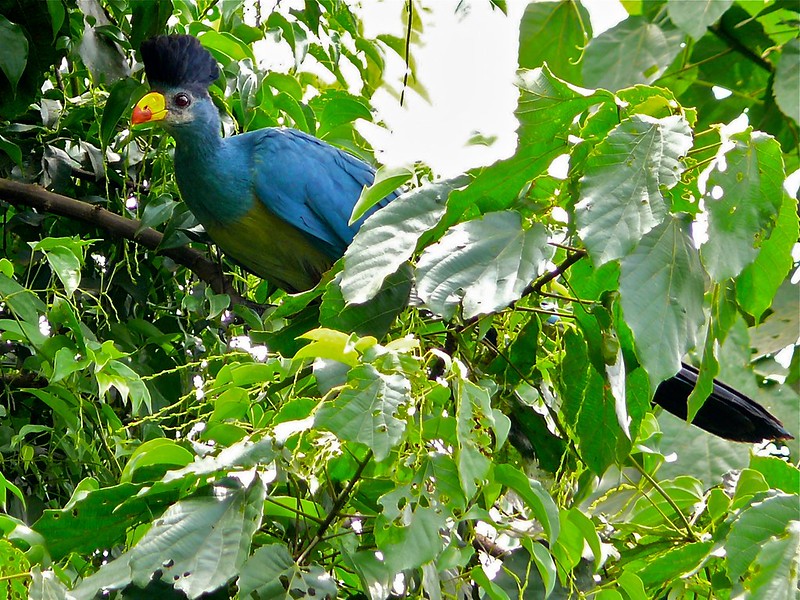
Photographers should expect detail-rich subjects: papyrus reflections, weaver nests, fungi after rain, and the unhurried flight of a Great Blue Turaco between palms. Macro attention often produces the day's best memories even when large mammals stay hidden.
Where Bigodi fits on a western Uganda safari
Most itineraries combine Bigodi with Kibale chimp trekking and Fort Portal crater-lake country. Longer routes continue to Queen Elizabeth National Park, Semuliki National Park, or Rwenzori Mountains National Park. Birders sometimes add Mabamba Swamp near Entebbe for a Lake Victoria wetland contrast to Magombe's forest-edge character.
For species lists, seasons, and access detail, see our Bigodi Wetland Sanctuary bird watching, best time to visit, and getting there guides.