Bird watching at Bigodi Wetland Sanctuary
If you are already booked for Kibale National Park, bird watching in Bigodi Wetland Sanctuary deserves a deliberate half-day — not leftover minutes before checkout. More than 200 bird species have been recorded around the Magombe swamp, where papyrus channels, boardwalk margins, palm thickets, farmland, and village trees create a habitat mosaic that closed-canopy chimp forest alone cannot supply. The headline species is the Great Blue Turaco, but productive listers know the walk rewards patience at swamp edges and forest margins alike.
Why the Great Blue Turaco defines Bigodi
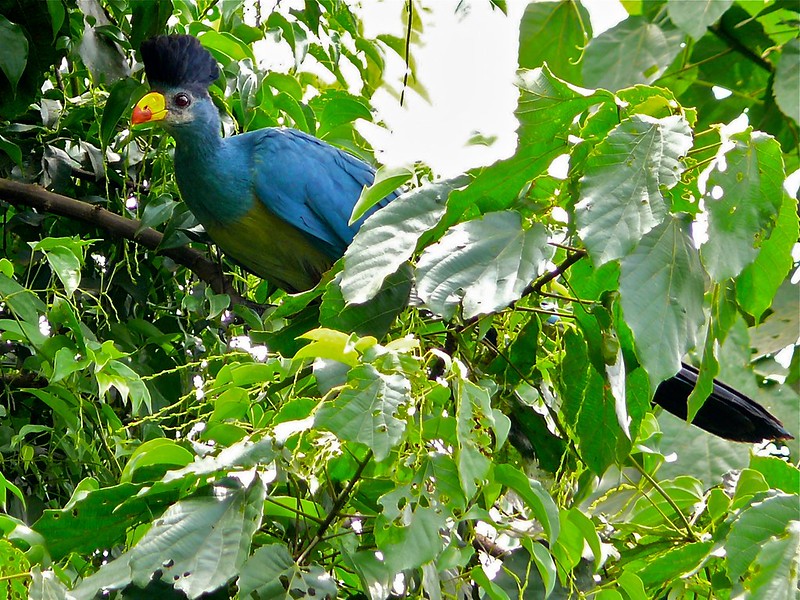
The Great Blue Turaco is large, unmistakable, and vocal enough that casual travelers remember it long after the trip. Blue-green plumage, a yellow bill, and slow glides through canopy gaps make it a photography target as much as a checklist tick. Bigodi's marketing as the turaco's home reflects genuine habitat quality and daily guide effort — KAFRED naturalists know stakeouts, flight lines, and calls along trails they walk year-round.
No wild bird is guaranteed, but Bigodi remains among Uganda's strongest turaco sites because Magombe habitat stays intact and community guides bird the swamp daily. Early starts, attentive listening, and willingness to pause when a guide hears a distant call all improve outcomes. Mixed groups often see turacos even when skulkers stay hidden — which is why Bigodi works for birders and general nature travelers on the same walk.
Papyrus specialists and forest-edge birds
Beyond turacos, productive habitats include papyrus stands along boardwalks, open swamp margins, and the Kibale National Park forest edge. Commonly sought species include papyrus gonolek, malachite and pied kingfishers, black-and-white casqued hornbill, weavers, sunbirds, flycatchers, raptors, waxbills, and seasonal migrants depending on month and water level. Day lists hinge on pace, overnight weather, and whether the group prioritizes birds over cultural interpretation — communicate birding focus when you book.
Bigodi fills a niche pure forest birding cannot replicate on the same lodge night: wetland specialists within minutes of chimp tourism infrastructure around Kanyanchu. Operators routinely pair a morning chimp trek with an afternoon Bigodi walk — or reverse the order when permit timing demands — without extending the Kibale stay by an extra day.
Guiding, optics, and trail pacing
KAFRED guides live beside Magombe and walk it regularly. For target species or long lists, say so when you book — mixed groups move faster than dedicated birders prefer, and a guide who knows you want papyrus gonolek will budget time at the right margins. Bring 8×42 binoculars as a practical default; a zoom lens helps for turacos and kingfishers in open crowns. Trails can be muddy after rain — protect optics in a rain sleeve or dry bag.
Morning starts suit activity and light best. Afternoon walks remain worthwhile when chimp schedules force a later slot, though midday heat may reduce passerine movement. Birders sharing the walk with non-specialists should brief companions that turacos and hornbills usually satisfy casual interest while listers scan edges longer — clear communication prevents friction on the trail.
Seasons, migrants, and micro-climate
Year-round birding is possible because many residents use the Magombe system continuously. Migratory interest often strengthens in the broader October to March window when Palearctic visitors supplement resident species — especially rewarding on multi-habitat western Uganda itineraries. Rain can suppress forest-edge calling; ask lodge staff about trail conditions the night before rather than assuming national forecasts match Kibale's micro-climate.
Carry a Uganda field guide or eBird checklist. Steady drizzle often quiets activity until a shower passes; flexible timing beats rigid schedules. Fair tips for guides who locate target species support the community employment model that keeps habitat protected.
Building a western Uganda birding circuit
Bigodi connects logically to Semuliki National Park lowland forest, Queen Elizabeth National Park savannah and waterbirds, Bwindi Impenetrable National Park Albertine Rift specials, Budongo Forest, and arrival-day wetlands such as Mabamba Swamp near Entebbe. Each stop adds a different habitat chapter — Magombe's community-managed forest edge complements Kibale's closed-canopy primate forest and Mabamba's Lake Victoria papyrus channels.
Longer circuits often route through Fort Portal crater lakes between Kibale nights, adding woodland and lake-edge species before continuing toward savannah or mountain parks. Treat Bigodi as a deliberate birding block, not an afterthought squeezed into leftover daylight before checkout.
Ethical birding on community-managed land
Stay on trails and boardwalks. Minimize playback unless your guide advises otherwise for a specific ethical context. Avoid pressuring guides toward nesting areas for photographs. Bigodi is community-managed land where village life remains visible — respect for people and habitat is part of credible Uganda birding practice.
Season planning sits on our best time to visit Bigodi page. Access detail is on getting to Bigodi. Primate and general wildlife context appears on Bigodi wildlife notes.