Mabamba Swamp — questions travelers ask before booking
Mabamba Swamp occupies a specific niche in Uganda travel: a Ramsar wetland near the airport where community guides pole canoes through papyrus in search of the shoebill. It is not a lodge-based safari park. Understanding that distinction upfront prevents the common mismatch — expecting lions and leopards, then wondering why the morning is quiet except for kingfishers and fishermen.
The site works best when treated as a purposeful half-day or full-morning activity from Entebbe or, with an early start, from Kampala. Pair it with Entebbe Botanical Gardens or Lutembe Bay Wetland if you are building a Lake Victoria birding arc before inland parks such as Bwindi or Queen Elizabeth.
Shoebills, guarantees, and expectations
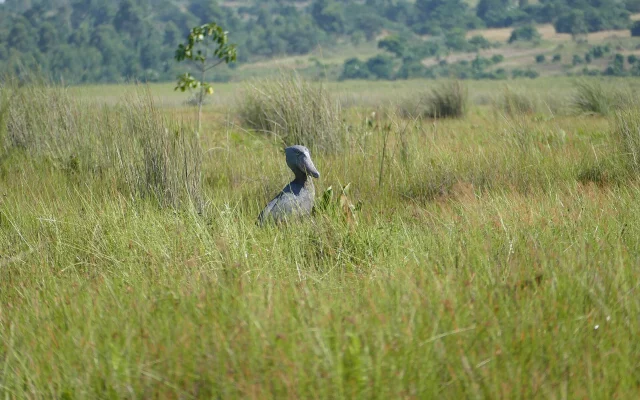
Mabamba is one of Uganda's most reliable places to search for a shoebill, but reliable is not the same as guaranteed. This is wild birding in a working wetland, not a controlled exhibit. Local guides know territories and recent movements; early mornings and patient searching improve outcomes. Operators who advertise near-certain success rates should be treated skeptically unless they cite verifiable data — the honest framing is strong odds with skilled guides, not a ticket to a guaranteed view.
Non-birders often enjoy Mabamba anyway. The canoe journey through papyrus is visually distinct, the shoebill is dramatic when found, and the setting on Lake Victoria feels far from airport hotels despite the short drive.
Time, cost, and itinerary fit
Most visitors allow a half day from Entebbe including transport and boat time. Serious birders may extend the morning to work papyrus edges for gonoleks, warblers, and other specialists after the shoebill effort. Same-day combinations with Ngamba Island are possible only with disciplined scheduling — both activities compete for morning hours.
Mabamba rarely anchors a multi-night safari by itself. Travelers stay in Entebbe or Kampala, not inside the swamp. That keeps costs lower than park lodges but means you should book airport-friendly hotels when Mabamba sits on arrival or departure day. See our best time to visit and getting there pages for season and route detail.
Packing, safety, and responsible travel
Bring binoculars, sun protection, a rain jacket, drinking water, and a dry bag for phones and cameras. Wear muted colors and shoes suitable for wet boarding. Small cash helps for tips and community services. Life jackets should be worn when provided; follow boat instructions and keep voices low near sensitive birds.
Conservation pressure on Mabamba includes fishing, invasive vegetation, runoff, and shoreline development. Tourism helps when it employs local guides and respects distance around shoebills. Avoid litter, do not pressure boatmen to flush birds for photos, and treat fishermen and community members along the landing with courtesy.
Where to read next
Species and ecology: Mabamba Swamp wildlife.
Bird lists and shoebill tracking: Mabamba bird watching.
Seasons and months: best time for Mabamba.
Entebbe and Kampala access: how to get to Mabamba.
The main Mabamba Swamp destination guide covers the full hub overview, nearby combinations, and safari planning context.