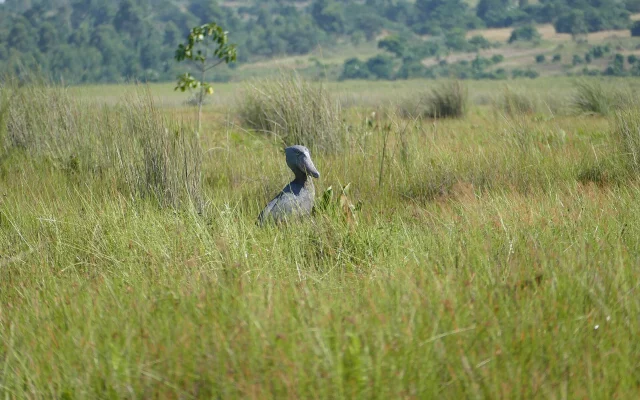
Best time to visit Mabamba Swamp
Unlike gorilla trekking, where permit availability dominates the calendar, Mabamba Swamp is flexible. The shoebill does not migrate away from the bay for half the year. The real planning questions are simpler and more practical: What time will you leave Entebbe or Kampala? How much buffer do you need before a flight? And are you combining Mabamba with Entebbe Botanical Gardens or a longer Lake Victoria birding day?
Time of day: mornings win
For shoebill tracking and general bird activity, morning is the clear preference. Temperatures on the water are cooler, wind is often lighter, birds feed actively, and light is better for photography. Guides and repeat visitors consistently plan the first session of the day for the wetland — not a late slot squeezed before sunset.
If you are visiting on arrival or departure day through Entebbe International Airport, an early Mabamba start usually means coordinating hotel pickup, boat landing logistics, and airport check-in with deliberate buffer time. Rushing the wetland to catch an afternoon flight rarely produces the best birding or the calmest canoe experience.
Dry season vs rainy season
Uganda's broadly drier windows — roughly June to September and December to February — often simplify road access to the landing areas around Mabamba Bay. Tracks that feel manageable in dry weeks can turn slow after heavy rain. Drier months also align with peak international travel, so Entebbe hotels and guides fill earlier; book ahead if your dates are fixed.
Rainy periods centered on March to May and October to November bring greener scenery, fewer competing visitors at times, and strong bird activity once showers pass. The trade-offs are muddy access roads, changing water levels in papyrus channels, and the need for a rain jacket, dry bag, and flexible schedule. Mabamba can still be excellent in wet months — but build margin into the day.
Local altitude and Lake Victoria influence mean weather near Entebbe may not match what inland parks such as Kibale or Murchison Falls experience the same week. Check conditions for the wetland specifically, not only national forecasts.
Migration and specialist birding months
Resident shoebills and papyrus specialists are present throughout the year. Birders targeting Palearctic migrants and broader Lake Victoria lists often favor the wider October to March window, when additional waterbirds and migrants supplement resident species. Exact mixes vary annually; combining Mabamba with Lutembe Bay Wetland spreads your chances across two Ramsar sites on the same lake.
Serious listers on multi-week Uganda birding safaris frequently open the itinerary with Mabamba, then move through forest sites such as Mabira Forest and Budongo Forest before Albertine Rift and savannah habitats. Season choice then becomes about road comfort across the whole route — not Mabamba alone.
Holiday weeks and Entebbe logistics
Christmas, Easter, and European summer holidays increase demand for Entebbe-based activities and airport hotels. Mabamba itself does not sell permits like gorilla trekking, but popular guides and drivers still book up. If your visit sits inside a peak holiday week, reserve the Mabamba morning when you confirm Entebbe accommodation — not the night before.
Travelers chaining Mabamba with Ngamba Island boat departures or lake transfers should compare timetables. A full morning on the swamp may not leave enough margin for an afternoon island run without a very tight schedule.
First day or last day of a safari?
Mabamba fits both positions on a Uganda itinerary. As a first-day activity, it delivers an immediate wildlife highlight before long drives to Bwindi or Queen Elizabeth. As a last-day outing, it uses spare hours before an evening flight — provided you respect traffic and airport security time.
Mid-itinerary visits are less common unless you are based in Entebbe between other legs. Kampala-based day trips are possible but traffic can consume the birding window; see our getting there guide for realistic drive planning.
Month-by-month snapshot
January–February: Often drier, good access, strong general birding; popular with travelers escaping northern winter.
March–May: Rainier, lush, flexible timing helps; afternoons may interrupt outings.
June–August: Drier, peak travel season, book Entebbe early; excellent shoebill searching conditions when roads cooperate.
September: Transition month — still workable, watch for early rains locally.
October–November: Second rainy peak possible; migrant interest rising for listers.
December: Holiday demand around Entebbe; morning starts essential.
For wildlife ecology and species detail, pair this page with our Mabamba Swamp wildlife and bird watching guides.