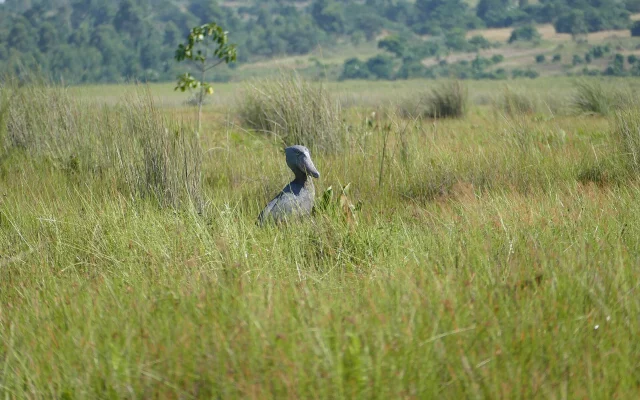
Bird watching at Mabamba Swamp
If you have one morning for Uganda birding near the airport, Mabamba Swamp is the site most safari planners recommend first. The Mabamba Bay Wetland System is a Ramsar site and Important Bird Area where papyrus, open water, and Lake Victoria margins support more than 300 recorded species in the wider area. The headline target is the shoebill, but serious listers treat the outing as a half-day minimum — not a rushed tick before lunch.
Shoebill tracking by canoe
Shoebill tracking in Mabamba is usually done in a canoe or small boat with a local guide. You move slowly through narrow papyrus channels and open pools while the guide scans for the bird's heavy bill and upright stance. Shoebills hunt lungfish and other prey in shallow water, often standing motionless for long periods. When one is found, experienced guides position the boat without crowding or flushing the bird — essential for ethical viewing and photography.
Mabamba is widely regarded as one of the most accessible shoebill sites in Africa, especially compared with remote swamps that require multi-day expeditions. That accessibility from Entebbe and Kampala is the main reason the site appears on so many Lake Victoria and central Uganda birding circuits. Sightings remain wild, not guaranteed — but local knowledge, resident territories, and canoe access give you a realistic search rather than a lottery.
Beyond the shoebill: papyrus and wetland specialists
Once the shoebill search is done — or while you wait — bird watching in Mabamba Swamp opens into papyrus and wetland birding. Commonly sought species include African jacana, malachite and pied kingfishers, African fish eagle, purple heron, long-toed lapwing, blue-breasted bee-eater, swamp flycatcher, papyrus gonolek, papyrus yellow warbler, African pygmy goose, and palm-nut vulture. Conservation-focused listers also note records relevant to the site's Ramsar profile, including species such as blue swallow in the wider Important Bird Area context.
Exact day lists depend on water level, season, guide effort, and whether you scan cultivated margins and nearby woodland patches after the main wetland loop. A guide who knows calls and papyrus stakeouts adds far more value than a boat ride focused only on the shoebill photograph.
When and how to bird Mabamba
Morning is the best time for Mabamba birding. Temperatures are cooler, wind is often lighter on the water, bird activity peaks, and light is softer for photography. If you are connecting to a flight or a long drive to Bwindi or Queen Elizabeth, plan an early departure rather than a late-afternoon afterthought.
Year-round birding is possible because many residents, including shoebills, use the system continuously. Migratory interest often strengthens from roughly October to March, when Palearctic visitors supplement the list — especially rewarding if you combine Mabamba with Lutembe Bay Wetland or other Lake Victoria sites on a specialist itinerary.
Gear, pacing, and guide choice
Bring 8×42 binoculars as a practical default for canoe birding. A Uganda field guide or eBird checklist helps between sightings. Telephoto lenses suit shoebill and kingfisher photography, but avoid pressuring guides to approach too closely. Pack a rain jacket, sun protection, and a dry bag — showers and splash are normal.
Move slowly, listen more than you talk, and let the guide set the pace. Rushing rarely adds species. Casual visitors still enjoy colorful common birds; expert birders should book enough time to work papyrus edges properly after the main shoebill effort.
Building a central Uganda birding day
Mabamba pairs naturally with Entebbe Botanical Gardens for forest-edge and garden species on the same day or adjacent mornings. Mabira Forest adds mid-elevation forest birds a short drive away. Longer circuits often continue to Budongo Forest, Kibale, savannah wetlands in Murchison Falls, and Albertine Rift forests around Bwindi — Mabamba is the logical Lake Victoria opening chapter.
See also our Mabamba Swamp wildlife and ecology notes, best time to visit, and access from Entebbe pages for route and season planning.