Bird watching in Kibale National Park
With more than 375 recorded bird species, Kibale National Park anchors western Uganda forest birding alongside Bwindi Impenetrable National Park and Semuliki National Park. The park mixes closed-canopy rainforest, woodland, grassland transition, and swamp margin — habitat layers that produce hornbills, barbets, sunbirds, woodpeckers, flycatchers, and sought-after ground birds when guides know stakeouts and calls.
Birding here differs from savannah routes in Queen Elizabeth National Park or Kidepo Valley National Park: light is lower, targets hide in foliage, and ear birding matters as much as scanning open plains.
Headline species and forest targets
Serious listers chase African pitta and green-breasted pitta on seasonal stakeouts, alongside great blue turaco, black bee-eater, yellow-spotted barbet, cassin's spine-tail, various forest robins, shrike-flycatchers, and multiple hornbill species. Exact day lists depend on month, guide effort, and whether you work the main forest after chimp trekking or dedicate separate mornings to bird-focused walks.
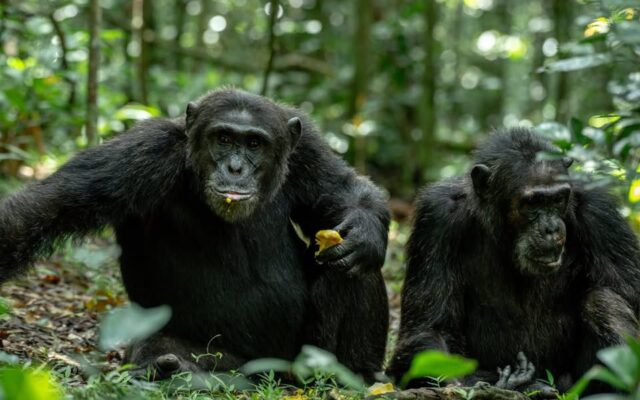
Chimpanzee trekking itself can produce incidental birding — but permit timing and group pace rarely suit long lists. Birders should add dedicated forest time beyond the chimp slot.
Bigodi Wetland Sanctuary
Bigodi Wetland Sanctuary is the park's most accessible half-day birding complement. Community guides on Magombe swamp boardwalks target Great Blue Turaco, papyrus gonolek, kingfishers, weavers, and forest-edge species where farmland meets wetland. The walk is slower and more open than interior Kibale trails — ideal for photographers and mixed-ability groups.
Pair Bigodi with Fort Portal crater-lake birding or Amabere Caves area routes on multi-day western Uganda birding safaris.
When and how to bird Kibale
Early morning forest walks maximize activity and calling periods. Wet months (roughly March–May and October–November) boost lush scenery and some species activity but muddy trails; drier windows (December–February, June–September) simplify trekking comfort — see best time to visit Kibale for month detail.
Bring 8×42 binoculars, a Uganda or East Africa guide, rain protection, and insect repellent. Telephoto lenses with good high-ISO performance help under canopy shade.
Building a primate-and-bird circuit
Kibale fits naturally between Queen Elizabeth savannah birding (waterbirds, raptors, shoebill extensions toward Mabamba Swamp on arrival days) and Albertine Rift forests at Bwindi. Budongo Forest Reserve adds complementary chimp and forest bird options on Murchison-Kibale corridors. Longer itineraries may include Rwenzori Mountains National Park for altitude specialists.
Forest edge and crater-lake birding
Tea estates and Fort Portal crater lakes around Kibale add sunbirds, widows, and open-country species after closed-canopy mornings. Half-day loops combining Kanyanchu forest with lake margins diversify lists without extra park permits — useful when chimp briefing times occupy dawn.
Recording lists and eBird ethics
Record sensitive stakeout locations responsibly; some pitta sites benefit from guide-only knowledge to prevent disturbance. Playback should follow guide judgment — overuse stresses breeding birds. Share checklist goals at booking so drivers allocate stop time on transfer days, not only inside the park boundary.
Playback, stakeouts, and guide qualifications
Playback for pitta and other sensitive species should follow your guide's judgment — overuse stresses breeding birds. Stakeout locations change seasonally; reputable birding operators update guide briefings monthly. Ask whether your lead guide has recent Kibale pitta success before paying premium birding day rates.
Albertine overlap and national list strategy
Kibale alone cannot complete a Uganda list — pair it with Semuliki for Congo Basin edge species, Queen Elizabeth for waterbirds, and northeastern savannah on longer expeditions. Budget two Kibale mornings if pitta stakeouts and Bigodi turacos both matter; one rushed day often sacrifices half your western forest targets.
Crater lake afternoon birding
Post-chimp afternoons on Fort Portal crater lakes add open-water and garden species — weavers, sunbirds, and raptors over tea — when forest interior feels complete. Short drives from Bigodi lodges make this pairing practical without extra overnight moves.
Continue planning with Kibale wildlife, getting to Kibale, and the main Kibale National Park guide.
Family birding on Bigodi boardwalks
Bigodi suits mixed-ability groups when Kanyanchu forest feels too strenuous — turacos and kingfishers reward slow boardwalk pacing with children or non-hikers.