Wildlife in Kibale National Park
Kibale National Park wildlife is defined by rainforest density, not open visibility. Covering roughly 795 square kilometres of tropical forest, woodland, grassland transition, and swamp habitat near Fort Portal, the park holds one of Africa's richest primate communities. Travelers come for chimpanzee trekking; they often leave remembering colobus troops, mangabeys, hornbills, and the humid stillness of a forest that feels far from Queen Elizabeth National Park savannah just a few hours away.
Unlike Murchison Falls National Park or Kidepo Valley National Park, Kibale rewards patience, listening, and guided interpretation. Mammal sightings outside primate targets are often brief — but ecological richness is constant.
Chimpanzees: the flagship species
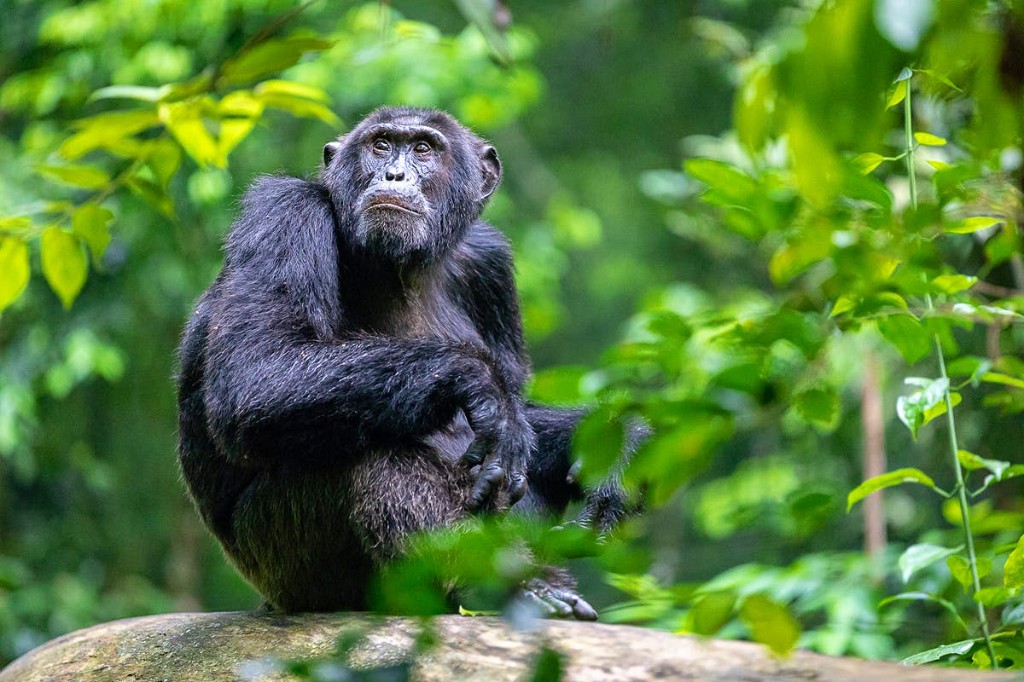
Estimates of roughly 1,500 chimpanzees in the Kibale ecosystem underpin its global reputation. Habituated communities allow regulated trekking from briefing points such as Kanyanchu, where Uganda Wildlife Authority rangers and guides lead small groups on forest tracks that may last from under an hour to several hours depending on chimp movement and terrain.
Encounters are dynamic: chimps vocalize, groom, feed, and move rapidly through canopy and understorey. The one-hour viewing window on standard treks is intense. The Chimpanzee Habituation Experience extends observation for travelers who want deeper behavioral context with researchers and trackers — a premium activity requiring advance booking and higher fitness.
Other primates of Kibale
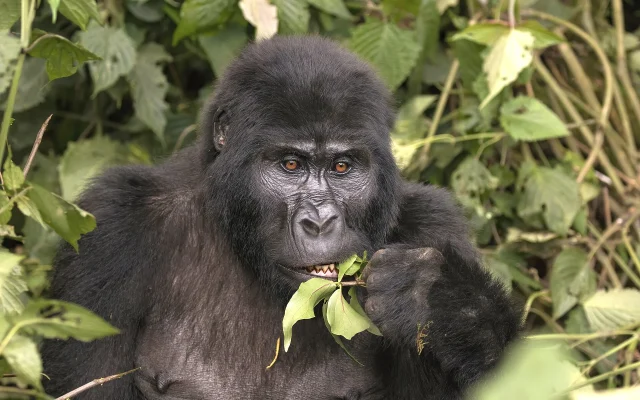
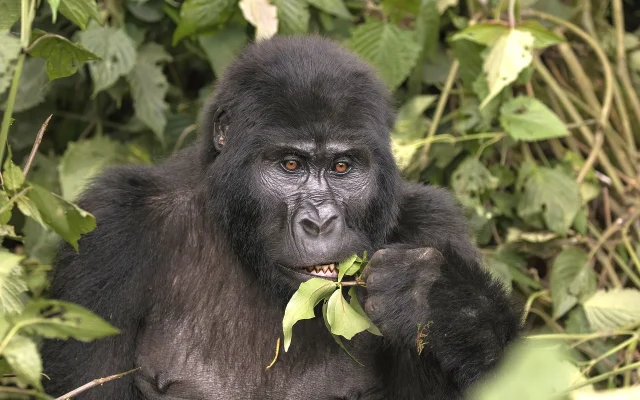
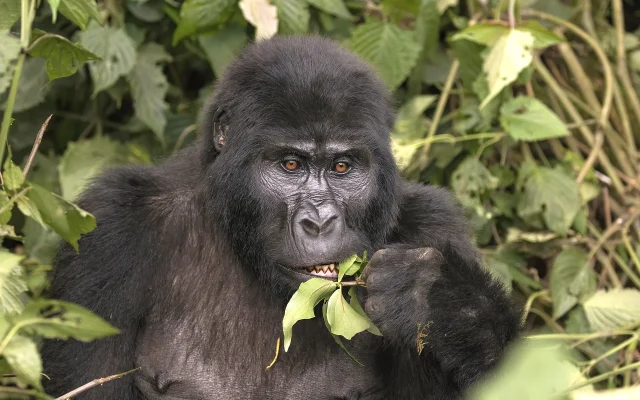
Beyond chimps, the park supports black-and-white colobus, red colobus, L'Hoest's monkey, grey-cheeked mangabey, red-tailed monkey, blue monkey, olive baboon, and nocturnal bush babies among its primate roster. Many appear on forest walks, lodge edges, or the Bigodi Wetland Sanctuary boardwalks beside the park boundary — a community-managed swamp where forest-edge monkeys and turacos complement closed-canopy trekking.
Primate diversity here exceeds most single parks in East Africa. Photographers should expect low light under canopy and prepare for movement rather than static savannah portraits.
Forest mammals and smaller life
Large savannah mammals do not define Kibale. Forest antelope such as duiker, bush pigs, sitatunga in suitable swamp habitat, otters, and varied rodents and carnivores occur but are shy and easily missed without guide skill. Elephants use forest corridors historically; encounters are possible though not the primary draw. The honest framing: Kibale is a primate and forest ecology destination, not a Big Five checklist park.
Reptiles, amphibians, butterflies, and invertebrates add depth on guided nature walks beyond chimp permits — especially in wetter months when forest life feels most active.
Bigodi and the park edge
Bigodi Wetland Sanctuary extends Kibale's wildlife story into papyrus, farmland margins, and village approaches. KAFRED community guides interpret Magombe swamp ecology, Great Blue Turaco territories, and how tourism revenue supports local development since 1992. Most travelers pair a morning chimp trek with an afternoon Bigodi walk — complementary pace and habitat.
Conservation and corridor context
Kibale links with Queen Elizabeth through wildlife corridors that matter for elephant and genetic exchange across forest-savannah boundaries. Understanding Kibale as part of that wider western Uganda landscape helps explain why lodge location, drive times, and combined itineraries with Semuliki National Park or Rwenzori Mountains National Park make ecological sense.
Nocturnal forest life and night walks
Where UWA and lodge programs allow, guided night walks search for bush babies, civets, and nightjar activity along forest edges — a different pace from daytime chimp energy. Torches, red filters, and strict guide protocols protect wildlife from disorientation. Night options vary by lodge and season; confirm availability rather than assuming nightly departures.
Responsible primate tourism
Chimp viewing rules mirror gorilla etiquette at distance: no feeding, no flash, follow ranger instructions on approach and time limits. Tourism revenue should reach trackers and communities transparently — ask operators how permit fees and tips flow before booking. Forest litter and off-trail shortcuts damage fragile understorey; stay on marked paths except where guides direct otherwise.
For birding detail see Kibale bird watching. Trekking seasons: best time to visit Kibale. Access from Kampala and Queen Elizabeth: getting to Kibale.