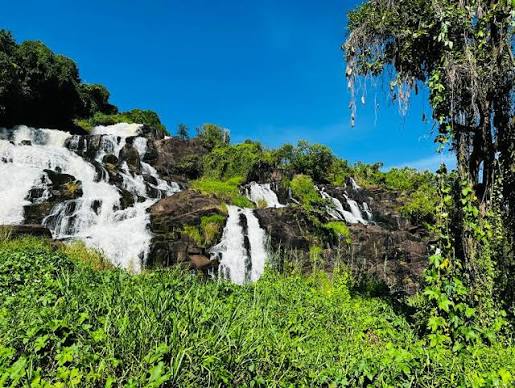
Bird watching at Aruu Falls
Specialist Uganda birders usually anchor northern itineraries with Kidepo Valley National Park, Murchison Falls National Park, or wetland sites such as Mabamba Swamp near Entebbe. Aruu Falls still earns a place on mixed routes — not as a replacement for those destinations, but as a waterfall pause where kingfishers, swallows, weavers, raptors, and scrub birds appear while you photograph cascades and rest between long drives.
What birding at Aruu actually looks like
Bird watching at Aruu Falls happens on foot around rock shelves, pool margins, and vegetation edges — not on a dedicated boardwalk or forest trail system. There is no entrance gate checklist or habituated hide. Instead, you scan while moving carefully on wet stone, listening for kingfisher calls, watching swifts over water, and picking up bush birds in scrub along access paths. Lists stay modest compared with Kidepo or Murchison, but casual birders often enjoy colorful sightings without adding a separate birding day.
Morning and late afternoon suit bird activity and northern Uganda light. Midday can be hot on exposed rock; plan the waterfall walk for cooler hours when possible, especially if Aruu sits mid-route on a Gulu–Kitgum transfer.
Riverine and pool-margin species
Moving water attracts kingfishers — pied and malachite are plausible near quieter pools — plus wagtails, sandpipers or lapwings where habitat allows, and swallows skimming cascades. Herons or egrets may appear at vegetated margins after rain. Exact species depend on season, flow volume, and how much time you spend scanning rather than photographing wide waterfall scenes.
Guides who walk the site regularly often know where birds perch between tourist groups — a practical advantage over self-guided rock hopping. Tell your guide if birding matters; pacing can slow near productive pool edges.
Open country and scrub along the approach
The drive and walk through Acholi farmland and scrub adds open-country birds: weavers, bishops, cisticolas, doves, shrikes, starlings, and raptors overhead. Hornbills or turacos are less guaranteed than in western forest parks, but northern countryside assemblages still supplement the riverine list. Photographers may combine a perched kingfisher frame with wide cascade shots — two aesthetics on one stop.
Do not expect shoebills, papyrus gonoleks, or Kidepo specials at Aruu itself. Honest expectations keep satisfaction high; treat the falls as a bonus birding pause, not a primary list destination.
Season and safety for birders
Wetter months often increase flow and greenery — dramatic falls, more insect activity, and sometimes richer edge birdlife — but slippery rock becomes the main constraint. Drier months simplify walking and may expose more stable pool margins for scanning. Either way, grip shoes and guide-led routes matter more than month choice for birders who need safe footing while watching through binoculars.
Pack 8×42 binoculars, sun protection, water, and a dry bag if cameras approach spray zones. Telephoto lenses help for kingfishers and raptors; wide lenses still dominate waterfall photography for most visitors.
Building a northern Uganda route with Aruu
Logical combinations include Gulu overnight, Aruu en route to Kidepo, or Murchison–Karuma Falls–Gulu circuits where Aruu breaks up road time. Birders serious about northern lists should still prioritize full days in Kidepo and Murchison; Aruu adds texture without replacing park time.
Travelers comparing waterfalls on one Uganda trip often contrast Aruu with Sipi Falls on Mount Elgon — forested plunge pools versus open Acholi rock shelves — and with the Nile power of Murchison. Each stop teaches a different regional bird community. Aruu's list will stay shorter, but the kingfisher-by-cascade moment can still anchor a travel memory when the route already passes Pader District. Even a twenty-minute scan between photos adds value on long transfer days.
See also our Aruu Falls wildlife and nature notes, best time to visit, and getting there from Gulu pages for route and season planning.