Wildlife and nature at Aruu Falls
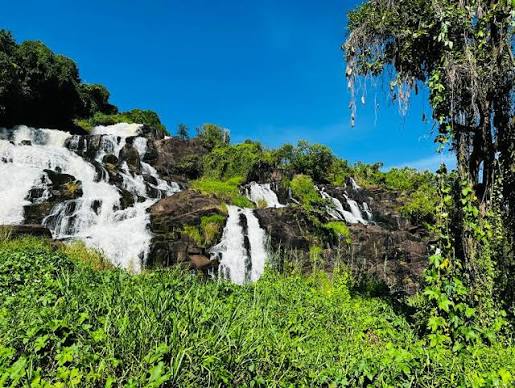
Aruu Falls is not a national park. You will not find elephant herds or lion prides on the rock shelves. Instead, the wildlife experience is intimate and water-focused: layered cascades over ancient rock, green vegetation in wet seasons, riverine birds, butterflies, lizards on warm stone, and the small life that gathers wherever northern Uganda's streams break into open pools. That narrower focus is exactly why Aruu works as a scenic break on routes linking Gulu, Kitgum, Kidepo Valley National Park, and Murchison Falls.
Located around Lupaya village in Angagura sub-county, Pader District, near the Gulu-Kitgum highway, Aruu spreads water across a broad rock landscape rather than plunging into a single narrow gorge. Seasonal flow changes what you see — powerful channels after rain, exposed shelves and calmer pools in drier months — and guides adapt walking lines accordingly. Understanding that variability makes repeat visits feel different even on the same road trip.
Riverine life and rock-pool ecology
The ecological heart of Aruu Falls wildlife is the relationship between moving water and rock. Streams feed multiple cascades, creating aerated pools, splash zones, and damp margins where algae, insects, and amphibians thrive. Frogs may call from vegetated edges after rain; dragonflies patrol misty spray when flow is strong; fish ripple in deeper pools where guides permit observation from safe distances.
Monitor lizards and smaller reptiles often appear on sun-warmed rock once you move away from the wettest shelves. Spiders, beetles, and rich insect communities occupy the interface between water and vegetation — easy to overlook when the falls themselves dominate your attention, but part of what makes the site a genuine nature stop rather than a pure viewpoint.
Birds, butterflies, and countryside species
Aruu should not be marketed like Mabamba Swamp or Toro-Semliki Wildlife Reserve for specialist birding. Expect everyday riverine and countryside birds: kingfishers hunting near pools, swallows and swifts over water, weavers and bishops in nearby grass, raptors on thermals above the valley, and bush birds in scrub along access paths. Casual observers often remember colorful kingfishers or a sudden hawk as vividly as the cascades.
Butterflies are frequently abundant on flowers and damp margins, especially in greener rainy-season weeks. Mixed groups of photographers, families, and road-weary safari guests find enough living detail to justify a slow hour — provided they follow guide advice on slippery rock and fast-water edges.
Acholi landscape and community context
Aruu sits in an Acholi-region landscape of farms, villages, rock, and northern Uganda road life. Wildlife here persists beside human use — picnics, local bathing where permitted, guiding income, and community tourism around Pader. A responsible visit supports guides and vendors while keeping distance from unsafe edges and respecting people who use the area beyond tourism.
Some sources mention historical associations around the site. Treat those as local context when guides share them; the strongest draw remains the waterfall landscape itself — the name Aruu is commonly linked to a Luo word meaning woken up, a detail guides often weave into introductions.
Compared with other Uganda waterfalls
Aruu is not Murchison Falls power on the Nile, nor the developed hiking scene at Sipi Falls on Mount Elgon. It is more local, more spread across rock shelves, and especially useful between long overland drives. Karuma Falls on the Murchison route offers a different scale and road logic. Visiting several waterfalls on one Uganda itinerary teaches how geology and regional culture shape each site differently.
Responsible wildlife and nature viewing
Keep voices moderate near pools, never throw litter into streams, and follow your guide on distance from fast water and steep edges. Swimming only where guides confirm safety — submerged rocks, currents, and slippery entries change with rainfall. Wear shoes with grip; wet rock injures more visitors than wildlife ever will. Do not photograph local people without permission.
Hiring Acholi-area guides directly supports the people who know safe walking lines and seasonal conditions. That income reinforces community tourism value around a site still developing formal infrastructure such as walkways and guardrails.
How Aruu fits a northern Uganda safari
Most itineraries treat Aruu as a half-day or scenic stop: high-value waterfall time between Gulu and Kitgum or Kidepo, not a multi-night wildlife destination. It pairs naturally with Gulu town services, Pian Upe Wildlife Reserve for savannah contrast on some routes, and Murchison–Karuma legs when the road continues west.
For deeper planning, see our guides on Aruu Falls bird watching, best time to visit, and getting there from Gulu — each covers a different angle of the same waterfall stop.