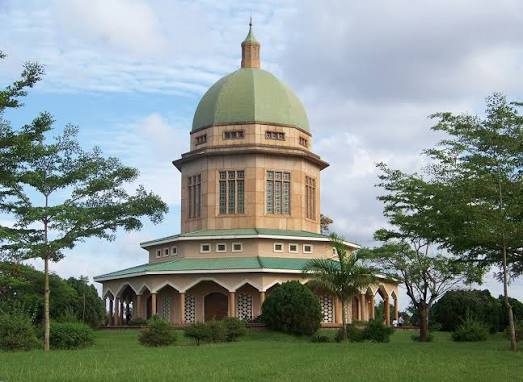
Gardens and nature at Bahai Temple Kampala
The Baháʼí House of Worship in Kampala — widely known as the Mother Temple of Africa — is not a wildlife park. You will not find elephant herds or chimpanzee troops on the lawns. Instead, the nature experience is calm and garden-focused: hilltop breezes, shaded paths, flowering shrubs, butterflies, lizards in sun patches, and the birds that use large urban green spaces as daily habitat. That quieter ecology is exactly why non-faith visitors still remember the site as one of Kampala's most peaceful stops.
Dedicated January 1961, the temple sits on Kikaaya Hill north of central Kampala — a nine-sided domed building within a large garden property designed for prayer, contemplation, and community life. Baháʼí principles link worship with beauty and serenity; the grounds are not decorative afterthought but part of the atmosphere of openness. Walk slowly and the hill reveals living detail between architectural moments.
Urban green space on Kikaaya Hill
Kikaaya Hill behaves like an elevated island of green inside the city. Mature trees, lawns, and planted borders create microhabitats: sunlit edges for insects, shade for roosting birds, and open grass for raptors overhead. Compared with closed-canopy forest parks such as Mpanga Forest or primate destinations like Ngamba Island, the temple gardens offer open-sky ecology — easier for mixed groups, photographers, and travelers who want nature without trekking gear.
Seasonal change is subtle but real. Rainy weeks bring lush grass and stronger flower displays; drier months simplify path walking and widen views across Kampala. Either way, the site rewards unhurried pacing rather than a rushed photo stop before traffic swallows the afternoon.
Birds, butterflies, and smaller life
The strongest Bahai Temple Kampala wildlife interest is avian. Sunbirds, weavers, doves, starlings, coucals, raptors, and swifts commonly appear on urban hill properties like this — especially early morning when garden activity peaks and city noise is lower. Casual observers often notice colorful sunbirds on flowering shrubs or a hawk riding thermals above the dome while they walk the paths.
Butterflies visit planted borders after rain; lizards bask on warm stone near paths; bees and other pollinators work flowers throughout the year. These are not marquee safari species, but they explain why the gardens matter as living space — not only as a backdrop to the House of Worship.
Faith, stewardship, and respectful observation
The temple is an active sacred space open to all people. Nature observation must align with visitor etiquette: quiet voices, modest behaviour, no litter, and sensitivity near prayer or devotional gatherings. Sunday devotional programs are part of living use; confirm current times locally if you hope to attend respectfully rather than only tour the grounds.
Photographers should treat worshippers with the same courtesy as wildlife — ask before intrusive frames, avoid flash near sensitive moments, and prioritize reflection over checklist photography. The gardens invite stillness; that is part of their ecological character as well as their spiritual one.
How the temple fits a Kampala itinerary
Most city tours pair Bahai Temple Kampala with Uganda Museum for national history, Kasubi Tombs for Buganda royal heritage, Ndere Cultural Centre for evening performance, or Namugongo Martyrs Shrine on faith-focused routes. Arrival and departure days from Entebbe sometimes include the temple as a calm counterweight to traffic-heavy transfers.
For deeper planning, see our guides on Bahai Temple Kampala bird watching in the gardens, best time to visit, and getting there on Kikaaya Hill — each covers a different angle of the same hilltop visit.
Responsible garden visiting
Stay on paths, do not pick flowers or disturb nesting birds, and carry out any litter. Dress respectfully for a place of worship. The gardens remain maintained for prayer and community use — courteous behaviour protects both the sacred atmosphere and the small urban ecosystems that persist on the hill.