Wildlife in Shaba National Reserve
Shaba National Reserve wildlife thrives across a semi-arid ecosystem anchored by the Ewaso Nyiro River along the northern boundary and permanent springs scattered through volcanic country east of Samburu National Reserve. Unlike southern Kenya's grassland parks, Shaba blends lava ridges, steep ravines, doum-palm riverine forest, and acacia scrub — a habitat mosaic supporting the famous Samburu Special Five alongside elephants, big cats, and hundreds of bird species in country far quieter than its western neighbours.
The Samburu Special Five
Five species define Shaba's northern Kenya identity within the shared Ewaso Nyiro ecosystem:
- Grevy's zebra — endangered northern race with narrow stripes and white belly
- Reticulated giraffe — striking polygonal coat pattern endemic to northern Kenya
- Beisa oryx — heat-adapted antelope that can survive weeks without drinking
- Somali ostrich — blue-grey neck and thighs; northern race of the world's largest bird
- Gerenuk — the "giraffe gazelle" that browses upright on acacia shoots
All five occur year-round with patient game driving along spring margins, lava plains, and riverine zones. Licensed guides know productive territories near Buffalo Springs National Reserve and Shaba Hill's volcanic foothills.
Elephants & River Wildlife
Substantial elephant populations congregate at permanent springs and along the Ewaso Nyiro during dry months. Family herds, large bulls, and dramatic swamp scenes define many visitors' strongest memories. Hippos and Nile crocodiles occupy deeper river pools on the northern boundary. Buffalo gather in herds at spring-fed wetlands that sustain wildlife when inland pools shrink.
Predators
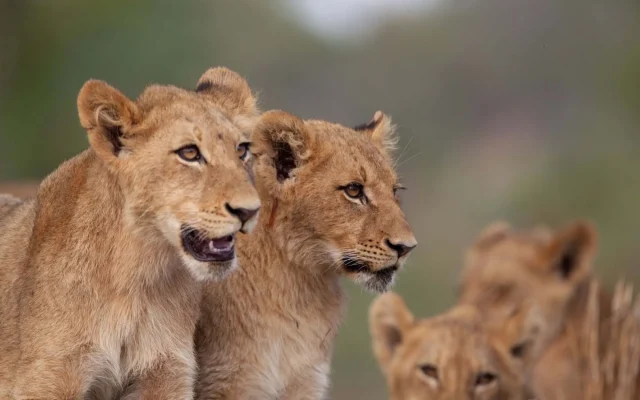
Leopards inhabit rocky kopjes and riverine thickets — Shaba's connection to Joy Adamson's leopard rehabilitation work adds cultural depth to cat searching. Lions rest beneath toothbrush trees by day and hunt near spring grazing zones. Cheetahs exploit open lava plains with exceptional visibility. Spotted hyenas, striped hyenas, and black-backed jackals occur throughout the ecosystem.
Other Mammals
Lesser kudu browse thickets. Grant's gazelles, impala, dik-dik, and warthogs add plains-game diversity. The reserve does not position itself as a rhino destination — travellers seeking rhino encounters add Ol Pejeta Conservancy or Meru National Park to broader Kenya circuits.
Game Drive Zones
- Spring and swamp margins — elephants, buffalo, and plains game at permanent water
- Ewaso Nyiro northern boundary — riverine elephants, crocodiles, and doum-palm birdlife
- Lava ridge country — cheetahs, oryx, and Grevy's zebra on open plains
- Shaba Hill approaches — elevated viewpoints and habitat transitions
- Rocky gorges — leopard country and klipspringer habitat
Walking Safaris
Select lodges offer guided bush walks with armed rangers — interpreting tracks, geology, and spring ecology on foot. Walking complements vehicle drives by revealing Shaba's volcanic terrain and smaller species that vehicles pass quickly.
Game Drive Tips
- Plan dawn drives when predators are active and spring light is soft
- Search rocky outcrops slowly for leopards — Shaba rewards patience
- Allow two full days to target all Special Five species
- Combine Shaba with Samburu and Buffalo Springs for ecosystem-scale coverage
- Visit Joy Adamson memorial sites between drives for conservation context
Pair Shaba with Samburu and Buffalo Springs for the complete Ewaso Nyiro ecosystem, Meru National Park for Born Free lion heritage, or Maasai Mara for southern Kenya grassland contrast on extended routes through Nairobi.
Continue planning Shaba National Reserve with Shaba bird watching, Shaba best time to visit, and Shaba getting there, or read the main Shaba National Reserve destination guide.