Kisoro is the main town and travel gateway for Uganda’s far southwestern gorilla highlands. Set close to Rwanda and the Democratic Republic of Congo, Kisoro links travelers with Mgahinga Gorilla National Park, Lake Mutanda, the southern sectors of Bwindi Impenetrable National Park, Echuya Forest, local markets, Virunga volcano hikes, golden monkey tracking, and scenic highland touring.
Many visitors first hear about Kisoro because of gorilla trekking, but the town’s value is broader than a permit pickup point or overnight stop. It is the service center that makes the surrounding highlands work: vehicles refuel here, guides meet guests, travelers route toward Mgahinga or Lake Mutanda, local markets supply villages and lodges, and cross-border itineraries from Kigali often pass through the area.
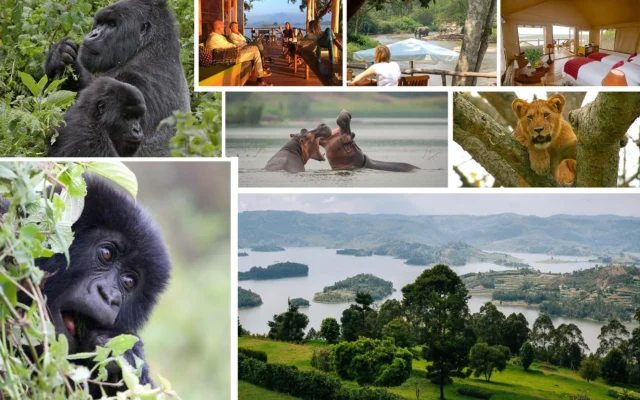
For a Uganda safari, Kisoro is best understood as a practical gateway with real scenic reward. The town itself is modest and busy, while the surrounding countryside is exceptional. Within a short travel radius are volcano views, crater lakes, bamboo forest, community visits, and two of Uganda’s most important gorilla landscapes.
This destination combines naturally with Lake Mutanda, Kisoro Highlands, Mgahinga Gorilla National Park, and Bwindi Impenetrable National Park in a well-planned Uganda safari route.
Quick Facts About Kisoro
| Feature | Details |
|---|---|
| Location | Southwestern Uganda, near Rwanda and Democratic Republic of Congo borders |
| Role | Gateway town for Mgahinga, Lake Mutanda, southern Bwindi, and Kisoro Highlands |
| Nearby Park | Mgahinga Gorilla National Park |
| Nearby Lake | Lake Mutanda |
| Main Travel Uses | Gorilla trekking logistics, golden monkey tracking access, volcano hiking, markets, transfers |
| Common Access | Road from Kabale, Kigali, Bwindi, Lake Bunyonyi, or longer routes from Entebbe/Kampala |
| Best For | Travelers who need a flexible base for the far southwest |
| Nearby Extensions | Lake Bunyonyi, Queen Elizabeth National Park, Kibale National Park, Fort Portal area |
Overview of Kisoro
Kisoro town sits in one of the most strategically important tourism corners of Uganda. The surrounding district reaches toward Rwanda and the Democratic Republic of Congo, while the landscape rises into the Virunga Mountains and spreads across terraced hills, lakes, forests, and farms. For safari travelers, this geography matters because it places Kisoro at the center of several high-value experiences.
Mgahinga Gorilla National Park is the closest major protected area. It is Uganda’s smallest national park, but it carries enormous conservation and tourism value because it protects mountain gorillas, golden monkeys, and three Virunga volcanoes on Uganda’s side of the range. Lake Mutanda sits north of town and provides the scenic lake base many travelers prefer for relaxation and photography.
Southern Bwindi sectors such as Rushaga and Nkuringo are also commonly connected through Kisoro. This makes the town important when permits are booked in the south of the park, when travelers arrive from Kigali, or when itineraries combine Mgahinga with Bwindi. The key is to avoid vague routing. A good Kisoro safari plan names the park gate, trekking sector, lodge, and transfer timing clearly.
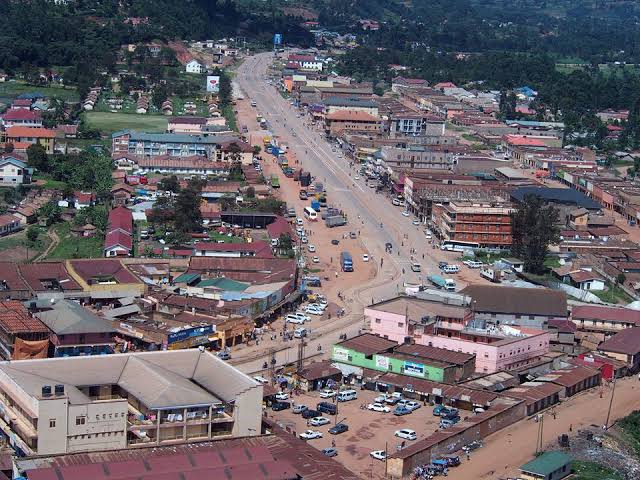
Kisoro is also a local commercial center. Markets, small hotels, restaurants, fuel stations, shops, and transport links support both residents and visitors. Travelers who pass through with time to stop can see a more ordinary but important side of the gorilla highlands: the town life that sits behind the lodge views and national park gates.

Why Visit Kisoro?
Best Gateway to Mgahinga
Kisoro is the natural service hub for Mgahinga Gorilla National Park. Travelers heading for gorilla trekking, golden monkey tracking, the Batwa Trail, or volcano hikes commonly pass through town before continuing toward Ntebeko and nearby lodges.
Useful for Southern Bwindi
When gorilla permits are in Rushaga or Nkuringo, Kisoro can be part of the routing plan. Depending on the lodge, travelers may stay in the countryside rather than in town, but Kisoro remains important for access, supplies, and transfers.
Close to Lake Mutanda
Lake Mutanda is one of the strongest reasons to slow down near Kisoro. It adds canoe trips, volcano reflections, birding, island scenery, and a peaceful base after long drives or demanding treks.
Cross-Border Itinerary Flexibility
Kisoro is valuable for trips that use Kigali as an access point. This can reduce driving time for travelers focused on the far southwest, although border formalities and visa planning must be handled carefully.
Markets and Local Life
A guided stop in Kisoro town can add market color, local food, craft, and insight into how the highlands function beyond safari tourism. This works best when done simply and respectfully, without turning everyday life into a staged performance.
Things to Do in and Around Kisoro
Gorilla Trekking in Mgahinga or Southern Bwindi
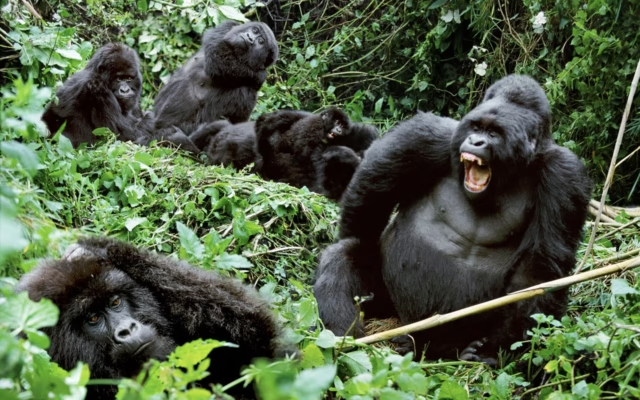
Gorilla trekking is the headline activity linked to Kisoro. Mgahinga offers a compact volcanic forest experience, while southern Bwindi sectors provide access to one of Africa’s most famous rainforest gorilla habitats. Permits are date-specific and sector-specific, so accommodation and transfers should be planned only after permit availability is known.
Golden Monkey Tracking
Golden monkey tracking in Mgahinga is an excellent addition for travelers staying near Kisoro. It is active, often lively, and very different from gorilla trekking because the monkeys move quickly through bamboo and forest edges.
Lake Mutanda Canoeing and Relaxation
From Kisoro, travelers can continue to Lake Mutanda for boat rides, canoeing, island views, birding, and lakeside rest. The lake is one of the best ways to turn a logistical overnight into a memorable scenic stay.
Virunga Volcano Hiking
Physically fit visitors may hike the volcanoes associated with Mgahinga. These are demanding mountain days, so travelers should be honest about fitness, pack properly, and allow recovery time before or after the hike.
Kisoro Market and Town Walks
A short guided town visit can include market stalls, local produce, craft, and everyday scenes from a busy highland service center. It is a good low-key addition for travelers who want context between park activities.
Echuya Forest and Highland Drives
The Kabale-Kisoro road and nearby Echuya Forest make the approach to Kisoro particularly scenic. Birders, photographers, and travelers interested in montane forest ecology can build this into the wider journey.
Best Time to Visit Kisoro
Kisoro can be visited year-round, but most safari travelers prefer the drier months from June to September and December to February for trekking, hiking, road transfers, and clearer volcano views. These seasons are also popular for gorilla permits, so early planning is important.
The wetter months from March to May and October to November are greener and quieter. Roads may be slower and trails muddier, but the highlands can be especially beautiful under mist and rain. For travelers who do not mind flexible timing, the wet season can provide a richer sense of atmosphere.
Because Kisoro sits in a cool highland region, packing should not be based on Uganda’s lowland heat. Early mornings can be cold, especially before treks or transfers. A fleece, waterproof shell, and sturdy shoes are useful in every season.
How to Get to Kisoro
{{SEC_GETTING_THERE}}
From Entebbe or Kampala
The overland journey from Entebbe or Kampala to Kisoro is long and usually best included in a wider western or southwestern Uganda itinerary. Many travelers break the route with Lake Mburo, Queen Elizabeth, Lake Bunyonyi, or another scenic stop.
From Kigali
Kigali is a common access point for short gorilla safaris to Kisoro, Mgahinga, and southern Bwindi. The route can be efficient, but travelers need correct visa planning, border timing, and cross-border vehicle arrangements.
From Kabale and Lake Bunyonyi
Kabale and Lake Bunyonyi connect naturally to Kisoro via one of Uganda’s most scenic highland roads. This route is excellent for travelers who want to combine two different lake and mountain settings.
By Air
Some itineraries may use fly-in access to the southwest, depending on flight schedules, airstrip routing, and the final lodge location. Even with flights, road transfers are still needed to reach Lake Mutanda, Mgahinga, or Bwindi sectors.
How to get to Kisoro — routes & drive times
Where to Stay in Kisoro
{{SEC_ACCOMMODATION}}
Accommodation choices include town hotels, countryside lodges, Lake Mutanda retreats, Mgahinga-area properties, and lodges positioned for southern Bwindi. Travelers should choose based on the next morning’s activity rather than on the destination name alone.
Staying in Kisoro town can be practical for budget travelers, logistics-heavy itineraries, or guests who need quick access to services. Staying outside town usually offers stronger scenery, quieter nights, and better safari atmosphere. Lake Mutanda is often the preferred choice for travelers who want the Kisoro area to feel like a destination rather than a transit stop.
On trek days, ask about packed breakfast, packed lunch, departure time, road conditions, and distance to the relevant briefing point. These details matter more than broad distance estimates.
Kisoro for Gorilla Safari Planning
Kisoro plays a practical role in gorilla safari planning because it sits near multiple trekking options. The town can support Mgahinga treks, golden monkey tracking, and southern Bwindi access. However, each activity has its own meeting point, permit rules, and transfer time.
Travelers should avoid booking accommodation first and permits second. The safer sequence is to confirm preferred dates, secure gorilla permits, identify the exact park sector or gate, then choose the best lodge. This prevents early starts from becoming longer than necessary and reduces the risk of routing surprises.
Kisoro also works well as a recovery point. After a trek, travelers can return to Lake Mutanda, enjoy a relaxed meal, take a canoe ride, or simply rest before continuing to Lake Bunyonyi, Queen Elizabeth, Kibale, or Kigali.
Nearby Destinations
Kisoro connects naturally with Lake Mutanda, Kisoro Highlands, Mgahinga Gorilla National Park, Bwindi Impenetrable National Park, Lake Bunyonyi, Queen Elizabeth National Park, and Kibale National Park.
Lake Mutanda
Lake Mutanda is the most scenic lake escape near Kisoro, adding canoeing, island views, birding, and Virunga volcano scenery.
Kisoro Highlands
The surrounding Kisoro Highlands turn a town stop into a broader landscape of terraced hills, volcanoes, lakes, forests, and cultural encounters.
Mgahinga Gorilla National Park
Mgahinga is the closest major national park to Kisoro, offering gorilla trekking, golden monkey tracking, and Virunga volcano hiking.
Bwindi Impenetrable National Park
Kisoro is useful for southern Bwindi routes, especially when gorilla permits are in Rushaga or Nkuringo.
Lake Bunyonyi
Lake Bunyonyi pairs well with Kisoro for a wider southwestern Uganda highland and lake itinerary.
Queen Elizabeth National Park
Queen Elizabeth adds classic wildlife drives and boat safaris after Kisoro, Mgahinga, Bwindi, or Lake Mutanda.
Suggested Kisoro Itinerary Ideas
One-Night Gateway Stop
Arrive in Kisoro, prepare for a Mgahinga or southern Bwindi activity, and continue the next morning. This is practical but leaves little time for the surrounding scenery.
Two- or Three-Night Scenic Base
Stay near Kisoro or Lake Mutanda, trek gorillas, add golden monkeys or a canoe ride, and use the final morning for a market stop or viewpoint before moving on.
Southwestern Uganda Circuit
Combine Kisoro with Lake Mutanda, Mgahinga, Bwindi, Lake Bunyonyi, Queen Elizabeth, Kibale, and Fort Portal for a complete primate, lake, savannah, and highland route.
Planning Tips for Kisoro Tours
Build Kisoro around confirmed activities. If the goal is gorilla trekking, the permit sector decides the route. If the goal is scenery, allow enough time for Lake Mutanda and the surrounding highlands. If the goal is cross-border speed, confirm every border and visa detail before travel.
Do not underestimate altitude and weather. Treks, hikes, and even short walks can feel more demanding than expected. Warm layers, rain gear, and broken-in footwear are essential.
Finally, give Kisoro enough respect as a real town. It is not polished like a lodge and not managed like a park, but it is the working center that makes many southwestern Uganda safaris possible.
Kisoro FAQs
- What is Kisoro known for?
-
Kisoro is known as a gateway to Mgahinga Gorilla National Park, Lake Mutanda, the southern sectors of Bwindi Impenetrable National Park, Virunga volcano scenery, golden monkey tracking, and gorilla trekking logistics.
- Is Kisoro a good base for gorilla trekking?
-
Yes, especially for Mgahinga Gorilla National Park and some southern Bwindi itineraries. The best base depends on the exact permit sector, lodge location, road conditions, and next-day activity timing.
- How far is Kisoro from Lake Mutanda?
-
Lake Mutanda is close to Kisoro by regional standards, but actual transfer time depends on the lakeside lodge, road conditions, and season. Most safari itineraries treat Kisoro as the nearest main town for the lake.
- Can I reach Kisoro from Kigali?
-
Yes. Kigali is commonly used for shorter gorilla itineraries into southwestern Uganda. Travelers should plan visa requirements, border timing, and cross-border vehicle logistics in advance.
- What can I do in Kisoro besides gorilla trekking?
-
Activities around Kisoro include golden monkey tracking, volcano hiking, canoeing on Lake Mutanda, market visits, cultural experiences, birding, Echuya Forest stops, and scenic highland drives.
- When is the best time to visit Kisoro?
-
June to September and December to February are usually best for drier trekking and clearer views. The wetter months are greener and quieter but can bring muddy trails and slower rural roads.
- Should I stay in Kisoro town or outside town?
-
Stay in town for practicality and services, or outside town for stronger scenery and safari atmosphere. Lake Mutanda and Mgahinga-area lodges are often better for travelers who want a more memorable highland stay.