Weather and climate in Aberdare National Park
Aberdare National Park weather reflects central Kenya highland climate moderated by altitude, forest cover, and Indian Ocean-influenced rainfall patterns. The park spans Nyeri and Nyandarua counties on the Aberdare Mountain Range — a major water catchment feeding Nairobi and agricultural regions below. Cool temperatures persist year-round; travellers arriving from warm Nairobi or hot Amboseli National Park days should expect immediate climate contrast requiring warm layers for tree-hotel deck vigils.
Unlike equatorial lowland parks where heat dominates safari rhythm, the Aberdares demand packing discipline — fleece jackets, waterproof shells, and warm sleepwear for night viewing are standard equipment, not optional extras. Mist and cloud build through mornings, especially during rainy seasons, filtering light through forest canopy and creating atmospheric photography conditions that dry-season clarity cannot replicate.
Temperature and altitude
Altitude between approximately 2,100 and 4,300 metres creates sharp temperature gradients across park sectors. Eastern tree-hotel zones near Nyeri sit at lower forest elevations with cool but moderate daytime temperatures. Western moorland approaches via Kinangop climb toward colder, wind-exposed ridges where tussock grassland and giant lobelia zones feel distinctly alpine.
Daytime temperatures on forest drives typically feel cool to mild — often comfortable in light layers with sun breaks through canopy. Night temperatures drop substantially; tree-hotel decks become cold within hours of sunset. Rooms at Treetops and The Ark provide heating in many cases, but viewing walkways remain exposed. Gloves, beanies, and insulated jackets improve comfort during multi-hour waterhole observation.
Rainfall patterns and seasons
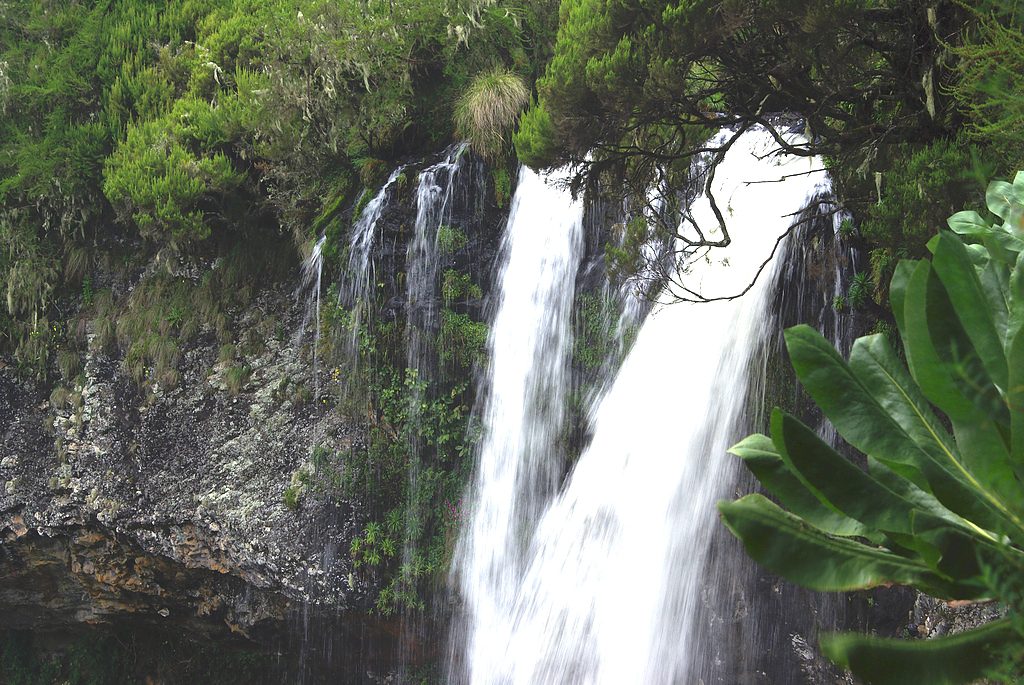
Central Kenya experiences bimodal rainfall typical of the region. Long rains from roughly March through May bring heavier, sustained precipitation that greens forest dramatically, swells waterfalls including Karuru Falls, and softens forest tracks. Short rains from November through December deliver briefer showers that refresh vegetation without the sustained mud of peak long-rain months.
Dry seasons from June through October and January through February reduce rainfall frequency, improve track firmness, and lessen persistent morning mist on drives. These windows align with peak Kenya safari travel — tree hotels book early regardless of temperature, which remains cool year-round. Dry months may concentrate wildlife at waterholes as natural forest sources diminish, supporting night-viewing activity.
Mist, cloud, and visibility
Morning mist is characteristic Aberdare weather — forest drives often begin in filtered grey light that lifts unevenly through valleys through mid-morning. Mist limits long-distance visibility compared with savannah parks but adds mood that defines highland forest photography. Afternoon cloud build is common during rainy seasons; planners should avoid assuming full-day clear skies on any month.
Moorland sectors on western approaches expose travellers to wind and rapid weather changes — rain gear and windproof layers matter on scenic drives toward Rift Valley viewpoints. Eastern forest-fringe tree-hotel circuits experience more sheltered conditions but remain cool and damp during wet months.
Monthly conditions at a glance
- January–February — relatively warm highland dry window; lower rain frequency; strong drive conditions
- March–May — long rains; lush forest; highest waterfall flow; softest tracks; misty mornings
- June–August — cool dry season; crisp days; peak travel demand; reliable track access
- September–October — continuing dry conditions; moderate temperatures; good routing weather
- November–December — short rains; green scenery; intermittent afternoon showers
Packing for Aberdare climate
Layering is the practical rule. Base layers, fleece or insulated mid-layers, waterproof jacket, warm hat, and gloves support tree-hotel nights. Waterproof boots help on muddy forest tracks during rains. Binoculars and cameras need rain protection — highland drizzle is common even outside peak rainy months.
Sun protection still matters on moorland drives where exposed ridges lack canopy shade. Sunglasses, sunscreen, and lip balm complement cold-weather gear — Aberdare weather varies within single days across elevation and habitat transitions.
Climate and itinerary routing
Cool Aberdare conditions offer welcome relief during hot dry-season travel elsewhere in Kenya. Many circuits position Aberdare forest nights between hot Samburu days and Rift Valley lake stops. Mount Kenya National Park shares similar highland climate on adjacent circuits — trekkers and tree-hotel guests face comparable layering requirements.
Long-rain travel remains viable for atmosphere-focused visitors who accept flexible scheduling and muddy track conditions. Green-season birding and waterfall photography reward rainy-month travellers with lower lodge pressure outside Easter peaks.
Continue planning Aberdare National Park with Aberdare best time to visit, Aberdare travel tips, and Aberdare getting there, or read the main Aberdare National Park destination guide.