Mount Kenya National Park protects Africa’s second-highest mountain — an extinct stratovolcano whose jagged peaks, equatorial glaciers, and afro-alpine moorland form one of the continent’s most extraordinary trekking landscapes. Managed by the Kenya Wildlife Service (KWS) and inscribed as a UNESCO World Heritage Site, this central Kenya reserve spans roughly 715 square kilometres from montane forest at 2,400 metres to the technical summits of Batian (5,199 m) and Nelion (5,188 m), with Point Lenana (4,985 m) offering fit hikers a non-technical trekking summit without ropes or rock-climbing skills.
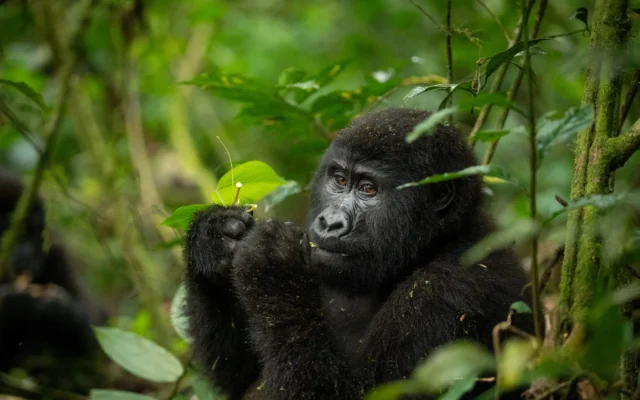
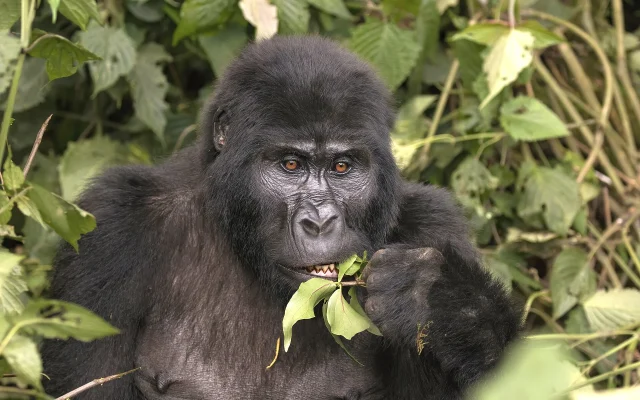
For travellers building Kenya adventure itineraries — whether as a standalone highland trek from Nairobi, a complement to Ol Pejeta Conservancy safaris in Nanyuki, or part of a broader East Africa route linking mountain trekking with Uganda gorilla forests — Mount Kenya safaris and climbs deliver wilder scenery, richer forest wildlife, and far fewer crowds than the more famous slopes of Mount Kilimanjaro across the border in Tanzania.
Unlike Kenya’s savannah parks, Mount Kenya is defined by vertical ecology. Trekkers pass through cedar and podocarpus forest where elephants and colobus monkeys still roam, climb through bamboo and giant heather into moorland studded with surreal giant lobelias and groundsels, and reach glacial tarns such as Lake Michaelson beneath ice-scoured peaks that are retreating rapidly in a warming climate. The mountain rewards those who respect altitude, choose routes for acclimatization rather than speed, and treat the journey as both mountaineering adventure and living natural-history classroom.
This destination combines naturally with Aberdare National Park, Ol Pejeta Conservancy, Samburu National Reserve, Maasai Mara National Reserve, and Nairobi National Park in a well-planned central Kenya highlands circuit.
Whether you are planning a Point Lenana summit bid, a forest wildlife walk on the lower slopes, or a multi-park Kenya safari that anchors on highland adventure before descending to savannah game drives, Mount Kenya National Park delivers landscapes and ecological drama found nowhere else on the East Africa travel circuit.
Quick Facts About Mount Kenya National Park
| Feature | Details |
|---|---|
| Location | Central Kenya, straddling the equator — east of the Great Rift Valley |
| Established | 1949 (national park); UNESCO World Heritage Site since 1997 |
| Size | Approximately 715 square kilometres |
| Management | Kenya Wildlife Service (KWS) |
| Highest Peaks | Batian (5,199 m), Nelion (5,188 m) — technical climbing |
| Trekking Summit | Point Lenana (4,985 m) — non-technical walk-up |
| Main Routes | Sirimon, Naro Moru, Chogoria (Sirimon–Chogoria traverse popular) |
| Typical Duration | 4–5 days on mountain for Point Lenana with acclimatization |
| Landscape | Montane forest, bamboo, moorland, afro-alpine desert, glacial tarns |
| Best Time to Visit | January–February and July–September for driest trekking conditions |
| Major Wildlife | Forest elephants, buffaloes, leopards, colobus monkeys, tree hyrax |
| Bird Species | 130+ recorded species |
| Nearest Gateway | Nanyuki (approximately 175 km / 3–4 hours north of Nairobi) |
| Flight Access | Nanyuki airstrip (scheduled and charter flights from Wilson Airport) |
Overview of Mount Kenya National Park
Mount Kenya National Park occupies a unique position in East African travel — neither a classic Big Five game-drive destination nor merely a Kilimanjaro alternative, but a UNESCO-protected mountain ecosystem where trekking, wildlife, botany, and geology intersect across one of the sharpest altitudinal gradients on the continent. The park wraps around the mountain’s upper slopes and peaks, adjoining forest reserves and community lands on lower elevations where Kikuyu and Meru communities have farmed and worshipped the mountain — Kirinyaga, the place of brightness — for generations.

Geologically, Mount Kenya is an extinct stratovolcano whose central peaks eroded into the dramatic spires visible today. Batian and Nelion demand technical rock climbing at altitude — multi-pitch routes rated Grade IV and above that attract experienced mountaineers from around the world. The vast majority of visitors target Point Lenana, the third-highest peak, reachable by trekking routes that require fitness and acclimatization but no rope work on standard itineraries.
The mountain’s hydrology feeds major Kenyan rivers including the Tana, and its forests act as a critical water tower for agriculture across central Kenya. Permanent glacial ice — though diminishing — still caps the highest cirques, with Lewis Glacier among the most studied tropical ice bodies on Earth. Alpine tarns including Lake Michaelson, Lake Ellis, and the Hobley Tarns sit in ice-scoured basins that trekkers on Chogoria and Naro Moru routes encounter as highlights of the high-altitude experience.
Ecologically, Mount Kenya stacks habitats like nowhere else in Kenya’s park system. Montane forest between 2,400 and 3,000 metres shelters elephants, buffaloes, leopards, and primates beneath cedar and yellowwood canopy. Bamboo belts transition to giant heather moorland where giant lobelias and groundsels create a landscape that feels more science fiction than safari. Above 4,000 metres, afro-alpine desert supports only the hardiest plants and animals — a world of rock, ice, and equatorial cold that challenges every trekker who reaches the summit ridge.
KWS management ensures that climbing occurs through licensed operators with mandatory guides and porters. This framework protects both visitors — altitude sickness and mountain weather kill the unprepared — and the fragile ecosystems that take decades to recover from a single careless shortcut through lobelia fields or moorland turf.
Mount Kenya appeals especially to:
- trekkers seeking a less crowded alternative to Kilimanjaro
- adventure travellers combining highland hiking with Kenya safaris
- wildlife enthusiasts interested in montane forest ecology
- bird watchers pursuing alpine specialists and scarlet-tufted malachite sunbirds
- photographers drawn to giant groundsels, glacial tarns, and peak panoramas
- East Africa itinerary planners linking Kenya highlands with Uganda primate trekking
Why Visit Mount Kenya National Park?
Mount Kenya National Park earns its place on every serious Kenya adventure shortlist for reasons that extend well beyond summit bragging rights. The combination of accessible trekking peaks, extraordinary botany, forest wildlife, and UNESCO conservation status creates a destination that works for dedicated mountaineers and curious naturalists alike.
Africa’s Second-Highest Peak
Only Kilimanjaro rises higher on the continent. Standing at Point Lenana places trekkers among an elite altitude club — with the geological drama of Batian and Nelion spires visible from the summit ridge on clear mornings.
Non-Technical Summit Access
Point Lenana requires no rock climbing on standard routes. Fit hikers with proper acclimatization and licensed guides reach the summit by trekking alone — democratizing high-altitude adventure while Batian and Nelion remain objectives for technical climbers.
UNESCO Afro-Alpine Ecology
Giant groundsels, giant lobelias, and equatorial glaciers create landscapes found only on East Africa’s highest mountains. Mount Kenya’s botanical uniqueness justified UNESCO World Heritage inscription and rewards every hour spent above the treeline.
Forest Wildlife on Approach Trails
Where Kilimanjaro’s rainforest feels increasingly transited and mammal-shy, Mount Kenya’s lower slopes still deliver credible chances of encountering forest elephants, buffaloes, and black-and-white colobus monkeys during approach-day trekking — a wildlife dimension rare among high-altitude objectives.
Quieter Routes & Wilder Atmosphere
Mount Kenya receives a fraction of Kilimanjaro’s climber traffic. Sirimon, Chogoria, and Naro Moru corridors feel genuinely remote — particularly on Chogoria’s dramatic Gorges Valley descent where trekkers may see more lobelias than other hiking groups.
Central Kenya Circuit Anchor
Nanyuki gateway positions Mount Kenya within easy reach of Ol Pejeta rhino sanctuaries, Aberdare forest lodges, and northern routes toward Samburu — creating the most diverse non-Mara Kenya itinerary available.
Top Things to Do in Mount Kenya National Park
Mount Kenya National Park centres on trekking, mountaineering, and montane natural history rather than vehicle-based game drives. Most activities occur on foot along KWS-licensed routes with guide and porter teams, though lower-forest wildlife walks and gateway-town safari extensions round out the experience for travellers who want both altitude and classic Kenya wildlife.
Point Lenana summit treks dominate visitor itineraries — four to five days on the mountain through ecological zones that transform with every thousand metres of ascent. Route choice shapes the experience as profoundly as fitness: Sirimon offers gradual acclimatization from Nanyuki, Chogoria delivers the most spectacular scenery past Lake Michaelson and the Temple, and Naro Moru provides the fastest — but steepest — approach via the notorious Vertical Bog.
Travellers with extra time combine summit bids with Ol Pejeta game drives, Aberdare tree-lodge wildlife viewing, or multi-park circuits linking central highlands with the Maasai Mara. The mountain’s Nanyuki gateway makes these combinations logistically cleaner than most Kenya adventure routing.
Point Lenana Summit Trek
Multi-day ascent to 4,985 m — the highest point reachable without technical climbing.
Explore Mount Kenya trekking & wildlife
Sirimon Route Trek
Western approach via Nanyuki — gradual acclimatization and the most popular climbing corridor.
Chogoria Route & Gorges Valley
Eastern approach or descent past Lake Michaelson, the Temple, and dramatic cliff scenery.
Forest Wildlife Walks
Lower-elevation trails for elephants, buffaloes, colobus monkeys, and montane forest birding.
Alpine Lake Visits
High-altitude tarns including Lake Michaelson and Lake Ellis in glacial cirques below the technical peaks.
Bird Watching
Search for 130+ species including lammergeiers, scarlet-tufted malachite sunbirds, and Jackson’s francolins.
Explore Mount Kenya bird watching
Learn more about things to do in Mount Kenya
Trekking Routes on Mount Kenya
Trekking is the defining experience of every Mount Kenya safari-and-climb itinerary. KWS recognizes three standard approach routes, each with distinct character, acclimatization profiles, and scenic rewards. Licensed operators handle route registration, camping permits, and mountain crew logistics.
Sirimon Route
Starting near Sirimon Gate west of Nanyuki, this is Mount Kenya’s most popular trekking corridor. The gradual ascent through montane forest and open moorland offers excellent acclimatization — climbers typically reach Old Moses Camp and Shipton’s Camp before the summit push to Point Lenana. The terrain is varied without being punishing, making Sirimon the default recommendation for first-time Mount Kenya trekkers and the preferred ascent route for Sirimon–Chogoria traverses.
Chogoria Route
The eastern approach from Chogoria town passes through some of Mount Kenya’s most spectacular scenery — the Gorges Valley, Lake Michaelson in its cirque beneath the technical peaks, and the dramatic “Temple” rock formation. Many operators use Chogoria as a descent route after Sirimon ascent, giving trekkers the best of both corridors without repeating trail sections. The Chogoria approach alone is steeper and less forgiving for acclimatization but unmatched for photography.
Naro Moru Route
The southern approach via Naro Moru Gate is the shortest and steepest standard route, passing through the infamous Vertical Bog — a permanently saturated moorland section that tests boots and patience. Rapid altitude gain makes Naro Moru harder on acclimatization than Sirimon; it suits experienced high-altitude hikers or those with limited time who accept higher altitude-sickness risk. Mackinder’s Camp serves as the usual high camp for summit bids from this route.
Sirimon–Chogoria Traverse
Combining Sirimon ascent with Chogoria descent (or less commonly the reverse) is widely considered the finest way to experience Mount Kenya — varied acclimatization on ascent, maximum scenery on descent, and a complete traverse of the mountain’s diverse faces. Allow five days minimum for this combination.
Key high camps and landmarks across Mount Kenya trekking routes include:
- Old Moses Camp — Sirimon route moorland camp
- Shipton’s Camp — Sirimon high camp below Point Lenana
- Mackinder’s Camp — Naro Moru high camp at the base of the technical peaks
- Lake Michaelson — iconic tarn on the Chogoria route
- Point Lenana (4,985 m) — trekking summit; pre-dawn departure from high camp
KWS regulations require trekking with licensed guides and porters. Summit pushes typically begin before dawn for sunrise at Point Lenana — allow 4–6 hours from high camp depending on route and fitness. Guides monitor altitude symptoms and make descent decisions when safety requires.
Afro-Alpine Ecology & Glaciers
The ecological drama above Mount Kenya’s treeline justifies the trek even for travellers who care little about summit metrics. The afro-alpine zone — roughly 3,800 to 4,500 metres and above — hosts plant and animal communities adapted to equatorial cold, intense UV, and dramatic diurnal temperature swings.
Giant groundsels (Dendrosenecio keniodendron) tower over moorland like botanical sculptures, their dead leaf skirts insulating stems against freezing nights. Giant lobelias (Lobelia deckenii) rosette into massive flowering spikes that define Mount Kenya’s visual identity in countless photographs. These species evolved specifically on East Africa’s highest mountains — they exist nowhere else on Earth.
Mount Kenya’s glaciers are among the most visible casualties of global warming on the continent. Lewis Glacier and remnant ice in the highest cirques have retreated dramatically over recent decades; scientists document changes that outpace many Alpine and Himalayan ice bodies. Trekkers who reach the summit zone witness landscapes that future generations may not see in the same form — a sobering context that deepens the experience beyond personal achievement.
Alpine tarns — Lake Michaelson being the most celebrated — occupy cirques scoured by former ice masses. Their turquoise water beneath Batian and Nelion spires creates rest-stop panoramas that rival any summit view. Treat these fragile shorelines with care: camping and washing restrictions protect water quality and shoreline vegetation.
Wildlife in Mount Kenya National Park
Mount Kenya National Park wildlife follows altitudinal zoning as strictly as vegetation does. The richest mammal encounters occur in montane forest on approach days; life above 3,500 metres shifts toward specialized species and outstanding birding rather than classic safari viewing.
Forest Elephants & Buffaloes
Forest-adapted elephants move along ancient corridors on the mountain’s lower slopes, particularly on Sirimon and Naro Moru approach trails during early-morning hours. Buffaloes graze forest clearings and moorland margins — lone bulls near high camps require respectful distance on trail corners. Guides manage all wildlife encounters; never approach animals independently.
Primates & Smaller Mammals
Black-and-white colobus monkeys announce their presence in cedar canopy with flowing white capes and guttural calls. Sykes monkeys and bushbabies occur at lower elevations. Tree hyrax — peculiar relatives of elephants — vocalize from rock outcrops in forest-moorland transition zones.
Predators
Leopards persist throughout the forest belt — among the most significant predator populations in Kenya’s central highlands. Sightings are rare on trekking routes, but tracks confirm their presence. Hyenas and servals occur at lower elevations.
Alpine-Zone Life
Above 4,000 metres, Mount Kenya mole rats and hardy rodent species tunnel through alpine turf. Raptors including lammergeiers patrol thermals above valleys and cirques. Do not expect savannah-style game viewing in this zone — the reward is geological and botanical.
Mount Kenya is not a Big Five checklist destination — rhinos occur at Ol Pejeta and Aberdare nearby, not on the mountain itself. For trekkers who value forest wildlife as a complement to altitude adventure, few high peaks anywhere match Mount Kenya’s ecological richness.
Read full Mount Kenya wildlife guide
Bird Watching in Mount Kenya National Park
With more than 130 bird species recorded across altitudinal zones, Mount Kenya National Park offers excellent montane birding alongside its trekking experience. Forest approach days deliver the richest diversity; the afro-alpine zone rewards patient listers with lammergeiers and the sought-after scarlet-tufted malachite sunbird feeding at giant lobelia stands.
Montane forest holds Hartlaub’s turaco, mountain buzzards, African crowned eagles, and mixed-species flocks. Moorland transitions introduce Jackson’s francolins and malachite sunbirds. Above 4,000 metres, lammergeiers drop bones onto rocky slabs and alpine swifts cut through thin air.
Bird watching is productive year-round, with Palearctic migrants augmenting resident populations between November and April. Communicate birding interest to guides before departure so trekking pace accommodates forest scanning on approach days.
Read full Mount Kenya bird watching guide
Bird watching guide for Mount Kenya
Best Time to Visit Mount Kenya National Park
Mount Kenya National Park is accessible year-round, but seasons shape trail conditions, summit visibility, and high-camp temperatures in distinct ways that every trekker should understand before booking flights.
Dry Season (January to February & July to September)
The dry months deliver the firmest forest trails, clearest Point Lenana sunrise views, and most reliable trekking conditions. January–February is widely considered prime season; July–September aligns with European summer travel. Book guides, porters, and Nanyuki lodges early for these windows.
Short Rains (October to November)
Brief rains soften trails and bring afternoon showers to moorland camps. Trekking continues with quality waterproof gear; crowds thin considerably. Cloud may obscure technical peaks for extended periods.
Long Rains (March to May)
Heavier rainfall makes forest sections muddy and river crossings more challenging. Trekking operates year-round, but trail conditions demand realistic pacing and excellent rain protection. Botanists and birders often prefer this greener, quieter window.
Summit-night temperatures drop below –5 °C with wind chill in every month — pack insulated layers regardless of calendar.
Read full best time to visit guide
How to Get to Mount Kenya National Park
Reaching Mount Kenya National Park is straightforward from Nairobi — roughly 175 kilometres north to Nanyuki and Sirimon Gate, or via Naro Moru and Chogoria for southern and eastern approaches respectively.
By Road from Nairobi
Road transfers follow the A2 highway through Thika toward Nanyuki — approximately three to four hours. Most climbers overnight in Nanyuki before gate transfers. Operators include transfers in climb packages.
By Air
Scheduled and charter flights connect Nairobi’s Wilson Airport to Nanyuki airstrip in under an hour, followed by a short road transfer to Sirimon Gate. Fly-in packages suit travellers combining Mount Kenya with tight East Africa itineraries.
Park Entry & KWS Fees
KWS collects entry fees for climbers, guides, porters, and camping at gates. Licensed operators handle registration, route permits, and mandatory guide-porter team assignment. Independent trekking is not permitted on summit routes.
How to get to Mount Kenya — routes & drive times
Where to Stay Near Mount Kenya National Park
Accommodation near Mount Kenya National Park clusters in gateway towns — primarily Nanyuki — with on-mountain camping at KWS-designated sites during treks. Pre- and post-climb lodges range from budget hostels to comfortable highland hotels with gear storage and briefing facilities.
Nanyuki Gateway
Nanyuki offers the widest lodge selection, gear shops, and operator offices. Most Sirimon-route climbers base here for at least one night before and after the mountain. Proximity to Ol Pejeta Conservancy enables pre-trek safari days at altitude-friendly elevation.
On-Mountain Camping
All standard routes use expedition tents at KWS campsites — Old Moses, Shipton’s, Mackinder’s, and others. Operators provide mess tents and sleeping mats; climbers bring sleeping bags rated to at least –10 °C for summit night.
Chogoria & Naro Moru
Smaller gateway towns serve eastern and southern routes with basic lodging. Chogoria properties suit trekkers prioritizing the scenic route; Naro Moru options work for steep southern-approach itineraries.
Book dry-season peaks — January–February and July–August — well ahead. Quality guide and porter teams are as important as lodge selection for summit success.
Mount Kenya Safari & Trek Tours
Mount Kenya tours suit adventure travellers seeking high-altitude trekking with optional Kenya safari extensions — a combination that central Kenya delivers more efficiently than any other region.
4 Day Mount Kenya Point Lenana Trek
The standard minimum for Sirimon-route ascent with acclimatization and summit bid — ideal for fit hikers with limited holiday time.
Explore 4 Day Mount Kenya Treks
5 Day Sirimon–Chogoria Traverse
The recommended full traverse — varied ascent, spectacular Chogoria descent, and maximum mountain scenery without rushing acclimatization.
Explore 5 Day Mount Kenya Traverses
Mount Kenya & Ol Pejeta Safari
Combine Point Lenana trekking with Big Five game drives and rhino sanctuary visits at Nanyuki’s doorstep.
Central Kenya Highlands Circuit
Link Mount Kenya with Aberdare National Park forest lodges and Samburu for montane trekking, tree-lodge wildlife, and arid-zone species specials.
Kenya & Uganda Adventure Combinations
Pair Mount Kenya trekking with Uganda gorilla trekking, chimpanzee tracking, or Queen Elizabeth safaris for comprehensive East Africa adventure routing.
Kilimanjaro & Mount Kenya Double Summit
Experienced trekkers climb both of East Africa’s highest peaks on extended itineraries — allow adequate recovery between mountains.
Mount Kenya National Park FAQs
- Is Mount Kenya National Park worth visiting?
-
Absolutely. Mount Kenya National Park is a UNESCO World Heritage Site offering Africa’s second-highest peak, extraordinary afro-alpine scenery, forest wildlife, and trekking to Point Lenana without technical climbing — one of Kenya’s most rewarding adventure destinations.
- Can beginners climb Mount Kenya?
-
Yes. Fit hikers with no technical experience can reach Point Lenana (4,985 m) on guided routes such as Sirimon or Chogoria over four to five days. Batian and Nelion peaks require rock-climbing skills. Proper acclimatization and licensed guides are essential.
- How does Mount Kenya compare to Kilimanjaro?
-
Mount Kenya’s trekking summit (Point Lenana) is lower than Kilimanjaro’s Uhuru Peak but the mountain feels wilder, less crowded, and richer in forest wildlife. Kilimanjaro draws more climbers; Mount Kenya rewards trekkers seeking afro-alpine botany, glacial lakes, and a quieter high-altitude experience.
- How many days do you need on Mount Kenya?
-
Four to five days is standard for a Point Lenana ascent with proper acclimatization. Three-day fast itineraries exist but increase altitude-sickness risk. Add a day for lower-forest wildlife walks or lodge recovery in Nanyuki before or after the climb.
- What wildlife is on Mount Kenya?
-
Lower slopes support elephants, buffaloes, leopards, tree hyrax, suni, and primates including black-and-white colobus monkeys. Higher zones hold specialized alpine species. Wildlife is encountered mainly in montane forest — not the primary focus above the treeline.
- Do you need a guide to climb Mount Kenya?
-
Yes. KWS requires visitors to climb with licensed guides and porters through registered operators. Independent trekking on summit routes is not permitted. Operators handle park fees, route logistics, and mountain safety protocols.
- What is the best time to climb Mount Kenya?
-
January to February and July to September offer the driest trekking conditions and clearest summit views. Long rains (March–May) and short rains (October–November) make trails muddy but reduce crowds. Summit temperatures drop below freezing year-round at night.
- Is Mount Kenya National Park safe?
-
Yes, when climbed through licensed operators following KWS regulations. Altitude sickness is the main health risk — choose routes with adequate acclimatization days. Follow guide instructions around wildlife in forest zones and carry proper cold-weather gear for high camps.
Nearby Destinations to Combine with Mount Kenya National Park
One of the most rewarding ways to experience Mount Kenya National Park is by integrating it into a broader central Kenya or East Africa itinerary. The Nanyuki gateway and equatorial highland location make the mountain a natural anchor for diverse wildlife and adventure combinations.
Aberdare National Park
Aberdare National Park lies south of Mount Kenya in the same central highlands ecosystem — misty forests, waterfalls, rhino and elephant habitat, and iconic tree lodges like The Ark and Treetops. Pair a Mount Kenya trek with Aberdare game viewing for a complete Kenya highlands circuit.
Ol Pejeta Conservancy
Ol Pejeta Conservancy sits on Mount Kenya's northwestern foothills near Nanyuki — home to the last northern white rhinos, Big Five game drives, and chimpanzee sanctuary visits. A natural pre- or post-trek safari stop on central Kenya routes.
Samburu National Reserve
Samburu National Reserve in northern Kenya offers arid-zone wildlife specials — Grevy's zebra, reticulated giraffe, gerenuk — contrasting sharply with Mount Kenya's montane forests. Connect via Nanyuki and Isiolo for adventurous multi-park itineraries.
Mount Kilimanjaro
Mount Kilimanjaro in neighbouring Tanzania is Africa's highest peak and the natural comparison point for Mount Kenya trekkers. Many adventure travellers climb both mountains on extended East Africa itineraries, or photograph Kilimanjaro from Amboseli without ascending either summit.
Maasai Mara National Reserve
The Maasai Mara complements a Mount Kenya adventure with classic savannah wildlife, predator density, and wildebeest migration spectacle. Fly or drive from Nanyuki via Nairobi to combine highland trekking with Kenya's premier game-viewing reserve.
Nearby destinations to combine
Plan Your Mount Kenya Adventure
Mount Kenya National Park remains one of Kenya’s most compelling adventure destinations — a UNESCO World Heritage peak where forest elephants still cross trekking trails, giant lobelias frame glacial tarns, and Point Lenana offers fit hikers a genuine high-altitude summit without technical climbing. Whether you ascend via Sirimon, descend through Chogoria’s Gorges Valley, or pair the mountain with Ol Pejeta rhinos and Aberdare forest lodges, central Kenya delivers an adventure depth that savannah-only itineraries miss.
From pre-dawn summit pushes above the clouds to colobus monkeys in cedar forest, from Lake Michaelson’s cirque reflections to lammergeiers riding mountain thermals, every day on Mount Kenya connects travellers to East Africa’s most dramatic highland wilderness.
Our expertly crafted Kenya safari tours and East Africa adventure combinations can be customized to match your trekking dates, route preferences, fitness level, and lodge standards.
Whether you prefer a focused Point Lenana ascent, a full Sirimon–Chogoria traverse, or a multi-park route linking Kenya’s highlands with Uganda’s gorilla forests, we can help design the ideal adventure experience.
Explore Mount Kenya Trek Packages