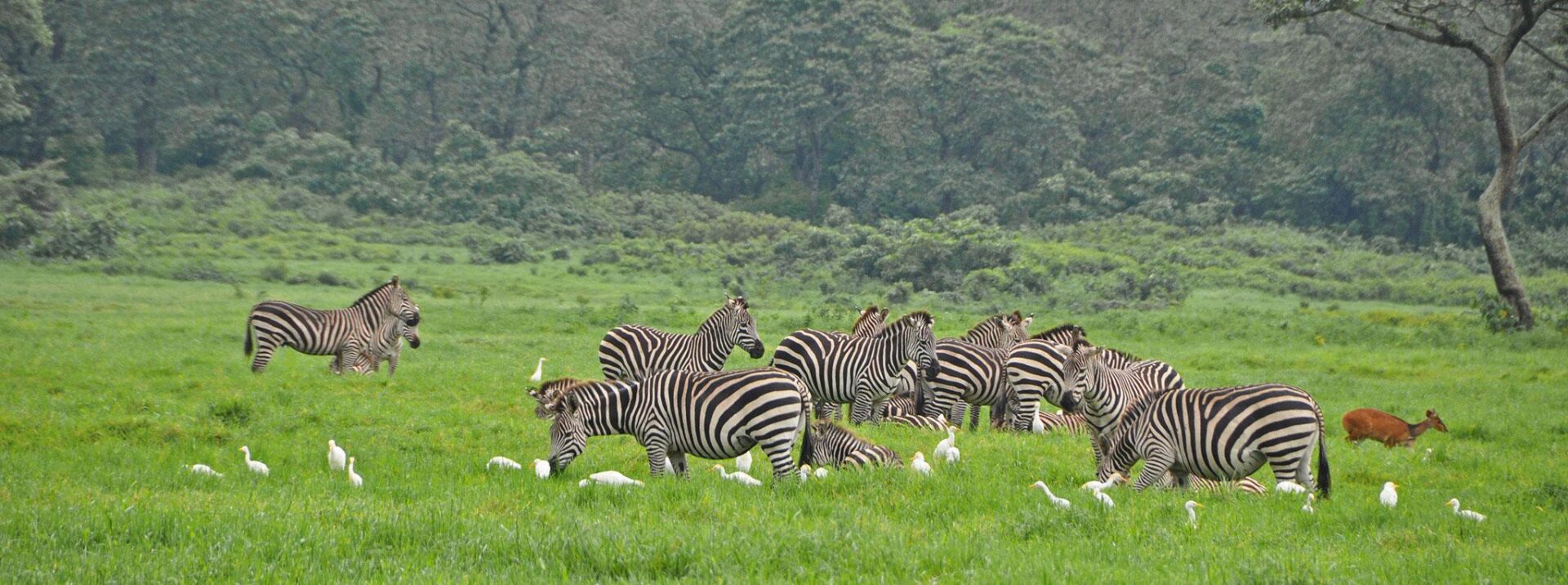
Weather & Climate in Arusha National Park
Arusha National Park sits within northern Tanzania's highland climate zone — mild temperatures at lake level, cooler montane forest conditions, and cold summit nights on Mount Meru. Understanding elevation-driven microclimates helps you pack correctly for day trips from Arusha, canoe safaris on Momella Lakes, forest walking safaris, and multi-day Meru ascents. The park remains open year-round; weather shapes comfort and photography rather than basic accessibility.
Annual Rainfall Pattern
Tanzania's bimodal rainfall governs Arusha National Park seasons: long rains (March–May) and short rains (November–December), with drier windows between. Momella Lakes receive adequate catchment from Mount Meru slopes year-round, but lake levels, algae blooms, and flamingo distribution shift with seasonal precipitation and evaporation cycles.
Long rains green montane forest dramatically — Tululusia Waterfall flows strongly, colobus troops are active in lush canopy, and migrant birds augment resident populations. Canoe safari availability on Small Momella Lake may be restricted when water levels or safety conditions change — confirm with TANAPA before booking rainy-season paddles.
Temperature by Elevation Zone
Momella Lakes & grassland (1,500–2,000 m): Daytime temperatures typically range 20–28°C; mornings are cool (12–16°C). Open grassland afternoons feel warm in dry season; pack sun protection for canoe and picnic sessions.
Montane forest & Ngurdoto (2,000–2,500 m): Cooler and more humid — 15–22°C typical with misty mornings. Forest walks require light rain jacket even in dry months.
Mount Meru trek zones (2,500–4,566 m): Progressive cooling — Miriakamba Hut nights near freezing; Socialist Peak summit dawn below 0°C with wind chill. Meru trekkers need full alpine layering regardless of season.
Dry Season Climate (June–October)
Clearer skies improve Kilimanjaro visibility from Momella shores and Ngurdoto rim viewpoints. Forest trails dry for comfortable walking safaris. Afternoon cloud often builds on Mount Meru's upper slopes even in dry months — morning activity windows are essential for photography and wildlife viewing. Dust is minimal compared with lowland savannah parks.
Green Season Climate (March–May & November–December)
Lush forest, active waterfalls, and strong birding define green months. Afternoon showers are common during long rains; morning game drives and canoe sessions maximise dry windows. Road conditions within the park generally remain passable — Arusha NP's maintained loops handle rain better than remote western parks. Fewer day-trip vehicles create a more intimate atmosphere.
Kilimanjaro View Weather
October through February often delivers clearest morning Kilimanjaro views from Momella Lakes before afternoon cloud obscures distant peaks. June–September also offers good visibility. Kilimanjaro views are never guaranteed on a fixed date — build flexibility and prioritise dawn sessions at lakeshore viewpoints when volcano photography is a primary goal alongside Mount Kilimanjaro climb preparation.
What to Pack by Activity
Day-trip game drive: Layers for cool dawn, sun hat, binoculars, camera, light rain jacket (green season).
Canoe safari: Quick-dry clothing, sun protection, waterproof bag for electronics; follow guide safety briefing for hippos.
Walking safari: Sturdy walking shoes, long trousers, insect repellent, rain jacket; forest trails may be muddy after rains.
Mount Meru trek: Full alpine kit — warm sleeping bag, waterproof shell, trekking poles, altitude-appropriate layering for sub-zero summit dawn.
Climate Comparison with Nearby Parks
Arusha city shares similar highland temperatures. Ngorongoro Crater rim is cooler at 2,200+ metres — pack extra layers for crater days after warm Momella afternoons. Lake Manyara floor is warmer and more humid along the Rift Valley. Tarangire lowland savannah runs hotter in dry-season afternoons.
Seasonal planning: Arusha National Park best time to visit. Access: Arusha National Park getting there. Main guide: Arusha National Park destination guide.