Bird Watching in Arusha National Park
With more than 400 bird species recorded, bird watching in Arusha National Park ranks among northern Tanzania's most productive destinations for a single-day visit. The park's habitat gradient — montane forest on Ngurdoto and Mount Meru lower slopes, open grassland glades, and the alkaline Momella Lakes chain — delivers forest specialists, savannah raptors, and Rift Valley waterbirds on one continuous TANAPA circuit without the multi-day commitment required in larger parks. For birders basing in Arusha before Northern Circuit departures, or Meru trekkers adding avifauna to a summit itinerary, Arusha National Park builds substantial East Africa lists efficiently.
Bird watching complements standard game drives and walking safaris rather than requiring separate expeditions. Signature species occur along maintained loops visible from safari vehicles, while enthusiasts who request bird-focused guiding and allocate full mornings to forest and lake sections target turacos, trogons, and flamingo concentrations that define the park's ornithological identity.
Momella Lakes Waterbirds
The Momella Lakes chain — seven lakes varying in mineral content from freshwater to strongly alkaline — concentrates East Africa's most photogenic waterbird assemblages when conditions align. Greater and lesser flamingos feed on cyanobacteria blooms in alkaline shallows, forming pink bands photographed against Mount Meru's volcanic ridge and, on clear mornings, Mount Kilimanjaro's snow cap beyond.
Pink-backed pelicans, yellow-billed storks, marabou storks, and African spoonbills work muddy margins where streams meet soda water. Goliath heron, saddle-billed stork, and African fish eagle patrol lake-edge channels. Canoe safaris on Small Momella Lake deliver water-level perspectives on feeding flocks impossible from vehicle viewpoints — among Tanzania's most distinctive birding experiences when TANAPA permits paddling.
Flamingo numbers fluctuate with lake chemistry, water levels, and seasonal algae blooms — communicate photography priorities to your operator and build flexibility rather than fixed expectations tied to a single travel date. Dry months often concentrate birds at remaining shallows; long rains may reshape distribution across the lake chain.
Montane Forest Specialists
Montane forest on Ngurdoto slopes and Mount Meru's lower elevations holds species rarely encountered on open savannah drives elsewhere on the Northern Circuit. Silvery-cheeked hornbill and Hartlaub's turaco — the park's most sought-after forest prizes — move through fig and podocarpus canopy. Narina trogon, African broadbill, and emerald cuckoo occur in forest interior glades. African paradise flycatcher and square-tailed drongo hawk insects along trail edges on walking safaris.
Forest birding rewards patience, binoculars with good low-light performance, and guides familiar with call identification when canopy density obscures visual contact. The Tululusia Waterfall trail and Ngurdoto forest sections deserve disproportionate morning time — many day-trip itineraries rush toward Momella and miss forest specialists visible only in the first hours after gate entry.
Mount Meru Slopes & Raptors
Mount Meru's volcanic shoulders generate thermals lifting raptors above grassland and forest transitions. Augur buzzard, mountain buzzard, African fish eagle, and tawny eagle scan from perches and soaring flight. Crowned eagle — among Africa's most powerful forest raptors — occurs in mature forest patches though remains a rare target requiring specialist knowledge.
Meru trekkers ascending through Miriakamba Hut zones encounter altitudinal species shifts — forest specialists giving way to moorland pipits, sunbirds, and raptors at higher elevations. Even day visitors who skip the full summit benefit from raptor scanning at Ngurdoto rim viewpoints and grassland pullouts beneath Meru's eastern caldera wall.
Grassland & Open-Country Birds
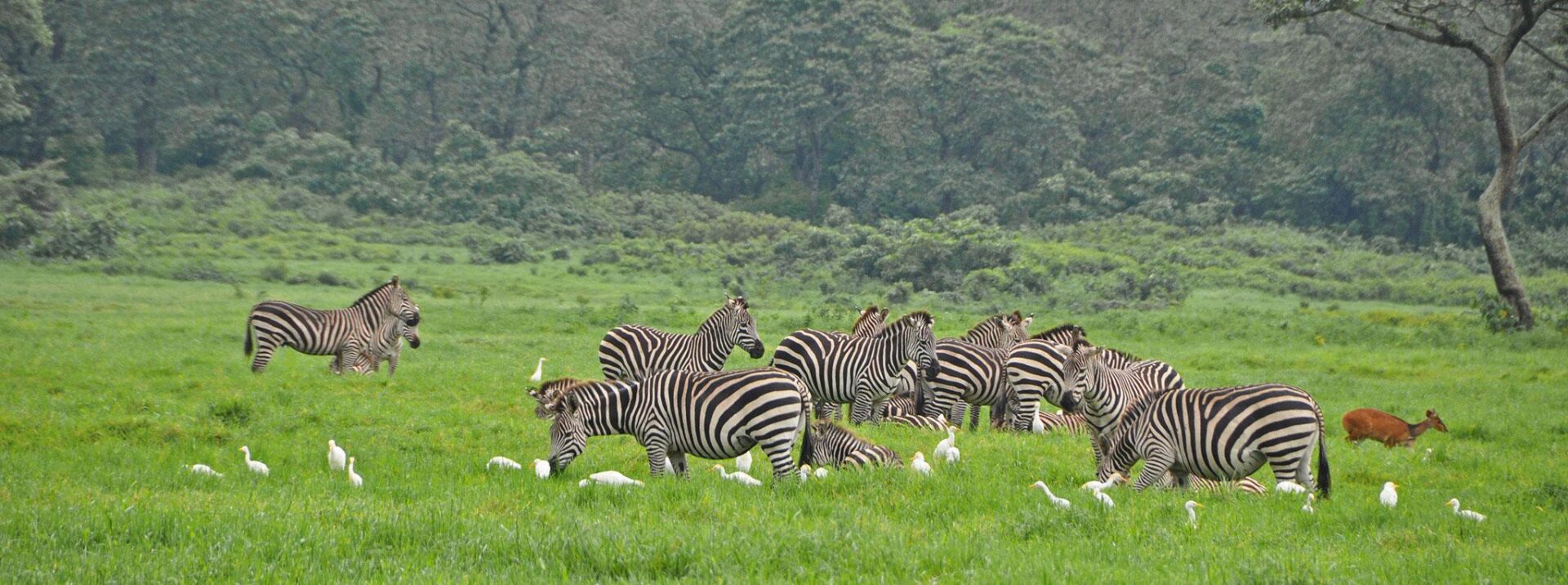
Open glades between forest patches and Momella shores hold grey crowned crane, secretary bird, kori bustard, and various larks and pipits. Crowned cranes add elegance to giraffe-and-zebra compositions on grassland game drives. Red-billed firefinch, bronze mannikin, and waxbills occur in woodland margins. Guineafowl and francolin scurry through grassland edges at dawn before heat pushes activity toward shade.
Seasonal & Migratory Patterns
Resident species provide year-round birding foundations across all habitats. Palearctic migrants augment Arusha's avifauna between November and April — various warblers, flycatchers, and waders joining resident populations during European winter months. The long rains (March–May) green montane forest, activate Tululusia Waterfall, and boost insect activity supporting breeding residents. Dry season (June–October) concentrates waterbirds at permanent Momella pools as interior water diminishes on grassland sections.
October through February often delivers clearest morning Kilimanjaro views from Momella shores — combining volcano photography with flamingo foregrounds in compositions that rival any postcard from Lake Manyara National Park.
Birding Practical Tips
Early morning game drives offer the best forest activity, raptor thermals building mid-morning, and coolest temperatures for scanning. Request bird-focused guiding when booking if avifauna is a primary interest alongside colobus monkeys and canoe safaris. A field guide to East African birds accelerates identification during fast-moving game drives.
Telephoto lenses suit hornbills and waterbirds; wide-angle lenses capture Momella compositions with Meru and Kilimanjaro backdrops. Walking safaris with armed rangers unlock forest interior species invisible from vehicles — essential for trogon and broadbill targets.
Comparison with Nearby Birding Destinations
Lake Manyara National Park adds groundwater forest baboon corridors and escarpment thermals on the westbound Northern Circuit. Ngorongoro Crater contributes highland and caldera-floor species including Lake Magadi flamingos. Tarangire National Park offers baobab woodland and dry-country species complementary to Arusha's forest and lake specialists.
Arusha National Park's distinctive contribution is forest-to-lake birding diversity within a 30-minute drive from Arusha city — turacos in montane canopy and flamingos on alkaline shallows in one TANAPA day trip.
Continue planning Arusha National Park with Arusha National Park wildlife, Arusha National Park best time to visit, and Arusha National Park getting there, or read the main Arusha National Park destination guide.