Why do photographers visit Aberdare?
Kenya’s Aberdare Range trades golden-hour clichés for charcoal mist and emerald moss — a highland forest where elephants emerge from fog like memory. Photographers tired of dust and horizon lines come here for atmosphere, rarity, and lodge waterholes that deliver midnight frames impossible on daytime Mara drives.
Atmospheric forest light
Cloud base sits at canopy level — diffuse light flatters fur texture on colobus and bushbuck. Sun breaks create god-rays through hagenia trees. Rain enhances saturation — photographers pack rain covers willingly. See Aberdare landscape photography for wide-angle technique.
Waterhole hide photography
Historic tree lodges (Treetops, Ark) maintain salt licks and waterholes illuminated at night — forest elephants, buffalo, and occasional leopard visits while guests watch from elevated decks. Flash prohibited; high ISO artistry required. Unique among Kenya parks for nocturnal mammal portfolios.
Rare and forest species
Giant forest hog — Africa’s largest wild pig, shy but photographable at Aberdare glades. Bongo antelope — extremely rare, reward patient trackers. Black-maned lions in forest clearings differ visually from Mara males. Colobus troops in mossy branches — portrait gold.
Contrast with open savannah
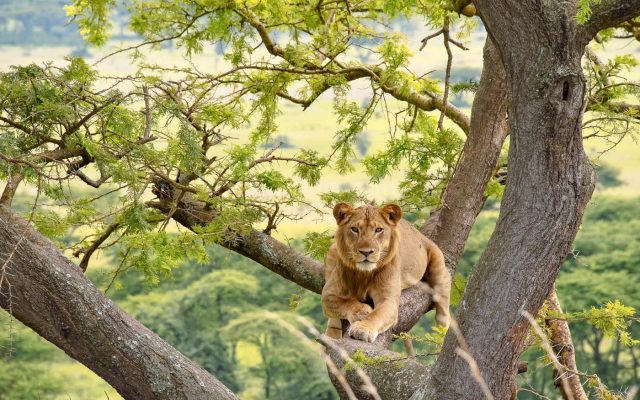
Mara sells scale; Aberdare sells intimacy and mystery. Portfolios balancing both demonstrate range — tree-climbing lions in Uganda offer complementary quirky behaviour.
Landscape layers
Bamboo zones, waterfall trails (Karuru Falls drops 273 metres), and ridge lines above cloud inversion suit environmental storytelling. Telephoto compression through mist creates abstract layers.
Non-safari activity crossover
Trout fishing, moorland hikes, and tea country drives extend stays — non-safari Aberdare activities keep non-photographer partners engaged while shooters chase dawn mist.
Logistics
Nairobi roughly 3–4 hours to park gates — pair with Laikipia or Samburu northern circuit. Roads steep and weather-affected — 4x4 essential. Dry seasons improve track access; mist persists year-round at elevation.
Gear notes
Fast primes for dim forest (50mm f/1.4, 85mm). Tripods for waterhole decks if lodge permits. Lens cloths for humidity. Second body avoids sensor swaps in rain.
Challenges
Wildlife less predictable than Mara — patience mandatory. Forest elephants skittish — longer lenses than expected. Some photographers leave frustrated; those embracing mood over headcount return obsessed.
Photographers visit Aberdare because Africa’s safari aesthetic is not only sunsets on grass — it is elephants dissolving into fog, and Aberdare owns that palette.
Waterhole night photography ethics
Lodge floodlights illuminate drinking wildlife — expose for eyes not blown highlights. Silence mandatory — shutter quiet modes preferred. No flash on sensitive forest species. Tripods allowed on decks at some properties — confirm policy before mounting long glass blocking other guests.
Pairing Aberdare with Samburu colour contrast
One week highland mist plus three nights Samburu arid drama delivers portfolio breadth — internal flights or road via Nanyuki connect efficiently. Editors publish spreads contrasting monochrome fog elephants with rust-red Samburu elephants same trip narrative.
Forest elephant behaviour photography
Skittish subjects demand longer lenses and silent shutter — burst discipline avoids thousand-frame culls. Waterhole patience evenings outperform frantic forest drives — lodge deck discipline separates Aberdare veterans from Mara speed tourists.
Black-maned lion rarity narrative
Forest-edge lions differ phenotypically from plains males — mane density and behaviour adaptations reward mammal photographers seeking genetic diversity stories beyond standard Mara male portraits. Sightings not guaranteed — manage expectations with guide pre-briefing.
Giant forest hog stakeouts
Guides know glades where hogs emerge dusk — tripod setups from vehicle distance when hogs tolerate engine-off waiting. Rare species elevates Aberdare portfolio uniqueness for mammal specialists globally.
Colobus monochrome portraiture
Black-and-white colobus against moss green suits fine art conversion — Aberdare colobus troops habituated near lodge trails offer portrait sessions impossible on rushed Mara drive-by schedules. Tree lodge architecture frames primates through floor-to-ceiling glass — architectural wildlife photography niche attracts magazine editors seeking atmospheric East Africa beyond savannah cliché. Repeat Aberdare photographers book same lodge waterhole seasonally tracking individual elephant matriarch ear-notch patterns year on year.
Lodge waterhole seasonality
Dry seasons concentrate forest elephant visits at salt licks nightly — photographers consult lodge managers on mineral lick activity peaks before booking peak rainy season when animals disperse widely.
Moss colour saturation peaks after rain — photographers embrace wet weather days others cancel rather than chasing only blue-sky savannah clichés.
Bushbuck and suni antelope at forest edge suit 200mm portrait work — Aberdare delivers small antelope frames absent open savannah park convenience.
Highland fog reduces harsh contrast — portrait photographers prefer Aberdare soft light over midday Mara shadow challenges.
Pack hand warmers November–February dawn waterhole vigils — highland chill surprises equator visitors.

 Best
Seller
Best
Seller
 Best
Seller
Best
Seller
 Best
Seller
Best
Seller
 Best
Seller
Best
Seller