Why are river crossings famous?
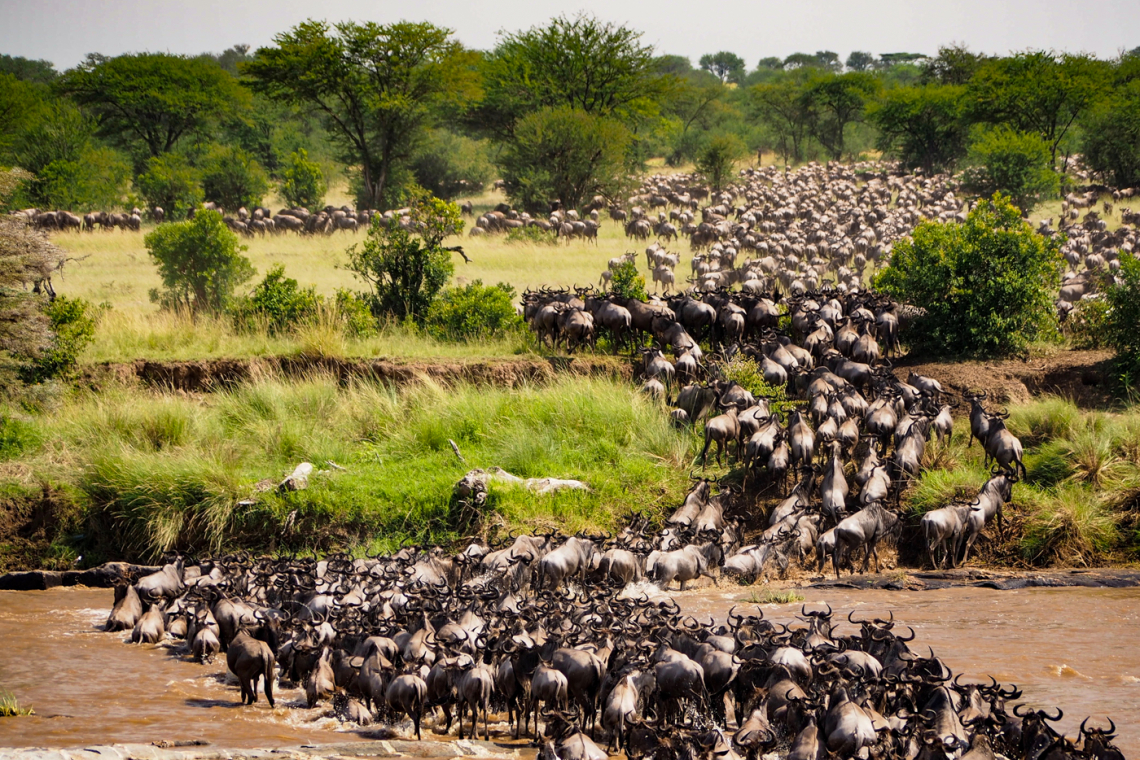
Every safari sells lions. Only migration river crossings sell mortality at scale — hooves hammering water, crocodiles exploding, calves separated in currents. The spectacle transcends tourism marketing; it entered global culture through narrated documentaries and viral clips defining “wild Africa.”
The biological setup
Roughly 1.5 million wildebeest and hundreds of thousands of zebra circulate
Serengeti-Mara ecosystem seeking grass and water. Rivers — primarily the Mara River in Kenya and Grumeti in Tanzania — block paths. Animals accumulate on banks until herd pressure forces plunges. Crossings are unpredictable but seasonal windows concentrate attempts July–October (Mara) and May–July (Grumeti).
Predator theatre
Nile crocodiles grow enormous on migration protein — ambush at entry points. Lions and hyenas patrol opposite banks for stragglers. Leopards occasionally exploit chaos. Photographers capture carnivore behaviour impossible on ordinary game drives.
Photography and media
Long lenses from opposite banks frame splashes frozen at 1/2000s. Drone restrictions push creativity to ground angles. BBC’s
Planet Earth and countless films cemented crossing iconography —
Serengeti photo subjects lists migration centrepiece.
Tourism frenzy
Peak season Mara river sectors crowd with vehicles — reputations for jam scenes at popular crossing points. Conservancy positioning and patient guides improve angles. Fame breeds congestion; off-peak green season crossings quieter but wetter.
Ecological importance
Crossings cull weak individuals — crocodile nutrition, genetic selection. Carcasses feed scavenger chains. River nutrients redistribute when bodies decompose — macabre but ecosystem-critical. Migration connectivity requires open corridors —
tourism funding conservation.
Human geography
Maasai and Ikoma communities border crossing zones — tourism revenue funds coexistence projects. Famous crossings occur on soils walked for centuries — fame intertwines with indigenous land narratives.
Expectation management
Crossings are not scheduled performances. Herds may hesitate hours (“bank tension”) then abort. Multiple days in Mara increase odds. Guides radio networks share intel — still no guarantees. Fame exaggerates daily frequency; patience separates veterans from disappointed first-timers.
Alternatives to Mara crowds
Grumeti crossings in Tanzania luxury camps offer lower vehicle density. Ndutu calving (January–March) famous for births rather than rivers — complementary spectacle. See
repeat Kenya visits chasing seasons.
Ethical viewing
Engines off during active crossings. No standing on roofs blocking others. Distance from descending animals — stress causes trampling. Reputable operators enforce codes amid fame-driven pressure.
River crossings are famous because they compress life and death into minutes — Africa’s migration heartbeat audible as hooves hit water — and no wildlife event replicates that scale of collective risk on demand.
Historical media milestones
Alan Root films, BBC Big Cat Diary lineage, and Instagram era viral clips layered mythology onto Mara crossings — fame predates social media but accelerated with it. Hashtag tourism now influences vehicle positioning ethics — responsible operators resist crowding stressed herds for content.
Planning crossing-focused itineraries
Minimum four nights Mara river sector July–September; hire guide with radio network and conservancy access not only public reserve entry. Balance river days with conservancy cat drives — crossing obsession blinds visitors to leopard on kopje ten minutes from camp.
Economic impact on Mara communities
River sector lodges employ hundreds seasonally — migration fame funds schools and health posts in Talek and Sekenani areas when tourism managed responsibly. Off-season community tourism projects still benefit — fame concentrates wealth July–October requiring year-round diversification programmes.
Documentary expectations versus reality
First-time visitors expect hourly crossings — biology dictates hesitation and aborted attempts. Veterans appreciate bank tension psychology — wildebeest collective decision-making as fascinating as successful splash when patience cultivated.
Serengeti side versus Mara side
Crossings occur on both Tanzania and Kenya riverbanks — fame concentrates Mara sector due to lodge density and media access, but Grumeti offers parallel drama with different logistical trade-offs.
Crocodile predation statistics
Mara crocodiles grow exceptionally large on migration protein — natural history fascination amplifies crossing drama beyond wildebeest perspective alone in documentary narration tradition.
Predator learning behaviour
Mara lions time crossings seasonally — experienced females position at predictable entry points demonstrating learned migration ecology filmmakers narrate as evolutionary arms race between predator and prey.
Wildebeest hesitation at banks creates suspense broadcasting networks exploit — tension duration often exceeds actual crossing seconds in highlight reels.
Zebras and topi often cross before wildebeest masses — attentive viewers witness multi-species choreography preceding headline wildebeest plunge footage.
Photographers wait hours for crossings — patience culture distinguishes serious migration observers from drive-by checklist tourists.
Crossing mortality sustains Mara crocodile populations — ecological stakes exceed spectacle alone.

 Best
Seller
 Best
Seller
 Best
Seller
 Best
Seller