<h2 id="what-makes-
ngorongoro-unique-globally">What makes Ngorongoro unique globally?
Travelers throw around superlatives in Africa — biggest, oldest, best. Ngorongoro earns them with geology you can see from space and wildlife you can count in a morning. The Conservation Area protects not only a crater but an entire highland ecosystem linking the Serengeti plains to the Great Rift Valley. Understanding why it matters globally helps you plan time on the crater floor versus the rim, and appreciate the cultural complexity beneath the postcard views.
The caldera: world’s largest intact volcanic bowl
The Ngorongoro Crater formed when a massive volcano erupted and collapsed on itself roughly two to three million years ago. Today it measures about 610 metres deep and 260 square kilometres on the floor — the world’s largest inactive, intact, unfilled caldera. Estimates suggest the original peak may have stood 4,500–5,800 metres before collapse.
Descending from the rim feels like entering a natural stadium walled by forested escarpments. Grassland, acacia woodland, wetlands, and Lake Magadi — a soda lake that attracts flamingos — fit inside one panoramic bowl. Photographers call the morning descent one of Africa’s great reveals.
Wildlife density without fences
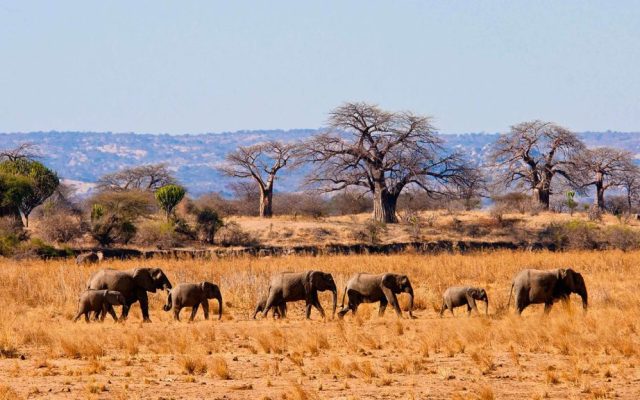
UNESCO notes the crater hosts on the order of 25,000 large mammals, including high densities of lion, spotted hyena, elephant, buffalo, hippo, and a small but critically important population of black rhino. Predator concentrations rank among Africa’s highest because prey cannot easily leave the caldera — geography creates a natural enclosure.
That density is globally exceptional. You may see lion, jackal, zebra, wildebeest, flamingo, and rhino in a single morning — a combination that would require days of driving across more diffuse savannah ecosystems.
One famous quirk: giraffes are rarely seen on the crater floor because the steep walls make entry and exit difficult for their long-legged gait. They live on the rim and surrounding highlands instead — a detail guides mention to manage expectations.
Gateway to the Great Migration
Ngorongoro Conservation Area adjoins Serengeti National Park and forms part of the wider Serengeti–Mara ecosystem. Over one million wildebeest, tens of thousands of zebra, and hundreds of thousands of gazelles move seasonally through these plains — one of Earth’s largest terrestrial migrations. Calving on the short-grass plains straddling Ngorongoro and Serengeti is a defining event each year.
Even if you visit outside peak migration months, the area’s role as migration infrastructure — nutrient-rich grasses, permanent water, predator networks — makes it ecologically central, not merely scenic.
Few national parks double as paleoanthropology laboratories. Olduvai (Oldupai) Gorge within the Conservation Area yielded fossils tracing millions of years of hominid evolution — from early Australopithecus and Paranthropus to Homo habilis and later Homo sapiens. Footprints preserved in volcanic ash date back roughly 3.6 million years.
UNESCO recognises Ngorongoro as both natural and cultural heritage because human story and wildlife story are inseparable here. Visiting the gorge museum adds intellectual depth to a safari that might otherwise be only binoculars and cameras.
Maasai multiple land use — rare globally
Established in 1959 as a multiple land use area, Ngorongoro allows semi-nomadic Maasai pastoralists to graze livestock alongside wildlife — a model debated and admired worldwide. Maasai communities have coexisted with predators and migratory herds for generations; their cultural landscape is part of the site’s Outstanding Universal Value.
Recent government resettlement policies and carrying-capacity debates have drawn international attention — responsible travelers should seek updated guidance and engage cultural visits respectfully. The tension between conservation, tourism growth, and indigenous land rights is part of Ngorongoro’s real-world complexity, not a footnote.
Biodiversity beyond the Big Five
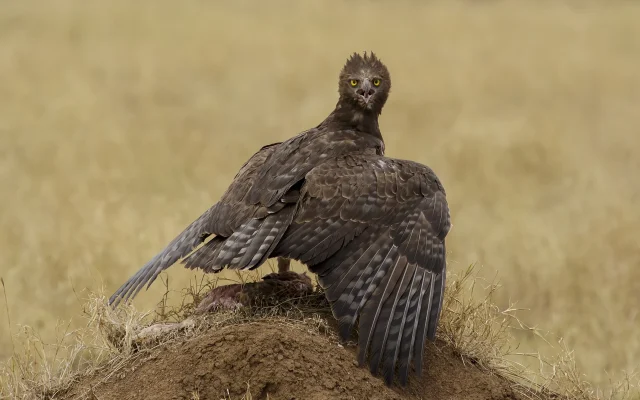
The wider Conservation Area spans over 8,000 square kilometres of highland plains, forests, and volcanic peaks — including Empakaai Crater and active Ol Doinyo Lengai. Bird lists exceed 500 species; endangered mammals include wild dog and golden cat in broader habitats. Black rhino inside the crater represent a relict population protected intensively — losing even one animal is a regional conservation event.
Why photographers and filmmakers prioritise Ngorongoro
Short time horizons, high subject density, and dramatic topography suit tight itineraries. Commercial filming requires NCAA/TANAPA permits, but even amateur photographers leave with portfolio-grade frames when light cooperates. Crater rim lodges deliver sunrise clouds pouring into the bowl — images that read instantly as “Africa.”
Comparing Ngorongoro to other “famous” parks
Serengeti offers vaster plains and migration scale; Kruger offers self-drive infrastructure; Maasai Mara offers river crossings. Ngorongoro’s global uniqueness is concentration inside geology — a complete ecosystem visible in one panorama. Many itineraries pair one or two crater drives with longer Serengeti days rather than replacing Serengeti entirely.
Planning respectfully
Crater entry limits and timing rules manage congestion — start early, expect other vehicles at rhino sightings, and tip guides who know traffic patterns. Combine with why the wider Conservation Area matters and rim versus crater-floor lodging choices when building quotes.
Ngorongoro is globally unique because it is simultaneously a volcano, a zoo without fences, a human birthplace, and a living pastoral landscape — all UNESCO-listed. No replica exists elsewhere on the planet, which is exactly why it remains non-negotiable on a serious Tanzania safari.