Mount Karisimbi is Rwanda’s highest point and the tallest volcano in the Virunga Mountains — a dormant stratovolcano rising to 4,507 metres (14,787 feet) on the Rwanda–Democratic Republic of Congo border within Volcanoes National Park. It is not a savannah safari destination. It is a demanding two-day summit trek with overnight camping: a high-altitude adventure through bamboo forest, hagenia woodland, and surreal Afro-alpine moorland where giant lobelias and senecios frame views across the entire Virunga chain.
Most trekkers base in Musanze or forest-edge lodges near Kinigi, briefing at park headquarters before rangers lead the ascent. The Rwanda Development Board (RDB) issues separate volcano hiking permits — distinct from gorilla trekking — and licensed operators arrange guides, porters, camping equipment, and park logistics. Karisimbi rewards fit hikers who respect altitude, mud, and cold summit nights more than travelers expecting a casual day walk after gorilla trekking.
For travelers building Rwanda circuits from Kigali, Karisimbi pairs naturally with mountain gorilla trekking, golden monkey tracking, and the Dian Fossey Grave memorial hike — all within the same park — and with broader routes through Nyungwe National Park or cross-border gorilla combinations with Bwindi Impenetrable National Park in Uganda. The mountain is the altitude challenge; the forests below are the primate theatre. Keeping those experiences distinct prevents disappointed travelers who expected gorilla-hour intimacy on a multi-day volcano push.
This destination combines naturally with Volcanoes National Park, Musanze, Kinigi, Dian Fossey Grave, and Kigali in a well-planned active Rwanda itinerary.
Quick Facts About Mount Karisimbi
| Feature | Details |
|---|---|
| Location | Volcanoes National Park · Musanze District · Rwanda–DRC border · Virunga Mountains |
| Protected Area | Volcanoes National Park (RDB) |
| Summit | 4,507 m / 14,787 ft a.m.s.l. — Rwanda’s highest point |
| Volcanic Status | Dormant stratovolcano — highest of the eight Virunga volcanoes |
| Destination Type | Multi-day volcano summit trek with overnight camping (non-technical) |
| Typical Duration | 2 days / 1 night on mountain (full days each side) |
| Briefing Point | Kinigi Park Headquarters — morning start with ranger guides |
| Gateways | Musanze, Kinigi area lodges, Kigali (2–3 hours by road) |
| Ecological Zones | Bamboo, hagenia-hypericum forest, subalpine shrub, Afro-alpine moorland |
| Best Trekking Seasons | June–September and December–February (drier Virunga windows) |
| Best For | Fit trekkers, volcano enthusiasts, Rwanda adventure extensions beyond gorillas |
Overview of Mount Karisimbi
Mount Karisimbi dominates Rwanda’s northern skyline — a snow-dusted name (“white shell” in Kinyarwanda, referring to summit frost and cloud) that towers above the bamboo slopes where mountain gorillas and golden monkeys make their home. While Volcanoes National Park marketing centres on primate trekking, Karisimbi offers the park’s most serious hiking objective: a full two-day expedition from Kinigi briefing through layered montane forest to a high camp near 3,700 metres, then a pre-dawn summit push to 4,507 metres before the long descent.
Geologically, Karisimbi sits on the Rwanda–Congo divide within the Virunga Conservation Area — a transboundary protected landscape shared with Uganda’s Mgahinga and the DRC’s Virunga National Park. On clear summit mornings, trekkers may glimpse neighbouring volcanoes including Mount Bisoke, Muhabura, and — across the border — the steaming caldera of Nyiragongo. The peak itself is a broad volcanic massif, not a knife-edge technical climb; the challenge is sustained altitude, mud, cold, and physical endurance rather than ropes or glacier travel.
Conservation history permeates the slopes. Primatologist Dian Fossey established the Karisoke Research Center in the saddle between Karisimbi and Bisoke in 1967, revolutionising gorilla habituation and anti-poaching patrols. Trekkers ascending Karisimbi pass through the same forest corridors that Fossey’s rangers defended — a landscape where tourism revenue today funds protection of species that were critically endangered within living memory. The optional Dian Fossey Grave hike visits her memorial on a separate permit day; Karisimbi itself is the summit adventure above that story.

What distinguishes Karisimbi from Rwanda’s popular Mount Bisoke day hike is scale and commitment. Bisoke delivers a crater lake on the rim within one long day. Karisimbi demands overnight camping, heavier packs (carried by porters), sub-zero summit temperatures, and legs that may still be recovering if poorly sequenced after gorilla trekking. RDB assigns ranger guides; operators supply tents, meals, and crew. Independent hiking without authorisation is not permitted inside the park boundary.
For Uganda-based safari planners, Karisimbi often appears on active Rwanda extensions: gorilla trekking at Volcanoes or Bwindi, then a multi-night Musanze stay with Karisimbi as the physical crescendo — or the reverse for travelers who prefer primates after the volcano. Allow recovery buffers; scheduling Karisimbi the morning after a strenuous gorilla trek is a common itinerary mistake.
Why Trek Mount Karisimbi?
Rwanda’s Highest Summit
Standing at 4,507 metres places you on the roof of Rwanda — higher than any point in the country’s thousand hills. For travelers who want a definitive altitude achievement without leaving Rwanda’s secure, well-organised tourism corridor, Karisimbi is the peak.
Virunga Volcano Drama
The eight Virunga volcanoes form one of Africa’s most spectacular volcanic skylines. Karisimbi is their highest summit — a vantage point over mist-filled calderas, crater lakes, and — when weather cooperates — the glow of distant Nyiragongo. The scenery rewards photographers who accept that clouds are part of the Virunga personality.
Afro-Alpine Ecology
Above the gorilla zone, habitat shifts to giant lobelias, senecios, and tussock grass that feel more alpine plateau than equatorial forest. Botanists and naturalists find Karisimbi’s high camps as memorable as the summit sign — endemic plants and altitude specialists absent from briefing-level treks.
Beyond Gorilla Trekking
Many visitors spend two nights near Volcanoes and leave having seen only primates. Karisimbi spreads tourism pressure, extends Musanze stays profitably for communities, and rewards travelers who want Rwanda’s active side — not only the regulated hour with gorillas.
Natural Fit for Multi-Activity Rwanda Routes
Karisimbi anchors adventure-heavy itineraries: gorillas one day, golden monkeys the next, Fossey memorial on a rest day, Karisimbi summit on dedicated days four and five, then Lake Kivu recovery or southbound transfer to Nyungwe chimps. The mountain is the endurance chapter in an otherwise primate-focused story.
Things to Do on Mount Karisimbi
Two-Day Summit Trek
The defining experience is the 2-day / 1-night ascent to 4,507 metres. Day one climbs from the trailhead through bamboo and montane forest to a high camp — typically around 3,700 metres — where tents go up before afternoon mist rolls in. Day two begins in darkness: a slow, cold summit push, brief celebration at the highest point, then a long descent back to Kinigi. Total walking time often exceeds eight hours on summit day alone.
High-Camp Overnight
Camping on Karisimbi is part of the adventure — not a comfort experience. Operators provide expedition tents, sleeping mats, and cooked meals; trekkers bring sleeping bags rated for sub-zero nights. Porters carry communal gear and personal duffels within park weight guidelines. Stars above Afro-alpine moorland, when skies clear, rival any lodge terrace in Musanze.
Forest-Zone Wildlife Encounters
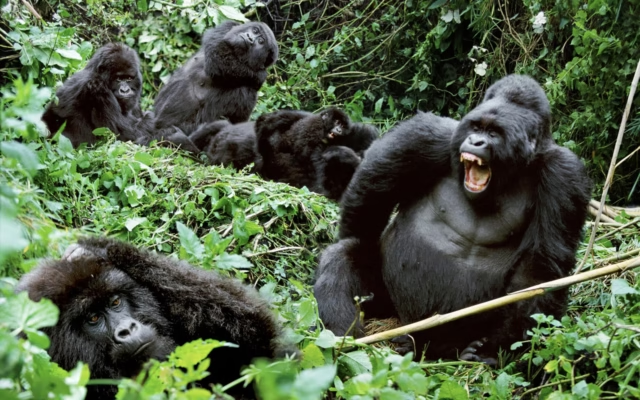
Lower slopes hold buffalo sign, duiker trails, and occasional primate glimpses — though Karisimbi is not a wildlife safari. Golden monkeys and gorillas inhabit neighbouring zones; trekkers may hear forest activity but should not expect primate contact on the volcano route. Bird calls in bamboo — sunbirds, turacos, and Albertine Rift specialists — reward early-morning ears on day one.
Photography and Volcano Panoramas
Wide-angle lenses capture layered Virunga ridgelines; telephotos isolate crater rims across the Congo border. Summit photography competes with cold fingers and limited time — shoot efficiently, then descend before afternoon weather closes in. Cloud inversions in the saddle between Karisimbi and Bisoke create ethereal images when mist lifts mid-morning.
Combine with Park Activities
Karisimbi is one activity within Volcanoes National Park, not a standalone park. Schedule separate days for gorilla trekking, golden monkey tracking, Mount Bisoke crater-lake hike, or the Dian Fossey Grave memorial — each requires its own permit and recovery time.
Wildlife and Ecology on Mount Karisimbi
Karisimbi’s wildlife is montane and altitude-zoned — not savannah. Forest buffalo, bushbuck, and duiker occur on lower slopes but are rarely seen on the summit route. Above 3,500 metres, life shifts to giant lobelias, senecios, and the hardiest birds. Treat wildlife as an ecological bonus during day one’s forest ascent — not the trek’s purpose.
See our dedicated Mount Karisimbi wildlife and bird watching guides for altitude-zone detail, Albertine Rift species, and responsible observation on the trail.
Best Time to Climb Mount Karisimbi
Dry-season windows — broadly June through September and December through February — offer firmer trails, clearer summit views, and less hypothermia risk at high camp. These align with Rwanda’s peak gorilla-trekking seasons, so Musanze lodges and combined permits book early.
Long rains (March–May) and short rains (October–November) bring lush forest, fewer trekkers, and muddy, slippery paths that slow ascents and increase turn-back rates when cloud seals the summit. Treks still operate for prepared groups with waterproof kit and flexible expectations — but Karisimbi in heavy rain is genuinely miserable above 3,500 metres.
Altitude weather ignores valley forecasts from Musanze. Pack for frost at summit regardless of tropical warmth at the trailhead.
How to Get to Mount Karisimbi
{{SEC_GETTING_THERE}}
Kigali International Airport (KGL)
Most international trekkers fly into KGL, then transfer northwest to Musanze or Kinigi-area lodges — roughly 2–3 hours on paved roads. Allow at least one rest night before Karisimbi day one; same-day arrival after long-haul flights is unwise before altitude exertion.
Kinigi Briefing and Trail Start
All Volcanoes volcano hikes begin with RDB briefing at Kinigi Park Headquarters — the same hub as gorilla trekking. Karisimbi departures start early morning on day one. Late arrival forfeits permits without refund. Lodge alignment matters: properties near Kinigi or Bisate reduce pre-dawn transfer stress compared with distant bookings.
Musanze Gateway
Musanze (Ruhengeri) is the commercial base — lodges, gear shops, restaurants, and operator offices. Most Karisimbi packages include Kinigi transfers from Musanze lodges on trek mornings. Budget 30–45 minutes from town centre to briefing.
From Uganda and Bwindi
Dual-country gorilla itineraries link Volcanoes with Bwindi Impenetrable National Park via Cyanika or Gatuna borders. Build buffer days for border queues and leg recovery before committing to Karisimbi’s two-day exertion.
How to get to Mount Karisimbi — routes & drive times
Where to Stay Near Mount Karisimbi
{{SEC_ACCOMMODATION}}
Pre- and post-trek lodges cluster in Musanze, Kinigi periphery, and Bisate slopes — from budget guesthouses to forest-edge luxury. Book at least one night before day one for briefing logistics and one night after summit descent for recovery; day-two descents are exhausting.
On-mountain accommodation is expedition camping only — no huts on Karisimbi. Operators provide tents and mess shelters; climbers bring cold-rated sleeping bags. Do not expect lodge service at 3,700 metres.
Post-trek recovery often continues at Lake Kivu lakeside lodges or returns to Kigali before onward flights.
Where to stay in Mount Karisimbi
Karisimbi and the Rwanda Adventure Circuit
A classic active Rwanda itinerary sequences gorillas first, volcano second — primate wonder before multi-day altitude. Typical flow: arrive Kigali, transfer Musanze, gorilla trek day two, golden monkey or rest day three, Karisimbi days four–five, recovery night Musanze, then Nyungwe chimps or Akagera savannah. Reversing the order suits fit travelers who prefer the hardest exertion early, but tired legs on gorilla slopes are common after Karisimbi descent.
Volcanoes National Park gorilla permits and Karisimbi volcano permits are separate RDB products — coordinate dates through one licensed operator to avoid misaligned bookings.
Nearby Destinations
Mount Karisimbi combines naturally with Volcanoes National Park, Musanze, Dian Fossey Grave, Kinigi, and Kigali.
Volcanoes National Park
Rwanda's flagship gorilla park at Karisimbi's base — mountain gorillas, golden monkeys, and ranger-led forest treks from Kinigi headquarters.
Musanze
Northern Rwanda's trek base town — lodges, operator offices, and pre-dawn transfers to Kinigi for Karisimbi briefing mornings.
Dian Fossey Grave
Memorial hike to Karisoke between Karisimbi and Bisoke — conservation history in the saddle where Fossey studied gorillas.
Kinigi
Park headquarters where Karisimbi treks brief and depart — the logistical heart of every Volcanoes volcano and gorilla morning.
Kigali
Rwanda's capital and international gateway — 2–3 hours south of Musanze for arrival, city culture, and post-trek recovery nights.
Nyungwe National Park
Southern rainforest chimps and canopy walks — the natural primate sequel after northern volcano exertion on complete Rwanda circuits.
Suggested Karisimbi Itinerary Ideas
5-Day Volcanoes Active Extension
Day 1 Kigali to Musanze. Day 2 gorilla trek. Day 3 golden monkeys or Fossey memorial rest day. Days 4–5 Karisimbi summit trek. Day 6 recovery transfer to Kigali or Lake Kivu.
7-Day Rwanda Primates and Peaks
Kigali city, Volcanoes gorillas, Karisimbi climb, Nyungwe chimpanzees, return via Lake Kivu scenic transfer — the comprehensive adventure circuit for fit travelers.
Uganda–Rwanda Gorilla and Volcano (10–12 Days)
Bwindi gorillas, cross-border transfer to Musanze, Karisimbi ascent, optional second gorilla trek in Rwanda, Kigali departure — popular for travelers comparing both countries’ primate experiences plus Rwanda’s highest summit.
Bisoke Day Hike Without Karisimbi (2–3 Days)
For companions who skip the two-day climb: Mount Bisoke crater-lake trek from the same Kinigi briefing hub — strenuous but single-day, with separate RDB permit.
Planning Tips for Karisimbi Treks
Sequence activities wisely. Do not schedule Karisimbi immediately after gorilla trekking unless fitness and itinerary buffers allow. Both demand steep forest climbing — compounded fatigue increases injury and altitude-risk.
Verify operator credentials. RDB-licensed guides and ranger escorts are mandatory. Confirm porter welfare, camping equipment quality, emergency protocols, and what personal gear you must supply.
Train for endurance and mud. Karisimbi is not technical, but summit day is long and often wet. Cardiovascular fitness and previous hiking experience above 3,000 metres help — gorilla trekking alone does not guarantee summit readiness.
Pack for four seasons. Bamboo humidity, moorland mist, and summit frost occur across two days. Waterproof boots, gaiters, insulated layers, gloves, and headlamps with spare batteries are non-negotiable.
Budget for porters and tips. Porters carry duffels and assist on muddy slopes — valuable local income. Tipping guides, cooks, and porters is customary; clarify expectations with your operator before departure.
Insure for evacuation. Helicopter rescue exists in limited conditions; comprehensive travel insurance covering high-altitude trekking is essential.
Mount Karisimbi FAQs
- How high is Mount Karisimbi?
-
Mount Karisimbi reaches 4,507 metres (14,787 feet) above mean sea level — Rwanda’s highest point and the tallest of the eight Virunga volcanoes.
- How long does the Karisimbi trek take?
-
The standard expedition is 2 days and 1 night — day one ascends to high camp (~3,700 m), day two summits at 4,507 m and descends to Kinigi. Each day involves many hours of walking.
- Do I need climbing experience for Karisimbi?
-
Karisimbi is non-technical trekking — no ropes required. You do need strong fitness, hiking experience, tolerance for cold and mud, and a licensed guide team with RDB permits. It is significantly harder than a gorilla trek or Mount Bisoke day hike.
- When is the best time to climb Karisimbi?
-
Drier months — June–September and December–February — generally bring firmer trails and clearer summit views. Treks can run year-round with proper waterproof gear; rainy seasons increase mud and cloud.
- How do I get to Mount Karisimbi?
-
Fly into Kigali International Airport, transfer to Musanze or Kinigi-area lodges, and start at Kinigi Park Headquarters on trek morning. Operators handle RDB volcano permits, guides, porters, and camping logistics.
- Is Karisimbi in Volcanoes National Park?
-
Yes — Karisimbi lies within Volcanoes National Park on the Rwanda–DRC border. It shares the park with mountain gorillas, golden monkeys, and other volcano hikes including Mount Bisoke.
- Can I combine Karisimbi with gorilla trekking?
-
Yes — but allow recovery days between activities. Gorilla and Karisimbi permits are separate RDB products. Most itineraries place gorillas before or after the two-day climb with at least one lighter day between.
- What is the difference between Karisimbi and Mount Bisoke?
-
Mount Bisoke is a single-day hike to a crater lake (~3,711 m). Karisimbi is a two-day expedition to Rwanda’s highest point at 4,507 m with overnight camping — far more demanding in time, altitude, and fitness.
- Can I see Nyiragongo from Karisimbi?
-
On clear summit mornings, trekkers may see neighbouring Virunga volcanoes including Nyiragongo across the Congo border — but cloud is common. Treat panoramic views as a bonus, not a guarantee.
- Is Karisimbi worth it after gorilla trekking?
-
For fit adventure travelers staying multiple nights near Volcanoes — absolutely. Karisimbi adds Rwanda’s highest summit and Afro-alpine scenery beyond the one-hour gorilla encounter. Skip it if time, fitness, or weather tolerance is limited.