Wildlife and ecology on Mount Karisimbi
Mount Karisimbi rises within Volcanoes National Park — but wildlife expectations must match altitude reality. You will not encounter savannah herds or vehicle-scanned lion prides on the summit route. Instead, Karisimbi delivers a textbook lesson in Virunga montane ecology: how mammals, birds, and endemic plants partition elevation on Rwanda's highest volcano, from bamboo belts shared with gorillas to frost-prone moorland above 4,000 metres.
Most animal sign appears during day one's forest ascent below 3,500 metres. High camp and summit zones shift toward giant lobelias, senecios, and sparse avian scavengers. Understanding each belt helps trekkers appreciate incidental encounters rather than mourning the absence of primate contact on a volcano push.
Cultivation and park-edge zone (2,400–2,600 m)
Trail approaches pass through farmland margins where potato fields, pyrethrum plots, and eucalyptus windbreaks frame Musanze District's agricultural economy. Bushbuck and duiker sometimes browse field edges at dawn. Domestic livestock is common; wild mammals keep to forest patches. This zone explains why Volcanoes feels inhabited compared with remote wilderness peaks — communities live in sight of the volcanoes they help protect through tourism revenue-sharing.
Bamboo forest (2,600–3,000 m)
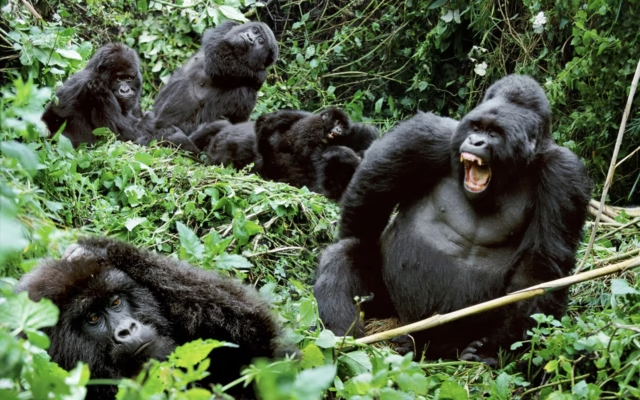
Dense bamboo stands hold critical habitat for mountain gorillas and golden monkeys elsewhere in the park. Karisimbi's ascending trail may cross bamboo zones where trekkers hear rustling or spot primate movement at distance — but the volcano route is not a gorilla trek. Guides keep groups on the authorised path. Buffalo occur in forest clearings; rangers maintain safe distances when sign is fresh. Leopards persist in Virunga forest — almost never seen — and servals hunt rodents in thicker undergrowth.
Hagenia-hypericum woodland (3,000–3,500 m)
Montane woodland dominated by hagenia and hypericum trees holds richer bird diversity than mammal visibility. Bushbuck trails cross mossy paths; hyrax sun on rocky outcrops where forest thins. This is the zone where altitude begins to announce itself — shorter breaths, cooler air, and the first giant lobelias appearing in clearings. Trail erosion hurts most here; decades of recovery follow a single careless shortcut off marked routes.
Subalpine and Afro-alpine moorland (3,500–4,507 m)
High camp near 3,700 metres sits in tussock grass and surreal vegetation — Dendrosenecio (giant groundsels) and Lobelia wollastonii define Karisimbi's botanical fame. Mammals become scarce; four-striped mice and occasional birds persist. Summit day crosses thin soils where only lichens, moss cushions, and endemic plants survive frost and intense UV. The "wildlife" at 4,507 metres is geological and botanical — volcanic rock, cloud, and the broad crater form of a dormant stratovolcano.
Transboundary Virunga context
Karisimbi straddles the Rwanda–DRC border within the Virunga Conservation Area. Elephant populations persist in the massif at low density; forest buffalo and hyena occur across the range. Trekkers rarely see these mammals on the standard Karisimbi route — patrol-funded protection matters more than tourist sightings. Conservation history ties directly to Dian Fossey and Karisoke Research Center in the saddle between Karisimbi and Mount Bisoke.
Responsible observation on the trail
Do not leave food scraps at camps — habituation harms forest species and attracts buffalo risk. Follow ranger instructions on all wildlife encounters. Stay on marked trails in moorland; giant groundsels and lobelias crush easily. Pack out all litter; RDB enforces leave-no-trace standards across Volcanoes activities.
Porter welfare is part of ethical trekking ecology: fair wages and load limits keep local communities invested in park protection rather than illegal forest exploitation on volcano margins.
How Karisimbi fits a wider Rwanda route
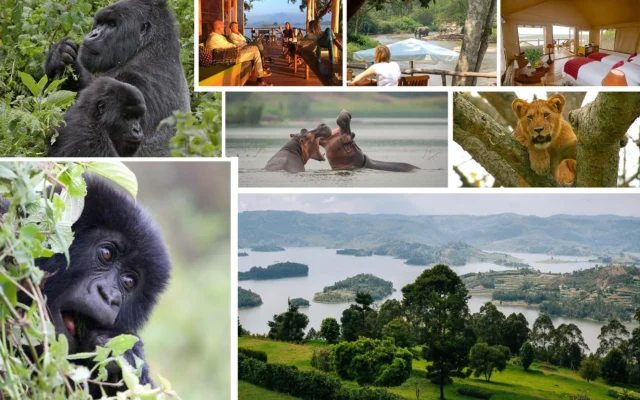
Combine montane ecology on the volcano with primate encounters in Volcanoes National Park and savannah wildlife at Akagera National Park on complete Rwanda circuits. Musanze anchors logistics between climb and lodge nights.
See our Mount Karisimbi bird watching, best time to visit, and getting there guides for seasons, access, and trekking logistics alongside ecology.