
Tour overview
A focused 2-day Mount Nyiragongo overnight hike in Virunga National Park — Africa's most dramatic active volcano, with a permanent lava lake glowing in the summit crater at 3,470 m. Nyiragongo's 2021 eruption sent lava flows through Goma; the trek remains one of the continent's bucket-list volcano experiences when ICCN and Virunga Foundation confirm safe access.
Starting from Kigali or Goma, you ascend 5–7 hours through montane forest and old lava fields, overnight in basic summit shelters overlooking the lava lake, and descend 3–4 hours the next morning. Trekking permits through ICCN/Virunga are typically around USD 300 plus mandatory cook/porter fees. This compressed loop suits fit travellers who want the crater-rim spectacle without extra recovery nights — see our permit guide for booking lead times and DRC visa requirements.
Places you visit
Key stops along this itinerary — customise dates and lodges when you enquire.
- Kigali or Goma (Start)
- Kibati Patrol Post, Mount Nyiragongo
- Nyiragongo summit crater (overnight)
- Kigali or Goma (End)
Day-by-day itinerary
Kigali or Goma to Kibati — Nyiragongo summit overnight
Your driver-guide collects you from Kigali city centre or KGL airport for the northwest run toward Lake Kivu and the DRC border (approx. 3–4 hours including border formalities), or meets you at your Goma hotel if you are already in eastern DRC. The Kigali route passes through Gisenyi on Lake Kivu before the Grande Barrière crossing — allow 45–90 minutes for Rwanda exit and DRC entry stamps; your guide handles permit verification with ICCN on the Congolese side.
En route through Goma you may pass blackened lava fields from Nyiragongo's May 2021 eruption — a sobering reminder that this is a live volcano, not a dormant scenic peak. The city skyline still frames Mikeno volcano and the park boundary where Virunga National Park protects roughly 7,800 km² of montane forest, savannah and volcanic terrain — Africa's oldest national park (est. 1925) and still one of its most geologically volatile landscapes.
Transfer to Kibati patrol post at the Mount Nyiragongo trailhead (approx. 30–45 minutes from central Goma on good days). Mandatory equipment check with Virunga rangers: hire sleeping bag and foam mattress locally if you did not bring your own (typically USD 15–20 combined). Summit shelters have basic bunks but no bedding — a four-season sleeping bag is essential even in dry season, when night-time temperatures at 3,470 m routinely drop below freezing.
Your guide reviews the packing list for the ascent: waterproof hiking boots with ankle support, gaiters for volcanic scree, headtorch with spare batteries (you will need both hands-free light at dusk and pre-dawn), warm fleece and down jacket, thermal gloves, beanie, rain shell, 3+ litres of water, energy snacks, and a small daypack under 8 kg. Porters are mandatory on Nyiragongo — they carry your overnight kit and cook meals at the summit; tipping is customary and paid locally.
10:00 briefing with armed Virunga rangers at Kibati. Staff explain pacing rules (the ascent is regulated for altitude — no racing), emergency protocols, and shelter allocation at the crater rim. The trail climbs steadily from roughly 1,990 m at the trailhead through bamboo zones, montane forest with moss-draped hagenia, and increasingly barren lava fields where vegetation thins and the ground turns to black scree. Trekking duration is commonly 5–7 hours depending on group fitness and weather; rangers set a sustainable pace with rest stops every 45–60 minutes.

Safari activity | Mount Nyiragongo overnight lava-lake hike
Ascend to summit shelters at 3,470 m overlooking the world's largest persistent lava lake — sunset and night photography of the glowing crater rim. Armed ranger escort throughout; mandatory porter/cook team carries gear and prepares meals at the summit.
Nyiragongo volcano hike callout: Arriving at the crater rim before dusk is the defining moment of this itinerary. Nyiragongo holds the world's largest persistent lava lake — a churning cauldron of molten rock roughly 200 m across that has been active in various forms for decades. As daylight fades, the crater transforms: what looked like a dark void becomes a furnace of orange and red, with fumaroles hissing at the rim and the lake's surface pulsing with fresh lava breaks. On clear evenings the glow reflects off low cloud and illuminates the faces of fellow hikers pressed against the safety barrier — one of the few places on Earth where you can stand at arm's length from an active lava lake without a helicopter. Photography is extraordinary but demanding: bring a tripod for long exposures, protect your camera from sulphur mist, and shoot immediately on arrival before mist closes in. Temperature drops sharply after sunset; retreat to the basic summit shelters for a hot meal prepared by your cook team, then return to the rim for night viewing when stars compete with the crater glow. Visibility is weather-dependent — dry months (June–September, January–February) offer the clearest crater views, though Virunga receives rain in every season.
Overnight in Virunga summit shelters — shared dormitory-style bunks with thin mattresses, no heating, and shared pit latrines. This is adventure accommodation, not a lodge: the payoff is waking at 3,470 m on an active volcanic frontier with Mikeno and the full Virunga chain spread below you. Pack earplugs, a silk sleeping bag liner, and warm base layers you can sleep in. Rangers remain on the summit overnight.
What to pack for ascent day: Four-season sleeping bag (or hire at Kibati); waterproof boots and gaiters; headtorch; warm layers to −5 °C; rain jacket; 3+ litres water; energy snacks; camera with tripod; passport and permit voucher; DRC visa confirmation.
Trek duration: 5–7 hours ascent
Drive time: 3–4 hours Kigali–Kibati (or 30–45 min from Goma)
Meals: Lunch on trail, dinner cooked at summit
Accommodation: Nyiragongo summit shelters (basic bunks)
 Day 1 | Accommodation
Nyiragongo descent & return to Kigali or Goma
Pre-dawn wake for optional final crater viewing — on clear mornings the lava lake contrasts with the first blue light on Mikeno's silhouette and the distant outline of Mount Karisimbi and Bisoke across the Rwanda border. Sulphur mist often rolls through the caldera at first light, creating brief windows of surreal photography before the sun burns it off. Rangers signal descent groups by 06:30–07:00 to ensure everyone reaches Kibati before midday heat softens the scree slopes.
The 3–4 hour descent is steep and hard on knees — trekking poles (bring or rent in Goma) transform stability on loose volcanic gravel. You retrace yesterday's route through lava fields and forest, passing ascending groups still climbing toward the rim. At Kibati, collect any stored luggage and settle porter/cook tips before transfer to Goma or the Grande Barrière for the Rwanda crossing.
Travellers returning to Kigali clear DRC exit and Rwanda entry at Gisenyi (allow 45–90 minutes), then continue on the paved Lake Kivu corridor (approx. 3–4 hours total from Kibati to Kigali, depending on border queues and lunch stops). Afternoon/evening arrival at city hotels or KGL airport is typical if descent finishes by late morning — allow buffer time for international connections. Goma-based travellers may finish by midday with optional afternoon city orientation (security permitting) or a lakeside lunch before checkout.
Many guests combine this 2-day Nyiragongo dash with a separate gorilla trekking permit in Virunga or Rwanda's Volcanoes National Park on adjacent dates — the compressed volcano loop is deliberately demanding, so schedule a recovery night before any gorilla trek if your permit falls the day after descent. Nyiragongo permits (~USD 300) and mandatory porter/cook fees are separate from DRC tourist visa costs (~USD 100); confirm all documentation before travel.
What to expect on descent: Knee-friendly pacing on scree; poles strongly recommended; keep rain jacket accessible — forest sections can be wet even when the summit was clear.
Trek duration: 3–4 hours descent
Drive time: 3–4 hours Kibati to Kigali (or 30–45 min to Goma hotels)
Best season: Year-round when park is open; dry months give firmer trails and clearer lava-lake visibility
Meals: Breakfast on summit, lunch en route
What's included
- Round-trip transfers Kigali ↔ Nyiragongo trailhead (or Goma-based)
- Nyiragongo trekking permit (approx. USD 300)
- Armed ranger escort and summit cook team
- 1 night summit shelter accommodation
- Meals on the mountain
- Mandatory porter/cook fees
- Bottled water


What's not included
- DRC tourist visa (approx. USD 100)
- Sleeping bag and mattress hire (approx. USD 15–20)
- Rwanda visa if routing via Kigali
- Tips for rangers and porters
- Travel insurance with volcano trekking cover


Accommodation & comfort level
1 night basic Virunga summit shelter (shared bunk). No luxury option on the crater rim — this is an adventure trek.
Request Pricing & booking information
Request Quote: Fill in the contact form below.
You may also like
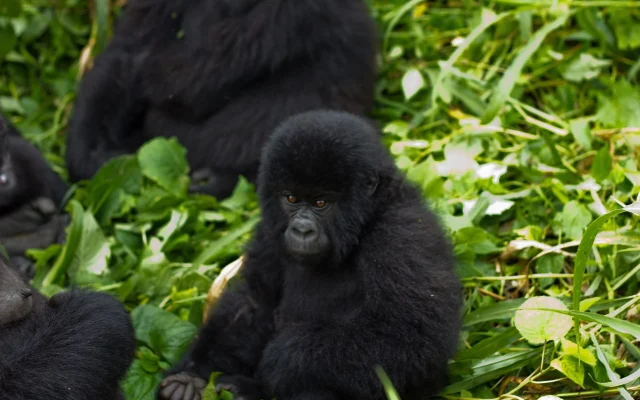
2 Days DR Congo Gorilla Trekking
Lake Kivu, Grande Barrière Border (Gisenyi–Goma), Virunga, Kigali
The shortest practical Virunga mountain gorilla trek — one night near Bukima and a morning with habituated gorillas on Mikeno volcano's forested slopes. Virunga National Park is Africa's oldest nation…

10 Days Rwanda, Congo & Uganda Classic Tour
Entebbe (Start, End)
The 10-day Rwanda, Congo and Uganda classic tour threads the entire Virunga Massif corridor: mountain gorillas in Rwanda's Volcanoes, low-cost gorilla trekking in DRC's Virunga, and Uganda's savannah…
15 Days Uganda, Rwanda & Congo Safari
Entebbe, Ziwa Rhino Sanctuary, Murchison Falls, Kibale Forest, Queen Elizabeth NP, Bwindi Forest, Lake Bunyonyi, Volcanoes NP, Virunga, Kigali
The comprehensive 15-day Uganda, Rwanda and Congo safari is the slow-travel version of the Virunga circuit: Ziwa rhinos and Murchison Falls in Uganda, chimps and Queen Elizabeth wildlife, Bwindi goril…