Tarangire National Park is Tanzania’s elephant capital — a baobab-studded savannah in the Manyara Region where the permanent Tarangire River draws thousands of animals from a 20,000 km² ecosystem during the dry season. Managed by the Tanzania National Parks Authority (TANAPA), this 2,850 km² reserve ranks as the country’s sixth-largest national park and anchors the southern end of the Northern Circuit, roughly 120 kilometres south of Arusha.
For travelers planning Tanzania wildlife safaris, Tarangire delivers something the Serengeti‘s vast horizons cannot: intimate encounters with Africa’s largest land mammals in ancient woodland, fewer vehicles than peak-season migration routes, and a landscape dominated by thousand-year-old baobabs that photographers call among the most distinctive on the continent. During June to October, elephant herds numbering 100 to 300 individuals congregate along the river — one of the highest dry-season elephant concentrations in East Africa.
Unlike Ngorongoro Crater, Tarangire is a classic TANAPA national park with no rhino population — but it compensates with exceptional elephant viewing, 550+ recorded bird species, and wild dog, lion, and leopard sightings across acacia woodland, combretum scrub, and seasonally flooded grassland. Most Northern Circuit itineraries allocate one to two nights here before continuing to Lake Manyara National Park and Ngorongoro.
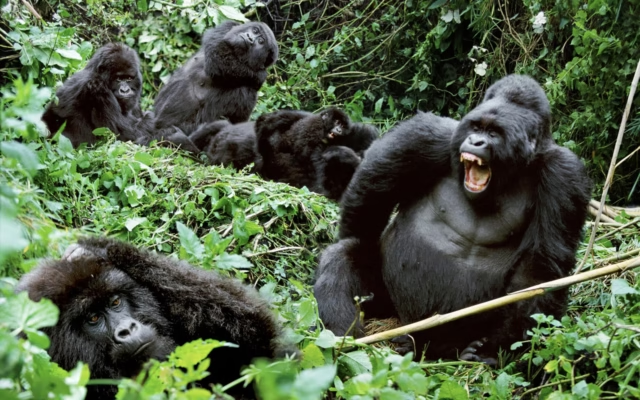
This destination combines naturally with Serengeti National Park, Lake Manyara, Ngorongoro, Arusha, and Zanzibar beach extensions in a well-planned Tanzania route. Travelers building Uganda–Tanzania combinations often pair Tarangire’s savannah elephant drama with Bwindi Impenetrable National Park or Volcanoes National Parkgorilla trekking — rainforest primates and baobab country in one East Africa arc.
Whether you are photographing elephants beneath upside-down baobabs at golden hour, scanning for yellow-collared lovebirds in dry-country woodland, or escaping Serengeti crowds without sacrificing wildlife quality, Tarangire safaris reward focused, unhurried Northern Circuit pacing.
Quick Facts About Tarangire National Park
| Feature | Details |
|---|---|
| Location | Manyara Region, northern Tanzania — southern anchor of the Northern Circuit (~120 km from Arusha) |
| Established | 1970 |
| Size | Approximately 2,850 km² (Tanzania’s sixth-largest national park) |
| Ecosystem Context | Core of the ~20,000 km² Tarangire ecosystem — wet-season dispersal, dry-season concentration |
| Management | Tanzania National Parks Authority (TANAPA) |
| Defining Feature | Tarangire River — permanent freshwater attracting wildlife in dry months |
| Elephant Population | Estimates of 3,000–4,000+ in peak dry season; herds of 100–300 along the river |
| Bird Species | 550+ recorded — among the highest totals on the Northern Circuit |
| Key Wildlife | Elephant, lion, leopard, cheetah, wild dog, buffalo, giraffe, zebra, wildebeest, eland, hartebeest |
| Landscape Icons | Ancient baobab trees (Adansonia digitata), some over 1,000 years old |
| Best Time to Visit | Dry season (June–October) for river wildlife; November–April for birding and green scenery |
| Nearest Gateway | Arusha / Kilimanjaro International Airport (JRO) |
| Main Gates | Kwa Kuchinja (main), Sangaiwe, and Burunge area access points |
| Main Activities | Day game drives, walking safaris (designated areas), night drives (where permitted), bird watching |
Overview of Tarangire National Park
Tarangire National Park takes its name from the Tarangire River that threads north–south through granitic ridges, river valleys, and swamps. For most of the year, wildlife disperses across the wider Tarangire ecosystem — the Maasai Steppe, Simanjiro Plains, and Yaida Valley beyond park boundaries. As the dry season tightens between roughly June and October, animals migrate inward to the river and marshlands, creating wildlife densities that rival Serengeti for sheer spectacle in a far more compact setting.

TANAPA established the park in 1970 to protect this seasonal concentration zone. Vegetation shifts from acacia and combretum woodland to seasonally flooded grassland and iconic baobab stands — trees that store up to 120,000 litres of water in swollen trunks and can live well over a millennium. Local legend calls them the upside-down tree, planted roots skyward by a vengeful deity; photographers simply call them Tarangire’s prehistoric skyline.
The park lacks black rhino — travelers seeking Big Five completeness pair Tarangire with Ngorongoro Crater descents. What Tarangire offers instead is Africa’s most reliable large-elephant theatre, strong predator populations including endangered African wild dog, and birding lists exceeding Serengeti’s totals in a park you can explore thoroughly in one to two days.
Visitor numbers remain lower than Serengeti and Ngorongoro even in peak season, producing a wilder, less congested safari feel along the river corridors and Silale Swamp viewing platforms.
Why Visit Tarangire National Park?
Tarangire belongs on every serious Northern Circuit itinerary — not as a filler day, but as a destination with its own ecological logic and photographic identity.
World-Class Elephant Viewing
Tarangire holds among the highest elephant densities in Tanzania. Dry-season herds along the river offer close, habituated viewing when guides maintain respectful distances — family groups with calves, bull elephants in musth, and mud-bathing congregations at swamp edges.
Baobab Landscapes
No Northern Circuit park matches Tarangire’s baobab density. These giants frame every composition — elephants silhouetted at sunset, lions resting in shade, and lovebird flocks nesting in hollow trunks.
Exceptional Birding
With 550+ species, Tarangire exceeds many larger parks. Endemic and near-endemic specials include yellow-collared lovebird, ashy starling, and rufous-tailed weaver — dry-country birds difficult to find elsewhere on the circuit.
Lower Crowds Than Serengeti
Most travelers allocate one to two nights, keeping vehicle pressure moderate. The park rewards slow river tracking over racing across vast distances.
Northern Circuit Anchor
Positioned between Arusha and the Rift Valley parks, Tarangire opens or closes loops naturally — often combined with Lake Manyara before ascending to Ngorongoro.
Wild Dog & Predator Diversity
African wild dog, though endangered continent-wide, occur in Tarangire with better odds than many Tanzanian parks. Lion, leopard, and cheetah patrol woodland and open plains.
Top Things to Do in Tarangire National Park
Tarangire National Park centres on game drives along the river and swamp circuits, with walking safaris and night drives available in designated zones through licensed operators. TANAPA regulations require professional guides for commercial safaris.
River & Swamp Game Drives
The essential Tarangire safari activity follows the Tarangire River and Silale Swamp — tracking elephant herds, buffalo concentrations, and predators drawn to reliable water. Dawn and late-afternoon drives maximise activity before midday heat.
Baobab Photography
Golden-hour sessions among ancient baobabs rank among East Africa’s finest landscape-wildlife combinations. Guides know productive tree clusters near the river and open plains.
Walking Safaris
TANAPA permits guided walking in specific areas — an intimate counterpoint to vehicle-based viewing, focusing on tracks, plants, and smaller fauna with armed ranger escorts.
Night Game Drives
Where operators hold appropriate permits, night drives reveal nocturnal species — genets, civets, porcupines, and occasional predator movement — unavailable during standard daylight entries.
Bird Watching
Dedicated birding mornings target lovebird colonies, raptors over woodland, and swamp waders. November to April adds Palearctic migrants to resident lists.
Learn more about things to do in Tarangire
Wildlife in Tarangire National Park
Tarangire wildlife peaks during dry-season river concentration, though resident species sustain rewarding game viewing year-round when travelers accept more dispersed animals in green months.
Elephants
Tarangire’s headline species. Dry-season populations swell to 3,000–4,000+ individuals with herds of 100–300 along the river — among Africa’s finest elephant destinations. Year-round river and swamp habitat supports core populations even when outer ecosystem animals have dispersed.
Predators
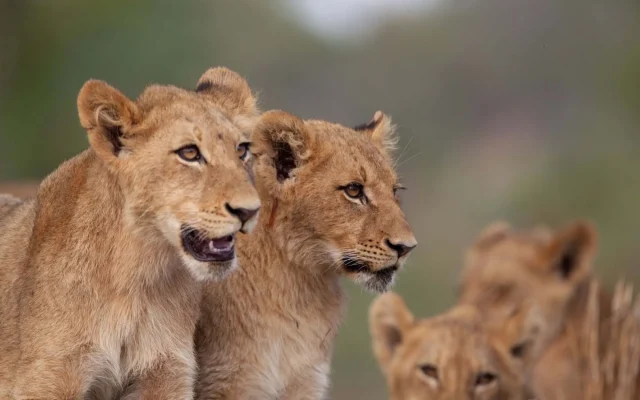
Lion prides patrol woodland and plains. Leopards haunt riverine thickets. Cheetahs hunt open grassland. African wild dog packs — critically endangered across Africa — occur with relatively better sighting odds than many parks, though never guaranteed.
Plains Game
Large zebra and wildebeest herds join buffalo, giraffe, impala, Grant’s gazelle, eland, hartebeest, waterbuck, and dik-dik across acacia savannah. Dry season concentrates these species at water; green season brings calving and lush photography.
Primates & Smaller Mammals
Olive baboon, vervet monkey, banded mongoose, and honey badger animate woodland margins. Hippo occur in river pools; dwarf mongoose and bat-eared fox reward attentive spotters.
Read more about wildlife in Tarangire
Bird Watching in Tarangire National Park
With 550+ recorded species, bird watching at Tarangire rivals dedicated birding destinations — dry-country endemics, raptors, and swamp specialists on standard game-drive routes.
- Yellow-collared lovebird and ashy starling (regional endemics)
- Rufous-tailed weaver and northern pied babbler
- Kori bustard and secretary bird on open plains
- Martial eagle, bateleur, and diverse raptors
- Silale Swamp waterbirds and storks
- Palearctic migrants November–April
Bird watching guide for Tarangire
Best Time to Visit Tarangire National Park
The best time to visit Tarangire depends on whether you prioritise dry-season elephant super-abundance or green-season birding and newborn animals.
Dry Season (June to October)
Peak wildlife along the Tarangire River. Grass is short, visibility excellent, and elephant herds at their largest. July–September aligns with Northern Circuit peak tourism — book lodges early.
Green Season (November to May)
Wildlife disperses across the wider ecosystem but resident species remain. November–April delivers superb birding, dramatic storm skies, lower fees, and fewer vehicles. December–February brings calving and predator activity on fresh grass.
Best time to visit Tarangire — full guide
How to Get to Tarangire National Park
Accessing Tarangire National Park is straightforward from Arusha — among the easiest Northern Circuit transfers by road.
By Road from Arusha
Paved roads reach the main gates in roughly 1.5 to 2 hours (approximately 120 km south). Most safaris depart Arusha or Kilimanjaro airport lodges with private 4×4 vehicles and licensed guides.
From Lake Manyara & Ngorongoro
Lake Manyara lies roughly 70 km north — Tarangire pairs naturally as a two-park day or consecutive overnights before ascending to Ngorongoro.
By Air
Charter flights serve airstrips near the park with connections from Arusha and Serengeti air hubs on fly-in itineraries.
TANAPA Fees
TANAPA collects park entry fees for visitors and vehicles at gates. Licensed operators typically include fees in packages — verify current non-resident rates before travel. Fees are valid for 24 hours from entry under standard TANAPA rules.
How to get to Tarangire — routes & drive times
Where to Stay at Tarangire National Park
Tarangire accommodation ranges from luxury tented camps inside and bordering the park to mid-range lodges near Kwa Kuchinja gate and budget options in surrounding conservancies.
Inside & Bordering the Park
River-facing tented camps position guests minutes from dawn elephant drives — ideal for photographers prioritising golden-hour river light.
Conservancy Lodges
Private conservancies adjoining TANAPA land may offer walking safaris and night drives beyond standard park-hour restrictions — confirm activities when booking.
Book peak dry-season properties months ahead for July–October.
TANAPA & Conservation
TANAPA manages Tarangire as part of Tanzania’s national park network — balancing tourism revenue with elephant corridor protection across the wider 20,000 km² ecosystem that extends beyond park boundaries. Seasonal migration into the park demonstrates why landscape connectivity with community lands and dispersal areas matters for long-term elephant survival.
Visitors contribute through TANAPA fees and responsible practices — staying on designated roads, respecting wildlife distances, and choosing licensed operators who comply with park regulations.
Tarangire Safari Tours
Tarangire safari tours typically span one to two nights within longer Northern Circuit packages.
1 to 2 Day Tarangire Extension
Focused elephant and baobab immersion from Arusha — ideal before or after Lake Manyara and Ngorongoro.
7 Day Northern Circuit
Classic Tarangire, Manyara, Ngorongoro, and Serengeti combination — the definitive Tanzania safari template with Tarangire opening baobab country.
Tarangire & Gorilla Safari Combinations
Pair Tarangire elephant country with Bwindi gorilla trekking or Volcanoes gorilla trekking via regional flights.
Tarangire & Zanzibar
Many travelers close savannah safaris with Zanzibar beach time — fly from Arusha or Serengeti airstrips after Tarangire nights.
Tarangire National Park FAQs
- How many days do you need at Tarangire National Park?
Most travelers find 1 to 2 nights ideal — one full day of river and swamp game drives plus baobab photography, with optional walking or night-drive add-ons. Tarangire rewards focused intensity rather than week-long stays.
- Is Tarangire National Park worth visiting?
Absolutely. Tarangire National Park offers among Africa’s finest dry-season elephant viewing, iconic baobab landscapes, 550+ bird species, and lower crowds than Serengeti — a essential Northern Circuit stop managed by TANAPA.
- When is the best time to visit Tarangire?
June to October concentrates elephants and general game along the Tarangire River. November to April suits birders and green-season photography with fewer vehicles and newborn animals on fresh grass.
- Who manages Tarangire National Park?
The Tanzania National Parks Authority (TANAPA) administers Tarangire — collecting entry fees, regulating game drives, and overseeing conservation across the 2,850 km² park and its wider ecosystem connections.
- Can I see the Big Five in Tarangire?
Lion, leopard, elephant, and buffalo occur reliably. Black rhino are absent from Tarangire — pair the park with Ngorongoro Crater for rhino on the same Northern Circuit itinerary.
- How far is Tarangire from Arusha?
Approximately 120 kilometres south of Arusha — roughly 1.5 to 2 hours by paved road to the main gates, making Tarangire one of the most accessible elephant destinations from Kilimanjaro International Airport.
- What is Tarangire famous for?
Tarangire is famous for large elephant herds along the Tarangire River in dry season, ancient baobab trees, exceptional birding (550+ species), and African wild dog sightings in baobab-studded savannah.
- Can I combine Tarangire with Serengeti and Ngorongoro?
Yes — this is the classic Northern Circuit. Most seven-day itineraries open at Tarangire or Lake Manyara, ascend to Ngorongoro, then continue to Serengeti. Licensed operators sequence TANAPA and NCAA permits efficiently.
- Is Tarangire good for bird watching?
Yes. With 550+ species, Tarangire exceeds many larger parks. Highlights include yellow-collared lovebird, ashy starling, rufous-tailed weaver, and diverse raptors — strongest November to April with migrants.
- Is Tarangire National Park safe?
Yes. Tarangire is a professionally managed TANAPA park visited safely through licensed operators and trained guides following established wildlife viewing and road regulations.
Nearby Destinations to Combine with Tarangire National Park
Tarangire National Park sits at the southern anchor of the Northern Circuit — within half a day’s drive of Rift Valley lakes, volcanic calderas, and endless Serengeti plains.
Lake Manyara National Park
Rift Valley groundwater forest, tree-climbing lions, and alkaline lake flamingos lie roughly 70 km north — a natural pairing with Tarangire's baobab elephant country on the road toward Ngorongoro.
Ngorongoro Crater
UNESCO-listed caldera Big Five density and black rhino stronghold status await west of Tarangire — the wildlife climax after baobab savannah on the standard Northern Circuit ascent.
Serengeti National Park
Endless plains and Great Migration drama beyond Ngorongoro complete the Northern Circuit — combine Tarangire's intimate elephant theatre with Serengeti's vast savannah scale.
Arusha
Tanzania's northern safari capital and gateway from Kilimanjaro International Airport — where most Tarangire road circuits begin, typically reaching the park in under two hours.
Zanzibar
Indian Ocean beaches and Stone Town heritage close many Northern Circuit safaris — fly from Arusha after Tarangire and Serengeti for savannah-to-coast combinations.
Nearby destinations to combine
Plan Your Tarangire Safari
Tarangire National Park remains one of East Africa’s most rewarding elephant destinations — a TANAPA jewel where ancient baobabs, dry-season river drama, and exceptional birding create a Northern Circuit experience distinct from caldera density or migration crowds.
Whether you are planning a first Tanzania safari, a photographic elephant expedition, or a Uganda–Tanzania gorilla combination, Tarangire safaris deliver baobab savannah intimacy at the heart of northern Tanzania.
From hundred-strong elephant herds at the river’s edge to lovebird flocks erupting from baobab hollows, every hour at Tarangire National Park deepens your connection to Africa’s seasonal ecosystems.
Our expertly designed Tanzania safari tours can be customised to match your schedule, wildlife priorities, travel style, and accommodation preferences.