Is Uganda good for bird photography?
Ask any serious bird photographer where to shoot in Africa, and Uganda appears near the top of the list — often alongside South Africa and Kenya, but with an advantage those countries cannot match: sheer species density in a small, tour-friendly package. Uganda sits at the convergence of the Congo Basin forests, East African savannahs, and Albertine Rift highlands, packing avian diversity into a country roughly the size of the United Kingdom.
For photographers, Uganda offers something rarer than species lists alone: variety of light, background, and subject behaviour within a single two-week itinerary. You can photograph a shoebill at water level in a papyrus swamp, a malachite kingfisher perched on a Kazinga Channel log, and a Rwenzori turaco in misty montane forest — all without leaving the western safari circuit.
Why Uganda works for bird photography
Several factors make Uganda exceptional for photographers specifically — not just birders with binoculars:
- Species richness — over 1,070 recorded species nationally, representing more than 10% of the world's bird total
- Habitat diversity — rainforest, papyrus swamp, crater lakes, river channels, acacia savannah, and Afro-alpine moorland within driving distance
- Albertine Rift endemics — restricted-range species found only in the highlands of Uganda, Rwanda, DRC, and Burundi
- Accessible star species — shoebill, green-breasted pitta, African green broadbill, and African skimmer at sites reachable by road
- Manageable geography — western parks connect in a logical loop without the vast distances of Tanzania or Kenya
- Growing specialist guiding — Ugandan bird guides with trained ears and stakeout knowledge dramatically improve hit rates on skulkers
Uganda Tourism Board and private operators increasingly market dedicated birding photography safaris — a sign that the country's infrastructure is maturing beyond general wildlife tourism.
Queen Elizabeth National Park is the anchor of any Uganda bird photography itinerary. With over 600 recorded species, it holds the highest species count of any single protected area in East Africa. The park's strength is habitat variety within a manageable area.
Kazinga Channel boat cruises
The Kazinga Channel — a 40-kilometre natural waterway connecting Lake George and Lake Edward — is Uganda's premier waterbird photography location. Afternoon boat cruises (and early morning private charters) offer close approaches to:
- African skimmer — skimming the surface at dusk, one of Africa's most sought-after waterbird shots
- Malachite kingfisher — brilliant turquoise perched on channel-side logs and papyrus stems
- Pink-backed pelican — breeding colonies and fishing formations
- Goliath heron — the world's largest heron, stalking shallows
- Yellow-billed stork, African fish eagle, pied kingfisher, water thick-knee — reliable channel staples
Boat photography tips: use a bean bag or monopod for stability on the vessel, shoot at higher shutter speeds to compensate for boat movement, and book a private boat when possible so the captain can position for light and angle rather than following a packed schedule. Afternoon light on the channel can be exceptional — warm tones on water and birds alike.
Kasenyi Plains and savannah raptors
The open savannah of Kasenyi offers a completely different photographic palette — clean backgrounds, golden-hour backlighting, and raptors overhead. Target species include martial eagle, bateleur, brown snake eagle, hooded vulture, and various bustards. Combining a morning game drive with afternoon channel boat creates two distinct shooting environments in a single day.
Ishasha sector
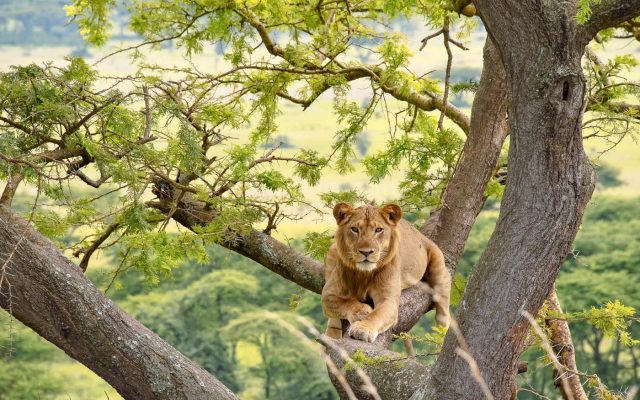
Queen Elizabeth's southern Ishasha sector — famous for tree-climbing lions — adds riverine forest and savannah edge species. African wattled lapwing, broad-tailed warbler, black-bellied bustard, and Verreaux's eagle-owl are among Ishasha targets. The sector's quieter roads mean fewer vehicles disturbing perched birds — a genuine advantage for patient photographers.
Maramagambo Forest
This forest patch within Queen Elizabeth shelters forest specialists less common on open plains — including various hornbills, turacos, and sunbirds. Bat cave viewing adds a mammal dimension, but forest bird photography here demands higher ISO tolerance and faster lenses due to canopy shade.
Bwindi is a UNESCO World Heritage Site protecting roughly 321 km² of montane rainforest. For bird photographers, its headline statistic is 350+ species including 23 Albertine Rift endemics — birds found nowhere else on earth outside this highland region.
Ruhija sector
The Ruhija sector on Bwindi's eastern edge is a favourite among serious birders and photographers. At roughly 2,300 metres elevation, it offers misty forest atmosphere and key targets including:
- African green broadbill — one of Africa's most wanted forest birds, vivid green in mossy understory
- Grauer's broadbill — another Albertine Rift specialty
- Rwenzori turaco — crimson and green against forest green
- Handsome francolin, archer's robin-chat, stripe-breasted tit — regional endemics
- Dusky crimsonwing, regal sunbird, yellow-eyed black flycatcher — high-altitude specialties
The Mubwindi Swamp Trail — a full-day walk — is the classic route for green broadbill and Grauer's swamp warbler. Photography in Bwindi is challenging: low light under canopy, birds moving quickly through dense vegetation, and steep trails. A lens in the 400–600 mm range (or 100–400 mm with good high-ISO performance) is essential. Flash is generally discouraged near nesting areas; patience and guide stakeouts matter more than equipment alone.
Buhoma and other sectors
Buhoma, the busiest gorilla trekking sector, still offers excellent forest birding along park-edge trails. Combining a gorilla trek morning with an afternoon birding walk is a standard Uganda itinerary pattern — though gorilla trekking fatigue is real, so dedicated birding days in Bwindi produce better images than squeezed add-ons.
Beyond Bwindi and Queen Elizabeth: completing the circuit
While Bwindi and Queen Elizabeth form the core photography pairing, most dedicated bird photography safaris add:
- Mabamba Swamp (near Entebbe) — shoebill stork from dugout canoes at water level; arguably Africa's most dramatic bird portrait subject
- Kibale Forest — green-breasted pitta stakeouts, great blue turaco, and forest hornbills
- Semuliki National Park — Congo Basin species at the eastern edge of their range, including lyre-tailed honeyguide and Nkulengu rail
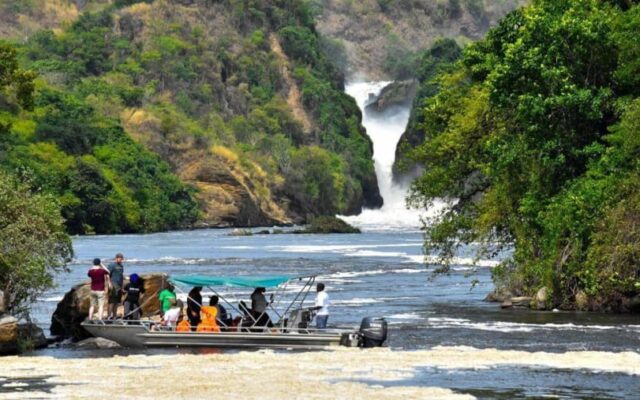
- Murchison Falls — shoebill in the delta, Abyssinian ground hornbill on savannah, and the falls themselves as backdrop
- Lake Mburo — acacia woodland species including red-faced barbet, an Uganda endemic
A 10–14 day birding photography itinerary through western Uganda can realistically yield 400–600 species observed, with strong portfolio images from 30–50 signature species depending on skill, equipment, and luck.
Equipment and technique for Uganda bird photography
Practical gear guidance for Uganda's varied habitats:
- Telephoto reach — 400 mm minimum effective focal length; 500–600 mm preferred for skittish forest birds and channel waterbirds
- Low-light performance — Bwindi and Kibale canopy shade demands cameras with strong high-ISO capability
- Stability — monopod or bean bag for boat and vehicle shooting; tripod impractical on forest trails
- Weather protection — rain covers essential; Bwindi and Nyungwe receive significant rainfall year-round
- Backup storage — shoot high volumes in species-rich environments; carry multiple cards
- Binoculars — 8x42 for guide communication; your guide spots, you shoot
Hire a specialist birding guide — not just a general safari driver. Uganda's top bird guides know stakeout territories for pittas, broadbills, and crimsonwings. Their ears detect calls you will miss, and their relationships with community forest scouts open access to productive trails.
Best seasons and timing
Uganda bird photography works year-round, but seasons shift subject availability:
- June–August and December–February — drier periods with easier forest trails and cleaner channel light; peak tourism season
- March–May and September–November — wetter, but breeding activity increases and forest atmosphere is moody and photogenic
- Migratory species — Palearctic migrants present roughly October–April, adding waders and raptors to lowland counts
- Shoebill — Mabamba accessible year-round; early morning departures avoid wind and improve canoe stability
- African skimmer — most reliable on Kazinga Channel late afternoon when skimming behaviour peaks
See also best birding season guidance for month-by-month planning.
Bwindi plus Queen Elizabeth: a five-day photography framework
A compact but productive bird photography safari combining both parks might look like:
- Day 1–2 — Ruhija sector forest birding; Mubwindi Swamp Trail for Albertine Rift endemics
- Day 3 — Transfer through Ishasha; savannah and riverine species; tree-climbing lions as bonus subject
- Day 4 — Morning Kasenyi plains raptors; afternoon Kazinga Channel private boat
- Day 5 — Dawn channel cruise for skimmers; depart or continue to Kibale/Mabamba
This route covers montane forest, savannah, and wetland in five days — a habitat transect that would require weeks to replicate in larger countries.
Uganda vs other African bird photography destinations
Kenya's Maasai Mara excels at open-country raptor and vulture photography but lacks Uganda's forest endemics. South Africa offers excellent infrastructure and endemic families but not Albertine Rift species. Tanzania's Ngorongoro and Serengeti are superb for savannah birds but require long drives between forest sites.
Uganda's competitive advantage is stacked endemism in a short loop — shoebill, green-breasted pitta, African green broadbill, and African skimmer on one itinerary is difficult to replicate elsewhere. For photographers building a portfolio of African birds, Uganda fills gaps that savannah-only destinations cannot.
Practical logistics and park fees
Queen Elizabeth National Park entry is approximately US $40 per day for foreign non-residents (confirm current UWA tariffs). Kazinga Channel boat cruises cost roughly US $30–40 per person on shared boats; private charters cost more but are worth it for photographers. Bwindi entry follows similar UWA fee structures. Birding walks in Bwindi's Ruhija sector may require additional guide fees beyond park entry.
Road transfers between Bwindi (Ruhija or Buhoma) and Queen Elizabeth take four to six hours depending on sector and road conditions. AeroLink flights to Kihihi or Kasese airstrips save a full day if budget allows. Lodge positioning matters — lakeside lodges near Mweya put you minutes from the Kazinga Channel launch point.
Ethical bird photography in Uganda
Responsible practice protects the subjects that make Uganda special:
- Never playback-call excessively — it stresses breeding birds and is restricted in many parks
- Keep distance from shoebill nests and known pitta territories
- Follow guide instructions on trail behaviour in Bwindi's fragile forest
- Support community guides and scouts who maintain stakeout sites
- Book through licensed operators whose park fees fund habitat protection
Uganda is good for bird photography — arguably among the best destinations on the continent for photographers who want forest endemics, wetland spectacles, and savannah raptors in a single trip. Bwindi and Queen Elizabeth together form the backbone of that case: two parks, contrasting habitats, and hundreds of species waiting for patient lenses and early mornings.

 Best
Seller
Best
Seller
 Best
Seller
Best
Seller
 Best
Seller
Best
Seller
 Best
Seller
Best
Seller