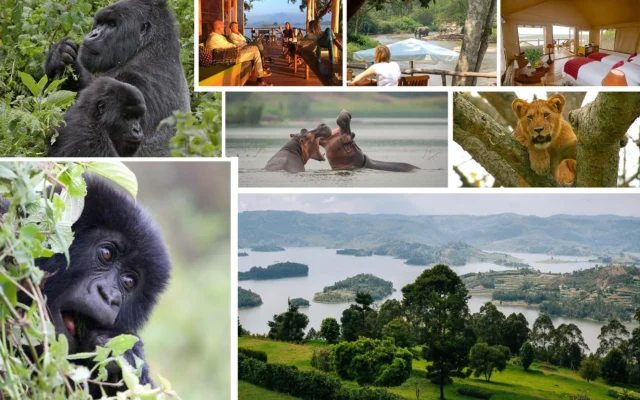
West Nile Region is northwestern Uganda’s emerging travel frontier, a culturally rich and geographically varied area shaped by the White Nile, escarpments, borderland trade, waterfalls, heritage sites, forest reserves, towns such as Arua and Moyo, and proximity to Murchison Falls National Park. It is a region for travelers who want to look beyond Uganda’s established safari circuits and understand the country’s northwestern edge.
For years, West Nile was more often crossed than explored. That is changing as regional tourism planning, heritage documentation, sustainable tourism discussions, and local investment begin to position Arua and surrounding districts as a stronger tourism hub. A West Nile Region safari can add cultural depth, Nile corridor scenery, birding, waterfalls, historical sites, and route variety between Murchison Falls, northern Uganda, and the South Sudan/DRC borderlands.
This destination combines naturally with Mount Otzi Forest Reserve, Murchison Falls National Park, Ziwa Rhino Sanctuary, and Kidepo Valley National Park in a well-planned Uganda safari route.
Quick Facts About West Nile Region
| Feature | Details |
|---|---|
| Location | Northwestern Uganda, west of the White Nile, bordering South Sudan and the Democratic Republic of Congo |
| Main Urban Hub | Arua City, with additional travel nodes including Pakwach, Nebbi, Moyo, Adjumani, Yumbe, and Maracha |
| Landscape | Nile corridor, escarpments, waterfalls, hills, forest reserves, agricultural land, and borderland towns |
| Signature Experiences | Cultural heritage, emerging eco-tourism, waterfalls, birding, history, Nile crossings, and Murchison extensions |
| Nearby Protected Areas | Murchison Falls National Park, Mount Otzi Forest Reserve, Ajai Wildlife Reserve, East Madi landscapes |
| Best For | Repeat Uganda travelers, culture seekers, researchers, birders, overland explorers, and sustainable tourism routes |
| Travel Style | Guided, flexible, locally informed, and best integrated with a northern Uganda circuit |
| Current Status | Emerging destination with growing regional tourism planning and limited mainstream visitor infrastructure |
Overview of West Nile Region
West Nile occupies a distinctive position in Uganda: physically separated from much of the country by the Nile, culturally connected to neighboring regions, and historically shaped by movement, trade, conflict, resilience, agriculture, and borderland identity. Its tourism potential lies in that layered geography. It is not only a place to see something; it is a place to understand connections.
Arua is the practical hub. It offers urban services, air and road links, hospitality, markets, and access to surrounding heritage and natural sites. Pakwach sits close to Murchison Falls National Park and the Nile corridor. Moyo and Adjumani open northern river and forest routes, including access possibilities toward Mount Otzi. Nebbi, Maracha, Yumbe, and other districts add waterfalls, hills, cultural sites, and community tourism potential.

Why Visit West Nile Region?
Emerging Sustainable Tourism
Recent tourism discussions in Arua and Pakwach have focused on integrating West Nile into national circuits, mapping heritage sites, and developing inclusive tourism opportunities. This makes the region interesting for travelers who like destinations in the process of being better understood.
Culture and Heritage
West Nile is home to diverse communities and cultural institutions, including Lugbara, Alur, Madi, Aringa, and other identities across the region. Heritage sites, oral histories, food traditions, music, craft, and market life can create meaningful travel experiences when guided responsibly.
Nile and Murchison Link
The region pairs naturally with Murchison Falls National Park. Pakwach and the Nile crossings make West Nile a logical extension for travelers interested in the river beyond the standard waterfall and boat-cruise itinerary.
Top Things to Do in West Nile Region
Explore Arua City
Arua is the main base for West Nile travel. Markets, food, cultural events, urban viewpoints, and local tourism initiatives can introduce the region before visitors move into rural districts.
Visit Waterfalls and Hills
Regional tourism sources reference waterfalls, hills, caves, and viewpoints across districts such as Arua, Maracha, Moyo, and Nebbi. Access varies, so these should be arranged with local guides who know current conditions and community permissions.
Discover Mount Otzi Forest Reserve
Mount Otzi adds a specialist nature component: birding, escarpment walking, and conservation interest near Moyo. It requires more planning than mainstream attractions but gives West Nile a strong eco-tourism anchor.
Connect With Murchison Falls
Murchison Falls National Park remains the easiest major wildlife anchor near West Nile. Travelers can combine game drives and Nile cruises with cultural or nature extensions across the river.
Plan Heritage and Community Visits
Heritage travel should be slow and respectful. Work with local tourism offices, cultural institutions, or trusted guides to ensure communities benefit and stories are interpreted accurately.
Learn more about things to do in West Nile Region
Wildlife, Birds, and Natural Landscapes
West Nile’s wildlife tourism is more dispersed than a national park hub. Murchison Falls provides the strongest nearby big-game experience, while Mount Otzi, forest reserves, wetlands, river corridors, and community landscapes support birding and nature walks. Ajai Wildlife Reserve and East Madi landscapes may be relevant for specialist route planning where access and management conditions allow.
Birders should treat West Nile as a route with pockets of interest rather than a single site. The Nile corridor, wooded savannah, forest reserves, farms, wetlands, and escarpments can all add species variety.
Trekking, Safari, and Culture Route Planning
A practical West Nile itinerary might begin with Murchison Falls, cross or route toward Pakwach, continue to Arua for culture and urban services, then extend to Moyo or Mount Otzi for specialist nature travel. Another route can link West Nile with Gulu, Kitgum, and Kidepo, though distances are large and should be paced carefully.
Because the region is still emerging as a leisure destination, rely on local advice for waterfall access, community visits, road conditions, and site readiness. Some attractions may be excellent for adventurous travelers but not suitable for all clients.
Best Time to Visit West Nile Region
Dry months generally make roads, waterfalls, viewpoints, and forest access easier, though heat can be strong. Rainy periods can refresh landscapes and improve greenery, but some rural tracks may become slower. For cultural events and local festivals, timing should be checked with regional contacts rather than assumed.
{{SEC_GETTING_THERE}}
Best time to visit West Nile Region — full guide
Getting to West Nile Region
Arua is the main gateway, reachable by road and by air depending on current schedules. Road routes commonly connect Kampala, Murchison Falls, Pakwach, Gulu, and northern Uganda. Moyo and Adjumani routes may involve Nile crossings depending on direction. A 4×4 is useful for rural site visits and forest reserve access.
Safety and Responsible Travel
Use current local guidance for roads, border-adjacent areas, and emerging tourism sites. Ask permission before photographing people, religious sites, homes, markets, or cultural events. Support local guides and businesses where possible. Avoid presenting sensitive history as spectacle; West Nile’s stories deserve care.
Mount Otzi Forest Reserve
A remote West Nile forest and wooded-savannah reserve for birding, escarpment scenery, and conservation-focused travel.
Murchison Falls National Park
The major nearby safari anchor, offering Nile cruises, waterfall viewing, game drives, and strong wildlife variety.
Ziwa Rhino Sanctuary
A useful conservation stop on road journeys between Kampala, Murchison Falls, and northern Uganda.
Kidepo Valley National Park
A remote wilderness extension for longer northern Uganda circuits linking West Nile, Gulu, Kitgum, and Karamoja.
Karamoja Region
A complementary northeastern frontier region for travelers continuing from West Nile into mountain, culture, and Kidepo routes.
Sample Itinerary Ideas
A short extension can add Arua or Pakwach after Murchison Falls. A deeper route can spend five to seven days exploring Arua, Moyo, Mount Otzi, Nile crossings, waterfalls, and local heritage. A long northern Uganda expedition can connect West Nile with Gulu, Kitgum, Kidepo, and Karamoja.
Building a West Nile Uganda Route
West Nile is best understood as a region rather than a single attraction. Strong itineraries combine Arua, Nebbi, Pakwach, Ajai Wildlife Reserve, Lake Albert viewpoints, markets, and cross-border trade culture.
Travelers interested in Murchison Falls extensions can enter or exit through Pakwach and Tangi Gate, then continue into West Nile for a different side of Uganda. Allow time for long drives, regional flights where useful, and local guiding.
Culture, Language and Respectful Travel
West Nile includes Lugbara, Madi, Alur, Kakwa, Aringa, and other communities with distinct languages, foods, and histories. Markets, crafts, music, and community-led visits are often the most meaningful experiences when arranged respectfully.
Building a West Nile Uganda Route
West Nile is best understood as a region rather than a single attraction. Strong itineraries combine Arua, Nebbi, Pakwach, Ajai Wildlife Reserve, Lake Albert viewpoints, markets, and cross-border trade culture.
Travelers interested in Murchison Falls extensions can enter or exit through Pakwach and Tangi Gate, then continue into West Nile for a different side of Uganda. Allow time for long drives, regional flights where useful, and local guiding.
Culture, Language and Respectful Travel
West Nile includes Lugbara, Madi, Alur, Kakwa, Aringa, and other communities with distinct languages, foods, and histories. Markets, crafts, music, and community-led visits are often the most meaningful experiences when arranged respectfully.
Custom Safari Planning for West Nile Region
When you add West Nile Region to a Uganda itinerary, treat it as a purposeful route decision rather than an afterthought. The best visits combine realistic drive times, local guiding, and nearby destinations that share geography or travel theme.
Start with how many nights you can spend in the area, whether you need an arrival or departure buffer, and whether the stop is mainly for wildlife, culture, scenery, adventure, or logistics. That framing helps you choose the right base, guide, and activity timing.
Strong Nearby Pairings
Many itineraries combine West Nile Region with Mount Otzi Forest Reserve. A remote West Nile forest and wooded-savannah reserve for birding, escarpment scenery, and conservation-focused travel.
Many itineraries combine West Nile Region with Murchison Falls National Park. The major nearby safari anchor, offering Nile cruises, waterfall viewing, game drives, and strong wildlife variety.
Many itineraries combine West Nile Region with Ziwa Rhino Sanctuary. A useful conservation stop on road journeys between Kampala, Murchison Falls, and northern Uganda.
Many itineraries combine West Nile Region with Kidepo Valley National Park. A remote wilderness extension for longer northern Uganda circuits linking West Nile, Gulu, Kitgum, and Karamoja.
Timing, Guides and Expectations
Morning starts often work best for cooler weather, smoother traffic, and better light. Confirm opening hours, boat or ferry schedules, permit rules, and guide availability before travel because local operations can change seasonally.
Use respectful travel habits throughout: ask before photographing people, follow site or park rules, support community-led experiences where possible, and keep expectations accurate for the destination type. This approach makes West Nile Region feel like a meaningful part of your Uganda story rather than a rushed checkbox stop.
If you want help building a route that includes West Nile Region, our team can suggest whether it works best as a half-day visit, overnight base, or multi-day regional extension.
- Where is West Nile Region in Uganda?
West Nile Region is in northwestern Uganda, west of the White Nile and bordering South Sudan and the Democratic Republic of Congo.
- What is West Nile Region known for?
It is known for Arua City, cultural diversity, Nile corridor routes, waterfalls, hills, heritage sites, Mount Otzi Forest Reserve, and proximity to Murchison Falls National Park.
- Is West Nile good for safari?
West Nile is best used as a cultural, heritage, birding, and route extension. For classic big-game safari, pair it with nearby Murchison Falls National Park.
- What is the main gateway to West Nile?
Arua City is the main urban gateway, with Pakwach, Moyo, Adjumani, Nebbi, and other towns serving specific route needs.
- Can West Nile be combined with Murchison Falls?
Yes. This is the most practical pairing, especially through Pakwach, Arua, Nile corridor routes, and northwestern Uganda extensions.
- Do I need a guide in West Nile?
A guide is strongly recommended for rural waterfalls, heritage sites, community visits, forest reserves, and emerging tourism areas where access is locally managed.