Big Five Animals in Uganda — The Big Five — lion, leopard, elephant, buffalo, and rhino — began as a hunting label for the five most dangerous African mammals to approach on foot. Today it is a safari shorthand, and Uganda’s relationship with the list is more nuanced than brochures suggest. Four of the five roam freely in the country’s national parks in healthy numbers; rhino require a dedicated sanctuary stop on a well-planned route. Understanding where each species lives, how reliably you might see it, and what pairs with primate trekking separates a checkbox safari from a genuinely rewarding Uganda wildlife holiday.
This guide covers practical planning for Big Five Animals in Uganda, with tips you can use when comparing options.
A clear plan around Big Five Animals in Uganda helps you book permits, lodges, and transport with fewer surprises.
Lion: Plains Cats and Tree-Climbing Specialists
Lion occur in Uganda’s major savannah parks, though densities are lower than in Kenya’s Masai Mara or South Africa’s Kruger. Queen Elizabeth National Park offers two distinct lion experiences: Kasenyi Plains game drives where prides hunt Uganda kob in open grassland, and the remote Ishasha sector in the far south, where lions routinely lounge in sycamore fig trees — one of the continent’s most reliable tree-climbing populations. Ishasha deserves a full morning or afternoon, not a transit-hour pass-through; see our tree-climbing lions guide for sector planning.
Murchison Falls National Park supports lion on the Buligi Peninsula and northern bank drives, often near buffalo herds and hippo pods along the Nile. Kidepo Valley National Park in the remote northeast holds small but photogenic prides against a dramatic mountain backdrop — low visitor numbers mean sightings feel private when they come. Lion are never guaranteed on a single drive; allocate multiple game drives in at least one park and communicate lion priority to your guide.
Leopard: Elusive but Present
Leopard are widespread but secretive — the hardest Big Five member to guarantee anywhere in Africa, Uganda included. Queen Elizabeth produces regular reports along the Kasenyi track edges, around the Mweya peninsula, and near the Kazinga Channel shoreline at dusk. Murchison’s riverine woodland and Budongo Forest fringes hold leopard that occasionally appear on night-adjacent drives or early-morning returns to kills.
Kidepo and Lake Mburo add further leopard habitat in acacia woodland and rocky kopjes. Uganda does not offer the near-daily Sabi Sand leopard culture of South Africa’s private reserves; patience, skilled guiding, and time near drainage lines and kopje rocks improve odds. Leopard share the ecosystem with spotted hyena and, in Kidepo, cheetah — a reminder that Uganda’s predator guild extends beyond the classic five.
Elephant: River Corridors and Forest Giants
Elephant are among Uganda’s most dependable Big Five sightings. Murchison Falls hosts large savannah elephant herds on the Buligi Peninsula and along the Victoria Nile — boat safaris put you alongside animals drinking at close quarters. Queen Elizabeth’s Kazinga Channel is equally famous for elephant line-ups on the bank, often with calves in tow. Kidepo’s Narus Valley concentrates elephant in the dry season against a wilderness setting few visitors reach.
Forest elephants — smaller, tusked differently, adapted to dense woodland — occur in Semuliki and parts of the western rainforest belt. They are a separate encounter from the savannah elephants most travellers photograph on open plains. For water-level elephant photography, pair savannah drives with a boat safari on the Nile or Kazinga Channel.
Buffalo: The Herds That Anchor Every Drive
African buffalo are the most consistently seen Big Five member in Uganda. Large herds graze Queen Elizabeth’s plains, mass along Murchison’s riverbanks, and wallow in Lake Mburo’s wetlands. Old bulls — “dagga boys” — break off alone or in small groups and demand respectful distance; they account for more hunter injuries historically than any other Big Five species.
Buffalo anchor the prey base that supports lion and hyena. On most morning drives in Murchison or Queen Elizabeth, buffalo appear within the first hour — a useful confidence builder for first-time safari visitors while guides search for cats. Kidepo and Kidepo’s ostrich-and-buffalo valley scenes add variety for repeat Africa travellers.
Rhino: Wild Parks vs Ziwa Rhino Sanctuary
Uganda’s rhino story is conservation in progress. Both black and white rhino were poached to local extinction in the twentieth century; no national park currently supports a free-ranging breeding population you can count on during a standard game drive. Completing the Big Five in Uganda means a stop at Ziwa Rhino Sanctuary on the Kampala–Murchison corridor.
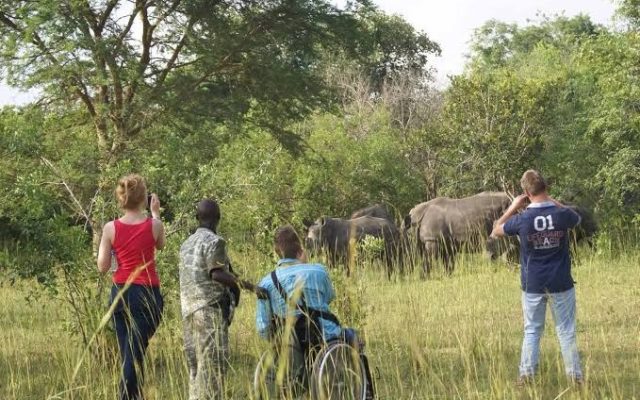
Ziwa protects reintroduced southern white rhino on foot with armed rangers — a tracked walk through bush that often brings visitors within metres of grazing animals. The sanctuary sits naturally en route to Murchison Falls; most northern-circuit itineraries include a half-day rhino trek before entering the park. Fees are separate from national park tariffs; your operator typically bundles them into the quote. Rhino tracking at Ziwa is flat-terrain walking suitable for a wider fitness range than gorilla trekking.
Where to See All Five on One Itinerary
A classic Big Five Uganda loop runs: Entebbe or Kampala north to Ziwa for rhino on foot, then two to three nights at Murchison for elephant, buffalo, lion, and leopard on drives and Nile boat safaris. Continue west to Queen Elizabeth for complementary savannah species, the Kazinga Channel, and Ishasha’s tree-climbing lions. Primate extensions — gorillas in Bwindi, chimps in Kibale — sit outside the Big Five list but define most Uganda trips.
Kidepo alone can deliver four in the wild in a frontier setting, but rhino still requires Ziwa unless you fly between regions. A ten-day itinerary with Ziwa, Murchison, Queen Elizabeth, and optional Kidepo is realistic; a week demands prioritisation. Our how many days for a Uganda safari guide helps pace the loop.
Big Five vs Uganda’s Real Superstars
Honest safari planning acknowledges that Uganda’s global headline acts are primates, not plains cats. Mountain gorillas exist only in this region of Africa; chimpanzees in Kibale outperform most savannah parks for close encounters. Shoebill stork, golden monkey, and 1,000-plus bird species reward travellers who look beyond the five-name list.
That does not diminish Uganda’s savannah credentials — it reframes them. You come for gorillas and stay impressed by elephant on the Nile, lions in fig trees, and a rhino walk that completes a set you cannot finish inside any single Ugandan national park alone.
Practical Tips for Big Five Viewing
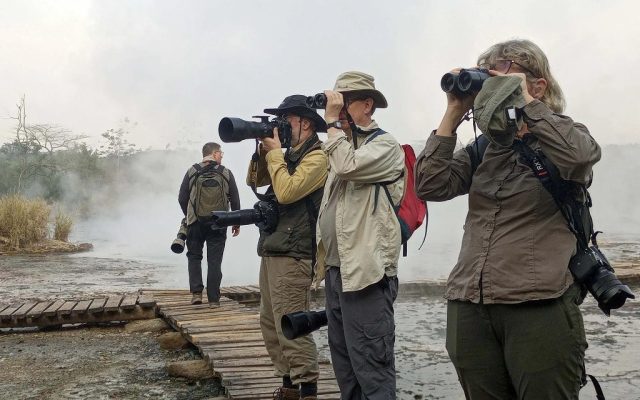
Book dry-season windows — December to February and June to September — for easier roads and mammals concentrated near water. Carry binoculars for leopard scans and birding between cat sightings. Respect park rules: stay in vehicles unless at designated stops, keep distance from buffalo bulls, and never approach rhino without Ziwa rangers.
Lion on the Rocks Safaris builds Uganda safari packages with Ziwa rhino tracking sequenced into Murchison and Queen Elizabeth loops — not as an afterthought on a rushed transit day. For seasonal planning across parks, see best time to visit Uganda for safari, then contact us to tailor a Big Five route around your gorilla permit dates and fitness level.
 Read
Read