Uganda packs an extraordinary number of bird species into a country roughly the size of the United Kingdom. More than 1,080 species have been recorded nationally — a list that includes savannah raptors, papyrus specialists, forest endemics, and migrants that pass through on their way between Europe and equatorial Africa. For serious listers and curious first-time birders alike, birdwatching safaris in Uganda deliver forest, wetland, and plains habitats within driving distance of one another.
This guide covers practical planning for Birdwatching Safaris in Uganda, with tips you can use when comparing options.
A clear plan around Birdwatching Safaris in Uganda helps you book permits, lodges, and transport with fewer surprises.
What makes Uganda stand out in East Africa is habitat diversity on a compact circuit. You can start a morning in a papyrus swamp searching for the prehistoric-looking shoebill, spend the afternoon on a boat cruise past hippos and African skimmers, and end the week in montane forest listening for Albertine Rift endemics found nowhere else on earth. This guide covers the best birding destinations, how to structure a safari around them, and what to expect when you travel with a specialist guide.
Why Uganda Leads East Africa for Birding
Uganda sits at the meeting point of several biogeographic zones: the Guinea–Congo forests of Central Africa, the East African savannahs, and the Albertine Rift highlands along the western border with the Democratic Republic of Congo. That overlap produces remarkable species richness. Queen Elizabeth National Park alone holds more than 600 recorded species. Murchison Falls National Park exceeds 670. Bwindi Impenetrable National Park, better known for gorillas, hosts 23 Albertine Rift endemics — birds restricted to a narrow band of montane forest along the western rift.
Birding here is not a side activity bolted onto a general safari. Many travellers plan entire itineraries around target species: the shoebill at Mabamba, the green-breasted pitta in Kibale, the African finfoot on the Kazinga Channel, or the handsome francolin on the forest trails above Buhoma. A good guide with sharp ears and a quality scope transforms a pleasant walk into a productive list-building day.
Mabamba Swamp and the Shoebill
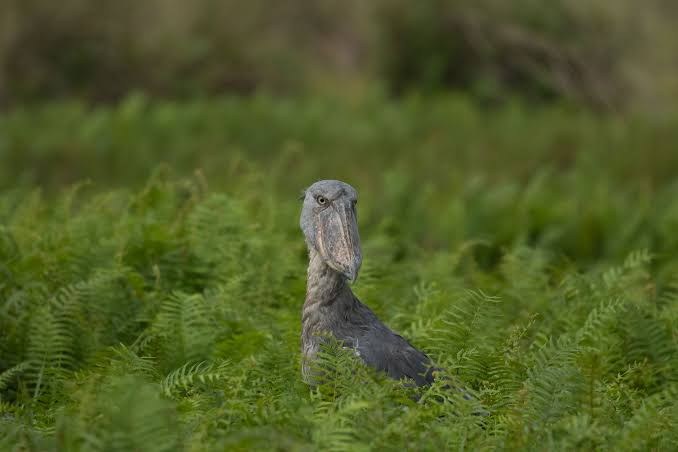
No birding conversation in Uganda begins without the shoebill (Balaeniceps rex). This tall, slate-grey stork with a massive shoe-shaped bill haunts papyrus swamps from South Sudan to Zambia, but Mabamba Bay on the northern shore of Lake Victoria remains the most reliable and accessible site for international visitors. The swamp lies roughly an hour’s drive from Entebbe, making it an ideal first or last day on a longer circuit.
Shoebill tracking at Mabamba happens by dugout canoe. Local boatmen pole through channels between papyrus stands at dawn, when the birds are most active and the light is soft. Sightings are not guaranteed — shoebills are solitary and territorial — but experienced guides know favoured territories and read the behaviour of other waterbirds that signal a shoebill’s presence. Allow a half-day from Entebbe, including the drive and canoe time. Combine Mabamba with a stop at the Entebbe Botanical Gardens for forest-edge species if your flight schedule allows.
Queen Elizabeth National Park
Queen Elizabeth National Park is Uganda’s birding heavyweight. The park spans savannah, crater lakes, forest gorges, and the Kazinga Channel — a natural waterway linking Lake George and Lake Edward. A single day can produce martial eagles over the Kasenyi Plains, swamp flycatchers in papyrus fringe, and African skimmers hawking over the channel at sunset.
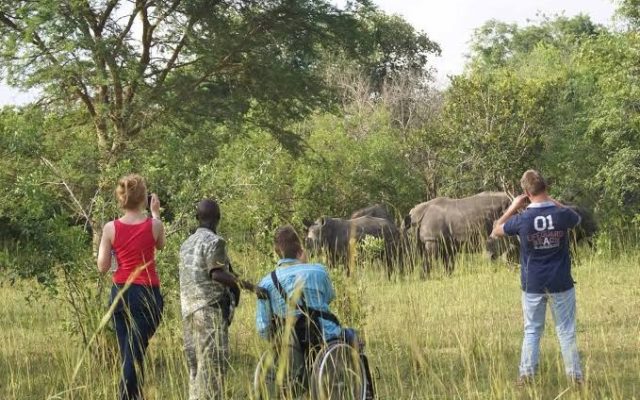
The Kazinga Channel boat cruise is essential birding, not just a scenic add-on. Hippos and elephants draw most visitors, but the channel banks hold malachite kingfishers, pied kingfishers, yellow-billed storks, and occasional African finfoot. Ishasha in the southern sector adds woodland and riverine species, plus the famous tree-climbing lions — a bonus for birders who also enjoy mammals. Maramagambo Forest on the park’s eastern edge offers forest specialists including the Rwenzori turaco and various sunbirds.
Bwindi Impenetrable National Park
Most visitors come to Bwindi for mountain gorillas. Birders come for Albertine Rift endemics. The park’s steep, moss-draped forest holds species such as the African green broadbill, Grauer’s rush warbler, Shelley’s crimsonwing, and the handsome francolin. The Buhoma and Ruhija sectors offer different trail profiles — Ruhija sits higher and can be cooler and wetter, with excellent ridge birding.
Forest birding demands patience. Mixed-species flocks move through the canopy in waves; a guide who knows calls is worth the investment. Many travellers schedule a dedicated birding walk on the day before or after their gorilla trek, when legs are tired but ears are still sharp. Bwindi also supports more than 200 butterfly species and outstanding forest scenery — context that makes slow birding feel purposeful rather than frustrating.
Murchison Falls, Kibale, and Other Key Sites
Murchison Falls National Park combines savannah and riverine birding at scale. The Nile boat trip toward the falls delivers goliath herons, red-throated bee-eaters on the cliff banks, and Abyssinian ground hornbills on the plains above. The rare shoebill also occurs in the delta area, though Mabamba remains the easier target for most itineraries.
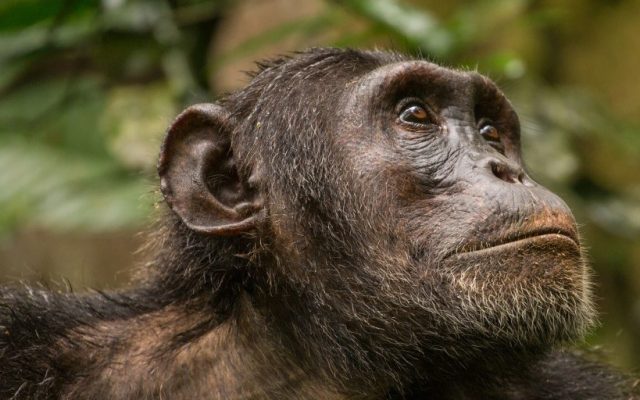
Kibale National Park is the premier site for the elusive green-breasted pitta, usually sought on early-morning forest walks between November and March when calling males are most detectable. Kibale also holds great blue turacos, papyrus gonolek in nearby wetlands, and the full chimpanzee trekking experience if you want primates alongside parrots.
Smaller but rewarding stops include Lake Mburo for acacia woodland species, Semuliki National Park for Congo-basin specials at the western edge of the rift, and the Bigodi Wetland Sanctuary near Kibale for community-guided swamp walks.
When to Go and How to Plan
Birding works year-round in Uganda, though the main rainy seasons — March to May and September to November — make forest trails muddier and canopy birding harder. Many resident species breed during the rains, which can improve calling activity. Palearctic migrants augment the list from November through April. For shoebills, early mornings year-round are best; for green-breasted pitta, plan around the short dry window in Kibale.
A focused 10- to 14-day birding circuit might run: Entebbe and Mabamba, then west through Kibale, Queen Elizabeth, Bwindi, and optionally Mgahinga or Lake Bunyonyi. Shorter trips can hit Mabamba, Queen Elizabeth, and Bwindi in a week if you accept long drives or a domestic flight to Kihihi or Kasese.
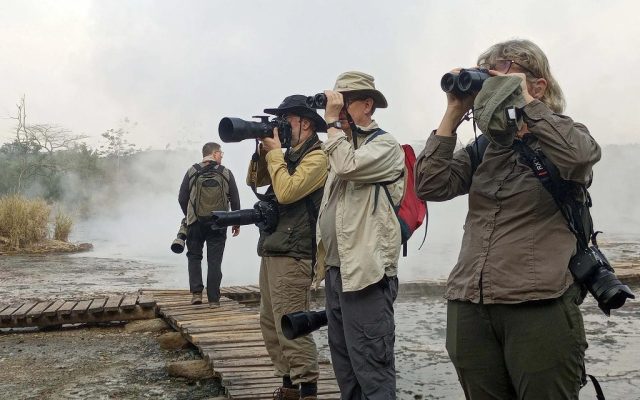
Pack binoculars (8×42 is the standard safari choice), a rain jacket, and neutral clothing. A scope helps on the channel and plains but is less useful in dense forest. Uganda Wildlife Authority park fees apply at each protected area; community swamp fees at Mabamba and Bigodi are separate and modest.
Birding Safaris With Lion on the Rocks
Specialist birding requires more than a driver who knows the roads. You need guides who understand habitat, calls, and the rhythm of each site — and an itinerary that does not force you to choose between shoebills and gorillas when both fit in the same week. Lion on the Rocks Safaris designs Uganda safari itineraries with birding priorities built in: Mabamba timing, Kazinga launch slots, forest walks in Bwindi, and realistic drive days between parks.
Whether you are chasing a life list or simply want to understand why Uganda is called the Pearl of Africa, a well-planned birdwatching safari rewards patience with sightings most travellers never know exist. Request a quote with your target species and travel dates — we will map a route that puts you in the right habitat at the right hour.
 Read