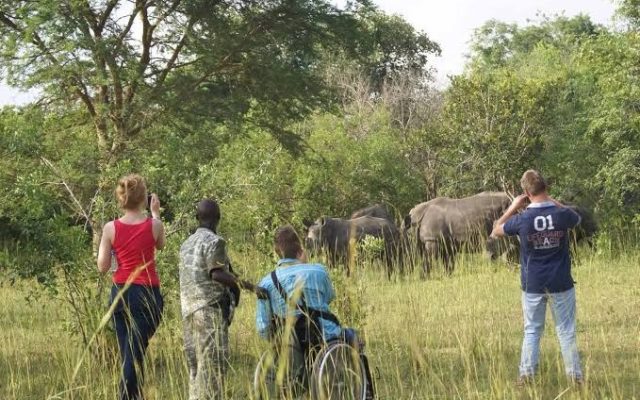
Rhino Tracking in Uganda — For decades, wild rhinoceros were absent from Uganda’s national parks—a sobering gap for travelers pursuing the Big Five. That changed with the success of Ziwa Rhino Sanctuary, a protected breeding and reintroduction site on the Kampala–Gulu highway where southern white rhinos roam fenced bushland under 24-hour protection. Today, guided rhino tracking on foot is one of Uganda’s most accessible and thrilling wildlife experiences, and it slots neatly into the drive north toward Murchison Falls National Park.
This guide covers practical planning for Rhino Tracking in Uganda, with tips you can use when comparing options.
A clear plan around Rhino Tracking in Uganda helps you book permits, lodges, and transport with fewer surprises.
Unlike vehicle-based game viewing, rhino tracking is an intentional walk. Rangers locate animals overnight or in the early morning, then lead small groups through savannah and woodland until you are close enough to observe behavior, body language, and sheer bulk at ground level—safely, on foot, with strict protocols. For many visitors, it is the moment Uganda’s Big Five story becomes complete.
Understanding Ziwa Rhino Sanctuary
Ziwa sits near Nakasongola, roughly three hours north of Kampala and about halfway to Murchison’s southern gates. The sanctuary was established by the Rhino Fund Uganda in partnership with Uganda Wildlife Authority to breed rhinos for eventual reintroduction into selected national parks once populations are viable and security allows. The site spans thousands of acres of restored habitat, fenced to prevent conflict with surrounding communities and to deter poaching.
The rhinos at Ziwa are southern white rhinos—grass grazers distinct from the more endangered black rhino species found in some East African reserves. Uganda’s historical rhino populations were wiped out by poaching and civil unrest in the twentieth century; Ziwa represents a careful, community-engaged effort to write a new chapter. Tourism revenue and tracking fees directly support anti-poaching patrols, veterinary care, and habitat management.
Because the sanctuary is a dedicated rhino site rather than a full national park, the experience is focused. You will not encounter lions or elephants on the same walk, but you will spend unhurried time with animals that elsewhere in Uganda exist only behind conservation programs.
What Rhino Tracking on Foot Involves
Tracking typically begins with a briefing at the sanctuary headquarters. Rangers explain rules: maintain a minimum distance, move quietly, follow single file, and never approach from downwind without guidance. Groups are kept small to reduce stress on the animals. Once rangers receive coordinates from scouts, you walk at a moderate pace across open ground and scrub—sometimes twenty minutes, sometimes longer depending on where rhinos have fed overnight.
The approach moment is unforgettable. A white rhino at close range is larger than most people expect: broad chest, squared lip adapted for grazing, ears swiveling at every sound. Calves stay near mothers; dominant bulls mark territory with scrapes and scent posts. Guides read behavior constantly, positioning the group for viewing while maintaining an escape route. If an animal shows agitation, you withdraw—conservation and safety trump photography.
Walks usually last one to two hours including the approach and observation time. Fitness requirements are modest; the terrain is generally flat. Sturdy shoes, neutral clothing, a hat, and water suffice. Morning sessions are popular for cooler temperatures and active rhinos; afternoon tracking is also offered depending on availability.
Fees, Booking, and Logistics
Rhino tracking requires a sanctuary entry fee and a per-person tracking fee, paid on site or through your tour operator as part of a packaged quote. Uganda Wildlife Authority park rules do not apply here in the same way as inside Murchison, but the sanctuary operates under UWA-aligned standards. Advance booking is recommended in peak season when Murchison-bound traffic is high.
Most itineraries treat Ziwa as a stopover on the road north: depart Kampala or Entebbe early, track rhinos late morning, lunch at the sanctuary restaurant or Amuka Lodge on site, then continue to Murchison for an afternoon or next-morning game drive and Nile boat cruise. The sequencing is efficient—one long travel day becomes two major experiences. Return journeys from Murchison can repeat Ziwa if you missed an earlier slot, though most travelers track once in each direction or on the outbound leg only.
Accommodation options include on-site lodges and camps, useful if you arrive late or want dawn tracking without a pre-dawn dash from Kampala. Self-drive visitors can reach Ziwa via the Gulu highway; signage is clear, and parking is available at headquarters.
Why Rhino Tracking Matters for Your Safari Story
Uganda’s savannah parks—Murchison, Queen Elizabeth, Kidepo—offer excellent lion, leopard, elephant, and buffalo viewing, but free-ranging rhinos are not yet re-established inside those boundaries. Ziwa fills the gap without requiring a detour to Kenya or South Africa. For families, the walk is often a highlight: children old enough to follow instructions engage deeply with conservation storytelling rangers share along the way.
Ethically, Ziwa is a fenced, managed population—but transparency is part of the narrative. Guides explain reintroduction goals, community land agreements, and the cost of protection. Travelers leave understanding that rhino recovery is incremental, expensive, and dependent on tourism and donor support.
Combining Ziwa With Murchison and Beyond
The classic northern circuit pairs Ziwa rhino tracking with Murchison Falls game drives, the Nile boat to the falls base, and optional chimpanzee tracking in Budongo Forest. Birders add the Delta boat for shoebill searches. Longer trips might continue west toward Kibale or Queen Elizabeth, but even a four-day Kampala–Ziwa–Murchison loop delivers rhinos, big game, and one of Africa’s great rivers.
Photography tips: respect distance limits; telephoto lenses work better than phone zoom for detail shots. Flash is unnecessary outdoors. Listen more than you shoot—rangers often predict rhino movement before it happens.
Plan With Lion on the Rocks Safaris
At Lion on the Rocks Safaris, we integrate Ziwa Rhino Sanctuary tracking into Uganda safari itineraries with realistic drive times, pre-arranged tracking slots, and lodges that minimize backtracking. Whether you want a dedicated one-day rhino excursion from Kampala or rhinos as the opening chapter of a full Murchison adventure, we handle permits, timing, and vehicle logistics so you arrive at headquarters ready to walk. Contact us to complete your Big Five checklist on foot—the way Uganda’s rhino recovery was meant to be experienced.

 Read
Read