Where to see shoebill stork — expert Uganda safari guide from local planners who know permits, parks, and realistic routing.
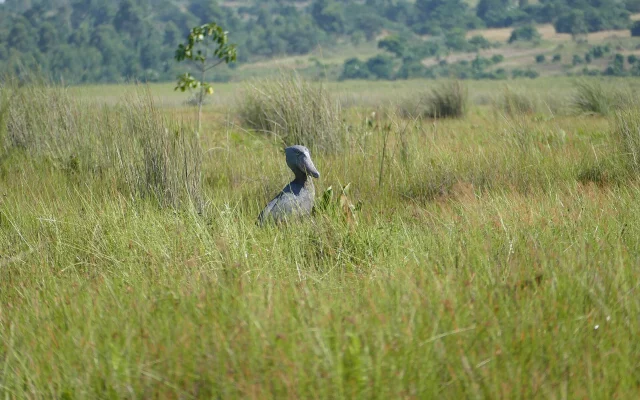
Seeing a shoebill stork in the wild is one of Uganda's signature wildlife experiences — and one of the main reasons birdwatchers fly halfway around the world. Unlike savannah game drives where animals are scanned across open plains, shoebill tracking means sliding through papyrus channels at dawn in a canoe, or scanning wetland edges from a boat. Choosing the right destination is essential — and Uganda offers three outstanding options, each with a different access style and safari combination potential.
Best Places to See Shoebills in Uganda
Uganda supports shoebill populations across at least a dozen Important Bird Areas. Three sites stand out for international visitors:
- Mabamba Swamp — classic dawn canoe destination near Entebbe
- Murchison Falls National Park — Nile–Lake Albert delta boat cruises
- Queen Elizabeth National Park — Lake George papyrus and Kasenyi wetland fringes
Mabamba Swamp — Uganda's Premier Shoebill Site
Mabamba Bay Wetland on the northwestern shore of Lake Victoria is the most reliable and accessible shoebill destination in Uganda — and among the best in Africa. Most international visitors reach Mabamba within 45–90 minutes of Entebbe International Airport, making it ideal as a first-day birding excursion or a pre-departure half-day trip.
How Shoebill Tracking Works at Mabamba
Visitors meet local guides from the Mabamba Wetland Eco-Tourism Association at the swamp landing. Pre-dawn departures are standard — shoebills hunt actively at first light. Guides paddle wooden canoes through papyrus channels, scanning edges and open pools for standing birds. Most excursions last two to three hours.
What to Expect
- Sighting success is high — many groups see a shoebill within the first hour
- Close views are possible when birds hunt at channel edges
- Over 300 bird species complement the shoebill — blue swallow, papyrus gonolek, malachite kingfisher
- Community guides know individual territories and seasonal movements
Getting There
Mabamba is reached by road from Entebbe or Kampala to the Kasanje landing, then by motorised boat across the channel to the canoe departure point. Some itineraries access the swamp from the Nakiwogo–Buwaya ferry route. Allow a pre-dawn start for best results.
Murchison Falls National Park — Delta Shoebills
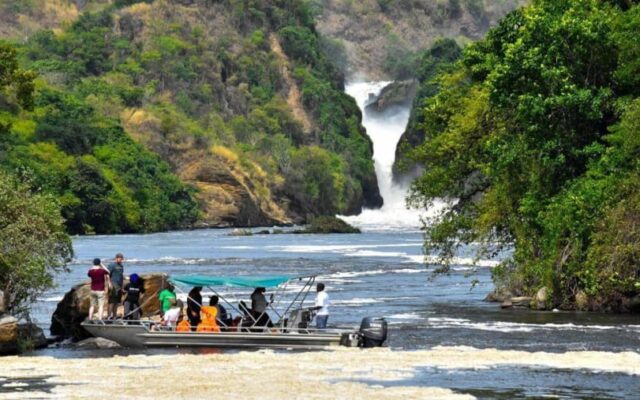
The Nile–Lake Albert delta in Murchison Falls National Park supports shoebills in papyrus channels and swampy margins where the Victoria Nile meets Lake Albert. Sightings are seasonal and less predictable than Mabamba, but the delta combines shoebill possibility with elephant, hippo, crocodile, and prolific waterbird diversity.
How to Search for Shoebills at Murchison
Afternoon delta boat cruises are the standard approach. Boats navigate papyrus channels and open water where shoebills hunt along edges. The Delta Point track on the northern bank also yields occasional shoebill sightings on game drives — ask your guide about current conditions.
Why Combine Murchison and Mabamba
A classic Uganda birding circuit opens with Mabamba (reliable shoebill) and continues north to Murchison for delta shoebill possibility plus lion, giraffe, and Nile cruise — two shoebill chances on one itinerary. Browse shoebill safari experiences for combined packages.
Queen Elizabeth National Park — Wetland Shoebills
Papyrus wetlands around Queen Elizabeth National Park — particularly along Lake George and the Kasenyi Plains fringe — support shoebills in season. This is the most opportunistic of the three main sites: sightings depend on water levels, recent movements, and guide knowledge.
Where to Look in Queen Elizabeth
- Kasenyi Plains track — morning game drives along papyrus edges
- Lake George boat landings and wetland margins
- Kazinga Channel vicinity — less common but recorded
- Ishasha sector wetland fringes during southern circuit drives
Queen Elizabeth shoebill sightings are a bonus on a savannah and boat-safari itinerary rather than a dedicated shoebill destination — but the park's overall birding (600+ species) makes it essential on any Uganda birding route.
Other Ugandan Shoebill Sites
Lake Mburo National Park
Wetland edges and swamp channels in Lake Mburo support shoebill records, though sightings are less frequent than the three main sites above. Mburo works as a stopover between Kampala and southwestern Uganda.
Eastern Wetlands — Lake Kyoga System
Lakes Bisina, Opeta, Nakuwa, and Nabajjuzi in eastern Uganda hold shoebill populations, but access is limited and tourism infrastructure is minimal. These sites matter for conservation but are not standard visitor destinations.
Lutembe Bay
This Ramsar site on Lake Victoria records shoebills seasonally but lacks the guided canoe infrastructure of Mabamba.
Comparing Uganda Shoebill Sites
- Mabamba — highest reliability, easiest access, dedicated canoe guiding, half-day trip
- Murchison delta — seasonal, combines with Big Five safari, afternoon boat cruise
- Queen Elizabeth — opportunistic, combines with Kazinga boat and savannah drives
- Lake Mburo — occasional, convenient stopover location
Shoebill Tracking Methods
Canoe (Mabamba)
The classic method. Silent approach through papyrus channels at dawn. Best for close observation and photography.
Boat Cruise (Murchison)
Delta boats scan wetland edges from a higher vantage. Less intimate than canoe but covers more territory.
Game Drive (Queen Elizabeth, Murchison)
Vehicle-based scanning of papyrus fringes and wetland margins. Opportunistic but rewarding when birds are present.
What to Bring
- Binoculars (8×42 or 10×42 recommended)
- Telephoto camera lens (300mm minimum ideal)
- Rain jacket and sun protection
- Insect repellent
- Neutral-coloured clothing
- Waterproof bag for electronics in the canoe
Responsible Shoebill Viewing
Shoebills are disturbance-sensitive, especially at nests. Follow guide instructions, maintain distance, and never surround a bird. Use licensed community guides at Mabamba. Read our conservation page for why this matters.
Planning Your Shoebill Trip
Most travelers prioritise Mabamba for a guaranteed-style encounter, then add Murchison or Queen Elizabeth for combined wildlife value. See best time to see shoebills for seasonal advice and shoebill tracking Uganda for practical logistics. For packaged itineraries, explore shoebill safari experiences and birding tours from Entebbe.
Where to See Shoebills — Quick Reference
- Top site: Mabamba Swamp (dawn canoe)
- Best combo site: Murchison Falls delta (boat + game drive)
- Bonus site: Queen Elizabeth wetlands (game drive)
- Access hub: Entebbe International Airport
- Typical duration: half day at Mabamba; afternoon cruise at Murchison
- Guide requirement: essential — community guides at Mabamba, park guides elsewhere