Understanding shoebill stork habitat explains their solitary hunting behaviour, lungfish diet, breeding requirements, and why Mabamba Swamp ranks among Africa's premier birding destinations. Shoebills are not generalist waterbirds — they are swamp specialists bound to a narrow set of ecological conditions found in only a handful of countries.
Where Do Shoebills Live?
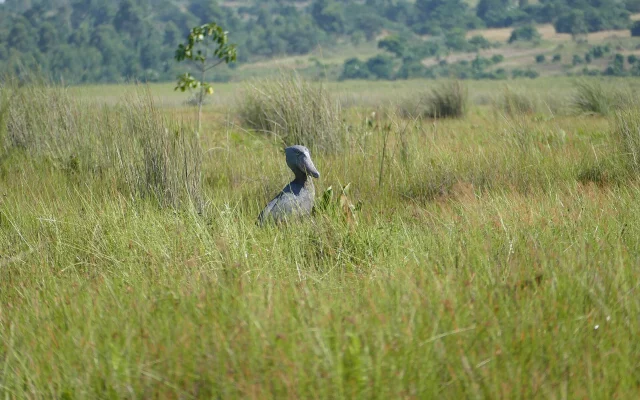
Shoebills inhabit freshwater swamps and extensive wetlands in central tropical Africa. Their distribution is fragmented — bound to large, relatively undisturbed swamp systems rather than continuous range across the continent.
- South Sudan and western Ethiopia (northern range)
- Uganda, Rwanda, and eastern Democratic Republic of Congo
- Western Tanzania and northern Zambia (southern range)
Uganda is one of the most important countries in the shoebill's range, with reliable populations at multiple sites. Our where to see shoebills guide compares the top Ugandan destinations.
Shoebill Geographic Range in Uganda
Shoebills are fairly widespread across Uganda, occurring in at least 12 of the country's 30 Important Bird Areas. Key sites include:
- Mabamba Bay — Lake Victoria's western shore; premier tourism site
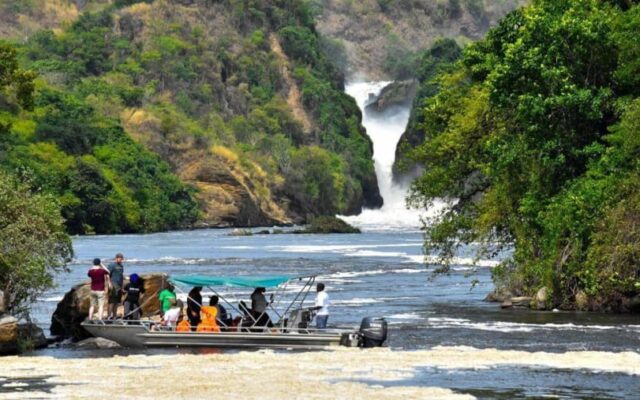
- Murchison Falls National Park — Nile–Lake Albert delta papyrus
- Queen Elizabeth National Park — Lake George papyrus fringes
- Lake Mburo National Park — wetland edges and swamp channels
- Lake Kyoga system — eastern wetlands including Nabugabo and Nabajjuzi
- Lutembe Bay — seasonal records on Lake Victoria
Mabamba Bay is both a breeding area and the most accessible site for international visitors arriving via Entebbe.
Mabamba Swamp Habitat
Mabamba Wetland on the northwestern shore of Lake Victoria is Uganda's flagship shoebill habitat. Designated an Important Bird Area in 2001 and a Ramsar site in 2006, Mabamba covers roughly 16,500 hectares of papyrus swamp, open water channels, and floating vegetation.
Key habitat characteristics include:
- Extensive papyrus (Cyperus papyrus) stands
- Slow-moving channels navigable by canoe
- Floating vegetation suitable for nest platforms
- Abundant lungfish and catfish prey
- Community-managed access via the Mabamba Wetland Eco-Tourism Association
Mabamba supports over 300 bird species, making it one of the richest wetland birding sites in Uganda — not just a single-species destination.
Why Mabamba Works for Shoebill Tourism
Mabamba combines extensive suitable habitat with proximity to Entebbe International Airport, trained local canoe guides, and a track record of reliable dawn sightings. The swamp's channel network allows guides to search efficiently without disturbing entire territories.
Murchison Falls Delta Habitat
The Nile–Lake Albert delta in Murchison Falls National Park offers a different shoebill habitat — vast papyrus and swampy channels where the Victoria Nile meets Lake Albert. Shoebills here hunt along channel edges and open mudflats where lungfish and catfish concentrate.
Delta habitat features:
- Mix of papyrus, reedbeds, and open water
- Seasonal water-level fluctuations
- Integration with hippo, elephant, and crocodile habitat
- Access via afternoon delta boat cruises
Sightings are less predictable than Mabamba but combine powerfully with Murchison's savannah wildlife.
Queen Elizabeth Wetland Habitat
Papyrus wetlands around Queen Elizabeth National Park — particularly along Lake George and the Kasenyi Plains fringe — support shoebills in season. Here, shoebills share habitat with Uganda kob, elephant, and hundreds of waterbird species.
Queen Elizabeth shoebill habitat includes:
- Lake George papyrus swamps
- Kazinga Channel wetland edges
- Seasonal floodplains near the Kasenyi track
Morning game drives along the Kasenyi track occasionally yield shoebill sightings — a memorable bonus on a classic savannah safari.
What Makes Ideal Shoebill Habitat?
Shoebills require specific conditions that exclude most disturbed or small wetlands.
Water Depth and Quality
Shoebills prefer shallow freshwater with slow movement or standing water. Deep open lakes without papyrus edges are unsuitable. Murky, oxygen-poor shallows where lungfish surface to breathe are ideal hunting zones.
Papyrus and Floating Vegetation
Extensive papyrus stands provide cover, nesting platforms, and territorial structure. Floating vegetation mats support nest construction — shoebills build platforms of papyrus stems and aquatic plants.
Prey Density
Lungfish and catfish populations must be sufficient to support solitary hunters spaced across large territories. Overfishing and wetland degradation reduce prey availability and displace shoebills.
Minimal Disturbance
Shoebills abandon nests and feeding territories when disturbed by fishermen, hunters, cattle, or unregulated tourism. Large, protected or community-managed swamps with regulated access support higher densities.
Altitude and Climate
Shoebills inhabit lowland wetlands generally below 1,200 metres elevation. Uganda's shoebill sites — Mabamba at roughly 1,130 m, Murchison delta lower, Queen Elizabeth around 900 m — fall within this lowland tropical zone. Temperature and rainfall patterns influence water levels, prey behaviour, and breeding timing.
Seasonal Habitat Changes
Wetland water levels fluctuate between rainy and dry seasons, reshaping channel depth, papyrus extent, and prey distribution. During dry periods, lungfish burrow into mud and surface more frequently to breathe — potentially improving hunting conditions. During heavy rains, rising water may flood nest platforms and disperse prey.
See our best time to see shoebills guide for seasonal planning advice.
Habitat Threats
Shoebill habitat faces mounting pressure across Africa.
- Drainage and agriculture — papyrus swamps converted to rice paddies and farmland
- Seasonal burning — fishermen and farmers burn papyrus, destroying nests and prey habitat
- Pollution and siltation — degraded water quality affects fish populations
- Overfishing — reduced prey density forces shoebills to abandon territories
- Unregulated tourism — canoe traffic and nest approaches cause abandonment
Conservation detail is covered on our shoebill conservation page.
Protected Areas and Ramsar Sites
Uganda protects shoebill habitat through national parks (Murchison Falls, Queen Elizabeth, Lake Mburo), Ramsar wetlands (Mabamba Bay, Lutembe Bay, Nabugabo), and Important Bird Area designations. Community-based management at Mabamba demonstrates how local stewardship can complement formal protection.
Habitat and Birding Diversity
Shoebill habitats are biodiversity hotspots. Mabamba alone hosts blue swallow, papyrus gonolek, lesser jacana, malachite kingfisher, and numerous weavers and warblers. A dawn canoe trip delivers the shoebill plus a rich wetland birding list — one reason wetland birding in Uganda attracts specialists from around the world.
Shoebill Habitat Quick Reference
- Habitat type: freshwater papyrus swamps and extensive wetlands
- Elevation: lowland, generally below 1,200 m
- Key vegetation: papyrus, reeds, floating aquatic plants
- Water: shallow, slow-moving or standing freshwater
- Prey: lungfish, catfish in murky shallows
- Territory: solitary, widely spaced across large swamps
- Uganda top sites: Mabamba, Murchison delta, Queen Elizabeth
Plan your visit through our where to see shoebill storks guide or explore shoebill safari experiences that include Mabamba and Murchison wetland excursions.