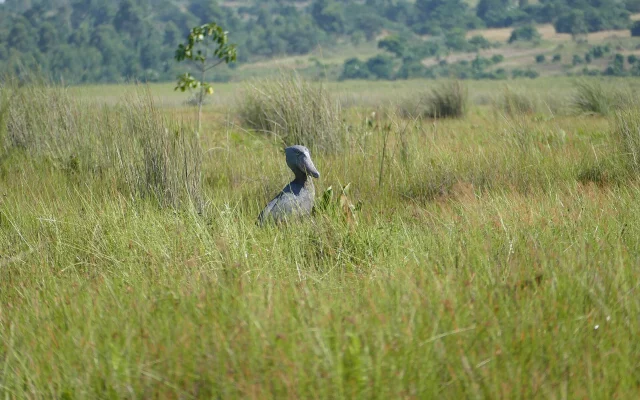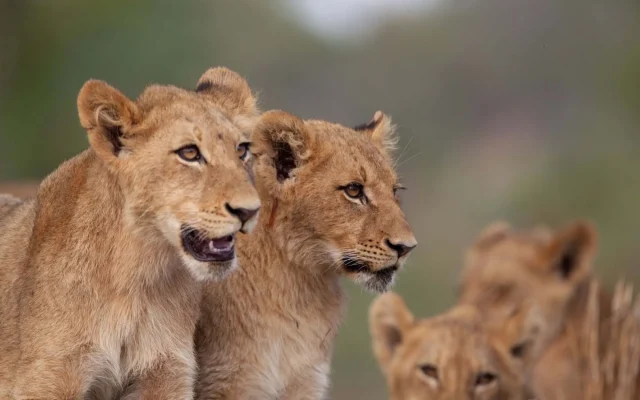
The shoebill stork is one of the world's most remarkable birds and among the most sought-after wildlife sightings in Africa. Towering, prehistoric in appearance, and almost unnervingly still when hunting, Balaeniceps rex has earned a devoted following among birdwatchers, wildlife photographers, and safari travelers who rank it alongside gorillas and lions on their Uganda wish lists. Found in freshwater swamps from South Sudan to Zambia, shoebills survive almost exclusively in vast papyrus and reed habitats — and Uganda is one of the best countries on Earth to see them.
Encountering a shoebill in the wild is unlike a typical savannah game drive. Instead of scanning open plains from a 4x4, shoebill tracking usually means sliding through papyrus channels at dawn in a wooden canoe, or watching wetland edges from a delta boat as the morning mist lifts. The bird may stand motionless for long minutes, then strike with startling speed. The result is an intimate, patient wildlife experience that rewards preparation — and stays with you long after the swamp falls silent behind your canoe.
What Is a Shoebill Stork?
The shoebill stork (Balaeniceps rex) is a large, solitary wetland bird and the sole member of the family Balaenicipitidae. Despite its common name, it is not a true stork — molecular studies place it closer to pelicans. What sets the shoebill apart is its enormous shoe-shaped bill, grey-blue plumage, broad wings, and patient ambush hunting style in Africa's great freshwater swamps.
- Kingdom: Animalia
- Phylum: Chordata
- Class: Aves
- Order: Pelecaniformes
- Family: Balaenicipitidae
- Genus: Balaeniceps
- Species: Balaeniceps rex
Physical Characteristics
Shoebills are imposing birds. Adult males can stand up to 1.5 metres tall and weigh around 5.6 kilograms, with females slightly smaller. Their wingspan approaches 2.3 metres — broad enough to carry them in slow, heavy flight above the swamp canopy.
The Iconic Bill
The shoebill's bill is its defining feature: massive, broad, and hooked at the tip, measuring up to 24 centimetres in length. It is a precision hunting tool evolved for striking lungfish and catfish in murky shallows, not merely a visual oddity.
Plumage and Stare
Adult shoebills wear blue-grey plumage with darker flight feathers. Juveniles are browner. Pale eyes set in a broad face give the bird an intense, almost prehistoric stare that photographers and first-time observers find unforgettable.
Flight and Movement
On the ground, shoebills move slowly and deliberately. In flight, they retract their neck — unlike storks, which fly with neck extended — and beat their broad wings in a heavy, measured rhythm.
Where Shoebills Live
Shoebills inhabit freshwater swamps and extensive wetlands in central tropical Africa. Their range is fragmented and tied strictly to suitable habitat.
Uganda — A Shoebill Stronghold
Uganda is one of the most important countries for shoebill conservation and tourism. Key sites include Mabamba Bay on Lake Victoria, the Nile–Lake Albert delta in Murchison Falls National Park, papyrus fringes around Queen Elizabeth National Park, Lake Mburo, and several eastern wetlands in the Lake Kyoga system.
Broader African Range
Beyond Uganda, shoebills occur in South Sudan, western Ethiopia, Rwanda, eastern Democratic Republic of Congo, western Tanzania, and northern Zambia — always in association with large, relatively undisturbed freshwater swamps.
Habitat and Ecosystem
Shoebills depend on vast freshwater swamps with slow-moving or standing water, floating vegetation, and abundant lungfish and catfish. Papyrus (Cyperus papyrus) dominates many prime sites. These wetlands also support hundreds of other bird species, making shoebill destinations rich all-round birding areas.
The ecosystem provides:
- Prey for ambush hunting
- Floating nest platforms
- Territorial spacing across extensive swamp
- Cover for solitary roosting
- Community livelihoods through fishing and ecotourism
Social Structure and Behaviour
Shoebills are predominantly solitary. Even when paired during breeding season, partners maintain distance — often feeding at opposite ends of their territory. They are patient ambush hunters, standing motionless at the water's edge before striking with explosive speed.
Bill-Clattering Display
Shoebills communicate through bill clattering — a rapid snapping of the mandibles that carries across the swamp. This display serves territorial and social functions, especially around breeding sites.
Diet
Shoebills are carnivorous. Lungfish form the core of their diet, supplemented by catfish, frogs, small reptiles, and occasionally rodents or water snakes. They hunt by standing still, then lunging with their massive bill — often decapitating prey in a single strike.
Reproduction and Breeding
Shoebills breed in extensive swamps, building nests on floating vegetation platforms. Females lay one to three eggs, but pairs typically raise only one chick — younger siblings often perish through siblicide if the eldest is healthy. Both parents incubate, feed, and shade chicks. Breeding success is sensitive to nest disturbance and wetland fires.
Lifespan
Shoebills may live up to 35 years in the wild, though longevity depends on habitat quality, food availability, and human-related threats. Slow reproduction makes population recovery gradual.
Threats to Survival
Despite their iconic status, shoebills face serious pressures across their range.
- Wetland drainage and agricultural encroachment
- Seasonal burning of papyrus swamps
- Nest disturbance by fishermen, hunters, and careless tourism
- Illegal live-bird trade
- Climate-driven drought and habitat degradation
Conservation Status
The IUCN classifies the shoebill as Vulnerable, with an estimated 3,300 to 5,300 mature individuals remaining globally. Uganda protects shoebills in national parks, Ramsar sites, and Important Bird Areas, with notable community-led conservation at Mabamba Bay through the Mabamba Wetland Eco-Tourism Association.
Population in Uganda
Shoebills are fairly widespread across Uganda, occurring in at least a dozen Important Bird Areas. Mabamba Bay is both a breeding site and the country's premier shoebill tourism destination. Community-based ecotourism has transformed former poachers and fishermen into guides and nest guardians — a model increasingly cited across the species' range.
Why Shoebills Matter
Shoebills matter ecologically as apex wetland predators, economically as drivers of birding tourism, and culturally as symbols of Africa's wild swamps. Their presence indicates relatively intact freshwater ecosystems. Their disappearance would signal wetland collapse across vast landscapes.
Shoebill Tracking in Uganda
Shoebill tracking is the premier way to observe this species responsibly. At Mabamba, local canoe guides paddle visitors through papyrus channels at dawn. At Murchison, delta boat cruises scan wetland edges. At Queen Elizabeth, game drives and boat trips on the Kazinga Channel and Lake George fringes offer seasonal possibilities.
What Makes Shoebill Tracking Unique?
- Immersive wetland experience by canoe or boat
- Patient, guide-led searching in papyrus channels
- One of Africa's most coveted birding targets
- Combines easily with gorilla, chimp, and savannah safaris
- Direct support for community conservation at Mabamba
Best Places to See Shoebills in Uganda
Mabamba Swamp
The classic shoebill destination — accessible from Entebbe, reliable sightings, and community-managed canoe guiding.
Murchison Falls National Park
The Nile–Lake Albert delta offers seasonal shoebill sightings combined with elephant, hippo, and lion on the same itinerary.
Queen Elizabeth National Park
Papyrus wetlands around Lake George and the Kasenyi area support shoebills, especially on lucky morning game drives.
Best Time to See Shoebills
Shoebills can be seen year-round in Uganda. Dawn is the best daily window for canoe trips and active hunting behaviour. Dry seasons (June–September and December–February) often improve swamp access and road conditions.
Safari Experiences
- 1 Day Mabamba Shoebill Safari
- Uganda Birding Safari with Shoebill
- Shoebill and Murchison Falls Safari
- Shoebill, Gorilla and Chimp Safari
- Luxury Uganda Birding Safari
Quick Facts
- One of Africa's most sought-after birds
- Sole member of family Balaenicipitidae
- IUCN status: Vulnerable
- Estimated 3,300–5,300 mature individuals globally
- Specialist of freshwater papyrus swamps
- Primarily eats lungfish and catfish
- Solitary ambush hunter
- Mabamba Swamp is Uganda's premier site
- Can be combined with gorilla and savannah safaris