
Shoebill Stork FAQs and Answers — use the questions below for quick answers on identification, rarity, shoebill tracking in Uganda, Mabamba Swamp, safety, and safari planning. Explore where to see shoebills, best time to visit, and safari experiences for deeper guides — or request a quote for a tailored shoebill itinerary.
- What is a shoebill stork?
The shoebill stork (Balaeniceps rex) is a large, solitary wetland bird found in freshwater swamps of central tropical Africa. Despite the name, it is not a true stork — genetic studies place it closer to pelicans. Its enormous shoe-shaped bill, grey-blue plumage, and patient hunting style make it one of the most sought-after birds in Uganda birding.
- Is the shoebill stork rare?
Yes. The IUCN classifies the shoebill as Vulnerable, with an estimated 3,300 to 5,300 mature individuals remaining globally. Populations are declining due to habitat loss, nest disturbance, wetland fires, and illegal trade. Uganda remains one of the most reliable countries for sightings — see our where to see shoebills guide.
- Where can I see shoebills in Uganda?
The top sites are Mabamba Swamp on Lake Victoria (the classic dawn canoe destination), the Nile–Lake Albert delta in Murchison Falls National Park, and papyrus wetlands around Queen Elizabeth National Park. Shoebills also occur at Lake Mburo and several eastern wetlands. Our where to see shoebill storks page compares each site.
- Is Mabamba Swamp the best place to see a shoebill?
For most travelers, yes. Mabamba Swamp is accessible from Entebbe or Kampala, offers guided canoe trips through papyrus channels, and has a strong track record of shoebill sightings — often within the first hour of a dawn excursion. It is the standard opening day on many Mabamba shoebill birding tours.
- What is shoebill stork tracking in Uganda?
Shoebill tracking means searching for shoebills on foot, by canoe, or by boat with local guides who know territory, roost sites, and seasonal movements. At Mabamba, this typically involves a pre-dawn canoe paddle through papyrus. At Murchison, delta boat cruises scan wetland edges. Read our full shoebill tracking Uganda guide for practical details.
- What is the best time to see a shoebill?
Shoebills can be seen year-round in Uganda. The best daily window is early morning, when birds are actively hunting at wetland edges and canoe access is calm. Dry seasons (roughly June–September and December–February) often make swamp tracks easier. See our best time to see shoebills seasonal guide.
- How tall is a shoebill stork?
Adult shoebills stand up to 110–152 cm (roughly 4–5 feet) tall, with males typically larger than females. Combined with a wingspan approaching 230 cm, the shoebill is an imposing presence in any papyrus swamp — even at a distance.
- What do shoebills eat?
Shoebills are carnivorous ambush hunters. Their primary prey is lungfish (Protopterus), supplemented by catfish, frogs, small reptiles, and occasionally rodents or water snakes. They hunt by standing motionless at the water's edge, then striking with their massive bill. Explore our shoebill diet page for more detail.
- Why is the shoebill famous?
The shoebill's fame comes from its prehistoric appearance, global rarity, and almost mythical status among birdwatchers. Its massive bill, slow movements, and intense stare create an encounter unlike any other African bird. Uganda's reliable access at Mabamba has made it a cornerstone of East African birding safaris.
- Is the shoebill endangered?
The shoebill is classified as Vulnerable on the IUCN Red List — not yet Endangered, but at high risk of further decline. Threats include wetland drainage, habitat fires, nest disturbance by fishermen and tourists, and illegal live-bird trade. Learn more on our shoebill conservation page.
- How close can visitors get to a shoebill?
At Mabamba and other regulated sites, trained guides approach carefully by canoe and maintain a respectful distance to avoid flushing the bird. Close views are often possible because shoebills hunt patiently and may tolerate still observers — but guides will stop if the bird shows stress. Never surround, chase, or use playback calls.
- Is Murchison Falls good for seeing shoebills?
Yes, seasonally. The Nile–Lake Albert delta in Murchison Falls National Park supports shoebills in papyrus and swampy channels, especially on afternoon delta boat cruises. Sightings are less predictable than Mabamba but combine beautifully with big-game safari — elephant, hippo, and shoebill on the same itinerary.
- Can I see shoebills on a one-day trip from Entebbe?
Absolutely. A one-day Mabamba shoebill excursion is one of Uganda's most popular short birding trips. Most itineraries depart pre-dawn from Entebbe, spend 2–3 hours in the swamp by canoe, and return by midday — ideal before an international flight or as a safari opener. Browse shoebill safari experiences for packaged options.
- How do shoebills hunt?
Shoebills are ambush predators. They stand motionless at the water's edge — sometimes for long periods — watching for lungfish and catfish near the surface. When prey is within range, they strike with a rapid bill thrust, often decapitating fish with their sharp mandibles. Read more about hunting and daily routines on our shoebill behaviour page.
- Are shoebills related to storks?
Despite the common name, shoebills are not true storks. They belong to the family Balaenicipitidae and are more closely related to pelicans and hamerkops. The stork label persists because of their tall wading posture and wetland habitat — but taxonomically, the shoebill stands alone as the sole member of its family.
- What should I bring for a shoebill canoe trip?
Essentials include binoculars (8×42 or 10×42), a rain jacket, sun protection, insect repellent, and a camera with a telephoto lens. Wear neutral colours and expect wet conditions in the canoe. A field guide to East African birds helps identify the 300+ species at Mabamba beyond the shoebill itself.
- Do shoebills breed in Uganda?
Yes. Shoebills nest on floating vegetation platforms in extensive swamps, with breeding records from Mabamba Bay, Murchison, and other Ugandan wetlands. Nests are vulnerable to disturbance and wetland fires — a key reason community protection at Mabamba matters. Breeding behaviour is covered in our behaviour and conservation guides.
- Can I combine shoebill tracking with gorilla trekking?
Yes — this is one of Uganda's great safari combinations. Many itineraries open with a Mabamba shoebill day trip from Entebbe, then continue to Bwindi or Mgahinga for gorillas, or north to Murchison for shoebill and Big Five in one circuit. See shoebill safari experiences for combined itineraries.
- Why do birdwatchers travel long distances to see shoebills?
Shoebills are a global birding trophy — rare, range-restricted, and visually unlike anything else. Uganda offers relatively accessible, guide-supported encounters at Mabamba that would require far more effort in many other range countries. For serious listers and casual wildlife lovers alike, the shoebill justifies the journey.
- How much does a shoebill safari cost in Uganda?
A standalone Mabamba day trip is among the most affordable specialist birding experiences in Uganda — typically covering transport, guide fees, and canoe hire. Longer birding safaris combining Mabamba, Murchison, and forest parks vary widely by lodge tier and duration. Compare options in our safari experiences section and Uganda birding tours guide.
Safari packages to see Shoebill Stork
Bookable itineraries below include parks and activities where you are most likely to encounter Shoebill Stork in the wild.
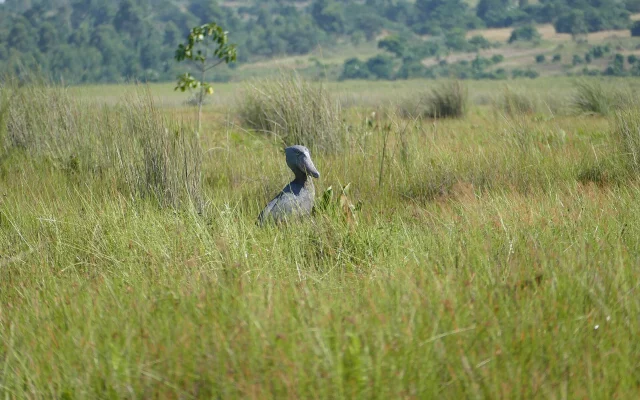
1 Day Shoebill Safari — Mabamba Swamp
You visit
Entebbe (Start, End)
Mabamba Bay on Lake Victoria is one of the most reliable places in Africa to see the shoebill stork — a towering, prehistoric-looking bird that hunts lungfish in papyrus channels. The wetland is a Ram…
 Best
Seller
Best
Seller
7 Day Uganda Wildlife & Gorilla
You visit
Murchison Falls, Kibale Forest, Queen Elizabeth NP, Bwindi Forest, Entebbe
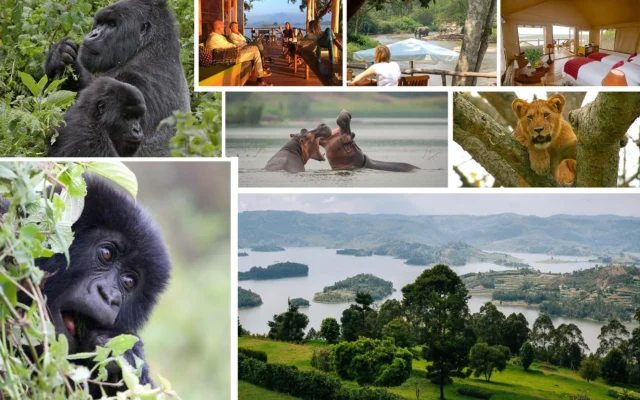
Seven days with gorillas: the wildlife tour above plus Bwindi trekking on Day 6 — the single most booked private itinerary for Uganda Safari Tours guests who want chimps, savannah and gorillas in one…
3 Day Murchison Falls Safari
You visit
Murchison Falls, Entebbe
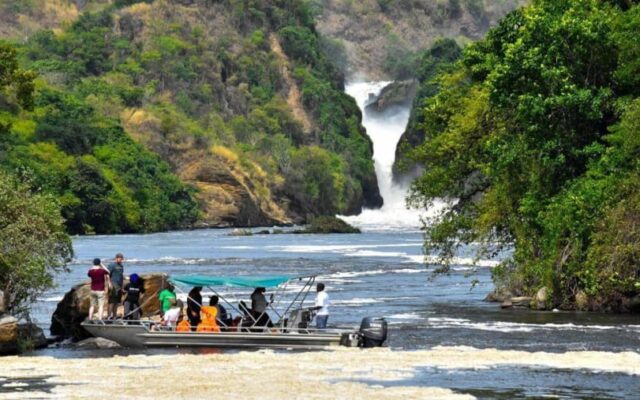
Our classic 3-day Murchison Falls safari follows the park’s most proven circuit: dramatic falls, savannah game drives north of the Nile, and the famous boat trip where the river narrows below the casc…
 Best
Seller
Best
Seller
6 Days Uganda Gorillas, Chimpanzees & Wildlife Safari
You visit
Kibale Forest, Queen Elizabeth NP, Bwindi Forest, Entebbe
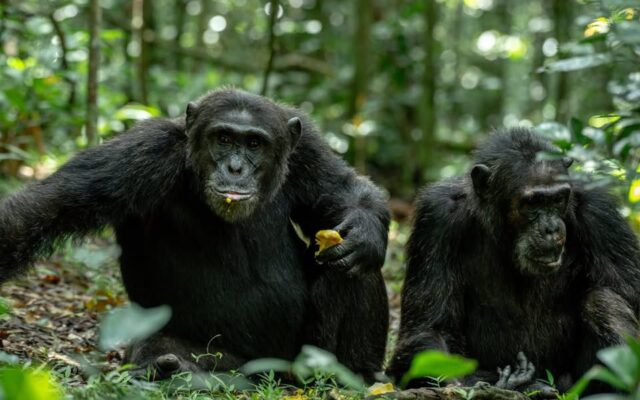
Primates plus plains in six days: Kibale chimps, Queen Elizabeth savannah, Bwindi gorillas and a Lake Mburo finale for zebra — the full Uganda highlight reel without rushing Kidepo or Murchison.