Explore this species across our habitat guide, where to see page, and safari planning resources — plus parks such as Lake Mburo and Kidepo Valley.
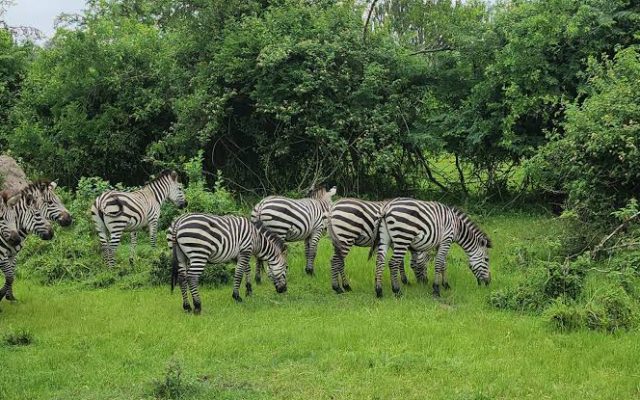
Plains zebras are among the most charismatic animals on any African safari. Their bold stripes, spirited temperament, and tightly organised family life make them favourites for photographers, families, and wildlife enthusiasts encountering savannah country for the first time. In Uganda, Burchell's zebra brings that classic East African atmosphere to game drives in four major parks.
This guide covers essential plains zebra facts — from taxonomy and physical traits to speed, lifespan, and the science behind those famous stripes.
What Is a Plains Zebra?
The plains zebra (Equus quagga) is a wild horse of the African savannah. It is the most numerous zebra species on the continent and the form most travellers see on game drives from Uganda to Botswana. The name quagga historically referred to a partially striped southern population now extinct; today the species name applies to all plains zebra subspecies, including Burchell's zebra in Uganda.
Burchell's Zebra in Uganda
Uganda hosts Equus quagga burchellii, commonly called Burchell's zebra. Compared with Grant's zebra of northern Tanzania and Kenya, Burchell's zebras often show fainter shadow stripes between the main black bands and brownish "shadow" striping on the lower legs. These subtle differences matter to researchers; for safari travellers, they simply mean beautiful, varied patterns across every herd.
Size and Build
Adult plains zebras stand approximately 1.2 to 1.4 metres at the shoulder — shorter than a horse but powerfully built for endurance running. Body weight typically ranges from 200 to 350 kilograms, with stallions at the upper end. Their compact, muscular frame supports rapid acceleration and sharp turns when predators attack on open ground.
Stripes: Pattern and Purpose
No two zebras share identical stripes. The pattern on the neck, withers, and rump acts as a visual signature, helping foals recognise their mothers and stallions distinguish members of their harem. Scientists have proposed multiple functions for striping:
- Disrupting predator outline recognition at distance
- Confusing biting flies, which appear less attracted to striped surfaces
- Social identification within herds
- Possible thermoregulation in hot savannah sun
On a game drive, side-light at dawn makes stripes glow — one reason photographers favour zebra as a subject.
Speed and Senses
Plains zebras can gallop at speeds up to roughly 65 kilometres per hour — fast enough to outrun many predators over short distances, especially when the herd scatters and reforming stripe patterns confuse a chasing lion. Their hearing is acute, their eyes placed for wide peripheral vision, and their sense of smell supports social bonding and predator detection.
Lifespan and Reproduction
Wild plains zebras typically live around 20 to 25 years when conditions are favourable. Mares usually produce a single foal after an 11- to 12-month gestation. Foals can stand within minutes of birth and run within hours — essential in predator-rich savannah. Peak birthing often aligns with rainy seasons when grass quality supports lactating mothers.
Social Facts
Zebras live in harems of one stallion and several mares with young, plus bachelor groups of males without breeding rights. Multiple harems may merge into herds of dozens or hundreds — a spectacle familiar from East Africa's great grasslands and a regular feature of Lake Mburo dry-season game drives.
Predators and Defence
Lions are the zebra's primary predator in Uganda, with leopards, hyenas, and African wild dogs taking foals and weakened adults where present. Zebras defend with speed, kicking, and collective vigilance — one animal's alarm bark can send an entire herd into motion.
Conservation Status
The IUCN lists the plains zebra as Near Threatened. Populations remain healthy inside Uganda's protected savannah parks, but habitat fragmentation and hunting outside reserves continue to pressure the species continent-wide. Tourism that supports park revenue helps maintain the landscapes zebras depend on.
Quick Reference
- Scientific name: Equus quagga
- Uganda subspecies: Burchell's zebra (E. q. burchellii)
- Shoulder height: ~1.2–1.4 m
- Weight: ~200–350 kg
- Top speed: ~65 km/h
- Lifespan: ~20–25 years
- IUCN status: Near Threatened
- Best Uganda parks: Lake Mburo, Kidepo, Queen Elizabeth, Murchison
Zebra on the Uganda Game Drive
For most visitors, the first plains zebra encounter happens from an open safari vehicle — engine idling, camera ready, guide explaining which animal is the stallion and which foals belong to which mare. Unlike trekking species that require permits and hours on foot, zebras reward even a single afternoon circuit at Lake Mburo. Their visibility, combined with spirited herd behaviour, makes them ideal ambassadors for Uganda's savannah parks on combined primate-and-plains itineraries.
For deeper context on daily life in the herd, see our plains zebra behaviour guide and best time to see page for seasonal game-drive planning.