Explore this species across our habitat guide, where to see page, and safari planning resources — plus parks such as Lake Mburo and Kidepo Valley.
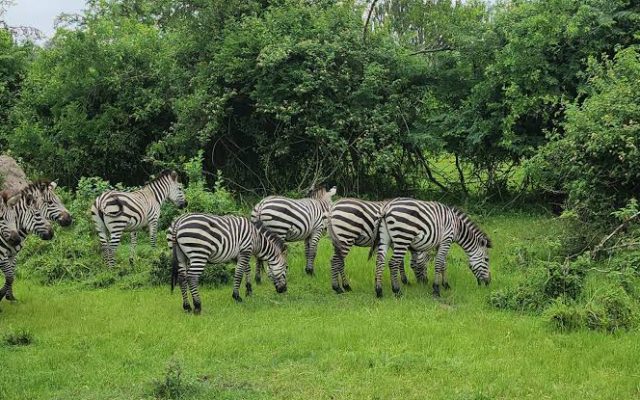
Plains zebra behaviour is savannah theatre at its finest. Harems led by watchful stallions, bachelor bands practising for dominance, foals learning the rules of the herd, and sudden explosive flight when a lion appears — zebras reveal the social intelligence and coordination that keep them alive in predator country. On a Uganda game drive, spending ten extra minutes with a zebra herd often delivers more drama than a hurried checklist sighting.
This guide explores plains zebra social structure, herd dynamics, seasonal movement, communication, predator defence, and what to watch for from the vehicle.
Harem Structure: The Foundation
The harem is the plains zebra's core social unit. It typically includes:
- One dominant stallion
- Several adult mares (often two to six)
- Foals and yearlings of both sexes
Harem membership is relatively stable. Mares form strong bonds with each other — often more enduring than their attachment to the stallion. If a stallion loses dominance or dies, the harem may remain together, accepting a new male rather than dissolving.
On game drive, identify the stallion by position and behaviour: he patrols the periphery, faces outward threats, and intervenes when strangers approach his mares.
Bachelor Groups
Young males expelled from their natal harem join bachelor groups — loose bands of up to a dozen or more males ranked by age and assertiveness. Bachelors graze at the edge of larger herds or move independently, sparring with jaw snaps and neck wrestling to build skills for future harem takeover attempts.
Watching bachelors interact is a highlight of patient game viewing in Kidepo and Lake Mburo — behaviour that looks playful can be serious rehearsal for breeding competition.
Herds and Aggregation
Multiple harems and bachelor groups merge into larger herds, especially when grazing or water draws animals together. Plains zebras are unusual among harem-holding mammals in forming these multi-family aggregations. In Uganda's dry season, Lake Mburo's open valleys can hold dozens of zebras in loose association — striped mass against acacia skyline.
Within herds, subgroups of two harems may temporarily associate, allowing social contact between individuals while maintaining stallion boundaries.
Migration and Seasonal Movement
Iconic long-distance migration defines zebra in the Serengeti–Mara ecosystem, where hundreds of thousands follow rain and grass. Uganda's Burchell's zebras make shorter, seasonal movements within park home ranges rather than cross-border mega-migrations — but the behavioural logic is the same.
After rains, herds disperse across wider savannah habitat as grass grows tall. In dry months, they contract toward lake shores, river valleys, and remaining green flats. Guides at Lake Mburo and Kidepo track these shifts across weeks, not continents — valuable knowledge for positioning your game drive.
Zebras appear to remember productive grazing areas, returning to valleys and plains where conditions were favourable in previous seasons — a form of landscape memory that shapes herd routes year after year.
Communication
Zebras communicate through vocalisations, ear position, tail movement, and body posture. Common signals include:
- Barking alarm: sharp snort or bark when predators detected
- Whinnying: contact calls between separated herd members
- Ear flattening: threat or submission in close encounters
- Stallion greeting ritual: mutual sniffing of neck, flank, and tail when males meet
A single alarm can trigger a chain reaction — heads up, ears forward, then sudden flight if threat is confirmed.
Grooming and Social Bonds
Mutual grooming strengthens bonds between mares and between mares and foals. Animals stand head-to-tail, nibbling along the neck and withers to remove parasites. Grooming peaks in relaxed midday periods and reinforces the cohesion that helps herds coordinate escape.
Reproduction and Foal Behaviour
Mares typically foal every one to three years. Newborns stand within minutes and run within hours — critical in lion country. Foals stay close to mothers, learning herd routes and alarm responses. Play chases and mock kicks among young zebras build agility watched fondly from the game-drive vehicle.
Predator Defence
Stallions defend harems against lions, hyenas, and wild dogs through threat displays, kicking, and biting. The herd's striped confusion effect may help when predators struggle to isolate a target at speed. Collective vigilance matters: animals at the herd edge scan while others graze; rotation is continuous.
In Queen Elizabeth and Murchison Falls, watching zebras tense when lions are nearby — ears swivelling, herd tightening — is among the most electric moments on safari.
Game Drive Behaviour Watching
Maximise zebra encounters by:
- Pausing when a herd is active rather than driving past
- Watching periphery animals first — they signal herd mood
- Positioning for dawn side-light on stripes during grazing
- Following guide advice on recent herd locations in dry season
- Keeping engine low and avoiding sudden movement when stallions are alert
Combine this page with where to see plains zebras and safari experiences to build game-drive days around herd hotspots.
Why Behaviour Matters
Zebras are not background scenery. Their social system — harems, bachelors, seasonal gathering, predator response — explains the movements you see from the vehicle and the photographs you take home. Understanding behaviour turns a stripe-pattern sighting into a story worth telling.