Plains zebra diet — expert Uganda safari guide from local planners who know permits, parks, and realistic routing.
Explore this species across our habitat guide, where to see page, and safari planning resources — plus parks such as Lake Mburo and Kidepo Valley.
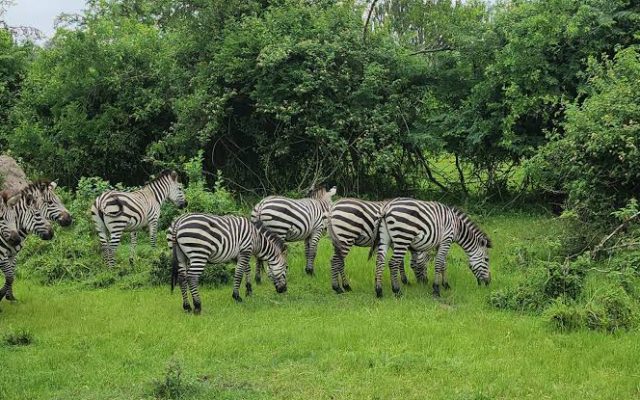
Watch a plains zebra herd on morning game drive and the picture is clear: heads down, jaws working, bodies drifting slowly across short grass. Zebras are built to eat — spending a large portion of each day grazing — and their diet shapes where they live, how they move, and which parks deliver the best sightings on a Uganda safari.
This guide explains what plains zebras eat, how feeding behaviour varies by season, and what their grazing means for savannah ecosystems from Lake Mburo to Kidepo.
Primary Diet: Grass
Plains zebras are predominantly grazers. Grass species form the bulk of their intake across every month of the year. Unlike selective browsers such as giraffe, zebras use strong molars and steady grinding to process fibrous blades and stems that many smaller antelope avoid.
Typical food sources include:
- Short green grasses after rain
- Coarser perennial grasses in dry season
- Fresh regrowth following fire or mowing by other herbivores
- Occasional herbs and forbs at ground level
Grazing Behaviour on Game Drive
Zebras feed in loose groups, maintaining visual contact while grazing. Stallions often position themselves on the herd periphery; mares and foals feed centrally. When grass height rises after rains, herds may shift to areas where buffalo, warthog, or fire have kept sward shorter — a pattern visible on tracks through Queen Elizabeth and Lake Mburo.
Morning and late afternoon are peak feeding windows. Midday heat often finds zebras resting in shade or standing in loose groups, still chewing cud.
Seasonal Diet Shifts
Uganda's two rainy seasons (roughly March–May and September–November) produce lush grass growth. Zebras disperse across wider areas, feeding on tender new blades rich in moisture and nutrients. Dry seasons (June–August and December–February) tighten the menu: coarser stems dominate, and animals concentrate near water where last green patches persist.
For safari planners, dry-season concentration near lake margins in Lake Mburo and river valleys in Kidepo often means more reliable, closer zebra photography — even if the landscape looks less emerald than in rainy months.
Water and Minerals
Zebras drink regularly when water is available — daily in most conditions. On game drives, watch for single-file movement toward waterholes and lake shores. They also seek mineral salts through natural licks and certain soils, behaviour that can create repeated visiting points guides learn over seasons.
Browsing and Supplemental Foods
Though classified as grazers, zebras occasionally browse leaves, bark, or stems when grass quality drops sharply. This flexibility helps survival in semi-arid Kidepo margins and during late dry-season stress. It is not the main diet, but it illustrates adaptability within savannah herbivore niches.
Feeding Competition and Coexistence
Zebras share grazing landscapes with buffalo, Uganda kob, waterbuck, impala, topi, and warthog. Each species occupies a slightly different feeding height and grass preference, reducing direct competition. Zebras often graze alongside wildebeest and buffalo in mixed herds elsewhere in Africa; in Uganda, impala and zebra pairs on open plains are a classic Lake Mburo sight.
Daily Intake and Digestion
Like other equids, zebras are hindgut fermenters — they process large volumes of low-quality forage efficiently. Adults may spend 60 percent or more of daylight feeding. Chewing cud while resting allows further digestion between grazing bouts. Foals begin nibbling grass within weeks of birth but continue nursing for months.
Diet, Movement, and Migration
Where zebra populations are migratory — notably in Tanzania's Serengeti — movement follows grass quality and rainfall months ahead. Uganda's herds make shorter seasonal shifts within park boundaries, but the principle is identical: zebras go where the best grass and water coincide. Understanding this link helps explain sudden herd absences from a valley after rain, or dense gatherings on dry-season plains.
Ecological Role
By grazing coarse grasses, zebras help maintain open savannah structure, indirectly benefiting species that need short grass or clear sightlines. As prey for lions and other carnivores, they transfer plant energy up the food web. Healthy zebra numbers signal productive grassland management inside protected areas.
Safari Viewing Tips
Approach feeding herds slowly and quietly — zebras often allow close vehicle passes when not startled. Side-light at dawn illuminates stripes against dew-wet grass. Watch for the rhythmic head-down line of a herd moving across short turf — that feeding front is often the best place to park at respectful distance and observe without disturbing grazing.
Pair diet knowledge with herd behaviour and seasonal timing to plan game drives when grazing concentrations peak at Lake Mburo lake margins or Kidepo valley floors.