Fly-In Uganda Safaris vs Road Safaris — Uganda’s best wildlife experiences cluster far from Entebbe. Bwindi’s gorilla forests sit roughly 460 kilometres southwest of the capital; Murchison Falls sprawls northwest; Kibale and Queen Elizabeth occupy the rift valley between. How you move between those points shapes your entire safari — not just the budget, but how much energy you arrive with on trek day.
This guide covers practical planning for Fly-In Uganda Safaris vs Road Safaris, with tips you can use when comparing options.
A clear plan around Fly-In Uganda Safaris vs Road Safaris helps you book permits, lodges, and transport with fewer surprises.
Most itineraries choose between road transfers in a private 4×4 and scheduled domestic flights operated primarily by AeroLink Uganda. Both work. The right mix depends on trip length, comfort priorities, and whether you view travel time as wasted hours or part of the adventure.
Road safaris: the classic Uganda experience
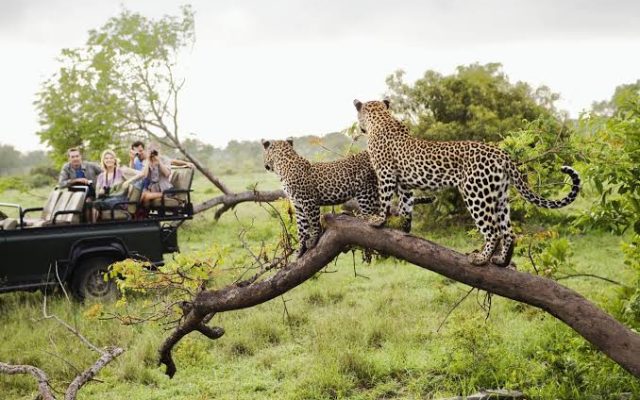
Road travel is how Uganda built its safari industry. A private Land Cruiser or equivalent with an experienced driver-guide lets you stop at the Equator, photograph terraced hillsides, break for lunch in Mbarara, and watch countryside shift from banana plantations to volcanic foothills as you approach the gorilla parks.
From Entebbe or Kampala to Bwindi, expect roughly eight to ten hours of driving — often split across two days with an overnight in Lake Mburo, Mbarara, or Kabale. That sounds brutal on paper, but splitting the journey turns transfer days into light safari days: zebra and impala at Lake Mburo, Ankole cattle on the hillsides, and gradual acclimatisation before a strenuous gorilla trek.
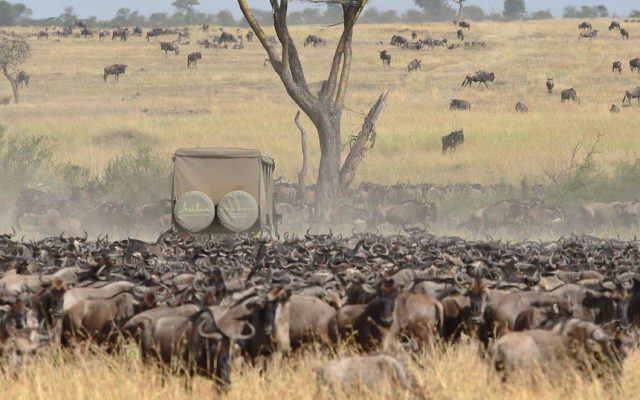
Road safaris excel on multi-park circuits. A typical eight-day loop — Murchison Falls, Kibale chimps, Queen Elizabeth, Bwindi — flows naturally by vehicle because parks connect in sequence. You pay one vehicle and guide rate for the duration, share fuel costs across the group, and avoid the weight limits and schedule constraints of bush flights.
Cost is the other advantage. Road transfers spread across several days often cost less than two or three flight legs per person, especially for groups of four to six sharing a vehicle. Mid-range road safaris remain Uganda’s best value proposition for travellers with eight or more days and moderate fitness.
The honest downsides: rough sections after rain, traffic near Kampala, and fatigue if operators stack a full-day drive the day before a gorilla trek. Reputable planners build buffer nights and avoid 6 a.m. departures after a ten-hour transfer.
Fly-in safaris: buying back time
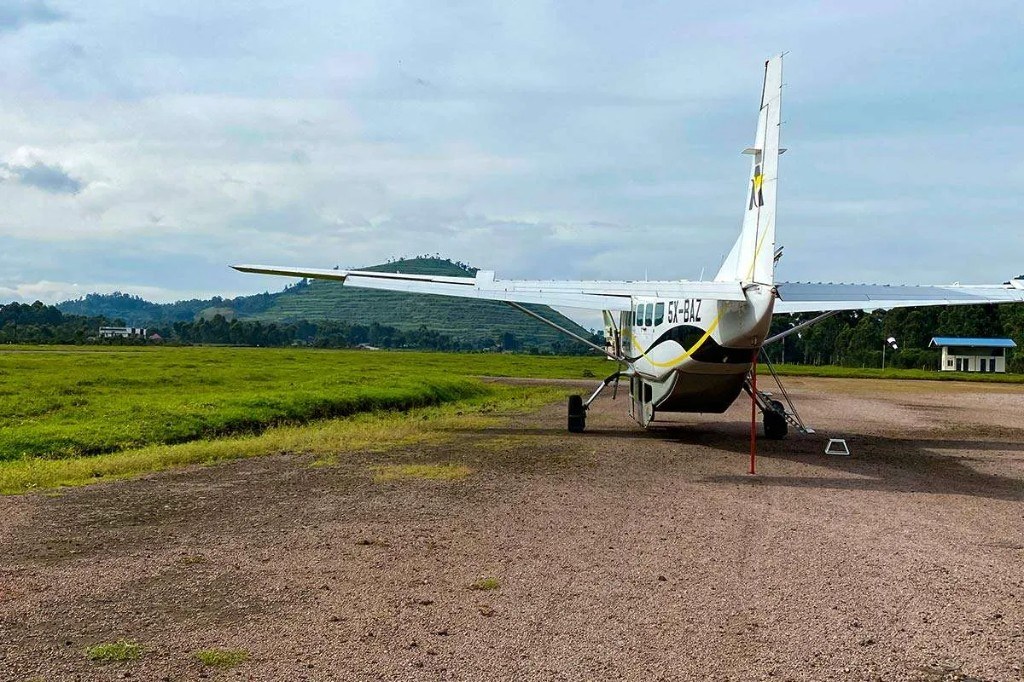
AeroLink Uganda runs daily scheduled services from Entebbe International Airport to bush airstrips serving the main safari regions. For gorilla trekking, flights land at Kihihi (northern Bwindi sectors — Buhoma and Ruhija) or Kisoro (southern Bwindi and Mgahinga). Flight time is roughly one hour and fifteen minutes versus a full day on the road.
2026 timetables show morning departures around 07:00 and 10:30, with additional afternoon services on many routes. Kihihi receives up to four daily connections in high season; Kisoro operates in early morning and mid-morning windows due to weather patterns around the Virunga volcanoes. Check-in at Entebbe is typically sixty minutes before departure; bush airstrips ask for thirty minutes.
Beyond Bwindi, AeroLink serves Kasese for Queen Elizabeth and Kibale access, and Pakuba, Bugungu, and Chobe airstrips for Murchison Falls (afternoon services, sometimes with minimum passenger loads). That network lets you fly between southwest primates and northern savannah without retracing the full road loop — valuable on ten-day luxury itineraries.
What fly-in costs — and what it saves
Scheduled seat rates commonly run USD 280–350 per person per leg, plus baggage surcharges and seasonal additions. AeroLink applies a USD 70 per person surcharge on Kisoro flights due to operational complexity at the airstrip. From May 2026, a USD 25 fuel surcharge per person per sector applies to tickets issued on or after that date. Luggage on bush aircraft is typically limited to about 15 kilograms in soft bags — planners should brief guests before packing hard suitcases.
A return Entebbe–Kihihi flight pair might cost USD 600–750 per person all in during peak season. For a couple, that is real money — but it replaces two days of driving and often two en-route lodge nights. On a short three-day fly-in gorilla safari, the math favours flying because the trip simply does not have time for road transfers at all.
Fly-in also suits honeymooners, older travellers, executives on tight leave, and anyone recovering from international jet lag who needs a gentle first day. You trade road scenery for a morning in a lodge garden listening to forest birds instead of counting potholes.
Hybrid itineraries: the smart compromise
Many of our guests fly one way and drive the other. Fly Entebbe to Kihihi for a gorilla trek, then drive north through Queen Elizabeth and Kibale over four or five days, exiting via Murchison or returning to Entebbe gradually. You capture aerial views and save time at the critical moment without flying every leg at premium prices.
Another hybrid: fly Entebbe–Kasese for chimps and Queen Elizabeth, then drive south to Bwindi over two days. Or road to the southwest and fly back after the trek when fatigue matters most. Operators price these mixes individually — ask for a line-item flight quote rather than a bundled “fly-in supplement.”
Practical differences on the ground
Scheduling rigidity: Flights tie you to fixed departure times. Miss the morning AeroLink because of a delayed international arrival and you may lose a day. Road transfers flex around your actual landing time.
Weather cancellations: Kisoro flights cancel more often than Kihihi in heavy cloud. AeroLink reroutes or reschedules, but bush aviation is weather-dependent. Build a buffer day before your gorilla permit if flying to Kisoro in rainy months.
Connection to lodges: Airstrips are not at lodge gates. Expect thirty to ninety minutes of transfer on sometimes rough tracks from Kihihi or Kisoro to your Bwindi lodge. Flying saves the long haul from Entebbe; it does not eliminate all dirt roads.
Environmental and experiential notes: Road travel has a larger carbon footprint per kilometre for small groups, though empty flight legs complicate the comparison. Culturally, road days expose you to towns and villages that flight paths skip — worthwhile if community contact matters to you.
When road makes more sense
Choose road travel for trips of eight days or longer covering multiple parks, for budget-focused itineraries where lodge and permit costs already dominate, for travellers who enjoy landscape transitions and optional stops, and for groups sharing a private vehicle where per-person road cost drops sharply.
When fly-in makes more sense
Choose flying for three-to-five-day gorilla-focused trips, when international leave is limited, when trekking day demands peak physical energy, for luxury itineraries pairing premium lodges with seamless logistics, and for Murchison or Kidepo extensions where road distances from Entebbe are genuinely punishing.
Sample decision framework
Count your hours, not just your dollars. If a USD 650 flight replaces sixteen hours of driving and two USD 150 overnight stops, the premium shrinks. If you have twelve days and five parks, road usually wins. If you have four days and one gorilla permit, fly.
For package-level pricing that includes flights, permits, and lodges, see how much does a Uganda safari cost and our seasonal planning guide. Lion on the Rocks Safaris quotes road, fly-in, and hybrid options separately so you can see exactly what each leg costs — because the best safari is the one that gets you to the trailhead rested, not merely the one that looks cheapest on the first quote.
 Read