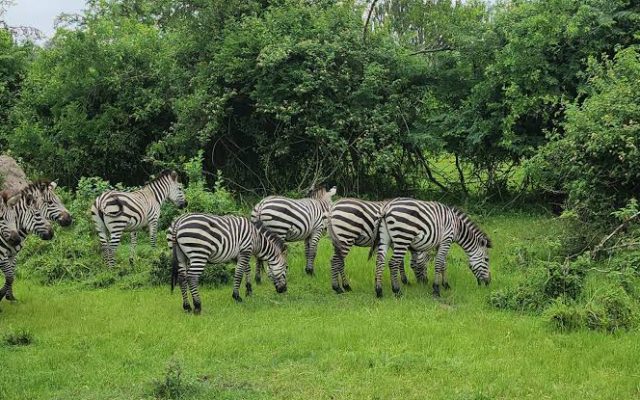
The plains zebra is one of Africa's most beloved savannah animals — instantly recognisable, endlessly photogenic, and deeply woven into the story of the wild. With bold black-and-white stripes, spirited herd behaviour, and a constant presence on open grasslands, zebras embody the classic safari experience travellers dream about before they arrive in East Africa.
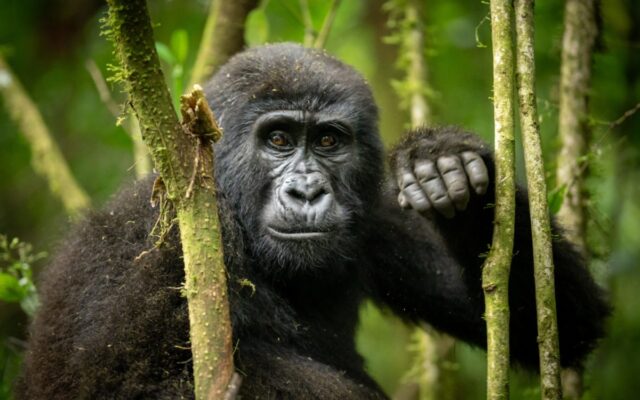
In Uganda, the plains zebra appears as Equus quagga burchellii — Burchell's zebra — the widespread subspecies whose stripes often fade to brown on the lower legs and whose shadow stripes appear between the bold black bands. Unlike the mountain gorilla or chimpanzee encounters that define Uganda's primate fame, zebra viewing belongs to the game drive: morning and afternoon circuits across acacia savannah, binoculars ready, engine quiet, stripes emerging from the grass.
What Is a Plains Zebra?
The plains zebra (Equus quagga) is a medium-sized wild equid native to eastern and southern Africa. It is the most common and geographically widespread zebra species, adapted to grasslands, savannah woodlands, and open plains where water and grazing remain available through seasonal change.
- Kingdom: Animalia
- Phylum: Chordata
- Class: Mammalia
- Order: Perissodactyla
- Family: Equidae
- Genus: Equus
- Species: Equus quagga
- Uganda subspecies: Equus quagga burchellii (Burchell's zebra)
Physical Characteristics
Plains zebras are built for speed, stamina, and life in the open. Their stripes are not decoration alone — researchers continue to study their roles in predator confusion, social recognition, and thermoregulation.
Size and Weight
Adults stand roughly 1.2 to 1.4 metres at the shoulder and weigh between 200 and 350 kilograms. Stallions are generally larger and more muscular than mares.
Stripes and Individual Identity
Every zebra carries a unique stripe pattern, much like a human fingerprint. Guides and researchers can identify individuals by the arrangement of stripes on the neck, shoulder, and rump — a detail that rewards patient photography on safari.
Speed and Agility
When threatened, plains zebras can reach speeds of up to 65 kilometres per hour over short distances, with sharp turns that help them evade lions and hyenas on open ground.
Where Plains Zebras Live in Uganda
Uganda's zebra populations are concentrated in savannah protected areas rather than montane forest or wetland ecosystems. The best viewing is on classic game drives in:
- Lake Mburo National Park — Uganda's most reliable zebra destination
- Kidepo Valley National Park — remote plains herds in the Narus Valley
- Queen Elizabeth National Park — Ishasha and Kasenyi grasslands
- Murchison Falls National Park — northern savannah sectors
Social Structure and Herd Life
Plains zebras are highly social. Their basic unit is the harem — one dominant stallion, several mares, and their offspring — which may join other harems and bachelor groups to form larger herds, especially when grazing conditions favour aggregation or when seasonal movement concentrates animals near water.
On a game drive, watch for stallions positioning themselves on the herd's edge, ears swivelling, ready to confront threats. Bachelor males often trail behind larger groups or form their own bands, practising the dominance displays that may one day win them a harem.
Migration and Movement
Uganda's zebras are not part of the Serengeti–Mara Great Migration, but they are far from static. Populations shift seasonally across home ranges, following rainfall, fresh grass, and water. In Lake Mburo and Kidepo, dry-season concentrations near waterholes and lake margins produce some of the year's finest photographic opportunities.
Diet and Ecological Role
Zebras are primarily grazers, feeding on a wide range of grasses and occasionally browsing when forage is scarce. Their grazing helps maintain savannah structure, and their presence supports predator populations — lions, leopards, hyenas, and wild dogs all target zebra, especially foals and weaker individuals.
Conservation Status
The plains zebra is listed as Near Threatened on the IUCN Red List. While still numerous in parts of Africa, populations have declined in some regions due to habitat loss, hunting, and human encroachment. Uganda's national parks provide essential refuges where zebras remain a visible, thriving part of the savannah community.
Why Zebras Matter on Safari
Zebras matter ecologically as grazers and prey, economically as a flagship savannah species for tourism, and emotionally as one of the animals that make a first game drive unforgettable. They are often among the first large mammals travellers see — and among those they remember longest.
Game Drive Viewing
The best way to see plains zebras in Uganda is on guided game drives in the parks listed above. Early morning and late afternoon offer the best light, active grazing, and cooler temperatures. Pair zebra viewing with where to see plains zebras, herd behaviour, and safari experiences for full trip planning.
Quick Facts
- Most widespread zebra species in Africa
- Burchell's subspecies in Uganda's savannah parks
- Unique stripe pattern on every individual
- Lives in harems and larger herds
- Can run up to 65 km/h
- Best seen on game drives, especially dry season
- Lake Mburo is Uganda's top zebra park
- Near Threatened (IUCN)