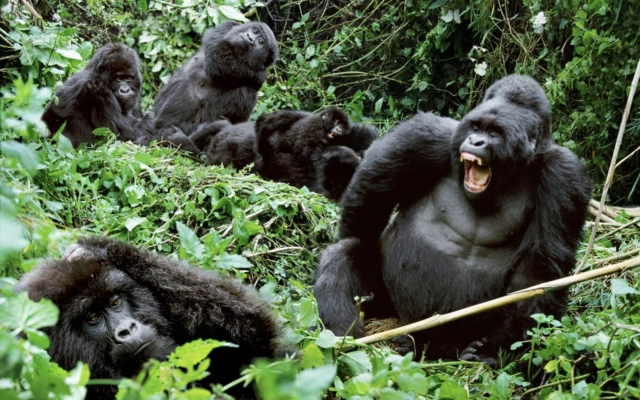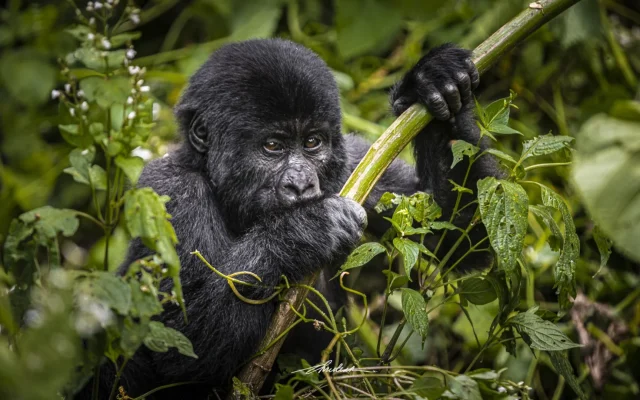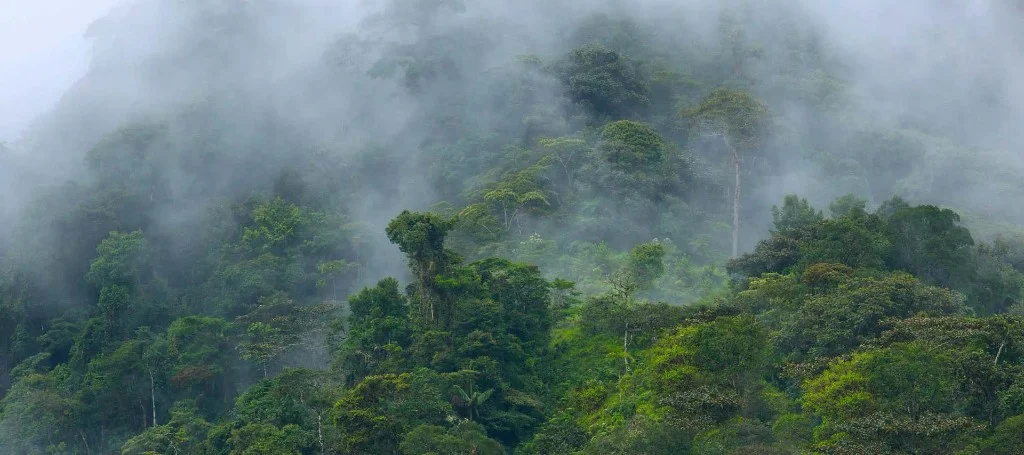
Understanding mountain gorilla habitat helps explain their behaviour, diet, movement patterns, social structure, conservation needs, and why gorilla trekking is such a distinctive wildlife experience.
Where Do Mountain Gorillas Live?
Wild mountain gorillas live in only two isolated population zones in East and Central Africa.
- Bwindi Impenetrable National Park in Uganda
- The Virunga Massif spanning Uganda, Rwanda, and Democratic Republic of Congo
This extremely restricted geographic distribution makes habitat protection essential to their survival.
Mountain Gorilla Geographic Range
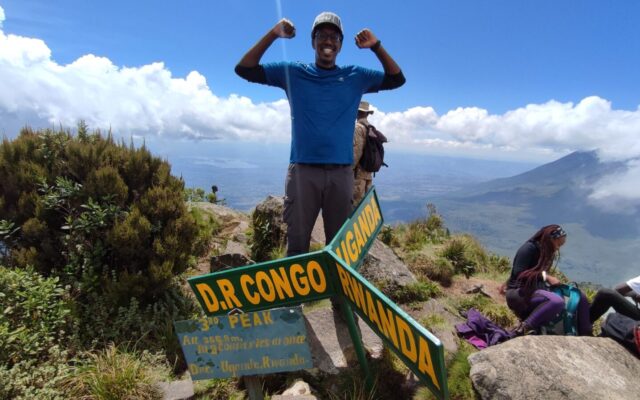
Mountain gorillas occur naturally in three countries:
- Uganda
- Rwanda
- Democratic Republic of Congo
However, their range is fragmented into isolated ecosystems rather than continuous territory.
Bwindi Impenetrable National Park Habitat
Bwindi Impenetrable National Park in southwestern Uganda is one of Africa’s most significant mountain gorilla habitats. This UNESCO World Heritage Site contains dense ancient forest with remarkable biodiversity.
Key habitat characteristics include:
- Dense montane rainforest
- Steep ridges and valleys
- Heavy rainfall
- Thick understory vegetation
- Rich botanical diversity
- Variable altitude ecosystems
Bwindi supports multiple habituated mountain gorilla families distributed across trekking sectors.
Bwindi Gorilla Sectors
- Buhoma
- Rushaga
- Nkuringo
- Ruhija
Each sector offers slightly different habitat characteristics, terrain difficulty, and trekking experiences.
Virunga Massif Habitat
The Virunga ecosystem forms the second major mountain gorilla habitat zone. This dramatic volcanic mountain chain spans international borders and includes multiple protected areas.
- Mgahinga Gorilla National Park (Uganda)
- Volcanoes National Park (Rwanda)
- Virunga National Park (DR Congo)
The Virunga environment differs from Bwindi in structure, vegetation, and terrain.
Altitude Range
Mountain gorillas inhabit elevations generally between 2,200 and 4,300 meters above sea level.
These elevations create cooler climates and specialized vegetation zones distinct from lower tropical forests.
Habitat Types
Montane Forest
These forests dominate much of the mountain gorilla’s range and provide extensive food resources, shelter, and nesting material.
Cloud Forest
Persistent mist and moisture define cloud forests, creating cool, humid microclimates ideal for mountain gorillas.
Bamboo Zones
In parts of the Virunga ecosystem, bamboo forms an important habitat type and seasonal food source.
Afro-Alpine Transition Zones
Higher elevations include sparse vegetation adapted to harsher climatic conditions.
Climate Conditions
Mountain gorilla habitat experiences:
- Cool temperatures
- Frequent mist
- High humidity
- Substantial rainfall
- Dense moisture-rich vegetation
This environment differs dramatically from stereotypical African safari landscapes.
Why Habitat Matters
Habitat determines nearly every aspect of mountain gorilla ecology.
- Food availability
- Movement routes
- Nesting opportunities
- Protection from exposure
- Social interaction zones
- Infant survival conditions
Habitat Adaptations
Mountain gorillas possess physical and behavioural adaptations shaped by their environment.
Dense Fur
Protects against cold and moisture.
Powerful Limbs
Support movement over steep terrain and through dense vegetation.
Diet Flexibility
Ability to exploit diverse forest plant resources supports survival.
Nest Building
Daily nest construction reflects habitat dependence and climate adaptation.
Forest Vegetation and Food Resources
Mountain gorilla habitat supports abundant plant diversity essential for feeding.
Common resources include:
- Leaves
- Shoots
- Bamboo
- Roots
- Bark
- Herbaceous vegetation
- Wild celery
- Nettles
Habitat and Social Behaviour
Dense forest habitat shapes group cohesion. Visibility is limited compared with open ecosystems, making close social bonds and vocal communication essential.
Movement Patterns
Mountain gorillas move through habitat in response to food availability, group needs, weather, and disturbance.
Movement is generally local rather than migratory.
Habitat Fragmentation Risks
Restricted range makes fragmentation a serious threat.
- Agricultural encroachment
- Human settlement pressure
- Infrastructure expansion
- Resource extraction
Human Proximity Challenges
Many gorilla habitats exist near dense human communities, increasing conservation complexity.
Key concerns include:
- Disease transmission
- Habitat pressure
- Human-wildlife interaction risk
- Land competition
Protected Habitat Management
Conservation success depends on strong habitat management.
- Protected area enforcement
- Anti-poaching patrols
- Tourism regulation
- Scientific monitoring
- Community engagement
Best Places to See Mountain Gorillas in Their Habitat
Bwindi Impenetrable National Park
Exceptional biodiversity, multiple trekking sectors, and rich forest habitat.
Mgahinga Gorilla National Park
Smaller but spectacular volcanic gorilla habitat.
Volcanoes National Park
Iconic volcanic forest trekking in Rwanda.
Virunga National Park
Remote and dramatic habitat, subject to travel considerations.
Habitat Comparison: Bwindi vs Virunga
Bwindi
- Dense ancient forest
- Steeper enclosed terrain
- Very rich biodiversity
- Strong trekking variety
Virunga
- Volcanic ecosystem
- Bamboo zones
- Open montane sections
- Different trekking dynamics
Mountain Gorilla Habitat and Tourism
Responsible tourism helps fund habitat protection while creating economic incentives for conservation.
Permit revenue contributes to habitat management and local community benefit systems.
Explore the full Mountain Gorilla guide and browse more Uganda wildlife species.