
Mountain Gorilla FAQs and Answers — use the questions below for quick answers on biology, gorilla trekking in Uganda, gorilla permits, safety, and safari planning. Explore where to see mountain gorillas, best time to visit, and safari experiences for deeper guides — or request a quote for live permit availability.
Mountain gorilla faqs — expert Uganda safari guide from local planners who know permits, parks, and realistic routing.
Explore the full Mountain Gorilla guide and browse more Uganda wildlife species.
- What is a mountain gorilla?
A mountain gorilla is a subspecies of the eastern gorilla that lives in the high-altitude forests of East and Central Africa. Mountain gorillas are found only in the Virunga Mountains and the Bwindi Impenetrable Forest. They are among the world's most endangered great apes and are famous for gorilla trekking experiences in Uganda, Rwanda, and the Democratic Republic of Congo.
- Where do mountain gorillas live?
Mountain gorillas live in two isolated populations. One population inhabits the Virunga Mountains, spanning Uganda, Rwanda, and the Democratic Republic of Congo, while the other resides in Uganda's Bwindi Impenetrable National Park. They thrive in dense montane and bamboo forests at elevations ranging from approximately 2,200 to 4,300 meters above sea level. See our where to see mountain gorillas guide for park-by-park comparisons.
- How many mountain gorillas are left in the wild?
Recent conservation surveys estimate that there are slightly over 1,000 mountain gorillas remaining in the wild. Their population has steadily increased over the past few decades due to intensive conservation efforts, making them one of the few great ape species with a growing population.
- Are mountain gorillas endangered?
Mountain gorillas remain classified as an endangered species. Although their numbers are increasing, they still face threats from habitat loss, disease transmission, poaching, and human encroachment on their forest habitats. Learn more on our mountain gorilla conservation page.
- What do mountain gorillas eat?
Mountain gorillas are primarily herbivores. Their diet consists of leaves, stems, shoots, roots, bark, bamboo, wild celery, and various forest plants. Occasionally, they may consume ants and other small insects, but vegetation forms the vast majority of their diet. See our mountain gorilla diet guide for seasonal feeding patterns.
- How much does a mountain gorilla weigh?
An adult male mountain gorilla, known as a silverback, can weigh between 135 and 220 kilograms. Adult females are considerably smaller, typically weighing between 70 and 100 kilograms.
- Why are male gorillas called silverbacks?
Adult male gorillas develop a distinctive silver patch of hair across their backs as they mature, usually around the age of 12. This silver coloration signifies maturity and leadership within the gorilla family group.
- How long do mountain gorillas live?
Mountain gorillas can live for 35 to 40 years in the wild. Some individuals under protected conditions have been known to live longer.
- Are mountain gorillas dangerous?
Mountain gorillas are generally gentle and peaceful animals. They are not naturally aggressive toward humans. However, they are powerful wild animals and may display defensive behaviors if they feel threatened, provoked, or if visitors fail to follow trekking guidelines.
- Can mountain gorillas climb trees?
Young mountain gorillas frequently climb trees for play and exploration. Adult gorillas, particularly large silverbacks, spend most of their time on the ground due to their size and weight, though they can still climb when necessary.
- How intelligent are mountain gorillas?
Mountain gorillas are highly intelligent primates. They demonstrate problem-solving abilities, social learning, emotional awareness, and complex communication. They share approximately 98% of their DNA with humans. Explore more on our mountain gorilla behaviour page.
- How do mountain gorillas communicate?
Mountain gorillas communicate through vocalizations, facial expressions, body language, and chest beating. Researchers have identified more than 20 distinct vocal sounds used to convey warnings, comfort, playfulness, and group coordination.
- What is a gorilla family group?
A gorilla family group is a social unit led by a dominant silverback and composed of adult females, juveniles, infants, and subordinate males. Group sizes can range from a few individuals to more than 30 members.
- What is the role of a silverback gorilla?
The silverback is responsible for leading and protecting the family group. He makes decisions about movement, feeding locations, nesting sites, and defends the group from threats or rival males.
- How often do mountain gorillas have babies?
Female mountain gorillas typically give birth every four to six years. This slow reproductive rate is one reason why mountain gorilla populations recover gradually.
- How long is a mountain gorilla pregnancy?
Mountain gorillas have a gestation period of approximately 8.5 months, which is similar to that of humans.
- Do mountain gorillas live alone?
Most mountain gorillas live in social family groups. However, some mature males leave their birth groups and may live alone or form new groups before becoming dominant silverbacks.
- What predators do mountain gorillas have?
Adult mountain gorillas have very few natural predators due to their size and strength. Leopards are the only significant natural predator, though attacks are extremely rare. Humans pose the greatest threat through disease transmission, habitat destruction, and illegal activities.
- Can mountain gorillas catch human diseases?
Yes. Because mountain gorillas are genetically very similar to humans, they are highly susceptible to many human illnesses, including respiratory infections, influenza, and other contagious diseases. This is why strict trekking rules are enforced.
- Why must visitors keep a distance from gorillas?
Visitors are required to maintain a minimum distance of 7 meters (approximately 23 feet) to reduce the risk of transmitting diseases and to minimize disturbance to the gorillas.
- Which countries offer mountain gorilla trekking?
Mountain gorilla trekking is available in Uganda, Rwanda, and the Democratic Republic of Congo. These are the only countries in the world where mountain gorillas occur naturally. Plan your trip with our gorilla trekking in Uganda guide or browse Uganda safari packages.
- Where is the best place to see mountain gorillas?
The most popular destinations for mountain gorilla trekking are Bwindi Impenetrable National Park (Uganda), Mgahinga Gorilla National Park (Uganda), Volcanoes National Park (Rwanda), and Virunga National Park (Democratic Republic of Congo). Compare all options on our best places to see mountain gorillas page.
- How difficult is mountain gorilla trekking?
The difficulty varies depending on the location of the gorilla family being visited. Some treks may take less than an hour, while others can last several hours through steep, muddy, and densely forested terrain. Read our gorilla trekking in Uganda planner for fitness and packing advice.
- What is the best time to see mountain gorillas?
Mountain gorillas can be visited year-round. The dry seasons from June to September and December to February generally offer easier trekking conditions and better photography opportunities. See our best time to see mountain gorillas guide for monthly conditions.
- How close can visitors get to mountain gorillas?
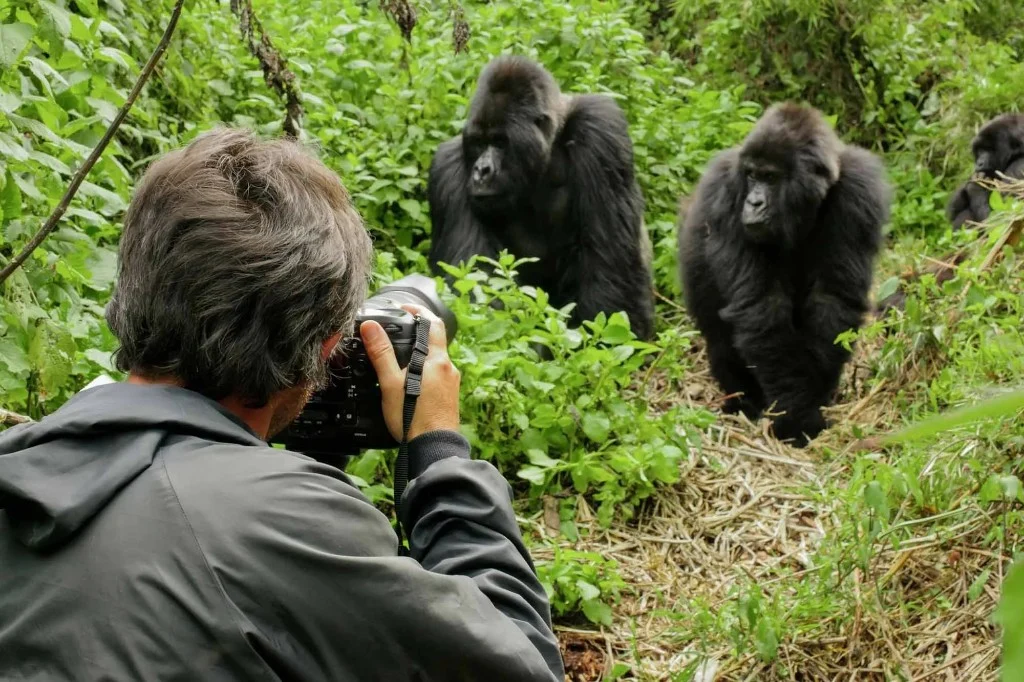
Visitors are generally required to stay at least 7 meters away. However, gorillas are wild animals and occasionally approach visitors on their own.
- How much time do visitors spend with gorillas?
Standard gorilla trekking permits allow visitors to spend one hour observing a habituated gorilla family after locating them in the forest.
- What is gorilla habituation?
Gorilla habituation is the process through which wild gorillas gradually become accustomed to the presence of humans. In Uganda, special habituation experiences allow visitors to spend up to four hours with a gorilla family undergoing habituation — typically in Bwindi Impenetrable National Park.
- Why are mountain gorillas important to ecosystems?
Mountain gorillas help maintain healthy forest ecosystems by dispersing seeds, pruning vegetation, and contributing to forest regeneration. Their presence supports biodiversity and ecological balance in montane forest habitats.
- What conservation efforts protect mountain gorillas?
Conservation efforts include anti-poaching patrols, veterinary care, community tourism programs, habitat protection, research initiatives, and regulated gorilla tourism that generates funding for conservation. Learn more on our mountain gorilla conservation page.
- Can mountain gorilla populations continue to grow?
Yes. With continued protection, responsible tourism, community involvement, and habitat conservation, mountain gorilla populations can continue to increase. Their recovery over recent decades is considered one of the world's greatest wildlife conservation success stories.
Safari packages to see Mountain Gorilla
Bookable itineraries below include parks and activities where you are most likely to encounter Mountain Gorilla in the wild.
 Best
Seller
Best
Seller
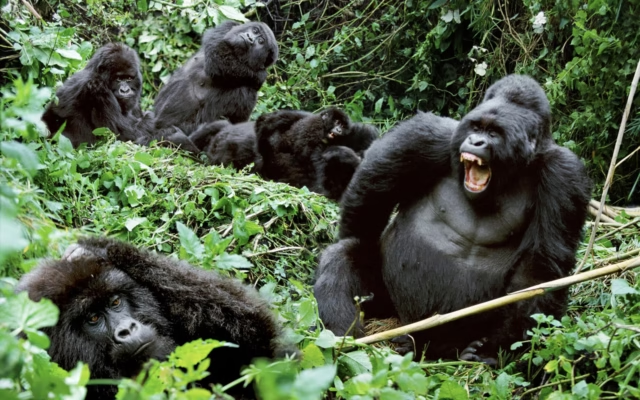
3 Day Uganda Gorilla Trekking Safari
You visit
Bwindi Forest, Entebbe
This private Uganda gorilla trekking safari is a focused 3-day Uganda gorilla trekking road trip: a full-day mountain gorilla trek in Bwindi Impenetrable National Park—a UNESCO rainforest where roughl…
 Best
Seller
Best
Seller
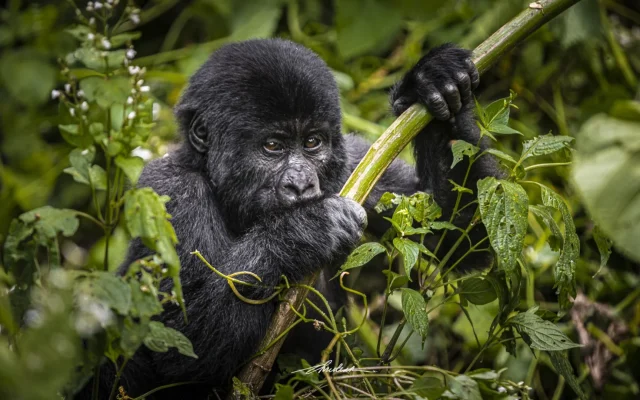
5 Day Gorilla & Chimp Safari
You visit
Kibale Forest, Bwindi Forest, Entebbe
Combine Bwindi gorilla trekking with Kibale chimpanzee tracking.
 Best
Seller
Best
Seller
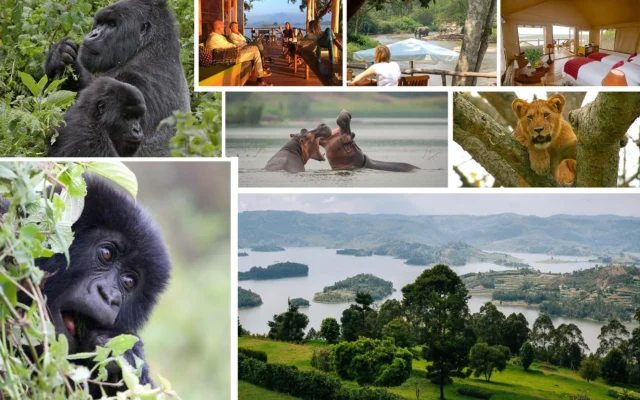
7 Day Uganda Wildlife & Gorilla
You visit
Murchison Falls, Kibale Forest, Queen Elizabeth NP, Bwindi Forest, Entebbe
Seven days with gorillas: the wildlife tour above plus Bwindi trekking on Day 6 — the single most booked private itinerary for Uganda Safari Tours guests who want chimps, savannah and gorillas in one…
3 Days Mgahinga Volcanoes Hiking Safari
You visit
Entebbe (Start, End)
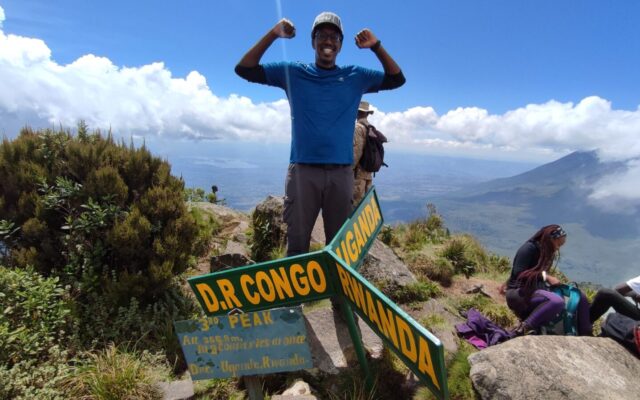
Mount Gahinga (3,474 m) is the gentlest of Mgahinga’s three Virunga volcanoes — a 6–7 hour round trip through bamboo forest to a swamp-filled crater at the summit. This 3-day Mgahinga hiking safari su…